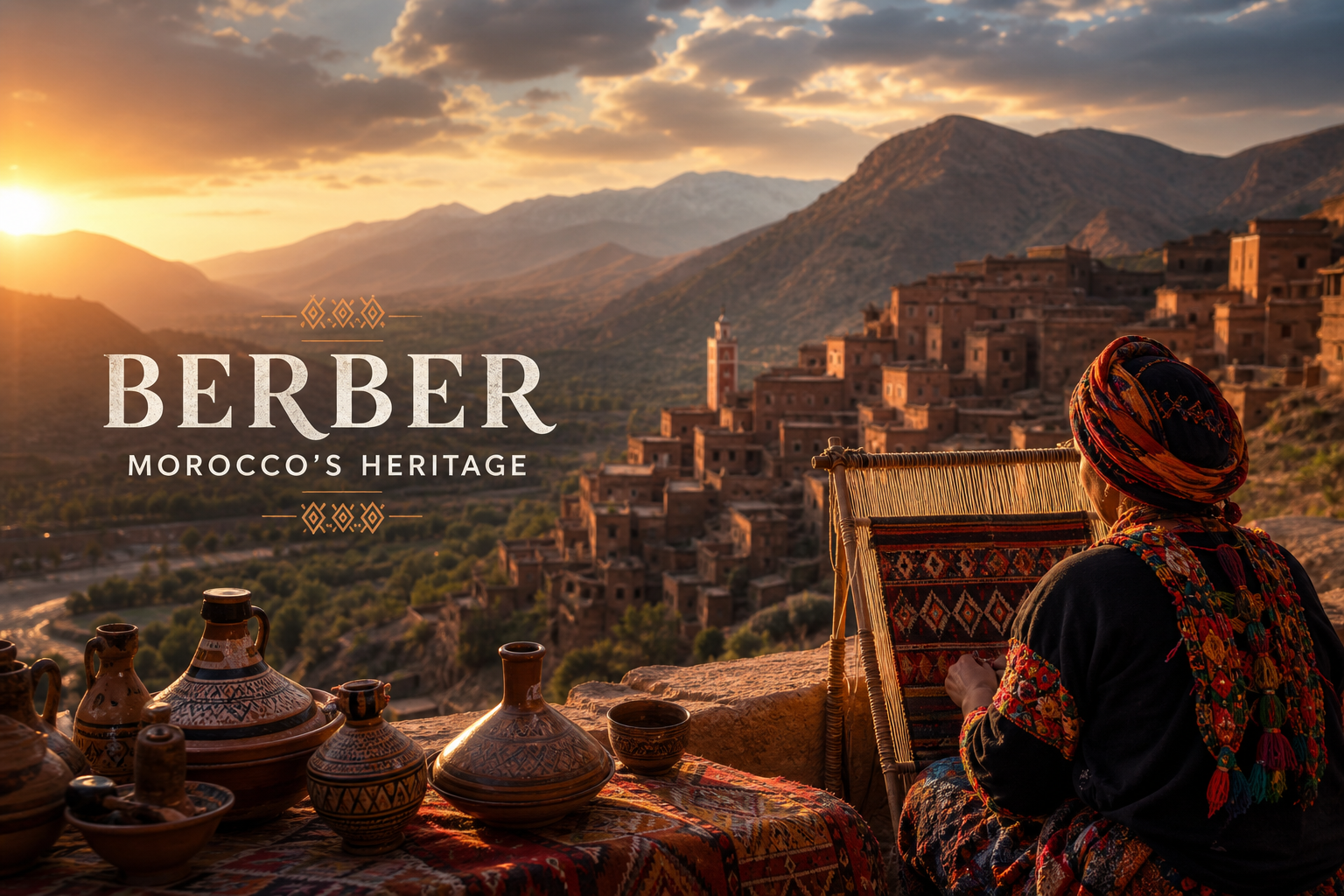
Close your eyes for a moment. Picture a woman in a High Atlas village, singing softly while her fingers move across a loom. The smell of woodsmoke and saffron drifts through the doorway. Outside, a weekly market hums with voices bargaining in a language that predates Arabic, Roman, and Phoenician presence in North Africa by thousands of years. Nobody is performing for you. This is just Tuesday.
Berber culture in Morocco isn’t a show staged for curious visitors. It’s a living identity shared by a substantial proportion of Morocco’s population, estimates vary considerably depending on methodology, woven into language, craft, music, food, and daily rhythm. The Amazigh, which is what Berber people call themselves (the word roughly translates as “free people”), are North Africa’s indigenous inhabitants, and their culture is as layered and regional as the country itself.
This guide to Berber culture in Morocco covers who the Amazigh are, what their crafts and celebrations mean, where to find the real thing, and how to visit without accidentally being the worst kind of tourist. If you want a door into this world that most travel agencies genuinely can’t open, look for operators with genuine Berber roots and local community relationships, like Sahara Serenity Tours, a family-run company whose guides bring lived knowledge rather than rehearsed script.
Who the Amazigh people are: ancient roots and a living identity
The Amazigh were here long before the names we associate with Moroccan history arrived. Ancient Numidian and Mauretanian kingdoms were Berber-led. When Arab armies swept across North Africa in the 7th and 8th centuries, Amazigh communities absorbed Islam while keeping their own languages, traditions, and social structures intact. Berber-led dynasties, including the Almoravids, Almohads, and Marinids, went on to shape medieval Morocco and reach as far as al-Andalus. For a readable overview of their history, culture, and legacy, see exploring the Berber peoples of Morocco.
That long arc matters because it explains why Amazigh identity today feels so rooted. These aren’t people who arrived somewhere; they are the somewhere. Morocco’s 2011 constitution recognized Tamazight as an official national language alongside Arabic, describing it as “the common heritage of all Moroccans without exception.” Implementation in schools and public life has been gradual, but the constitutional recognition was a genuine turning point for Amazigh cultural pride and visibility.
The three dialects and why they matter for travel planning
Morocco has three main Amazigh language groups, and knowing which region speaks which helps you understand the cultural variation you’ll encounter on the ground. Tachelhit is spoken across the High Atlas, Anti-Atlas, and the Souss Valley in the southwest. Central Atlas Tamazight is the language of the Middle Atlas heartland. Tarifit belongs to the Rif Mountains of the north. These reflect distinct communities, each with its own craft traditions, festivals, and village rhythms, and for a traveler, that regional variation translates into genuinely different experiences depending on where you go. If you want more detail on how those languages are used across Morocco, see this primer on the languages of Morocco.
Berber culture in Morocco: what the crafts actually tell you
The crafts you’ll find in Morocco’s mountain markets aren’t just beautiful objects. They’re coded texts. Once you know how to read them, shopping in a souk becomes something closer to a conversation with the person who made what you’re holding. For practical context on where crafts fit into Moroccan life and economy, consult a guide to Moroccan crafts.
The language of Berber rug weaving
Atlas Mountain women weave rugs that carry symbols tied to protection, fertility, water, and tribal identity. A diamond or lozenge shape signals femininity and protection. A zigzag represents movement or the course of life. An eye motif wards off misfortune. These aren’t design choices made for aesthetic reasons, they’re a visual language passed down through generations of weavers, explore the symbolic meanings in Moroccan Berber rugs to see how motifs map to cultural ideas. Natural dyes sourced from henna, pomegranate skin, saffron, and mineral earths give authentic rugs their warm, soft color. Slight weave irregularities and tight but handmade knotting are signs of the real thing. An authentic Berber rug is a one-of-a-kind object, tied to the specific woman who wove it and the community she belongs to.
Silver jewelry, the fibula, and textile traditions
The fibula, a large circular brooch-pin, is one of the most recognizable pieces of Amazigh dress. It fastens the haik (a traditional robe) and carries coded meaning about tribe, region, and belief. The Handira, a wedding blanket embroidered with protective symbols, is another textile that travelers frequently encounter and rarely understand fully. These pieces mark who someone is and where they come from, functioning less as decoration and more as biography. Beyond textiles, broader Moroccan craft traditions with deep Amazigh roots include pottery from Safi and Fez and thuya woodwork from Essaouira.
Berber culture in Morocco: music, oral poetry, and celebration
Moroccan Amazigh culture is profoundly oral. Before it was ever written down, history, love, land, and ancestry were transmitted through song, poetry, and communal performance. That changes how you experience it when you encounter it in person: you don’t read it, you listen.
Collective singing and the role of the ahwach
The ahwach is a large communal performance tradition centered in southern Morocco, combining dance, call-and-response singing, and percussion. Performers form two parallel rows or a circle, and the music belongs to the group rather than to any single performer. You’ll encounter it at weddings, moussems (seasonal festivals), and communal celebrations. The instruments driving the rhythm include the bendir, a large frame drum, and the ghaita. A double-reed wind instrument, the ghaita carries across open hillsides and village squares with a sound that’s hard to mistake once you’ve heard it.
Oral poetry as living archive
Amazigh oral poets, known as imdyazen, are cultural keepers who compose verses about love, land, and ancestral memory. They improvise using drum and rebab (a bowed string instrument), moving through structured sections that blend music, poetry, and commentary. Because so much of Amazigh identity was transmitted through performance rather than written text, witnessing a live gathering isn’t a tourist attraction. It’s contact with a form of cultural preservation that has survived for centuries on its own terms.
Festivals worth building your trip around
Many mainstream itineraries overlook Morocco’s Amazigh cultural calendar entirely, which is a genuine missed opportunity, because these events are accessible, meaningful, and not staged for visitors.
Yennayer, the Amazigh New Year, falls on January 12 or 13 and is observed across Morocco with family meals and community gatherings. It’s the most widespread Amazigh celebration and a warm, low-key introduction to how the culture marks time. In the second week of February, the Almond Blossom Festival in Tafraoute celebrates the bloom of almond orchards alongside local Amazigh traditions and is one of the most visually striking and traveler-accessible festivals in southern Morocco.
For spring visitors, the International Nomads Festival in the Draa Valley (April) brings together nomadic cultures with strong Amazigh representation in one of Morocco’s most dramatic landscapes. The Moussem of Tan-Tan in May or June is UNESCO-recognized and celebrates Saharan and nomadic heritage. And if your schedule allows late summer or early autumn, the Moussem of Imilchil (late August or September) is a major annual gathering with markets, music, and a collective Amazigh wedding tradition that draws communities from across the High Atlas.
Where to experience Berber culture in Morocco: regions and villages
Saying “visit the Atlas Mountains” is about as helpful as saying “try food in France.” Here’s where to actually go.
High Atlas and Anti-Atlas: where the culture runs deepest
Imlil is the most accessible High Atlas village for a genuine encounter with mountain Amazigh life. It sits below the Toubkal massif and has a working weaving cooperative, Cooperative Adrar, where visitors can meet artisans and buy directly from makers. Tafraoute, in the Anti-Atlas, is widely considered the heartland of Tachelhit-speaking Amazigh culture: surrounded by almond orchards and rose-pink granite valleys, it rewards slow time more than a quick stop. Aït Benhaddou is worth seeing as a UNESCO-listed kasbah, but go in knowing it functions more as a heritage showcase than as everyday village life.
Middle Atlas and the Rif: markets and mountain rhythms
Azrou stands out in the Middle Atlas for its weekly market culture and the kind of ordinary, lived Amazigh life that doesn’t have a ticket booth in front of it. Amizmiz and Asni are High Atlas souk towns worth a half-day for their Saturday markets, where farmers, artisans, and everyday village life collide in the best possible way. For the north, Chefchaouen works well as a base for accessing Rif Amazigh communities, with the surrounding Jebala villages offering a quieter, less-visited alternative to the city’s photogenic blue streets.
Why your guide matters more than your itinerary
Here’s something no travel app will tell you: the difference between visiting Amazigh culture and actually experiencing it comes down almost entirely to who opens the door. A beautifully planned itinerary that routes you through the right villages can still leave you an outsider looking at closed doors if the person leading you doesn’t have personal roots in those communities.
What a local Berber guide actually gives you
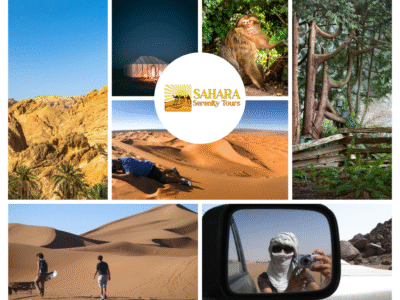
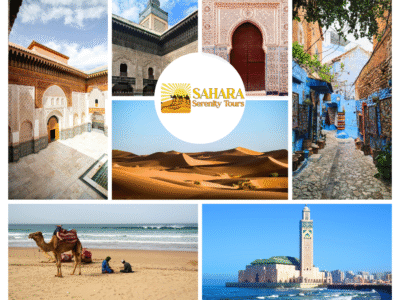
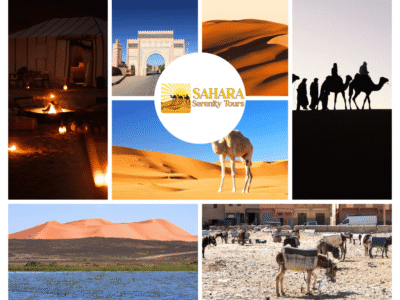
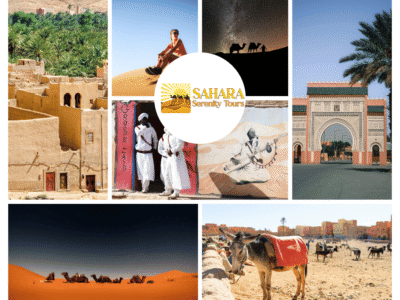
A guide who grew up speaking Tamazight, who knows which family in a given village weaves the best Handira, or which elder will genuinely welcome you to share a meal, gives you access that no amount of research can manufacture. That’s the case for seeking out family-run Berber operators rather than generalist agencies. Sahara Serenity Tours is one such outfit: their guides bring community knowledge built over generations, connecting travelers to mountain villages, desert camps, and everything in between across the Atlas, Draa Valley, and Sahara edge.
How to visit respectfully whatever route you take
A few principles go a long way. Always ask before photographing people, a smile and a gesture go further than any translation app. Accept tea when it’s offered, because hospitality is a gesture of genuine welcome in Amazigh culture, not a sales tactic. Dress modestly in villages, covering shoulders and knees. Buy crafts directly from cooperatives rather than urban middlemen, so the money reaches the hands that made what you’re holding. And learn a few words of Tamazight: even a clumsy attempt at “azul” (hello in several Tamazight varieties) lands differently than pulling out your phone.
This culture was never stored in a museum
Berber culture in Morocco has survived Phoenician traders, Roman legions, Arab conquest, and colonial pressure because it lives in people, not buildings. It’s in the symbols a woman weaves into a rug before her daughter’s wedding. It’s in the rhythm of a drum circle at a village festival. It’s in the way a guide says the name of a mountain in Tamazight and means something specific by it that no translation quite captures.
Moroccan Amazigh culture is layered, regional, and very much alive. The best way to engage with it is through curiosity and respect, not a checklist. If Morocco is on your horizon, consider building your trip around these experiences rather than squeezing them in as an afternoon add-on.
If you want a Berber-led journey through Morocco, from the high kasbahs to the edge of the Sahara, Sahara Serenity Tours is a genuine starting point. Not because they’ll show you what Berber culture in Morocco looks like from the outside, but because they’re part of it from the inside.