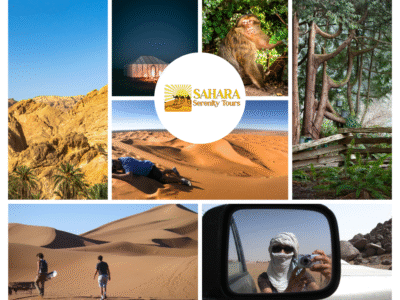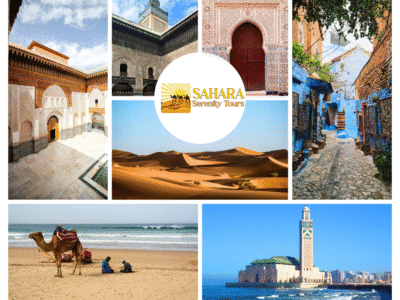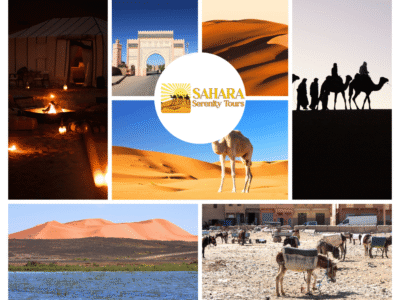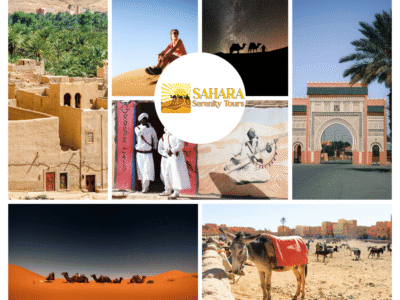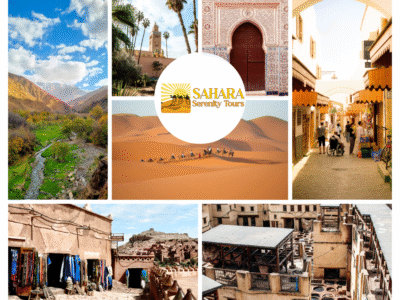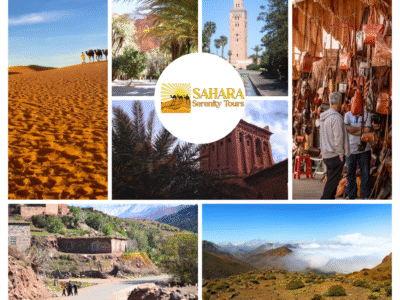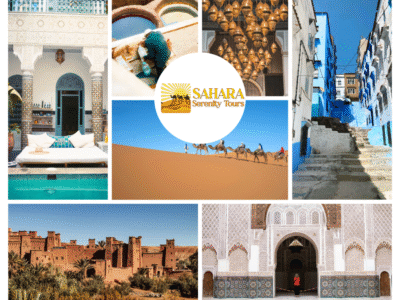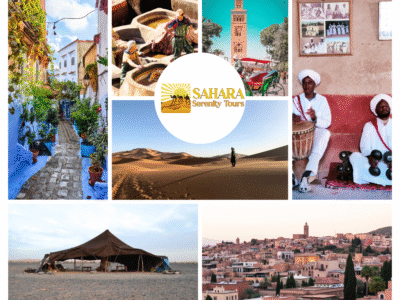
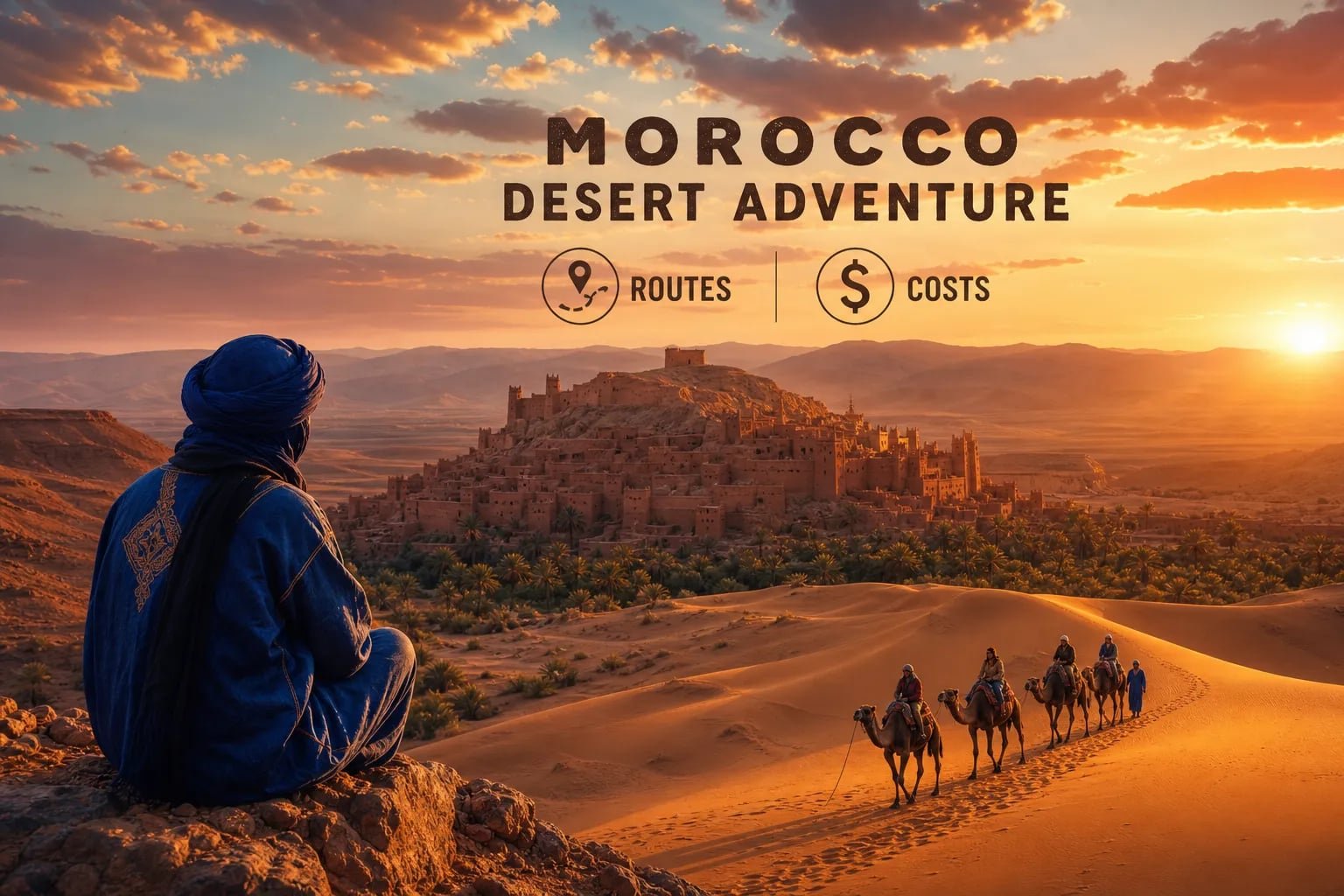
A Morocco desert trip to Erg Chebbi takes a minimum of three days from Marrakech. Zagora shortens that to two days but trades the towering dunes for smaller ones. No single-day excursion gets you to the real Sahara. Those three facts are the foundation of every good desert itinerary, and everything else builds on top of them: which route, which camp tier, how much to budget.
The two decisions every traveler faces are which dune field to target and how to handle transport between cities. Get those right, and the rest of the planning falls into place. At Sahara Serenity Tours, we are a local Morocco-based operator, and we design every itinerary around exactly these choices so you arrive with the experience already mapped out rather than piecing it together on the ground.
Key takeaways
- Erg Chebbi needs 3+ days: Merzouga’s iconic 150-meter dunes sit roughly 560 km from Marrakech, making a minimum three-day itinerary non-negotiable.
- Zagora for tight schedules: At about 360 km from Marrakech, a two-day Zagora desert excursion is possible, but the dunes are smaller and the driving is still substantial.
- Confirm inclusions before booking.
- October and March are ideal: These months combine comfortable temperatures, dramatic sunset light, and manageable crowds.
- Guided tours reduce friction: Booking a local operator reduces the coordination burden and is a common choice for many travelers who want logistics handled in advance.
- No visa for Americans: U.S. passport holders enter Morocco visa-free for stays up to 90 days, according to the U.S. Department of State.
Which Sahara destination fits your Morocco desert trip?
Erg Chebbi (Merzouga): the classic Merzouga desert trip
Erg Chebbi is Morocco’s most visited Sahara destination, and the reasons are straightforward. The dunes reach approximately 150 meters, making them the tallest in the country, and a paved road runs all the way to Merzouga village, putting the sand within walking distance of hotels, guesthouses, and a wide range of camps. The activity ecosystem is the richest in Morocco’s desert: camel treks, quad biking, buggy tours, stargazing, sandboarding, and Berber music around a campfire. For first-time visitors with three days, this is the destination. Erg Chebbi is the anchor for our multi-day itineraries at Sahara Serenity Tours.
Erg Chigaga: when solitude matters more than convenience
Erg Chigaga sits roughly 50 to 60 km beyond M’Hamid across desert pistes, accessible only by a capable 4×4. The dunes are broader and more spread out than Erg Chebbi, stretching around 35 to 40 km long, though their crests top out lower at around 40 to 60 meters. The real draw is the atmosphere: far fewer visitors, no quad bikes circling the ridge at sunset, and a genuinely remote horizon. This is the right choice for repeat Morocco visitors or travelers who prioritize emptiness over convenience. Plan for at least 3 or more days and accept that the logistics are more demanding than a standard Merzouga desert trip.
How many days do you need for a Morocco desert trip?
The 2-day Zagora option (and its trade-offs)
Zagora sits approximately 360 km from Marrakech, which translates to six to eight hours of driving each way. A two-day trip is technically achievable: Day 1 crosses the Tizi n’Tichka Pass, visits Aït Benhaddou and Ouarzazate, and reaches the dunes by sunset; Day 2 returns after sunrise and breakfast. The dunes are smaller than Erg Chebbi, and both days involve heavy driving, but Zagora works for travelers who want a genuine Sahara camp experience without committing to three full days on the road.
The 3-day Merzouga route: the sweet spot
Erg Chebbi is approximately 560 km from Marrakech, which means eight to ten hours of continuous driving. A proper three-day itinerary splits the journey sensibly: Day 1 travels from Marrakech through the High Atlas, Aït Benhaddou, and down to the Dades Valley; Day 2 passes through Todra Gorge and Rissani to reach Merzouga in time for the camel trek and overnight camp; Day 3 starts with the sunrise, breakfast, and the return.
Why 4+ days changes the whole experience
An extra day or two transforms the trip from a push to Merzouga and back into an actual journey. Four days opens up time for Todra Gorge hikes, the Rissani weekly market, quad biking across the dunes at Erg Chebbi, or an alternative return via Fes rather than retracing the route to Marrakech. The scenery on the road is that compelling, and the desert rewards a slower pace.
How do you get to Merzouga from Marrakech?
Private driver vs. 4×4 tour vs. bus: what each one actually looks like
A private driver or 4×4 tour offers the most flexibility. Stops at UNESCO-listed Aït Benhaddou, Ouarzazate’s film studios, the Dades Gorges, and Todra Gorge are easy to build in, and transport, camp, and meals are typically bundled into one booking. The paved road to Merzouga is manageable in a standard vehicle; a 4×4 becomes essential only for Erg Chigaga’s desert pistes beyond M’Hamid.
Public buses via CTM or Supratours offer direct service to Zagora, with coach fares markedly cheaper than private transfers, though the journey runs seven or more hours and drops you at the station rather than your door. For Merzouga, the bus route can involve a connection at Errachidia or Rissani plus a local taxi; budget ten to twelve hours and a late arrival. A rental car handles the paved Merzouga route but is unsuitable for Erg Chigaga’s tracks. The bottom line: buses work for budget backpackers with flexible schedules; everyone else is better served by a private driver.
Why the route itself is half the experience
The road from Marrakech to Merzouga crosses the High Atlas via the Tizi n’Tichka Pass at over 2,000 meters, drops through Ouarzazate, skirts the kasbah of Aït Benhaddou, and cuts southeast through the Dades and Draa valleys before the landscape opens into pre-Saharan desert. With a knowledgeable local guide behind the wheel, those transit hours become as memorable as the dunes themselves. Rushing that drive on a coach with a connection at midnight is a fundamentally different trip.
Desert camp Morocco: what to expect on your overnight stay
Budget bivouac
A basic bivouac means a shared Berber-style tent, foam mattresses laid on rugs, blankets, and a shared bathroom with limited hot water and electricity. Inclusions typically cover a simple dinner, breakfast, mint tea, campfire music, and a camel ride or 4×4 transfer to the camp. This tier is perfectly adequate for adventurous travelers who sleep well in any conditions. It is less suited to anyone sensitive to cold desert nights or thin bedding.
Standard and luxury camps: the upgrade worth considering
Before booking any tier, confirm whether the price is per person or per tent and whether transfers and activities are included in the quoted rate.
The sunset, the camel trek, and the silence
The camel ride out to camp typically runs somewhere between 30 and 60 minutes depending on the camp’s location and route, with the dunes turning amber and the shadows growing long. Dinner arrives by firelight, usually a tagine or couscous alongside Berber tea, followed by drumming and singing from your guide. Then the desert goes quiet in a way that is almost impossible to describe from a city. The absence of light pollution at Erg Chebbi makes the stargazing exceptional, and the sunrise that follows, watched from the crest of a dune before breakfast, is what most travelers name as the defining moment of their entire Morocco trip.
When should you go, and what do you need to pack?
The best months for comfortable desert conditions
Late October through November and March through early April are the two optimal windows for a Sahara desert tour Morocco-bound travelers should target. October delivers warm days in the range of 22 to 29°C with manageable nights between 6 and 16°C, plus outstanding golden-hour light for photography. March offers similar comfort with slightly fewer crowds than high season. December through February brings clear, crisp conditions ideal for daytime activity, but nights can drop to 0 to 6°C; verify that your camp provides insulated bedding before you arrive. Avoid June through August entirely: daytime temperatures regularly exceed 40°C, and some camps restrict or suspend activity during the hottest weeks.
One note on spring travel: March and April carry the highest sandstorm risk, driven by dry Chergui winds. Pack eye protection and a face covering, check short-range forecasts before any dune excursion, and build a little flexibility into the itinerary in case visibility deteriorates during your trip.
What to actually bring into the desert
Pack in layers and keep the bag small. For daytime, breathable long-sleeved shirts and loose trousers protect against sun and blowing sand far better than shorts. A shemagh or neck gaiter handles wind and blowing sand more effectively than a hat alone does, since it covers the face and neck as well. After dark, the temperature drops fast regardless of season: bring a fleece or insulated jacket, warm sleep layers, and wool socks. For December through February, add a thermal base layer and thin gloves. Sunscreen at SPF 30 or higher, quality sunglasses, a headlamp, and a fully charged power bank are non-negotiable. Leave large roller luggage behind; a soft duffel or daypack fits a 4×4 and desert tracks far more comfortably.
Should you book a guided tour or plan your Morocco desert trip independently?
What DIY Morocco desert travel actually involves
Planning a Sahara desert tour Morocco-style on your own means booking accommodation across multiple cities, sourcing a reliable long-distance driver separately from your camp, confirming meal inclusions at each property, and managing any changes on the ground in a region where English signage and service are inconsistent. It is doable, and some travelers prefer the control it gives them. The margin for error is real, though, especially when transport timings, camp check-ins, and camel treks all need to connect across 560 km of road with no backup plan in place.
Why most travelers choose a local operator: the Sahara Serenity Tours approach
A trusted local operator removes the coordination burden entirely. At Sahara Serenity Tours, we handle everything from your starting city, whether that’s Marrakech, Fes, Casablanca, Agadir, or Tangier. Our route covers Aït Benhaddou, the gorges, and desert camps. You show up; we take care of the rest.
Practical tips for your Morocco desert trip: FAQs
Do U.S. citizens need a visa for Morocco?
No. U.S. passport holders enter Morocco visa-free for stays up to 90 days, according to the U.S. Department of State. Make sure your passport is valid for at least six months beyond your travel dates.
Is a Marrakech to Sahara tour possible in two days?
Technically yes, if you target Zagora rather than Merzouga. The shorter distance (approximately 360 km each way) makes a two-day itinerary workable, though both days involve significant driving. For the full Erg Chebbi experience, three days is the practical minimum.
What is the difference between Erg Chebbi and Erg Chigaga?
Erg Chebbi, near Merzouga, features dunes up to 150 meters tall and is easily accessible via paved road. Erg Chigaga, beyond M’Hamid, is more remote, requires a 4×4, and offers far fewer visitors. First-timers are almost always better served by Erg Chebbi; experienced Morocco travelers sometimes prefer Erg Chigaga for its solitude.
When is the best time for a desert trip to Morocco?
October through November and March through early April are the most comfortable windows. Summer heat regularly exceeds 40°C and can limit or suspend camp activities, so avoid June through August if possible.
Start planning the right way
A Morocco desert trip rewards the traveler who gets the fundamentals right: three days minimum for Erg Chebbi, October or March for ideal conditions, a private guided transfer to make every kilometer count, and at least one night in a camp where the only sound after midnight is the desert itself. The Sahara is not hard to reach. It is easy to underplan, though, and an underplanned trip to a destination this far off the beaten path tends to feel rushed in exactly the places where it should feel expansive.
Our customizable itineraries at Sahara Serenity Tours are built around the choices this article describes. Whether you want the classic three-day Marrakech to Merzouga route, a longer journey connecting Fes, or a luxury camp experience at Erg Chebbi, we can put together an itinerary that fits your schedule, group size, and budget. Get in touch with our team to explore your options and get your Morocco desert trip on the calendar.
Frequently Asked Questions
What do desert camp prices usually include?
Camp prices commonly include dinner, breakfast, mint tea, campfire music, and the camel ride or 4×4 transfer to the camp. We also note that budget bivouacs use shared tents, basic bedding, and shared bathrooms; always confirm whether the quoted rate is per person or per tent and whether transfers and activities are bundled.
Can I do quad biking at Erg Chebbi?
Yes, quad biking is one of the activities available around Erg Chebbi. The dune field around Merzouga supports quad biking, buggy tours, sandboarding, camel treks, stargazing, and Berber music at camp, giving a rich activity ecosystem for first-time visitors.
How long is the camel ride out to the overnight camp?
The camel ride to camp typically runs between 30 and 60 minutes. That timing depends on the camp’s location and chosen route, and it usually brings you to camp in time for sunset and the evening meal.
Can I reach Merzouga by public bus from Marrakech?
Yes, but expect connections and a long journey. Buses via CTM or Supratours offer routes that may require a connection at Errachidia or Rissani, take ten to twelve hours for Merzouga with a late arrival, and then usually need a local taxi to reach your final door.
What should I bring in case of sandstorms or strong Chergui winds?
Bring eye protection and a face covering, and build flexibility into your itinerary. March and April carry the highest sandstorm risk from dry Chergui winds, so check short-range forecasts before dune excursions and plan for possible reduced visibility or schedule changes.