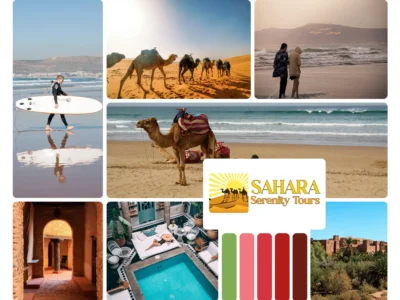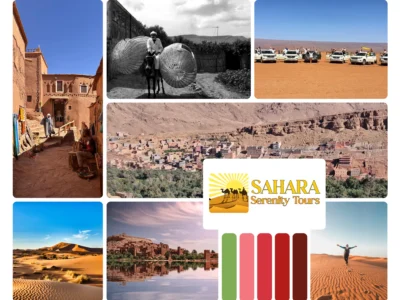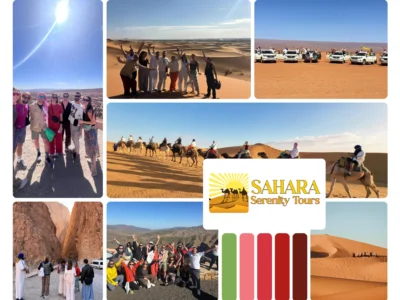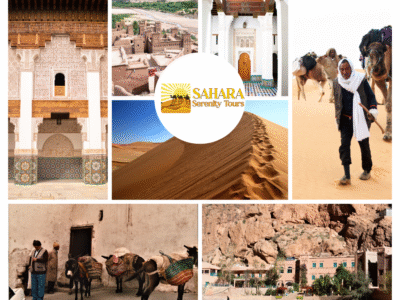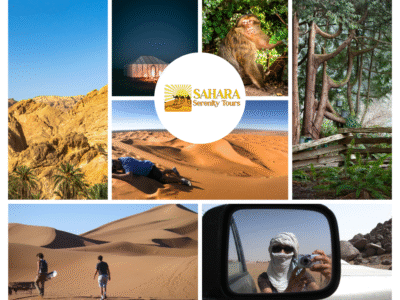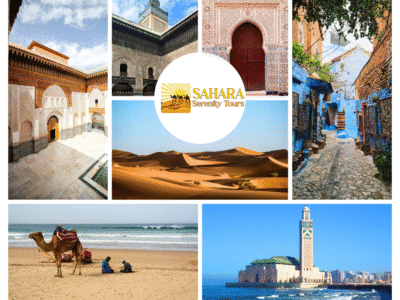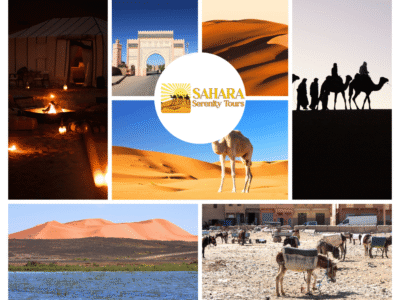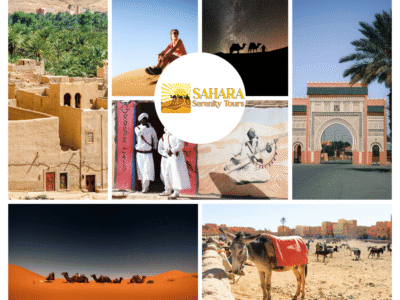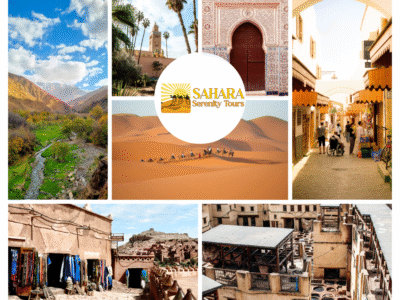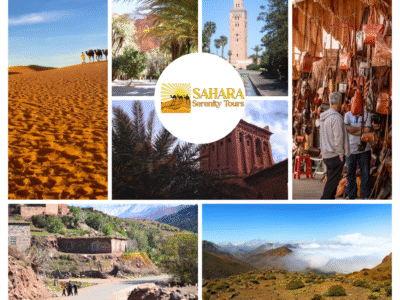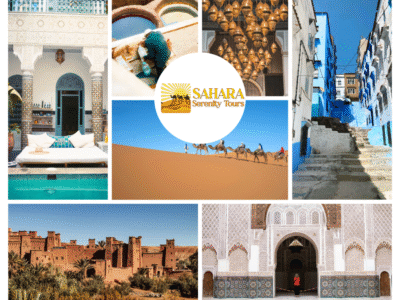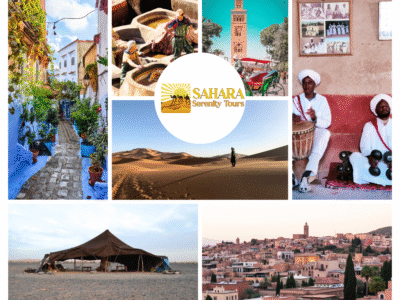
What is the best way to experience the Sahara desert in Morocco? For most travelers, it’s a guided multi-day trip to Merzouga and Erg Chebbi, with at least one overnight stay in a desert camp. That combination gives you the tallest, most photogenic dunes in the country, a sunrise camel trek, and a campfire under a star-packed sky, all without the logistics headache of navigating an unmarked desert piste on your own. For most first-time visitors, this formula is the one they won’t regret.
Erg Chigaga near M’Hamid is a genuine alternative for a specific kind of traveler: someone who prioritizes solitude and wilderness over convenience. We’ll cover that option too. By the end of this guide, you’ll have made five clear decisions: which region to visit, how to get there, what to do once you arrive, which camp tier fits your budget, and what to pack.
Key takeaways
- Merzouga wins for most travelers: Erg Chebbi’s 150-meter dunes are fully accessible by paved road and deliver the classic Sahara postcard with reliable infrastructure.
- Guided tours are recommended for most first-time visitors: A local driver handles navigation, terrain, and logistics so you focus on the experience, not the road. Self-driving can work for experienced road-trippers on paved approaches, but it comes with real trade-offs.
- One night is the minimum: Sunset, stars, and sunrise together form the core Sahara experience; a day trip misses two of the three.
- Plan at least 3 days from Marrakech: The drive to Merzouga is 9 to 10 hours; a proper itinerary accounts for the journey both ways.
- Budget options start around $30 per night, according to go2-morocco.com and citytoursmorocco.com. Camel rides and Berber music are commonly included across camp tiers; the upgrade buys comfort, not access.
- Spring and fall are the sweet spots: October, November, March, and April offer comfortable temperatures for trekking and camping.
Merzouga or Zagora: which Sahara region is worth your time?
This is the first decision, and it shapes everything else. Both Erg Chebbi and Erg Chigaga deliver a real Sahara experience. The landscape, logistics, and traveler profile differ sharply between the two.
Erg Chebbi at Merzouga: the classic desert postcard
Erg Chebbi’s dunes reach around 150 meters and rise directly beside the village of Merzouga, creating an immediately dramatic orange-gold sea of sand. The paved road runs all the way to Merzouga, so a standard rental car can make the drive, although your camp transfer may switch to a 4×4 for the final track. This region works best for first-time visitors, families, couples, and anyone who wants reliable infrastructure alongside a spectacular landscape.
Erg Chigaga near M’Hamid: space, silence, and serious remoteness
Erg Chigaga is a broader dune sea, roughly 35 to 40 km by 15 km, with lower rolling dunes around 40 to 60 meters set among gravel plains, tamarisk, and the dry Lake Iriki area. The paved road ends at M’Hamid; reaching the dunes requires an additional 1.5 to 3 hours on an unpaved 4×4 piste. This isn’t optional or improvised. It’s the only way in, and it rules out standard rental cars entirely.
How to make the call
From Marrakech, Merzouga is roughly 535 to 560 km and 9 to 10 hours of driving on paved roads, according to clevertourists.com and gateway2morocco.com. M’Hamid is about 445 to 460 km by road, 7.75 to 9 hours of driving, followed by the off-road leg to the dunes. Choose Erg Chebbi for towering dunes, easy access, and a full range of camps and activities. Choose Erg Chigaga if your primary goal is solitude, you accept harder logistics, and you’ve already explored Merzouga or want a wilder expedition feel.
What is the best way to experience the Sahara desert in Morocco? Start with these activities.
The Sahara isn’t just about arriving. What you do once you’re there determines whether the trip feels like a quick photo stop or something you’ll carry with you for years.
Camel trekking and sunrise dune walks
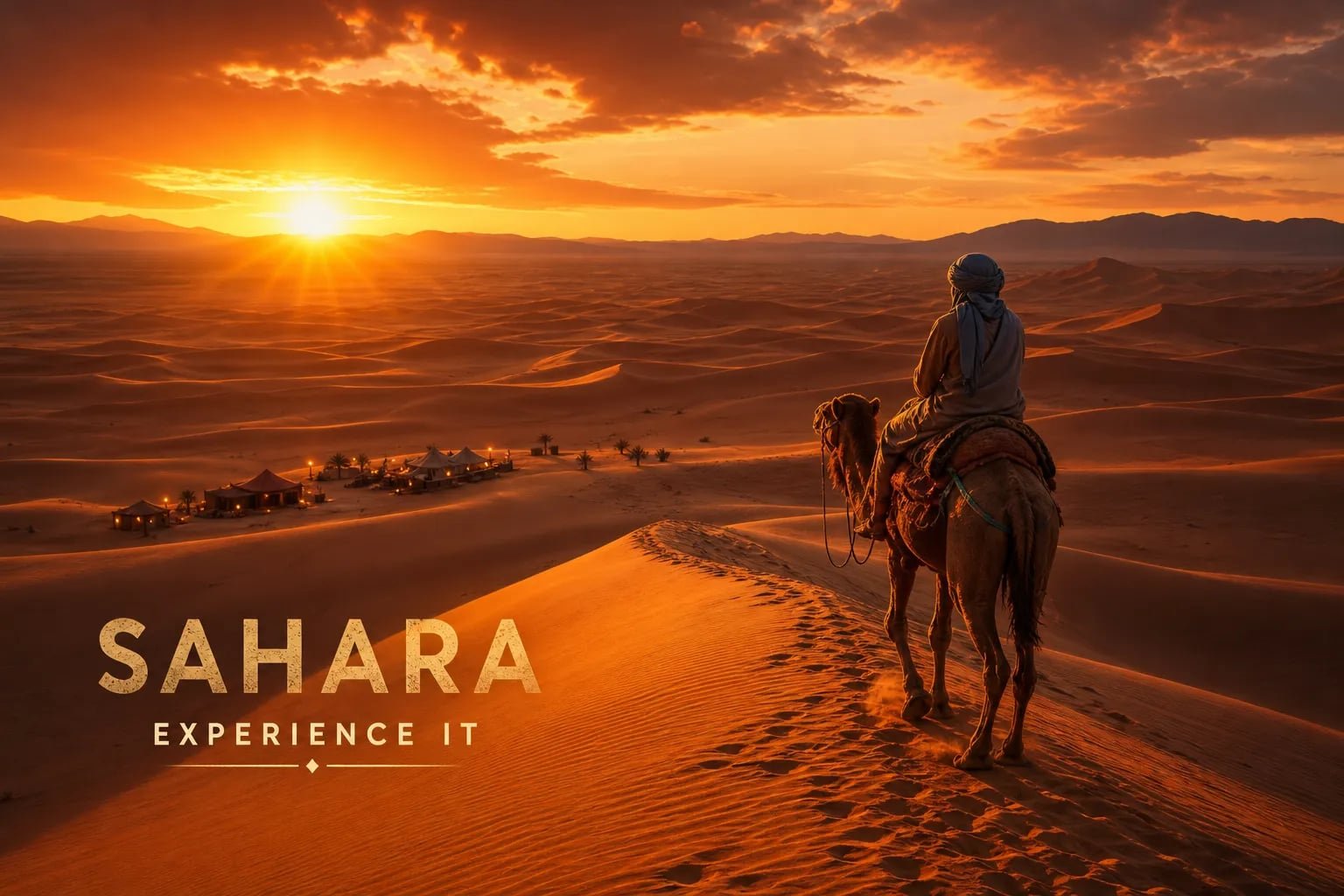
A sunset camel trek to camp followed by a sunrise walk up the dunes is the core experience, and the one most travelers remember longest. The trek itself takes about 60 to 90 minutes each way at a slow, steady pace, with dramatic low light and the crunch of sand underfoot. Most overnight packages include the camel ride; standalone arrangements run roughly 250 to 500 MAD per person, according to go2-morocco.com. The physical reality is gentle: uneven footing on sand, a slow rolling gait, and one of the better photo opportunities you’ll find anywhere.
Quad biking, sandboarding, and 4×4 desert excursions
For travelers who want more speed and adrenaline, the options are solid. Quad bikes run approximately 300 to 500 MAD per hour. Sandboarding boards are often supplied free by the camp; more structured sessions cost about 150 to 300 MAD, according to go2-morocco.com. 4×4 excursions into the wider dune field run roughly $50 to $150 depending on duration and stops, according to serenitymoroccotours.com.
Stargazing and Berber music around the campfire
Naked-eye stargazing at Erg Chebbi is free and remarkable. The area has almost no light pollution, and the Milky Way is clearly visible on clear nights. Guided telescope sessions are available at some camps for around $20 to $50, according to serenitymoroccotours.com. Amazigh (Berber) drumming and a communal dinner are commonly included with overnight stays across camp tiers; private performances are typically an additional cost.
Is it better to self-drive or book a guided Sahara tour?
This is where most travelers get stuck. Self-driving works in specific scenarios. Guided is better for most people, here’s the honest breakdown.
What self-driving to Merzouga actually involves
The approach to Merzouga is paved, so a confident driver with offline maps and a reliable car can handle it. The complication is the Tizi n’Tichka mountain pass at 2,260 meters: it’s winding, slow, and requires an early start. Rental car insurance typically excludes off-road damage, according to citytoursmorocco.com, which becomes a real problem once you’re on soft sand near a camp. Self-driving works for experienced road-trippers who are comfortable with long mountain drives and accept full responsibility for navigation and breakdowns.
Why a guided 4×4 tour is the smarter choice for most travelers
A local driver handles navigation, fuel planning, terrain, and logistics; you experience the landscape rather than managing it. For Erg Chigaga, a guided 4×4 isn’t optional, it’s the only practical approach to the dunes. Guided tours become cost-competitive once you factor in 4×4 rental, fuel, insurance gaps, and recovery gear, according to citytoursmorocco.com. Solo travelers, families, first-timers, and anyone on a tight schedule all benefit significantly from having a local expert at the wheel.
Why Sahara Serenity Tours is worth a serious look
Here at Sahara Serenity Tours, we’re a local Morocco-based tour operator with thousands of verified reviews averaging 4.7 out of 5 across multiple tours. Our itineraries are fully customizable and depart from Marrakech, Fes, Casablanca, Tangier, or Agadir, so you don’t have to build your trip around a fixed starting point. Pricing covers options from budget to luxury, with activity add-ons like quad biking and buggy tours available on request. English-speaking guides and private vehicle options are available.
Budget camp, mid-range, or luxury glamping: what are you paying for?
Camp tier affects comfort, not access. Camel rides and Berber music are commonly included across all three levels. Here’s what separates them.
Quad biking, 4×4 excursions, and telescope stargazing are usually add-ons regardless of which camp you book.
How many nights do you actually need in the Sahara?
One night is the minimum and enough for the core experience: sunset on the dunes, a campfire dinner with music, and a sunrise walk before the heat sets in. Two nights lets you explore the dune field more fully and relax into the rhythm of the desert without rushing back to a vehicle. The 9 to 10 hour drive from Marrakech makes a 1-night Sahara trip impractical as a round-trip in two days. Plan at minimum a 3-day itinerary for Merzouga, or use Fes as a closer starting point if time is tight.
What to pack for a Sahara overnight trip
The desert punishes vague preparation. Here’s what actually matters, skimping on the right gear can mean real discomfort from heat exhaustion or an unexpected cold night.
Clothing essentials for desert conditions
Wear loose, light, long-sleeved layers for daytime heat and wind protection. Desert nights are genuinely cold even in spring and fall: Erg Chebbi nighttime lows run 12 to 18°C in October and 6 to 12°C in November, according to merzougaway.com, and the temperature can drop roughly 20°C within a single evening. Bring a warm fleece or light insulated jacket regardless of the season. Choose closed shoes or hiking sandals for dune climbing; flip-flops are useless in soft sand. A headscarf or buff handles wind and blowing sand on the trek.
Gear and safety items that matter
- Sunscreen with SPF 50+ and UV-blocking sunglasses: the Sahara sun reflects off sand and hits harder than most travelers expect
- A minimum of 2 to 3 liters of water in a personal bottle; camps and guides supply more, but carry your own for the trek
- Offline maps downloaded before you lose signal
- A portable charger for your phone and camera
- Any prescription medication plus a basic first-aid kit for independent travelers
- A small daypack that fits over a camel saddle without unbalancing you on the ride
One non-negotiable from desert guides: carry a headlamp and shake out your shoes before putting them on in the morning. Scorpions are uncommon but real, and camp ground is uneven after dark.
What is the best way to experience the Sahara desert in Morocco? Here’s your answer.
The answer hasn’t changed: the best way to experience the Sahara desert in Morocco is a guided trip to Merzouga with at least one overnight in a desert camp. Guided beats self-drive for logistics, Merzouga beats Zagora for first-timers on dune drama and accessibility, and one night in the desert beats any day trip. Every major variable, camp tier, activities, number of nights, departure city, can flex to fit your budget and travel style.
Erg Chigaga is a worthy alternative for the right traveler: experienced, patient, and drawn more to solitude and space than to towering dunes or easy infrastructure. If that sounds like you, it’s worth adding a dedicated 4×4 leg to your itinerary.
Travelers who want a fully supported, customizable Sahara experience built around local expertise can reach out directly to our team at Sahara Serenity Tours.
Frequently Asked Questions
Can I drive a standard rental car all the way to Merzouga and the dunes?
Yes, a standard rental car can reach Merzouga because the paved road runs all the way to the village, but your final transfer to some camps may require a 4×4. We note that once you leave the paved approach, soft sand and off-road tracks can invalidate rental insurance, so reserve a 4×4 transfer if your camp sits beyond the final track.
How many days do we need if we’re starting from Marrakech?
Plan at least three days from Marrakech because the drive to Merzouga is 9 to 10 hours each way. We recommend a minimum one-night camp stay in the desert, but the round-trip travel time makes a single overnight impractical as a two-day round-trip.
Are camel rides and Berber music included with camp stays?
Yes, camel rides and Amazigh (Berber) drumming with a communal dinner are commonly included across budget, mid-range, and luxury camps. We add that private performances and activity add-ons like quad biking, 4×4 excursions, and telescope sessions are typically extra charges.
When is the best time of year to visit the Sahara for comfortable temperatures?
Visit in spring or fall, specifically March, April, October, or November, for the most comfortable trekking and camping temperatures. We also caution that nights can still be cold, so bring a warm fleece or light insulated jacket even in those shoulder seasons.