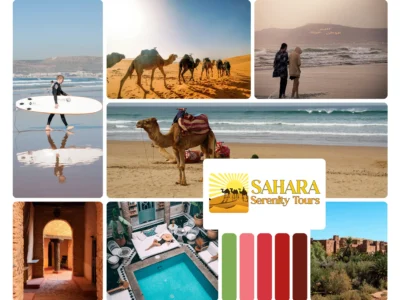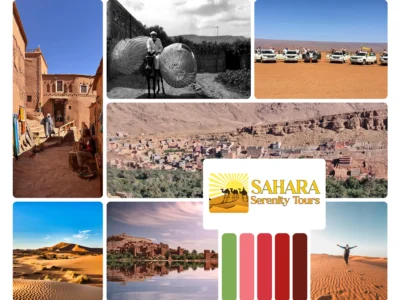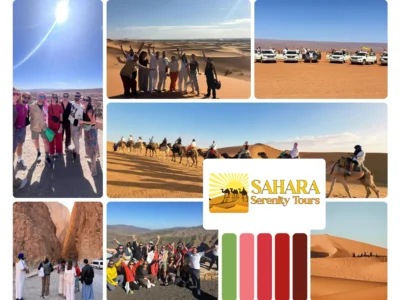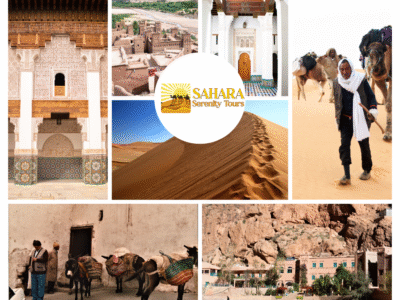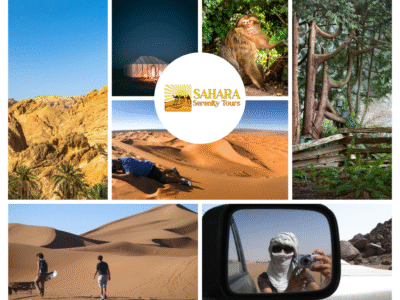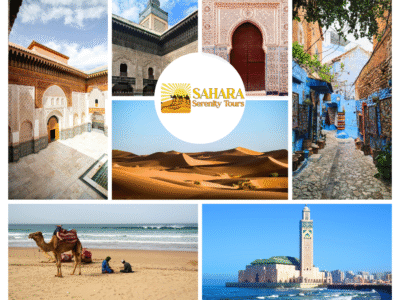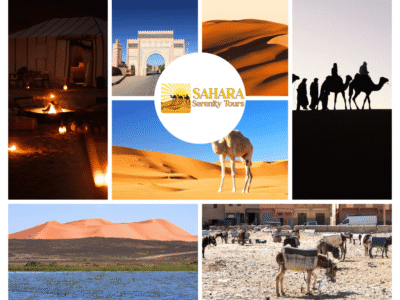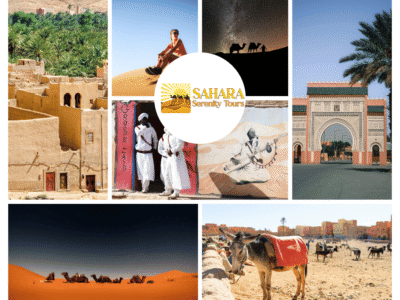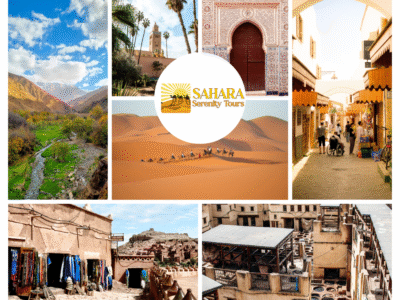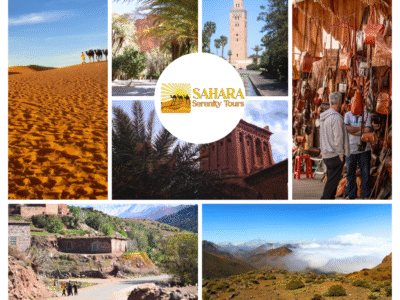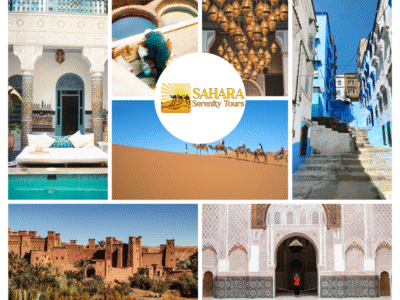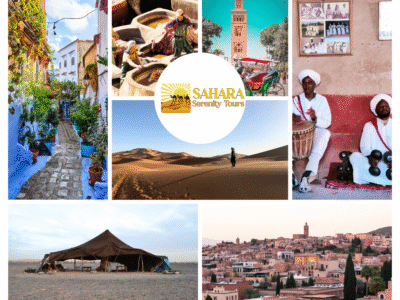
Many travelers book a Sahara desert tour for the camel photos and the sunset. There’s nothing wrong with that. Both are genuinely worth the trip. But something shifts when the person guiding you through the dunes didn’t just study the desert, they grew up in it. Choosing an expert Berber guide for Sahara Morocco tours is the difference between passing through a landscape and actually understanding it.
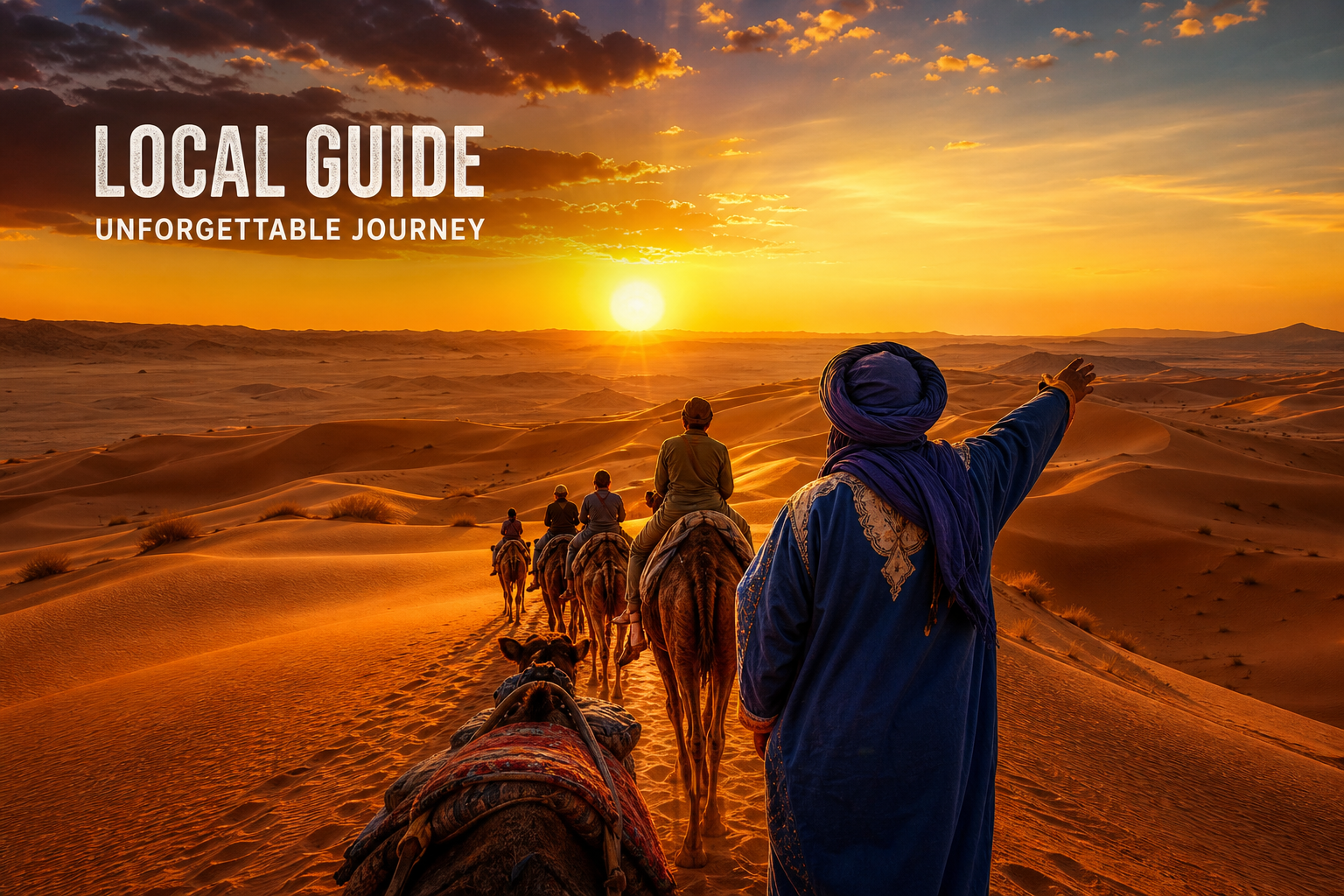
A Berber-guided Sahara tour isn’t an upgrade on a standard package. It’s a fundamentally different thing. Where a generic guide delivers a script, a Berber guide shares a living relationship with the land. That distinction sounds subtle until you’re standing in Erg Chebbi at dusk and your guide explains how shifting dune shadows and changing wind patterns inform route and camp decisions, the kind of reading that only comes from decades in the desert.
Some operators are built specifically around this depth of knowledge. Sahara Serenity Tours is a local Berber family operation whose guides grew up in the desert regions they lead travelers through, people whose families have moved through this landscape for generations, according to the company. That’s the kind of background that shapes how you experience everything from a morning camel trek to a conversation around the fire. This article unpacks what that actually means in practice: how to recognize genuine expertise, what to expect at a Berber-run desert camp, and how to book an expert Berber-guided Sahara Morocco tour with real confidence.
What an Expert Berber Guide Brings to Sahara Morocco Tours
Generational knowledge vs. memorized facts
A Berber guide isn’t reciting from a tourism handbook. They grew up watching weather patterns form over dunes, learning which routes flood in spring and which pass holds water in July. That kind of knowledge only comes from living in a place across decades, not from a training course taken before a season begins. For the traveler, it translates to a constantly layered experience: every stop carries context that a printed itinerary simply can’t hold.
This matters more than people expect. A route that looks identical on a map can feel completely different depending on who’s reading the landscape around you. A guide who grew up here notices things that are invisible to someone who arrived six months ago, subtle shifts in terrain, seasonal wind cues, and ecological details that transform a scenic drive into genuine education.
The difference between explaining a landscape and reading it
Most standard guides explain what you’re looking at. An expert Berber desert guide interprets it. They notice which dunes shifted since last month, what the wind direction means for the afternoon, and where the desert will look most alive at exactly this hour of the year. That attentiveness is what turns a Sahara desert tour into something personal rather than scenic.
For travelers who want to come away from Morocco with more than photos, this is the layer of experience that actually delivers. The difference isn’t in the scenery, it’s in how much of it you actually grasp while you’re standing there.
How Berber Guides Understand Desert Ecology
The Sahara as a living system, not a backdrop
The Sahara is not empty. A Berber desert guide who grew up here knows the plant species that signal underground water, the location of khettara irrigation channels that reveal how ancient communities survived without rivers, and the nocturnal animals that surface well after midnight. They point these things out not because they’re on a checklist, but because they genuinely find them remarkable. That enthusiasm is contagious, and it reframes the entire landscape for you.
Geological formations that look like abstract scenery to a first-time visitor become a 200-million-year story when someone explains what they’re reading. Palm valleys, oasis corridors, cultivated plots at the desert edge: a Berber guide sees the logic of where life is and where it isn’t, and they share that logic as naturally as conversation.
Desert navigation and seasonal awareness
Before GPS, Berbers navigated by wind texture, dune shape, and star position. Many experienced guides still carry this knowledge instinctively, not as a party trick but as a practical inheritance from the people who taught them the desert. On a Berber-led Sahara trek, you’re not just following a path. You’re learning how a landscape is read.
Stargazing and Tribal History: What Gets Shared Around the Fire
Stars as a Berber cultural inheritance
At Erg Chebbi, away from city light, the sky on a clear night is genuinely staggering. A Berber guide doesn’t just point at constellations. They connect them to oral history, to navigation traditions, and to the seasonal rhythms that structured nomadic life for centuries. Orion, known in Amazigh tradition as Amanar (“the guide”), was used for direction and timekeeping across the desert. The Pleiades, called Tallit, marked harvest seasons, while the Milky Way, the path of straw, oriented travelers through the dark. The names and stories carried for these formations aren’t in any astronomy app.
Tribal history told from the inside
Amazigh (Berber) presence in North Africa long predates the medieval Arab conquests. A guide from a family rooted in the desert carries that lineage firsthand, not as a recited summary but as something closer to lived memory. Around the fire, after dinner, when the group quiets down, this is when the real storytelling begins: accounts of trade routes, seasonal migrations, and alliances between tribal groups that textbooks flatten into footnotes. This is what an authentic Morocco Berber private tour can offer that a generic Sahara package simply cannot replicate.
What Berber Hospitality Actually Looks and Feels Like in the Desert
Food, tea, and the rhythm of desert camp life
Expect generous meals. A Berber-run desert camp in the Merzouga area typically serves dinner and breakfast: bread, olive oil, salads, a slow-cooked tagine or skewered meat, fresh fruit, and tea served multiple times. The pace is deliberate. Dinner isn’t rushed toward the next activity. You’re expected to sit, eat slowly, and talk. For travelers accustomed to itinerary-driven tourism, this rhythm takes some adjustment, and then becomes the part they remember most.
Sleeping arrangements are usually Berber-style tents with bedding or mattresses inside, and on clear nights some guests prefer to sleep outside near the tents entirely. Hygiene is functional rather than luxurious at most camps: basic toilets, limited showers, but organized and hospitable. The better operators are transparent about this upfront, which is itself a green flag.
Evening culture: music, fire, and what actually happens
Most camps organize an evening around a fire with drumming, singing, and cushions on the sand. At smaller, locally-run camps, the music feels informal and real rather than performed for tourists. A Berber guide translates what’s being sung, explains the instrument, and invites participation in a way that feels earned rather than choreographed. This is the version of a Sahara camel trek that travelers consistently describe as life-changing, not because anything dramatic happened, but because nothing felt staged.
How to Tell a Genuine Expert Berber Guide from a Tourist-Facing Performance
Green flags that signal real expertise
Look for guides or operators who can demonstrate an official Moroccan Ministry of Tourism license number. Desert guides in Morocco fall under the specialized natural-spaces guide category, which requires passing both written and oral examinations. Reputable operators share this information without being asked. Beyond licensing, look for specific evidence of local origin: guides who speak Tamazight, have family still living in the region, and can answer granular questions about desert ecology, routes, and tribal history without hesitation.
Strong independent reviews across platforms like TripAdvisor matter far more than testimonials on a company’s own website. A consistent track record of 15 to 20 or more years in desert guiding is a meaningful signal as well. Look for specificity in reviews: travelers who describe particular moments, conversations, or details are usually reporting something real.
Red flags that suggest a generic operator
The most commonly cited complaint in traveler reviews of Sahara desert tours is unsolicited stops at carpet shops or souvenir stalls. Watch for this in reviews and ask operators directly whether their itinerary includes commission-based retail stops. Vague language about what’s included, requests for large upfront cash payments, and camp descriptions that oversell comfort are all warning signs. If an operator can’t clearly answer questions about pricing, inclusions, and camp hygiene standards before you book, move on.
- Tours that promise “luxury” camps but won’t share photos or specific descriptions
- Guides who don’t speak the language promised in the listing
- Operators who are vague about how deposits are handled or who request unusual payment arrangements
Practical Costs, What to Expect, and How to Book with Confidence
Typical pricing for 3- and 4-day tours from Marrakech
Private Berber-guided Sahara tours from Marrakech to Erg Chebbi generally run between $300 and $1,360 per adult, depending on group size, duration, and accommodation level, based on listings across major tour platforms. A 3-day private tour typically starts around $300 per person, with upper ranges varying based on accommodation tier and group size. A 4-day private package often lands between $500 and $1,360. Most tours include private air-conditioned transport, overnight accommodation at a desert camp, a camel trek into the dunes, and dinner and breakfast. Lunches, drinks, tips, and optional activities like sandboarding are usually excluded, so confirm these specifics before you pay.
The drive from Marrakech to Erg Chebbi covers roughly 560 kilometers and takes around 8 to 10 hours by road, which is why most itineraries are structured across 3 days minimum. Zagora is closer at around 360 kilometers, but Erg Chebbi offers the most developed Berber-led desert experience among the main options. Most travelers who’ve made the longer journey report that the extra time is worth it for the depth of experience.
Why booking directly with a Berber family operator matters
Sahara Serenity Tours is a local Berber family operation offering Morocco Berber private tours with departures from Marrakech, Fes, Casablanca, and several other major cities, with customizable itineraries ranging from 2-day escapes to 17-day full Morocco journeys. Because the company operates as a family-rooted business rather than a reseller or international aggregator, the guides are the people who built the business, not contractors hired for the season. For travelers planning a Marrakech to Erg Chebbi tour who want the cultural depth described in this article, booking directly with a family-based Berber operator is the most reliable path. The logistics are simpler, the knowledge runs deeper, and the experience is more consistent.
The Trip That Actually Stays with You
The Sahara is large enough to absorb any kind of visit. You can pass through it and come home with good photos. Or you can travel with someone who carries the desert as part of their identity and come home with something harder to explain: a sense of having actually been somewhere, rather than having passed through it.
A genuine expert Berber-guided Sahara Morocco tour isn’t about a premium upgrade or an exclusive price point. It’s about choosing a guide whose knowledge of the desert runs deeper than a route map. The practical checklist matters: verify the license, read independent reviews, confirm inclusions before you pay, and ask directly about any shopping stops in the itinerary.
But the more important question is simpler. Does this guide know this desert? Not from a training course, from a life. If the answer is yes, the rest of the trip tends to take care of itself.