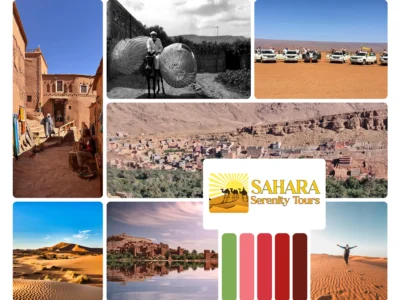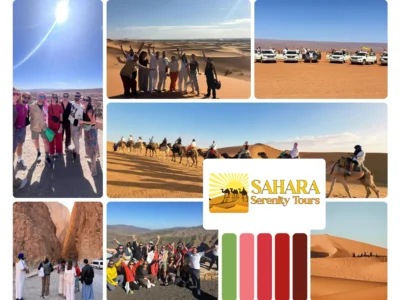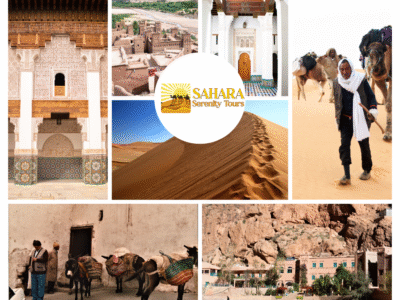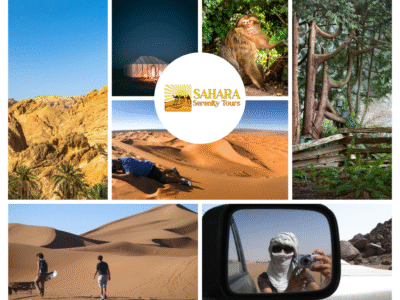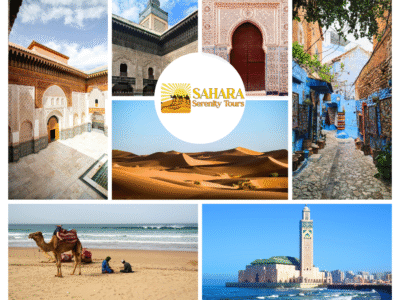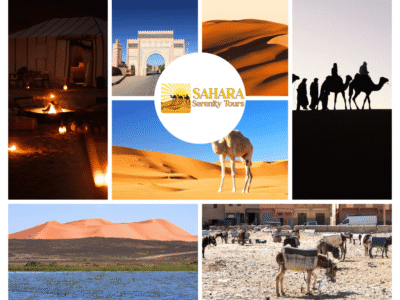
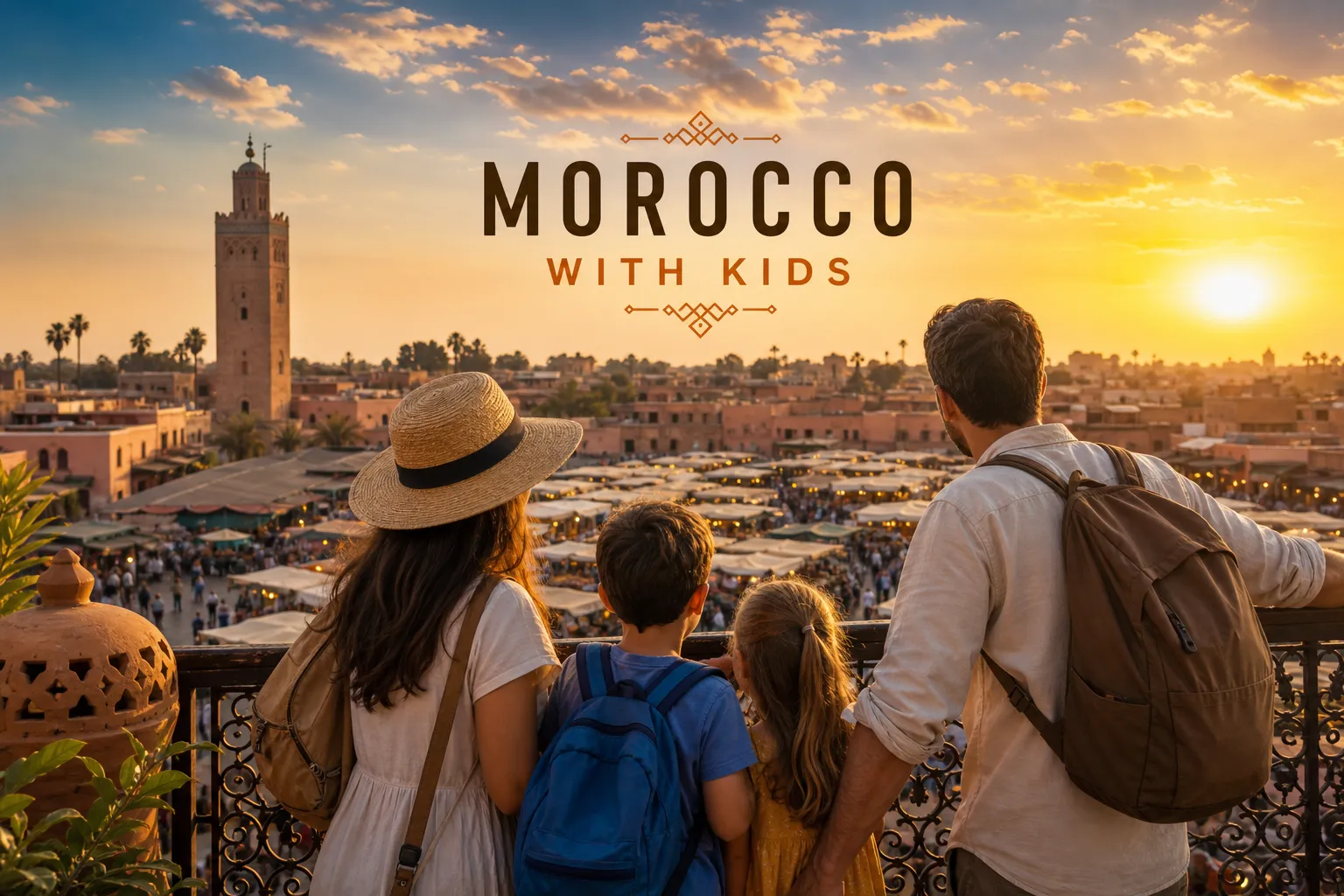
Picture this: your child is perched on top of a camel, eyes wide, watching the sun drop behind the sand dunes of Erg Chebbi. The sky turns amber, then rose, then deep purple. No one is looking at a screen. No one is asking “are we there yet?” They’re completely, utterly present. That’s the kind of moment a morocco tour with kids can deliver, and it’s the kind families keep telling stories about long after they’ve landed back home.
Many American parents cross Morocco off their list before they ever seriously consider it. Too unpredictable. Too far outside the comfort zone. Too complicated with kids in tow. That assumption is wrong, and this guide is here to correct it with specifics. You’ll find everything you need to plan a confident family trip: safety and entry requirements for 2026, how to pick the right tour format, where to stay with children, complete 7-day and 10-day itineraries, kid-friendly activities by destination, and a practical packing breakdown. The right planning, and the right local partner, turns Morocco into one of the most rewarding family trips you’ll ever take.
Why Morocco is one of the best family destinations right now
Morocco punches well above its weight as a family travel destination. It’s geographically compact, reachable from the U.S. East Coast without brutal jet lag, and it offers a density of genuine, hands-on experiences that’s hard to match with a typical European city break. You’re not walking your kids through another cathedral or standing in line to see another famous painting. You’re showing them how the world actually looks when it’s different from everything they know.
The experiences that kids genuinely remember
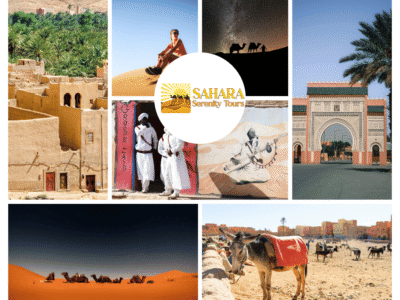
Think past “it’s beautiful.” The moments that stick are tactile and specific. Mounting a camel at golden hour in the Sahara. Walking through the thousand-year-old alleys of a medina and watching a craftsman beat copper into shape by hand. Spotting a chameleon clinging to a roadside shrub in the Draa Valley. Stepping inside Aït Benhaddou, the UNESCO-listed kasbah that appears in more films than your kids will recognize, and hearing the stories behind its mud-brick towers. These are not experiences children file away and forget. They’re the kind that come up at dinner tables for years.
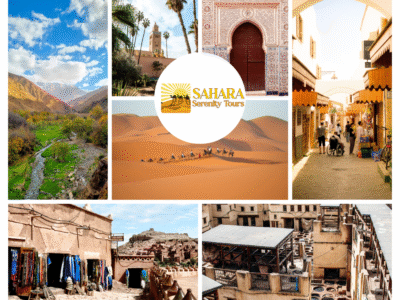
Erg Chebbi, the High Atlas Mountains, Jemaa el-Fna, the Todra Gorge: every stop on a well-planned Morocco itinerary with kids delivers a visual and sensory payoff that feels earned. That’s the emotional case for Morocco with kids. The practical case is equally strong.
How Morocco compares to other international family destinations
American families often benchmark Morocco against Southeast Asia when they’re thinking “exotic.” Morocco wins on almost every practical point. The time difference from the U.S. East Coast is just five hours, which means kids typically adjust within a day or two rather than a full week. The geography is compact: a loop from Marrakech through the Atlas Mountains and the Sahara and back covers the country’s greatest highlights without ever requiring a domestic flight. A 7-to-10-day American vacation window fits Morocco beautifully, more than you can say for a meaningful trip through Southeast Asia.
Flight connections from major U.S. hubs into Marrakech or Casablanca have expanded in recent years, and Morocco’s tourism infrastructure has kept pace. According to the Moroccan Ministry of Tourism, the country welcomed over 14 million international visitors in 2023, and the riads, camps, and guides that serve them are well-practiced at handling families with real needs.
Planning a Morocco tour with kids: safety, health, and entry basics for 2026
This is the section most parents scroll to first, so let’s address it directly. Morocco is manageable, safe, and genuinely family-friendly when you travel with good planning and a reputable local operator. That said, there are real things you need to know before you go.
Current U.S. State Department travel advisory
Morocco sits at Level 2: Exercise Increased Caution, the same designation that covers France, Germany, and roughly half of Western Europe. The primary concerns are terrorism awareness and urban crime in crowded areas, not active conflict or widespread instability. Specifically, the State Department flags pickpocketing in busy medinas, large crowd situations, and the general terrorism awareness that applies across North Africa and Europe alike. Road safety is also noted, as traffic patterns in Morocco differ significantly from U.S. standards.
A guided, private family tour can address many of these concerns directly. A local guide who knows the medina layout, the safe rest stops, and the family-friendly routes removes the situations where inexperienced tourists run into trouble. Families traveling with a structured, locally led tour experience a very different Morocco from independent backpackers navigating it alone.
Health, food safety, and vaccines for children
The most common health issue for families in Morocco is travelers’ diarrhea, and the main cause is tap water. Tap water is not reliably safe for drinking across Morocco, so bottled water is the standard throughout the trip, including for brushing teeth. Pack oral rehydration salts for each child; they’re lightweight and genuinely useful if anyone gets an upset stomach. Know the location of the nearest clinic or hospital in each city before you arrive, as emergency services may not match U.S. standards.
The CDC advises that routine vaccines be up to date for all travelers, and Hepatitis A is commonly recommended for Morocco. MMR coverage matters: children 12 months and older should have two doses before travel, and infants 6 to 11 months should receive an early dose. Consult your pediatrician at least six to eight weeks before departure to confirm what’s recommended for your children’s specific ages and health history.
Passport and entry requirements for U.S. families
U.S. passport holders generally enter Morocco without a visa for standard tourist stays. Every family member, including infants and children, needs their own valid passport with at least six months of validity remaining from the date of entry and at least one blank page. Confirm the exact entry requirements for your specific trip length before booking, as rules can change. If a child is traveling without one parent, it’s commonly recommended to prepare a notarized parental consent letter in advance; check with your airline and relevant border authorities for current guidance, as this simple step can eliminate a potential complication at the border.
How to choose the right Morocco tour with kids
This decision shapes the entire trip. Get it right, and the logistics disappear into the background. Get it wrong, and you spend your vacation managing the logistics instead of enjoying the destination. If you want more background on routes and seasonal timing, consult our Morocco travel guide.
Private tours versus small-group tours: what actually works with kids
Large bus tours are not built for families with young children. The schedule is fixed, bathroom stops come when the itinerary allows rather than when your 5-year-old announces an emergency, and the pace is calibrated for the average adult traveler. You’ll spend more time managing your children around the tour’s constraints than actually experiencing Morocco.
Small-group tours capped at around 10 travelers offer a solid middle ground: shared transport keeps costs reasonable, the group is small enough to feel human, and there’s still some flexibility in daily timing. Private tours go one step further. With a private vehicle and a dedicated guide, the schedule bends around your family rather than the reverse. If your child needs a rest afternoon, you take one. If someone is under the weather on Day 3, you adjust. That kind of flexibility has an outsized impact on a trip with kids, especially young ones.
Why Sahara Serenity Tours works well for families
Sahara Serenity Tours is a Morocco-based operator staffed by local guides with genuine, on-the-ground knowledge of the country. They offer both small-group tours and fully private family itineraries departing from any Moroccan city. See Sahara Serenity’s family-friendly tours in Morocco for sample itineraries and how they adapt routes for children.
For families, the private option delivers a dedicated vehicle, a guide who already knows which riads are genuinely child-friendly and where the clean rest stops are, and a daily schedule that adapts to your children’s energy levels rather than ignoring them.
Their itineraries span a range of lengths, from a focused short desert route to a full two-week country journey, which means there’s a format that fits both the 7-day and 10-day family trip structures covered in this guide. Because the team is local rather than a foreign agency reselling third-party packages, the cultural context they provide is specific, personal, and the kind that keeps older kids genuinely engaged. That’s a meaningful difference on a family trip.
Key questions to ask any operator before booking
Before confirming any booking, get clear answers to the following: Does the vehicle accommodate child car seats, or can you bring your own? What is the maximum group size? Can the daily schedule be adjusted for rest days if a child needs it? Does the guide speak conversational English well enough to keep older kids engaged with stories and cultural context? Are the accommodations on the itinerary already vetted for families with young children, or will you need to confirm child policies separately?
Where to stay: riads, hotels, and desert camps that actually welcome families
Accommodation is one of the most frequently overlooked stressors in Morocco family planning. Many traditional riads have age restrictions or simply aren’t configured for small children, and that surprises most first-time visitors. Here’s what you need to know before you book.
Family-friendly riads in Marrakech
Not every Marrakech riad accepts children, and some that do aren’t set up to handle them comfortably. The ones that tend to be well-suited for families include Riad Africa, which offers triple and quad rooms, cots, high chairs, and no typical age restrictions; Riad Palais Calipau, which has a traditional family suite sleeping two adults and two children; Riad Les Hibiscus, which provides cots on request and a welcoming atmosphere for young children; and Riad Zehar and Spa, which features interconnecting rooms with separate bathrooms and accepts children of all ages. For families who want a garden and a proper swimming pool, Les Jardins de la Medina accepts children aged 4 and over.
Always confirm the child policy directly when booking. Riad policies shift, and what was accurate when someone last reviewed a property may not reflect the current situation. A quick email before you finalize is worth the two minutes it takes.
Desert camps that work for families in Merzouga
A desert camp night at Erg Chebbi is one of the clearest arguments for bringing your kids to Morocco. The experience varies enormously by camp, though. For families, look specifically for camps that offer private tent configurations sleeping three or four people, proper bedding appropriate for children, a bathroom setup that doesn’t require a midnight walk through the dunes, and meals with simple, child-friendly options alongside the traditional tagine spread.
The most reliable path to a good camp experience is booking through an operator whose local guides have already vetted the camps on the family itinerary. A camp recommended by a guide who knows the difference between family-appropriate and not is consistently a step above what you’d find booking cold through a generic listing site. Your operator should be able to tell you specifically which family configuration the camp provides before you arrive.
What to prioritize in each destination
In Marrakech, prioritize a central riad with a small pool or courtyard where children can decompress after a busy morning. In Atlas Mountain stops, look for guesthouses with outdoor space and views rather than four-star properties that add cost without adding anything relevant for kids. In Merzouga, a private or semi-private desert camp configuration matters more than star ratings. In road-trip towns like Ouarzazate or the Dades Valley, clean reliable hot water and enough room for bags to spread out is all you need. For toddlers and children under 5, keeping accommodations consistently comfortable is more important than anything else on the itinerary.
Kid-friendly Morocco tour activities across the main stops
Morocco’s best destinations deliver well for families, but the activities that work depend on the ages you’re traveling with. Here’s what actually holds up across the main stops on a family itinerary.
Marrakech: the activities that hold up across age groups
Marrakech at full, unstructured speed is genuinely overwhelming for adults, let alone children. Approached with a plan, it’s one of the most engaging cities in the world for a curious kid. Jardin Majorelle is manageable, visually striking, and short enough to hold anyone’s attention. The Oasiria waterpark is the best mid-trip energy reset available in the city, and it works for a wide age range. Ludipark is aimed specifically at younger children, with pony rides, a mini zoo, and bouncy inflatables. For kids 8 and older, a guided souk scavenger hunt turns the chaotic medina lanes into a game.
Hot-air balloon rides over the Palmeraie are available from age 5 and are often cited by families as among the most memorable moments of the entire trip. Café Clock’s family storytelling and music evenings are worth booking in advance, especially for families with children who enjoy performance and storytelling alongside dinner.
The Atlas Mountains and Aït Benhaddou
The drive over the Tizi n’Tichka pass is dramatic enough to impress even teenagers who don’t impress easily. A stop at Imlil for an easy walk and a mint tea lunch with a local Berber family delivers more genuine cultural education than most museum visits your kids will ever take. Aït Benhaddou rewards children with its maze-like kasbah alleyways and the legitimate bragging rights of visiting a location used in dozens of major film productions. The terrain is photogenic and walkable, and the stories a good guide tells here tend to stick.
Todra Gorge is an excellent family stop further along the route. The canyon walls are genuinely jaw-dropping, the terrain at the base is flat enough for a stroller or a tired 4-year-old on foot, and the scale of the place creates a natural wow moment that no screen recreation comes close to matching.
The Sahara: camel rides, sandboarding, and the night sky
The Sahara is the centerpiece of any Morocco tour with kids, and it earns that position. A camel ride into the dunes at dusk runs about an hour for most family itineraries, long enough to feel like a real adventure and short enough that younger children stay excited rather than sore. Most operators find that children 7 and up handle the longer Merzouga treks comfortably; younger children can often join shorter rides based on their individual comfort, and a good operator will assess this honestly rather than simply selling you the experience.
Sandboarding down the erg works for children from about age 5 upward and requires no skill, only enthusiasm. The true, unforgettable moment, though, is the night sky. In the Sahara, completely removed from any light pollution, the Milky Way is visible with the naked eye in full detail. Families frequently cite this as the memory they carry home above all others. It costs nothing extra and requires nothing but clear skies and staying awake past sunset.
The 7-day Morocco family itinerary: when vacation time is tight
Seven days is enough to do Morocco justice if you focus on a logical, efficient loop rather than trying to cover every city. The most family-tested route runs Marrakech through the High Atlas to the Sahara and back, keeps driving days manageable, and delivers all three of the country’s headline experiences. For a broader overview, consult our Best Vacation In Morocco Guide : Epic Wonders, Magic Deserts.
Days 1 and 2: Marrakech
Day 1 is arrival and gentle orientation. Settle into the riad, walk the edges of Jemaa el-Fna in the late afternoon at a pace that lets children absorb rather than rush, and eat dinner without any agenda. The real Marrakech day is Day 2: Jardin Majorelle in the morning before the crowds arrive, a guided souk walk in the early afternoon, and the Oasiria waterpark or Ludipark for younger children in the late afternoon. Keep both city days relaxed because the longer drives come next.
Days 3 and 4: High Atlas and Aït Benhaddou
Day 3 crosses the Tizi n’Tichka pass and overnights near Ouarzazate after a stop at Aït Benhaddou. From there, Day 4 moves through the Roses Valley and the Dades Gorge for a scenic break from driving, with an overnight in Boumalne Dades. These two days include the longest driving segments of the trip, averaging about four to five hours per day. A comfortable private vehicle with proper seating and the ability to stop when you want makes the difference between these drives feeling like part of the adventure and feeling like a test of endurance.
Days 5, 6, and 7: Sahara and return to Marrakech
Day 5 reaches Merzouga for the late-afternoon camel ride and overnight desert camp. The next day begins the return journey west, with a proper midpoint rest stop built in rather than treating it as a pure transfer day. Day 7 returns to Marrakech with enough time for a final souk browse, a family hammam, or a cooking class before a next-morning departure. If time allows, the Draa Valley offers a scenic road alternative on the return that rewards families who take it.
The 10-day Morocco family itinerary: the better choice for young children
Ten days is the recommended format for families traveling with children under 8, and honestly for any family that wants to absorb what they’re seeing rather than race through it. The extra days don’t mean more destinations. They mean fewer rushed mornings, a second night in the Sahara, and enough breathing room to let each place land before moving on.
Days 1 through 3: two nights in Marrakech plus an Atlas day trip
Two full days in Marrakech removes the first-day fatigue and lets you spread activities comfortably across two relaxed mornings rather than cramming them into one. Day 3 works well as a day trip toward the foothills of the Atlas, visiting Imlil or the Agafay Desert for a gentler preview of what’s coming before the longer southern journey begins. This structure also builds in a natural buffer if anyone arrives jet-lagged or under the weather.
Days 4 through 8: Atlas, gorges, and the Sahara at a true family pace
Day 4 takes the Tizi n’Tichka route and overnights near Ouarzazate. Aït Benhaddou gets proper time on Day 5, allowing the family to explore at walking pace with a guide rather than on a rushed schedule. The pace slows further on Day 6 in the Dades Valley and Todra Gorge, with a picnic lunch and an afternoon with no fixed agenda. Merzouga arrives on Day 7 for the camel ride and camp night. Day 8 is a full second Sahara day: a morning dune walk, the inevitable sand collection, and a 4×4 excursion into the erg before heading northwest in the late afternoon.
Days 9 and 10: return journey and final Marrakech day
Day 9 breaks the return drive with an overnight in Ouarzazate or the Draa Valley rather than pushing all the way back to Marrakech in a single go. Day 10 returns to Marrakech for a proper final day: the Majorelle gardens, a family cooking class, or simply sitting in a riad courtyard with mint tea before a next-morning flight. The extra buffer day also functions as insurance for delays, illness, or a child who simply refuses to leave the desert. You’ll be glad you have it either way.
Packing smart and keeping the trip running smoothly
Good logistics on a Morocco family trip aren’t complicated. They just require a bit of forethought, especially around the desert segment where physical conditions demand more preparation than a typical city trip.
What to pack for the Sahara with children
Desert heat is the biggest physical challenge for kids in the Sahara. Loose, lightweight long sleeves protect better than sunscreen alone and hold up through a full day of outdoor activity. A wide-brim hat for each child is non-negotiable. Pack more socks than you think you need, sand gets into everything, and bring a headlamp for each child for the camp at night. Bottled water capacity is critical: plan for at least 2 liters per person per day in the desert, and significantly more in summer months when Sahara temperatures regularly top 100°F.
A small daypack that older children can carry themselves adds a practical benefit: it builds ownership and reduces the load parents are managing. Keep the contents simple: a water bottle, a snack, a headlamp, sunscreen, and whatever comfort item matters most to that child. They’ll wear it without complaint.
Health kit and day-to-day family logistics
Build a solid travel health kit and keep it in your carry-on, not checked luggage. Include oral rehydration salts, age-appropriate anti-diarrheal medication, a fever reducer, antihistamines, bandages, and all prescription medications in their original labeled containers. Know the location of the nearest clinic in each destination city before you need it.
For long driving days, agree on an audiobook, podcast, or downloaded playlist before you get in the car, not after boredom sets in an hour into a four-hour drive. Build at least one unplanned afternoon every three days as a reset. The itinerary will survive the adjustment, and your children will be noticeably easier to travel with because of it. Traveling with kids doesn’t require a rigid schedule; it requires a flexible one with enough breathing room to absorb the unexpected moments that turn out to be the best ones.
Ready to plan your family’s Morocco adventure?
A Morocco tour with kids isn’t a gamble. It’s one of the most rewarding international trips a family can take when it’s built around the right pace, the right accommodations, and a guide who actually knows the country. The memories your children carry home from the Sahara, the medinas, and the Atlas Mountains are the kind that shape how they see the world.
The difference between a stressful Morocco trip and an unforgettable one almost always comes down to one factor: whether someone local is handling the logistics for you. When the driving, the accommodation choices, the daily schedule, and the cultural context are in the hands of a team that lives and works in Morocco year-round, you get to be a parent on vacation instead of a travel manager. That’s exactly what Sahara Serenity Tours is built to provide, whether your family needs a focused 7-day desert loop or a relaxed 10-day country journey at a pace that respects your children’s energy levels.
Ready to book a Morocco tour with kids? Reach out to Sahara Serenity Tours to start planning a customized Morocco family itinerary. Tell them your children’s ages, how many days you have, and what matters most to your family, and they’ll handle everything from there.