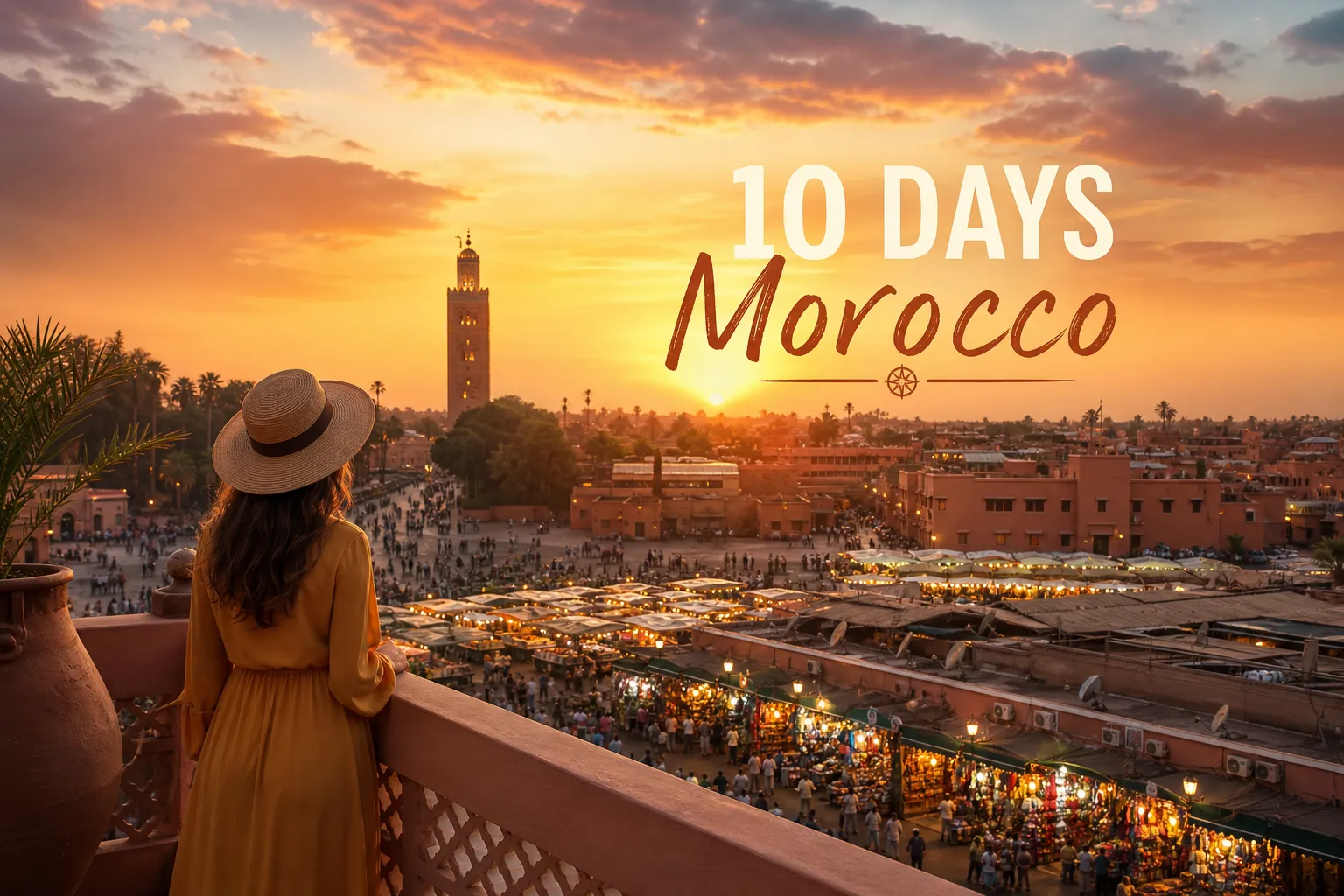
What is the best 10-day Morocco itinerary for first-timers? If that question has been haunting your browser history, this guide gives you a direct answer: a clockwise Casablanca, Marrakech, Sahara, Fes loop that covers the country’s essential highlights without a single wasted day. Morocco is genuinely spectacular, but it can tip quickly into overwhelming. The country fits imperial cities, Sahara dunes, UNESCO kasbahs, and Atlantic coastline into an area comparable in size to California, and every travel forum pushes a different starting point. Many first-time visitors end up overscheduling themselves into exhaustion, or spend weeks planning only to piece together a route that doesn’t quite flow.
A well-structured 10-day Morocco itinerary solves that problem. This first-time Morocco travel plan follows a logical progression: fly into Casablanca, move south to Marrakech, cross the High Atlas into the Sahara, then work north through the ancient city of Fes before heading home. Some travelers prefer to build every piece themselves. Others hand the full logistics to a specialist like Sahara Serenity Tours, whose ready-made 10-day package mirrors this exact route with English-speaking guides, private transfers, and flexible departure cities. Either way, this guide gives you the full picture.
Why this 10-day Morocco route works for first-timers
The clockwise circuit that ties it all together
The logic behind this Morocco 10-day route is straightforward: it avoids backtracking, keeps each driving day manageable, and layers experiences in a natural progression from city to desert to ancient medina. Flying in and out of Casablanca while looping through the south means you never retrace the same road twice. Compare that to itineraries that try to squeeze in Chefchaouen, Essaouira, and the Sahara in 10 days, those routes typically involve long drives on consecutive days, leaving travelers too tired to enjoy where they’ve arrived.
How the pacing protects first-timers from burning out
The most common mistake on a first Morocco trip is underestimating how much each place takes out of you. This itinerary builds in a minimum of two nights per major stop and puts the most demanding logistical segment, the desert crossing, in the middle of the trip when energy levels are highest, with Day 9 left intentionally flexible. Even split across two days, the drive from Marrakech to Merzouga totals roughly 10, 12 hours of road time including typical sightseeing stops along the way. Treating it as a half-day detour is a reliable way to arrive in the Sahara exhausted and miss the best parts.
What booking this as a package actually looks like
For travelers who don’t want to manage seven or more individual bookings across 10 days, Sahara Serenity Tours offers an end-to-end 10-day Morocco package that covers every stop in this guide. Private transfers between cities, an overnight desert camp, and an English-speaking guide are included, with the option to start from Casablanca or Marrakech depending on your flight. It’s a straightforward alternative to independently booking riads, drivers, desert camps, and guided medina tours across multiple platforms.
What is the best 10-day Morocco itinerary for first-timers? A day-by-day breakdown
Days 1, 3: Casablanca arrival and Marrakech immersion
Day 1: A soft landing in Casablanca
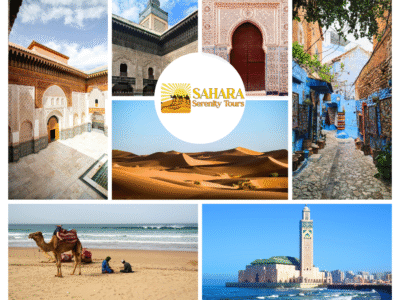
Starting in Casablanca gives jet-lagged travelers, especially those arriving on overnight flights from the U.S., a gentler entry point than heading straight to Marrakech. The Hassan II Mosque is the one unmissable attraction: a genuinely awe-inspiring building that sits at the edge of the Atlantic and ranks among the largest mosques in the world, with a capacity reported at around 25,000 worshippers inside. Tickets are generally purchased on-site, but arriving early is advisable since tour slots can fill up; a third-party operator can also pre-arrange entry if you want to guarantee your spot. The Corniche waterfront and the Art Deco architecture around the old city center round out an easy half-day before an overnight stay.
Days 2, 3: Getting lost and found in Marrakech
Marrakech overwhelms on arrival and rewards once you slow down. Day 2 covers the medina’s core circuit: Jemaa el-Fna square in the morning heat, Bahia Palace, and the Ben Youssef Madrasa. Day 3 is for the souks, Majorelle Garden, and an evening back at the square when food stalls and musicians take over the plaza. Two nights is the recommended minimum here, most experienced guides and travelers agree that a single day in Marrakech simply isn’t enough to do it justice.
Days 4, 5: High Atlas, Aït Ben Haddou, and the road to the Sahara
Day 4: The mountain pass and the kasbah
Day 4 offers one of the most visually dramatic drives in North Africa. The road climbs through the High Atlas via the Tizi n’Tichka pass before dropping into the ocher-colored southern valleys, a landscape that shifts from green cedar to bare rock to warm sandstone within a few hours. Aït Ben Haddou is a mandatory stop: this UNESCO-listed ksar of mud-brick towers has appeared in productions from Lawrence of Arabia to Game of Thrones, and an hour walking through the old village makes clear why filmmakers keep returning. Continue to Ouarzazate for a brief stop or an overnight before pushing east the following morning.
Day 5: Through the Draa Valley and into Merzouga
The final approach to the Sahara passes through palm oases in the Draa Valley and, for those with time, the narrow slot canyon at Todra Gorge as an optional detour. Merzouga announces itself before you arrive, the Erg Chebbi dunes materialize on the horizon as a wall of amber sand rising from a flat stone plain. Arriving with a couple of hours of daylight gives you time to settle in before the evening camel trek, which is exactly how Day 6 begins.
Day 6: The Sahara sunrise you’ll talk about for years
The camel trek, the desert camp, and the morning that earns its reputation
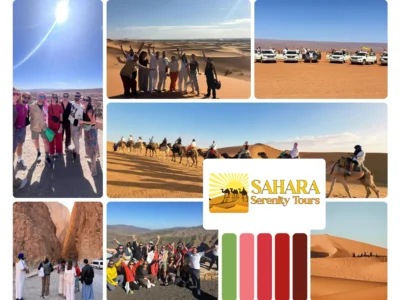
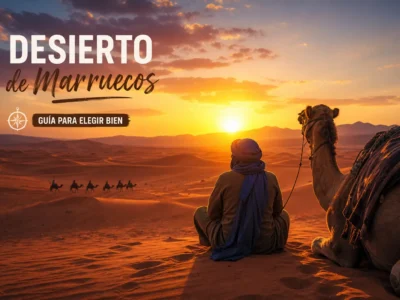
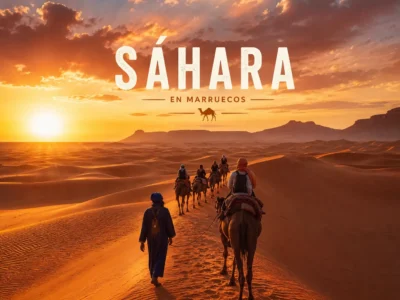
The standard Merzouga desert experience runs as follows: a late-afternoon camel trek into Erg Chebbi as the light turns gold, arrival at the desert camp as the sun drops behind the dunes, a dinner of tagine under an open sky, and a 5:30 a.m. wake-up to climb the nearest dune and watch sunrise over the Sahara. Basic bivouac camps generally run in the $50, 120 per-person range; mid-range luxury desert camps with private tents and en-suite facilities typically sit at $120, 250, though prices vary by season and operator. For most first-timers, the mid-range option is the right call, comfortable enough to sleep well, atmospheric enough to feel like the real thing.
What to pack and what to actually expect
Pack a headlamp and a warm layer. Desert nights drop significantly in temperature even in spring and fall, so don’t underestimate the chill. Keep luggage minimal since you walk into camp. Erg Chebbi itself is a substantial dune field in the eastern Moroccan Sahara, stretching toward the Algerian border, this is not a tourist photo backdrop but a genuine corner of the desert. The camp experience is organized and guided, which most first-timers appreciate. Travelers who want more solitude should ask their operator about less-trafficked access points further from the main cluster of camps.
Days 7, 8: Cedar forests, the road north, and the Marrakech, Fes, Merzouga itinerary completed
Day 7: Driving up from the desert
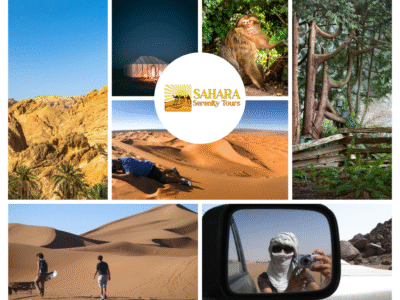
The drive from Merzouga to Fes takes roughly 6, 7 hours and delivers one of the trip’s best surprises: after two days of sand and stone, the road climbs into the cedar forests of the Middle Atlas around Azrou and through the green hill town of Ifrane. Most first-timer itineraries skip the stop in Azrou, that’s a mistake. The cedar forest here is home to wild Barbary macaques, and even a brief 20-minute walk through the trees produces the kind of unexpected moment that tends to stand out in trip memories. Arrive in Fes in the late afternoon and spend the evening near the medina gate at Bab Bou Jeloud to ease into the city.
Day 8: Inside the world’s oldest living medina
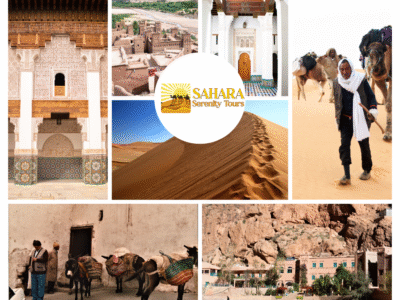
Fes el-Bali is one of the most intact medieval urban environments on earth, and a full day here barely scratches the surface. Structure the morning around a licensed local guide: the medina’s 9,000-plus alleyways are genuinely disorienting without one, and a good guide earns back their fee in the first hour by connecting you to the Bou Inania Madrasa, the Al-Attarine Madrasa, and the overlook above the Chouara Tanneries in a logical sequence. The afternoon belongs to the souk quarter and a slow walk back toward the blue gates at Bab Bou Jeloud.
Transport, costs, and what to book before you leave home
Self-drive vs. private driver vs. trains: the honest comparison
Trains work well for the Casablanca-to-Marrakech and Casablanca-to-Fes corridors, but the desert segment has no rail coverage. Self-drive is genuinely feasible on the highway stretches and offers real freedom on open roads, but navigating inside the Marrakech and Fes medinas is another matter, the medina streets are narrow, the signage unreliable, and finding parking is its own ordeal. A private driver is the most expensive option and also the most practical for a route that crosses mountain passes, desert tracks, and multiple overnight cities. For a 10-day Morocco road trip like this one, private transport removes the single biggest source of planning stress.
What a 10-day Morocco trip actually costs
Budget travelers spending roughly $50, 80 per day can cover the route using simple guesthouses, shared taxis, and a basic desert bivouac. Step up to $100, 200 per day and private riads, comfortable transfers, and a proper luxury desert camp become the standard. Flights from the U.S. to Casablanca typically run $600, 1,100 depending on season and departure city. For two travelers at the mid-range tier, the all-in cost for 10 days, excluding flights, generally lands between $2,500 and $4,500. Note that peak season runs March, May and September, November, when both riads and desert camps command higher prices.
The booking checklist that actually matters
The Sahara camp is the most time-sensitive reservation on this trip: luxury desert camps near Merzouga fill months ahead during peak season. Book that first. Riads in Marrakech and Fes follow close behind, especially properties with rooftop terraces and central medina locations. Internal transport, whether a private driver or train tickets for the Casablanca legs, should be confirmed at least three to four weeks before departure. U.S. passport holders do not need a visa for Morocco for stays up to 90 days, but your passport must have at least six months of validity at entry and at least one blank page for the entry stamp.
Travelers who want all of this handled in one transaction can book directly through Sahara Serenity Tours, where the 10-day Morocco package bundles every transfer, overnight stay, and desert experience into a single, transparent price with English-language support from booking through return.
The clearest starting point for a first Morocco trip
The best 10-day Morocco itinerary for first-timers isn’t about ticking every city off a list. It’s about choosing a coherent route and pacing it with intention, so that the Sahara feels like a genuine destination rather than a rushed checkbox. This Casablanca-to-Fes loop covers imperial architecture, desert dunes, UNESCO kasbahs, and ancient medinas in a sequence that builds naturally and keeps energy levels where they need to be.
Whether you build every piece independently or hand the logistics to a team like Sahara Serenity Tours, this first-time Morocco travel plan is the clearest, most practical starting point for a trip that delivers on every reason you wanted to go. The route is set, the pacing is built in, the only real variable is your departure date.
[…] for a first Morocco visit from Casablanca, if you want a ready-made example schedule, check the best 10-day Morocco itinerary for a sample first-timer […]
[…] the right amount of time: enough to explore without arriving home exhausted. See our recommended The Best 10-day Morocco Itinerary For First-timers for a detailed sample route and timing […]