If you’re trying to figure out which Morocco tour is best for someone traveling from the United States, you’re not alone, and the answer isn’t obvious. Morocco has no shortage of tour options, but many of them aren’t written with American travelers in mind. When you’re working with 10 days of vacation, landing in Casablanca after a transatlantic flight, and counting on English-language support throughout, you need more than a generic itinerary built for travelers with open-ended schedules and flexible entry points. You need a tour that starts where you land, moves at a pace your schedule can handle, and comes with a clear picture of what’s included before you hand over a dollar.
That’s exactly what Sahara Serenity Tours has built its model around: packages departing from both Casablanca and Marrakech (the two cities where most American flights arrive), itinerary lengths from two days to two weeks, and transparent pricing with no surprise fees on arrival. This guide walks through the key decisions, which tour style fits how you travel, which trip length matches your schedule, and what to confirm before you book.
What American Travelers Actually Need from a Morocco Tour
Much Morocco tour marketing targets a broad international audience. That framing misses several practical constraints that matter specifically to travelers coming from the U.S., and those constraints directly shape which tours are worth considering.
How U.S. Vacation Windows Shape the Decision
American travelers typically work with somewhere between 7 and 14 days of total vacation. That window isn’t long enough for a slow, self-directed trip across Morocco, but it’s a near-perfect fit for a well-structured guided itinerary. A 9 or 10-day package, for example, can comfortably cover Casablanca, Fes, the Sahara, and Marrakech in a single circuit without feeling rushed. Think of the limited window as a feature: it pushes you toward the kind of trip that actually delivers the highlights rather than stalling out in one city.
Why English-Language Support Matters More Than You’d Expect
Morocco’s medinas are genuinely dense, layered places. Navigating the souks in Fes or finding your way through the narrow alleys of a Marrakech riad neighborhood without local guidance takes time and patience most travelers don’t want to spend on logistics. An English-speaking guide doesn’t just translate; they explain why the tanneries in Fes are organized the way they are, why a kasbah was built at a particular point in a valley, and what the artisans in the souk are actually making. That context is the difference between a confusing walk and a memorable one.
USD Pricing and Transparent Inclusions
American travelers are accustomed to all-in pricing, and unclear inclusions are among the most commonly reported frustrations with budget Morocco operators. Before you book, confirm the breakdown in writing: which meals are covered, whether riad accommodations are included, what the transport situation is between cities, and whether the desert camp experience costs extra. A tour priced at $700 per person that covers accommodations, transport, an English guide, and most meals is a different value proposition than an $800 tour where most of those are add-ons.
Which Morocco Tour Is Best for Someone Traveling from the United States, The Four Main Tour Types
There are four distinct tour formats worth understanding. Each suits a different kind of traveler, and mixing them up is the most common reason people end up booking a trip that doesn’t match what they actually wanted.
Desert-Focused Tours: Merzouga, Camel Treks, and Sahara Camps
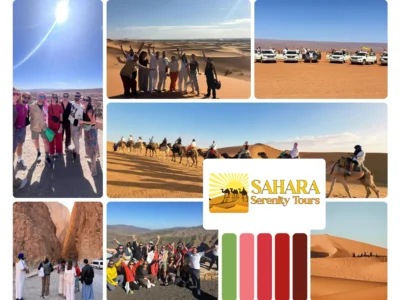
These itineraries are built for travelers whose Morocco moment is waking up in the dunes. A well-designed desert circuit includes a sunset camel trek into Erg Chebbi, at least one overnight in a desert camp, and a scenic route through the Draa Valley or Todra Gorge on the way in or out. For those seeking Morocco travel tips for first-timers, a standalone desert trip misses too much of Morocco’s cultural depth. It works best as the centerpiece of a longer circuit that also includes the imperial cities and a few days of Atlas scenery.
Imperial Cities Circuits: Fes, Marrakech, Rabat, and Meknes
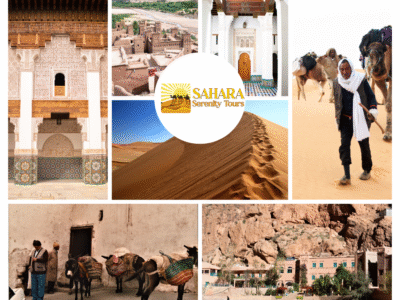
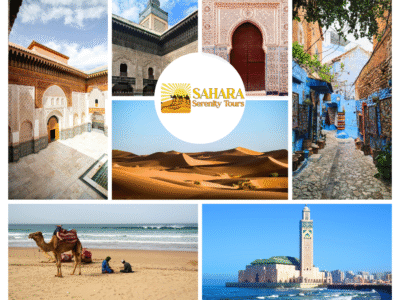
This is the cultural deep-dive. A cities-focused circuit covers UNESCO-listed medinas, historic mosques, centuries-old artisan souks, and traditional riad stays that put you directly inside the architecture of old Morocco. It’s the right choice for travelers who prioritize history and human culture over landscape. The format pairs naturally with a night or two in the desert when the itinerary is designed to include it, which the best ones are.
Adventure and Landscape Routes: Atlas Mountains, Gorges, and Coast
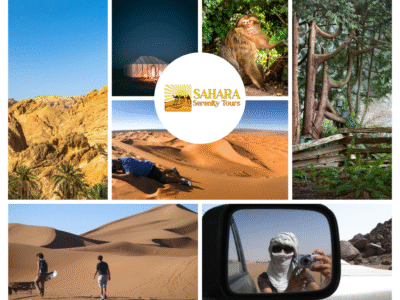
For active travelers who want physical engagement alongside cultural stops, the Atlas and gorge routes deliver. Todra Gorge trekking, the high passes of the Atlas, the windswept coast at Essaouira, and Ouzoud Falls all appear in longer itineraries built around movement. These work best at 10 days or more, where there’s enough time to actually hike rather than just photograph from the road.
Matching Your Tour Length to Your Vacation Window
The right trip length isn’t just about how many days you have. It’s about what pace you want and how much Morocco you actually want to see. Here’s how the main windows break down.
7, 9 Days: The Compact Highlights Route
A well-built 7 to 9-day itinerary covers Casablanca or Marrakech, the Sahara, and either Fes or Chefchaouen in one circuit. The pace is fast, which means the itinerary design has to be tight to avoid feeling like a blur of bus windows. Sahara Serenity Tours offers packages in this range departing from both Casablanca and Marrakech, so the trip starts the day you arrive rather than requiring an internal transfer to reach the starting point.
10, 12 Days: The Classic Morocco Circuit
This is the sweet spot for most first-time American visitors. Ten to twelve days gives you enough room to cover the imperial cities, a two-night desert stay, Atlas mountain scenery, and at least one rest day without scrambling from city to city. A Marrakech-to-Fes or Fes-to-Marrakech loop at this length feels complete rather than abbreviated. As of 2026, budget travelers can expect to spend roughly $800 to $1,200 per person for a mid-range package at this length, while private tour pricing typically runs $1,000 to $2,400 depending on inclusions and group size.
14 Days: The Grand Circuit
The right choice for travelers who don’t want to rush a single stop. A 14-day itinerary adds the northern cities, extra coastal time in Essaouira or Asilah, a fuller Atlas experience, and two proper nights in the Sahara without eating into city time. This length also suits return visitors who covered the main circuit on a previous trip and want to go deeper into Morocco’s less-traveled regions.
Small-Group vs. Private Tours: Picking the Format That Fits Your Style
This is where many travelers get stuck. The format question matters as much as the destination question, and the right answer depends less on budget than most people think.
What Small-Group Tours Deliver
Small-group tours are generally more affordable, social by nature, and a solid fit for solo travelers or couples comfortable sharing the experience with a group, often under 12 participants. The fixed itinerary removes planning decisions, which is either a benefit or a limitation depending on how you travel. For first-timers who aren’t sure what they want to prioritize, the structure of a small-group tour is genuinely useful. If you’re considering coordinated travel with friends or family, see the Group Travel In Morocco planning guide for practical tips on organizing a group trip.
Why Private Tours Work Better for Many U.S. Travelers
Couples, families, and small friend groups often find that a private tour pays for itself in flexibility and comfort. You control the pace, the stops, and the departure timing. For honeymooners, travelers with accessibility needs, or anyone who wants to spend an extra hour in a particular souk without the group waiting, private is the cleaner choice. Crossing the Sahara in your own vehicle with your own guide is a meaningfully different experience from doing it in a group coach.
How to Decide Between Them
Budget is one factor, but trip composition matters more. A group of four splitting a private Morocco tour often pays comparable per-person rates to a mid-range small-group tour while gaining full itinerary control. Run the math before assuming the small-group option is the better deal, for many American travel groups of three or more, it isn’t.
Which Morocco Tour Is Best for Someone Traveling from the United States, U.S.-Specific Logistics
These details affect which tours actually make sense for travelers departing from the U.S., and they’re often buried or missing entirely from generic tour listings.
Which Airports to Fly Into and Why It Matters
American flights connect most reliably into Casablanca (CMN) and Marrakech (RAK). From New York, Royal Air Maroc operates a direct JFK, Casablanca route with a flight time of roughly seven hours. Travelers from Los Angeles or Chicago typically connect through Madrid, Lisbon, or a similar European hub before arriving in either city. Choosing a Morocco tour that departs from your arrival city eliminates a domestic transfer and keeps you from burning a full day repositioning to the itinerary’s starting point.
Best Travel Months for Americans Visiting Morocco
Spring (March through May) and fall (September through October) are the strongest windows for both the imperial cities and the desert. Temperatures are comfortable, and the shoulder-season pace makes the medinas more pleasant to explore. Summer works reasonably well for the northern coast and Chefchaouen but makes a desert camp genuinely punishing. December through February suits the cities but means cold nights in the Atlas and sharp desert air that surprises many first-time visitors.
Entry Requirements for U.S. Passport Holders
American citizens don’t need a visa to enter Morocco for stays under 90 days. A valid U.S. passport is sufficient, provided it has at least six months of validity at the time of entry and one blank page for the entry stamp. Confirm your passport is current before you book anything, and carry proof of onward travel and accommodation when you arrive at the border.
Why Sahara Serenity Tours Works Well for Travelers from the U.S.
The practical concerns covered above, departure city, trip length, pricing clarity, and English-language support, are exactly what Sahara Serenity Tours has structured its packages around. The operator was built with the American travel schedule in mind, and that focus shows in the details.
Departure Options from Casablanca and Marrakech
Because most American flights land in one of these two cities, tours departing from either location mean the trip starts the moment you clear customs, no domestic repositioning to Fes or Tangier before the itinerary kicks in. Sahara Serenity Tours runs Morocco tours from the USA’s two most common arrival points, Casablanca and Marrakech, so regardless of which city your airline drops you into, you’re already at the starting line.
Tour Lengths That Match Real U.S. Vacation Schedules
Packages range from 2 to 14 days, covering every window in the trip-length guide above. Whether you have a long-weekend extension after a business trip or a full two weeks, there’s a structured, ready-to-book itinerary available. No drawn-out custom quote process required. The 9-day and 10-day packages are specifically designed for the American vacation window, covering the Sahara, the imperial cities, and the Atlas in a single well-paced circuit.
English-Speaking Guides, Transparent Pricing, and Full-Circuit Coverage
Every itinerary is built around clarity: what’s included, what isn’t, and what you’ll experience each day. Desert camps, riad stays, Atlas crossings, and imperial city walking tours are all part of the circuit depending on the package. English-speaking guides are standard, not an upgrade, and there are no hidden local fees to manage on arrival.
Book the Trip That Actually Fits Your Schedule
The best Morocco tour for a U.S. traveler is the one that fits their arrival city first, then their vacation window, then their travel style and interest priorities. That order matters. A beautiful 14-day itinerary that starts in Tangier and costs two travel days to reach doesn’t serve you as well as a 10-day circuit that begins in Casablanca the afternoon you land.
Morocco is a country that rewards travelers who arrive with a plan. The medinas, the desert, and the mountain passes are all more meaningful when you’re not burning mental energy on logistics. A well-structured escorted tour removes that friction entirely and lets the country do what it does best.
Now you know which Morocco tour is best for someone traveling from the United States and how to match it to your schedule, arrival city, and travel style. Browse the full range of itineraries at Sahara Serenity Tours to find the package that fits, or consult the Ultimate Morocco & Sahara Desert Travel Guide for expert answers to common questions, and reach out to the team directly if you have questions before you’re ready to book.
10 Best things about Morocco Morocco Desert Tours Morocco Tours For Seniors Morocco Student Tours
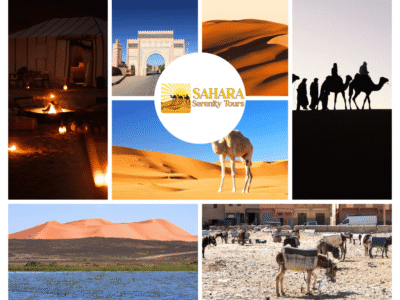
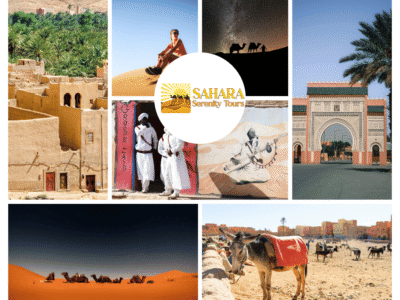
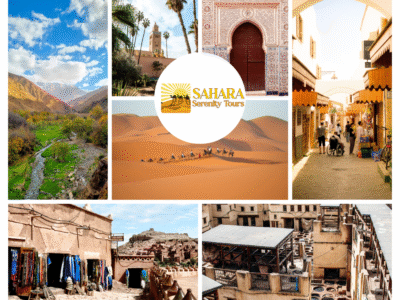
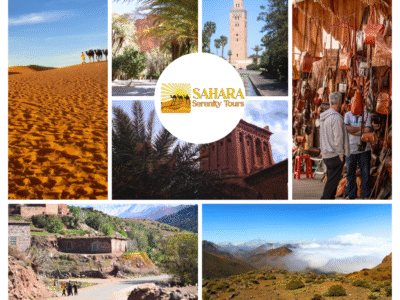
[…] a custom version of it. If you’re still deciding which option suits your needs, our guide to Morocco tours for U.S. travelers can help you compare formats and choose the right […]
[…] Sahara Serenity Tours is a Morocco-based specialist designed around the needs of U.S. visitors, a different proposition from a global operator running Morocco as one of fifty destinations. The entire team, guide network, camp partnerships, and local logistics infrastructure exist specifically for Morocco travel. That focus tends to show in the details that matter most to American travelers: communication quality, itinerary flexibility, and the kind of on-the-ground problem-solving that fixed-group tours can’t offer. If you want an overview of Morocco tours tailored to U.S. visitors, see Morocco Tours For U.S. Travelers: How To Find The Right Fit. […]