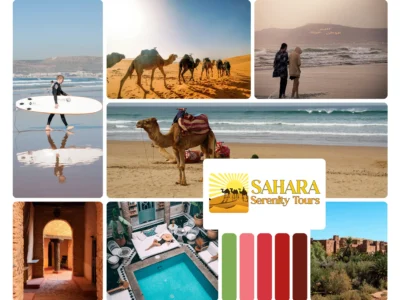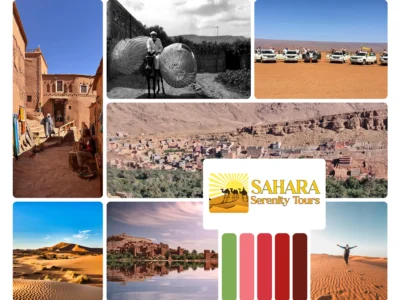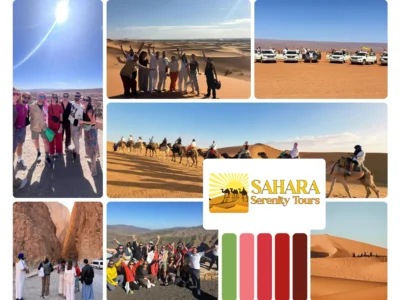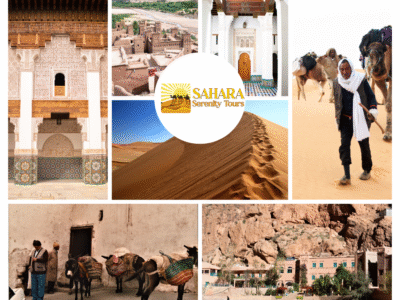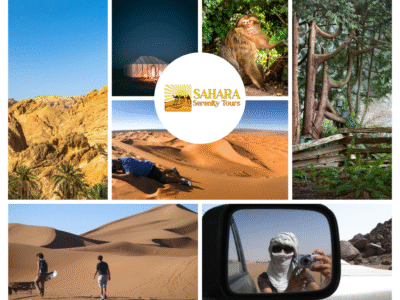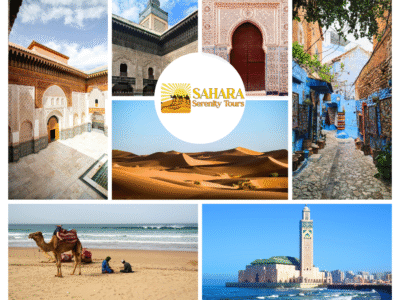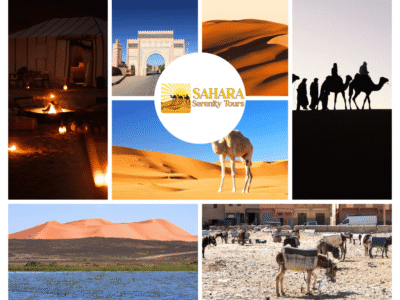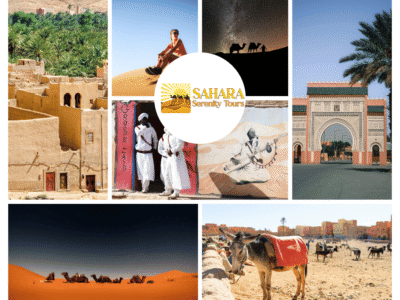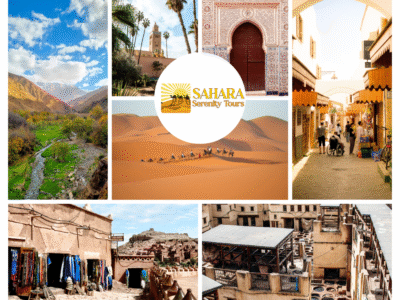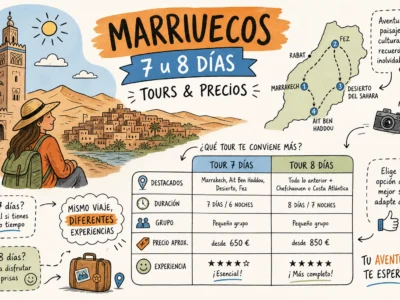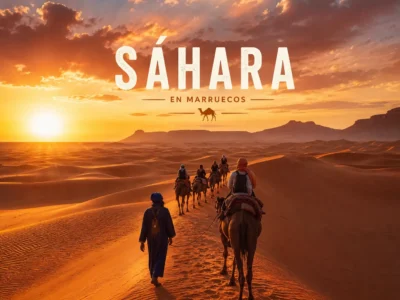
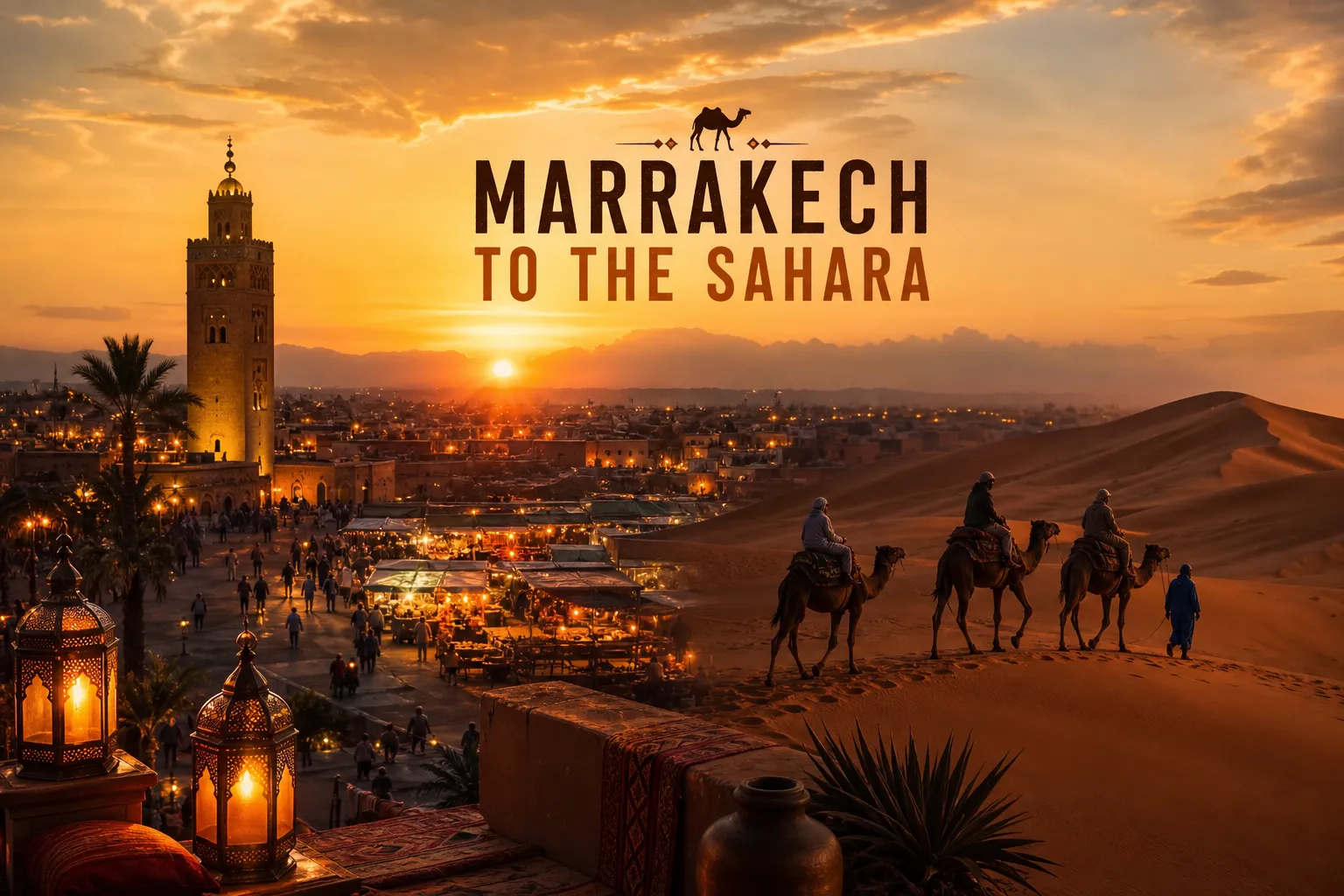
This 4-day Morocco itinerary takes you from Marrakech across the High Atlas to the Sahara dunes at Erg Chebbi and on to Fes, and it’s the most Morocco you can fit into a long weekend. When most Americans start researching a trip, they wonder whether four days is enough. Here’s the real question: not whether you can do Morocco in four days, but which four-day route gives you the most Morocco. The answer is a one-way circuit: start in Marrakech, cross the High Atlas, sleep under Sahara stars at Erg Chebbi, and end in Fes. Four days. Three landscapes. Zero backtracking.
This exact route is the backbone of Sahara Serenity Tours’ signature four-day Marrakech-to-Fes desert circuit, operated regularly with travelers from across the US. Every timing, stop, and recommendation in this guide comes from real experience on the ground, not from aggregating travel blogs. The result is a plan you can execute yourself or hand off entirely to a team that already knows every bend in the road.
By the time you finish reading, you’ll have a complete day-by-day plan with realistic driving times, honest cost estimates, and a clear picture of what to book before you leave home. No guesswork, no filler stops, just the route that consistently delivers the full Morocco experience inside a long weekend.
4-Day Morocco Itinerary Overview: Why a One-Way Route Beats a Round-Trip Loop
Most first-time visitors default to a loop: leave Marrakech, head to the desert, come back to Marrakech. That structure feels logical on a map, but the math breaks it. Marrakech to Merzouga is eight to ten hours one way. A round-trip in four days means spending nearly 20 hours in the car just getting to and from the desert, which leaves almost no time to actually be in it. The scenery on the return drive is identical to what you already saw, and you arrive back in Marrakech exhausted with nothing new to show for it.
The one-way circuit solves all of that. Marrakech in, Fes out, with the Sahara in the middle. You cover the same total distance but add three meaningful stops that would otherwise be skipped: the UNESCO kasbah at Ait Benhaddou, the red canyon walls of Dades Gorge, and the ancient medina of Fes as your closing bookend. Each stop earns its place geographically and tonally, and the route flows without a single repeated mile.
This itinerary is built for a specific traveler: someone with four to five vacation days, flying into Marrakech and out of Fes (or the reverse), who wants the full Morocco experience without spending most of the trip staring at a windshield. It works equally well for first-timers, couples celebrating a milestone, and small friend groups who want a shareable adventure that doesn’t require two weeks off work. Fes as the endpoint is also practically useful: Fes, Saïss Airport handles international flights to many European and select international destinations, making it a genuinely convenient place to finish rather than backtrack.
Day 1: Marrakech’s Medina, Souks, and Jemaa el-Fna
Day 1 is about landing in Marrakech and letting the city absorb you at a pace that doesn’t exhaust you before the driving days ahead. The medina is dense, loud, and completely mesmerizing, and the instinct to try to see everything in one afternoon will leave you overstimulated and overwhelmed. The goal today is to see the right things in the right order, not to check off a list.
Start at Ben Youssef Madrasa when it opens in the morning. The carved stucco, cedar ceilings, and green-tiled courtyard are at their best with minimal crowds, and you’ll have the space to actually absorb the architecture rather than shuffle through it. Walk south through the souks from there: the leather section, the spice market, the lantern quarter, and the textile stalls each have their own sensory identity, and moving through them in sequence gives you a layered sense of how the medina is organized. End the morning loop at Bahia Palace, which offers a grounded, beautiful look at 19th-century Moroccan craftsmanship without being overwhelming.
Beat the afternoon heat at Jardin Majorelle. The cobalt blue walls and cactus garden feel like a complete tonal shift from the medina’s chaos, and that contrast is exactly the point. Timed entry tickets sell out well in advance, so book yours online before you arrive in Morocco, not the morning of your visit. Return to Jemaa el-Fna by early evening. The square transforms after 6 p.m.: food stalls ignite, musicians appear, storytellers gather their circles, and the energy doubles. Have dinner at the stalls on the square itself, this is one of the great public spectacles in the world, and the street-level experience is what makes it extraordinary. Rooftop cafés are fine for a coffee break, but their tourist menus and elevated vantage point trade atmosphere for comfort.
If you’re pressed on time and need to cut something, El Badi Palace and the Saadian Tombs are worthwhile but not essential on this four-day itinerary. Save that time for Jemaa el-Fna in the evening instead.
Day 2: Crossing the High Atlas and Stopping at Ait Benhaddou
An early departure from Marrakech is non-negotiable on Day 2. Set your alarm, eat breakfast at your riad, and be on the road by 7:30 a.m. The drive south through the Tizi n’Tichka mountain pass to Ait Benhaddou takes approximately 3.5 to 4 hours under normal conditions, and plan for up to 4.5 hours if you stop for photos or hit midday traffic. You’ll cross into a different Morocco on the other side: drier, more ochre, quieter, and visually unlike anything on the northern side of the Atlas.
The mountain road is well-paved but has switchbacks and shares space with trucks and tour buses. Departing early keeps you ahead of heavy midday traffic and gets you to Ait Benhaddou with the light still angled and golden. Pull over at the high-altitude viewpoints: the valley views dropping into the Draa region below are worth a five-minute stop, and they give you a physical sense of how dramatically the landscape shifts from one side of the pass to the other.
Ait Benhaddou is a fortified village, or ksar, that has served as a filming location for Gladiator, Game of Thrones, and Lawrence of Arabia. Walk across the river on stepping stones and climb through the mudbrick towers to the granary at the top. Allow 1.5 to 2 hours for a comfortable visit, with time to explore and photograph without rushing. Photography enthusiasts or anyone wanting to enter individual structures inside the ksar should budget closer to 2 to 3 hours. The ksar itself has no official gate fee, though some individual structures inside charge a small tip to enter. Have lunch in Ait Benhaddou or the nearby town of Ouarzazate before pushing east.
Ouarzazate makes a practical lunch and fuel stop; most travelers spend around an hour there, adding more time if they want to visit Taourirt Kasbah. From here, the road to Boumalne Dades runs through flat, arid scrubland before the canyon walls start rising around you as you approach the gorge. Plan to arrive at Boumalne Dades or inside the gorge itself by late afternoon. This is your overnight base for Day 2, and choosing a guesthouse inside the gorge rather than in the valley town pays off visually when you wake up the next morning.
Day 3: Dades Gorge, the Valley of Roses, and Arrival at Erg Chebbi
Day 3 is the most visually varied day on the entire route. You move through canyon landscapes, past rose-growing valleys and ancient ksar villages, and arrive at the edge of the Sahara as the sun drops and turns the dunes copper. The key to making Day 3 work is an early start and disciplined timing at each stop, because the payoff at Merzouga is worth protecting.
Wake up early and walk or drive up into the gorge before breakfast. Morning light hits the red canyon walls in a way that midday sun completely flattens, and this early window is when the gorge earns its reputation. The road winds between walls of eroded rock before eventually narrowing past the distinctive rock formations locals call “monkey fingers,” where columns of stone rise from the canyon floor in shapes that look sculpted rather than geological. This section alone justifies the overnight stop in the gorge. Be back at your guesthouse by 8:30 a.m. for breakfast, then pack and head south.
On the route toward Merzouga, you’ll pass through the Valley of Roses near El Kelaa M’Gouna. This stretch is worth a dedicated stop only in late April or early May during the rose harvest season, when the fields are blooming and the famous annual rose festival fills the roads with color and music. Outside that window, drive through and appreciate the landscape without stopping. If your timing allows, Todra Gorge makes an excellent 30 to 45-minute detour: it’s narrower and more dramatic than Dades, a genuine slot canyon where the walls close in to just a few meters apart and the scale becomes almost surreal.
The drive from Boumalne Dades to Merzouga takes approximately 3.5 to 4 hours. Plan to arrive by 4 p.m. at the latest. That gives you time to settle into your desert camp or guesthouse, confirm your camel trek schedule, and position yourself on the dunes for sunset. The first view of Erg Chebbi is a genuine moment: a wall of orange sand rising abruptly out of flat gravel desert, with no warning and no gradual buildup. Let it land before you reach for your phone.
Day 4: Sunrise Camel Trek, Desert Camp Breakfast, and the Road to Fes
This is the day most people come to Morocco for. Erg Chebbi’s dunes rise dramatically, many accounts put their height at roughly 150 meters in places, and the Sahara in early morning is cool, quiet, and completely unlike anything in the Western travel experience. The silence at sunrise, when the day-trippers haven’t arrived yet and the wind has smoothed the dune faces overnight, is the kind of thing that stays with you for years.
Most operators run sunrise camel treks from Merzouga lasting around 45 to 90 minutes, depositing you at a viewpoint on the dunes to watch the light shift from grey to gold to amber. The camels are led on a rope, so no riding experience is necessary. Bring a light jacket regardless of the season: even in summer, pre-dawn desert temperatures drop sharply from the afternoon heat, and the wind on the dune crests intensifies the chill. After the trek, breakfast back at camp is the right move: Moroccan bread, honey, argan oil, coffee, and fresh-squeezed orange juice eaten in the morning quiet before the day heats up.
For this four-day itinerary, the overnight desert camp stay is non-negotiable. The stargazing, the silence after the day-trippers leave, and the pre-dawn camel trek only exist if you sleep there. If budget is a concern, standard camp options in Merzouga are comfortable and significantly more affordable than glamping-style luxury tents. Both deliver the same sky and the same silence, which is what you actually came for.
Be honest with yourself about Day 4’s driving reality before you leave camp. The route from Merzouga to Fes covers approximately 500 km and takes seven to eight hours with stops, including a stretch through the Ziz Valley, a possible break in Midelt, and the cedar forests of the Middle Atlas near Ifrane. Most travelers depart by 9 a.m. and arrive in Fes by early evening.
It’s a long day in the car, but the scenery changes considerably as you climb back into the highlands, which makes the drive more engaging than the flat road in would suggest. Arrive in Fes, check into your riad inside the medina, and save the exploration for first thing the following morning when the ancient city is at its quietest.
What This Four-Day Morocco Trip Realistically Costs
A 4-day Morocco itinerary spans a wide price range depending on how you travel. The most significant cost variable isn’t food (Morocco is extremely affordable at local restaurants) or attraction entry fees. It’s accommodation and transport, and understanding those two costs lets you calibrate expectations before you book anything.
Here are three realistic per-person tiers for this route, chosen to reflect the range of options actually available along the circuit:
- Budget: $200, $320 per person, using basic guesthouses, shared transport, local restaurants, and a standard desert camp with shared tent facilities.
- Midrange: $400, $700 per person, covering comfortable riads, private transfers for the main legs, sit-down restaurant meals, and a desert camp with a private tent.
- Guided tour: $900, $1,500+ per person, with all accommodation, transport, meals, guide, and activities included in one pre-set package price.
Accommodation absorbs the biggest cost difference across those tiers, especially on the Merzouga night. A standard shared tent at a desert camp typically runs $40 to $70 per person; a luxury bivouac with en-suite facilities and nicer bedding can run $150 to $200 or more. For Jardin Majorelle in Marrakech, check the official website for current timed-entry pricing (approximately $15 at time of writing, but ticket prices are updated periodically). Ait Benhaddou’s ksar is free to enter, though individual structures inside may ask for small contributions. The biggest single variable across the whole route is transport: a private driver for the full circuit versus joining a shared small-group tour changes the per-person cost dramatically, especially for solo travelers or couples.
Getting Between These Stops: Transport Options That Actually Work
This route isn’t served by train. Marrakech to Ait Benhaddou to Merzouga requires either a private vehicle or a shared tour van. There is no practical bus connection that covers the mountain and desert sections in the time available on a four-day itinerary. Understanding your options before you book prevents the expensive mistake of assuming you can piece this together with public transit.
A private driver gives you full flexibility on timing and stops, which matters for things like catching the gorge at dawn or arriving at Erg Chebbi before sunset. The trade-off is cost: private transfers are significantly more expensive per person for solo travelers or couples than joining a shared group. A shared small-group tour, many operators cap vans at around 10 to 12 travelers, offers a good balance for most people: lower per-person cost, a knowledgeable guide who handles every detail, and a built-in social dynamic that solo travelers especially appreciate. You travel on a fixed schedule, but on a well-designed four-day circuit, that schedule is built around the same priorities you’d choose anyway.
Self-driving is possible but requires an international driver’s license, genuine comfort with mountain switchbacks and unpaved desert approach roads, and advance coordination of desert camp reservations on your own. It’s the right call for experienced road-trippers with flexible timing; it’s the wrong call for someone on a compressed schedule who wants to enjoy the scenery rather than focus on navigation. Book your transport choice before you leave the US, not after you arrive in Marrakech. The best private drivers and small-group tours for this route tend to fill up several weeks in advance during peak season (October through April for the desert sections), so booking 4-plus weeks out is a reasonable target.
Other advance bookings worth locking in before departure: your Marrakech riad (four to eight weeks out for peak season), Jardin Majorelle timed entry tickets, your desert camp reservation in Merzouga (especially for Friday and Saturday nights), and your Fes medina accommodation. The most characterful riads in both cities sell out fast, and the ones worth staying in don’t hold rooms for walk-ins.
How Sahara Serenity Tours Handles This Entire Itinerary for You
Every stop in this guide maps directly onto the Sahara Serenity Tours four-day Marrakech-to-Fes desert circuit. If the day-by-day plan above appeals to you but coordinating riads, tracking down a reliable desert camp, and confirming private transfers from the US sounds like more pre-trip work than you want to do, this tour is built precisely for that situation. The entire route is pre-planned and road-tested by Sahara Serenity Tours’ local team, and they handle every logistical detail from Marrakech pickup to Fes drop-off.
The tour covers all transport in a private or small-group vehicle, four nights of accommodation including the Merzouga desert camp stay, guided stops at Ait Benhaddou and through the Dades Gorge, and the sunrise camel trek on Day 4. An English-speaking local guide manages every detail along the way. No juggling separate bookings from a different time zone, no uncertainty about whether your desert camp is actually worth staying in, and no lost hours figuring out which road through the High Atlas is the right one after dark.
They also run a popular 3-Day Marrakech Desert Tour for travelers who want a shorter but still immersive Sahara experience.
The tour works particularly well for first-time Morocco visitors, couples, and small friend groups who want the feel of an independent road trip without the risk and prep time of building it themselves. American travelers with seven to ten days total can use this four-day Sahara circuit as the centerpiece of a longer trip, pairing it with extra days in Marrakech before or Fes after, or folding it into a broader Best Morocco itinerary that covers additional regions and routes. Tours run year-round, with the cooler months from October through April being the most popular for desert travel. Booking directly through Sahara Serenity Tours includes USD pricing and English-language communication from your first inquiry, a practical advantage when you’re coordinating an international trip across multiple time zones.
Your 4-Day Morocco Itinerary: Done Right
A 4-day Morocco itinerary built on the Marrakech-to-Fes one-way circuit covers more ground and more contrast than most travelers expect is possible in under a week. You get the chaos and beauty of a living medina, the cinematic stillness of an ancient kasbah, the geology of red canyon country, and the Sahara at its most elemental: dunes, stars, and total quiet. None of it requires rushing if the route is planned right and the driving days start early.
The best time to do this route is between October and April, when desert temperatures are comfortable for camel trekking and the mountain pass is reliably clear. Spring and fall are ideal. Summer works for the northern sections, but the desert in July and August demands a heat tolerance that most travelers underestimate. Whatever the season, the logistics are the same: book early, start each day before the heat builds, and protect the Merzouga evening like the rare thing it is.
Whether you build this trip yourself using the day-by-day plan above or hand the logistics to Sahara Serenity Tours and show up ready to enjoy it, four days in Morocco rewards anyone willing to learn how to plan a Sahara trip in 3 or 4 days properly. The question was never whether it’s worth doing. The question is whether you want to spend those four days planning, or experiencing.