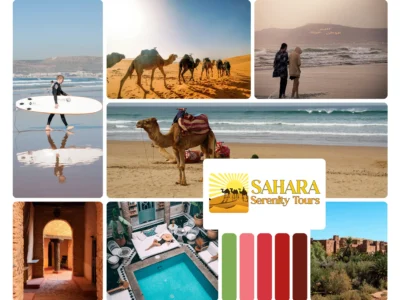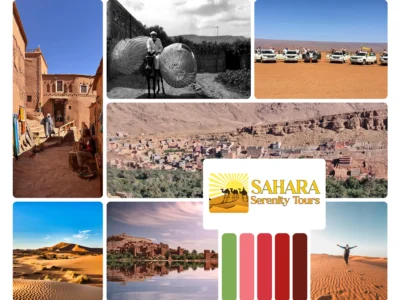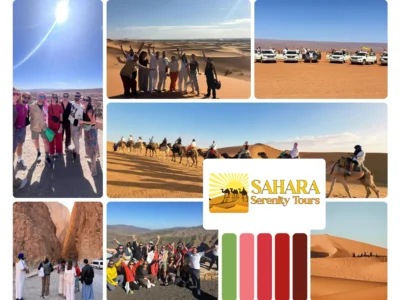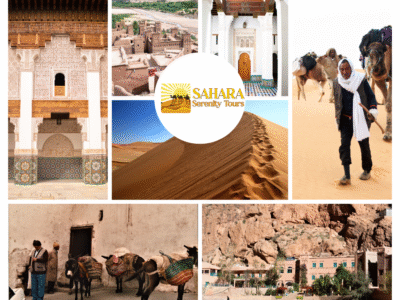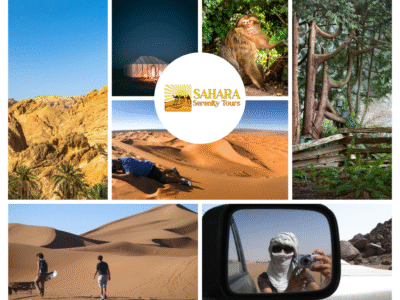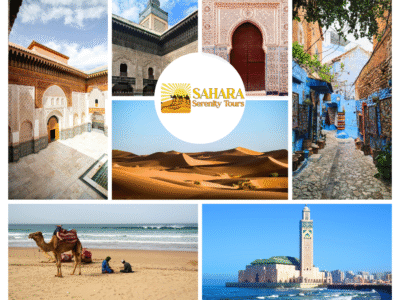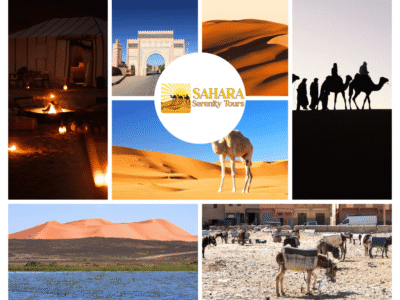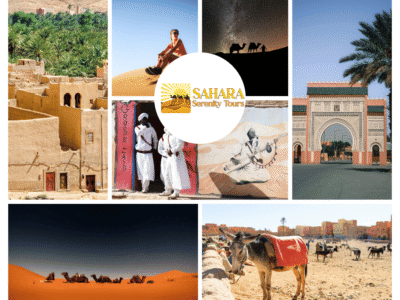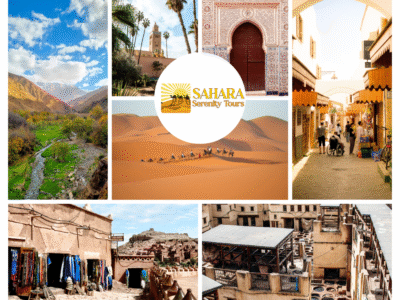
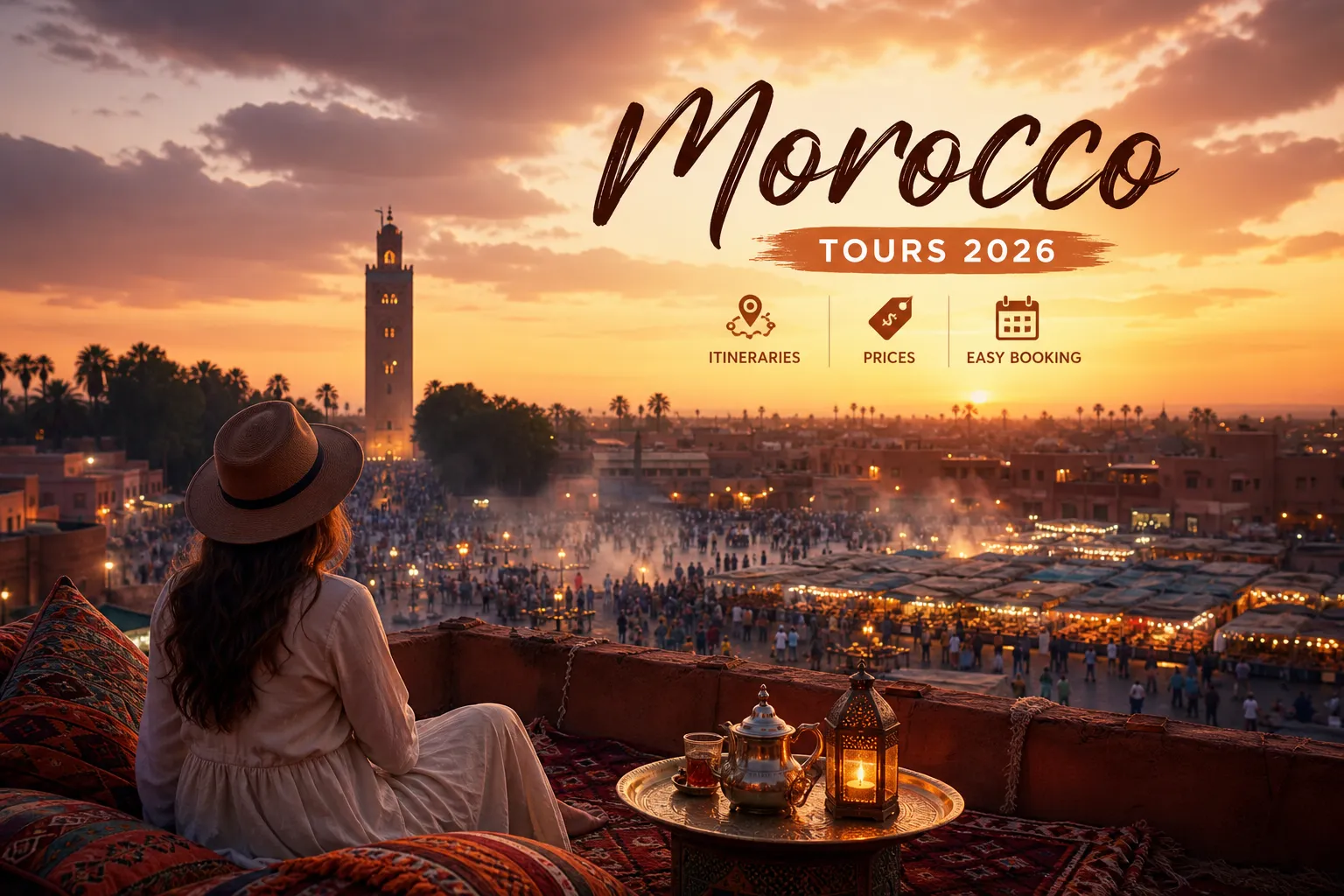
If you’re researching Morocco tours 2026, start here: imagine standing at the edge of the Erg Chebbi dunes as the first light breaks over the Sahara, watching the sand shift from deep violet to burned gold. The silence is total except for the wind. Somewhere behind you, a Berber guide is starting the fire, and the smell of mint tea is already drifting across the camp. Your only thought is: why did I wait so long?
That moment is exactly why Morocco keeps drawing American travelers back. From the winding medinas of Fes and Marrakech to the golden silence of the Sahara, this country delivers on nearly every front, history, landscape, food, and the kind of human warmth you simply don’t find on a tour bus through Western Europe.
This guide cuts through the noise. You’ll find a clear breakdown of Morocco tour types, honest price ranges, what’s actually included in a package, and how to choose the right operator for your travel style. Throughout, we’ll return to Sahara Serenity Tours, a Morocco-based specialist with a strong track record with American travelers that’s worth knowing about before you book.
Why 2026 is the year to stop waiting on Morocco
The booking window for peak seasons is already moving
Morocco’s highest-demand travel windows, spring (March to May) and fall (September to November), fill up months ahead of schedule. Small-group tours with a hard cap of around 10 people move especially fast because once a departure is sold out, it’s gone. American travelers who wait until spring to start planning their fall trip often find the best camp stays and departure dates already spoken for.
If you’re eyeing a 2026 departure in April, October, or early November, those dates are actively being secured right now by travelers who started planning earlier this year. For quality small-group Morocco tours, booking 6, 12 months out is the standard window, not the exception.
Seasonal timing: when to go for the best experience
Spring and fall are the undisputed sweet spots for a Morocco desert tour. Daytime temperatures in the Sahara are comfortable, the light is extraordinary for photography, and the overall pacing of a trip feels more relaxed when you’re not fighting the heat. Most experienced Morocco guides and repeat visitors point to April and October as the strongest months for both comfort and overall experience quality.
Summer is manageable in the northern cities and along the Atlantic coast, but the Sahara in July or August is genuinely brutal, with midday temperatures regularly exceeding 100°F. Winter offers a different kind of desert experience: cold nights, clear skies, and almost no crowds. Some travelers actually prefer it, especially for stargazing, but the temperature drop after sunset in the desert is dramatic, so pack accordingly.
How far ahead Americans typically book
Many American travelers book international trips closer to the departure date than their European counterparts, which creates a real problem with Morocco’s peak-season availability. Small-group Morocco tours fill with a mix of nationalities, so you’re competing for a limited number of spots regardless of where you’re booking from.
The practical takeaway: if your 2026 dates fall anywhere near March, May or September, November, treat this like a hotel reservation during a sold-out event weekend. The longer you wait, the more likely you are to face limited options, higher pricing, and no flexibility on the experiences that matter most, including specific luxury camp tiers and preferred departure routes.
Morocco tour packages 2026: types, styles, and what each delivers
Small-group vs. private: understanding the difference
A true small-group Morocco tour typically caps at roughly 8, 14 travelers (operators like Intrepid and G Adventures often use similar ranges), moves together in one vehicle, and travels with a single guide for the full duration. The social dynamic is one of the best parts: you share meals, campfires, and desert sunrises with a handful of people who quickly feel less like strangers and more like fellow travelers.
A private Morocco tour is booked exclusively for your party, giving you full control over pacing, stops, and scheduling. If you want to linger in a particular souk or take a longer lunch in the Dades Valley, a private itinerary accommodates that without negotiating with anyone else. The tradeoff is cost: private tours run meaningfully higher than small-group options, and that difference is worth understanding before you compare quotes.
Escorted vs. self-guided: which fits your trip style
Guided tours handle every logistical detail, driving, route navigation, accommodation bookings, and the language barriers that can genuinely derail an independent trip. For first-time visitors to Morocco, this matters more than it might seem. Navigating the medinas of Fes independently requires serious preparation, and long-distance driving through mountain passes and desert tracks is not trivial for travelers unfamiliar with the roads.
Self-guided Morocco trips suit experienced independent travelers who are comfortable with uncertainty, have conversational French or Arabic, and genuinely enjoy the problem-solving that comes with unstructured travel. For families, honeymooners, and most first-time visitors, a guided format removes enough friction that the trip becomes genuinely enjoyable rather than logistically exhausting.
Specialty tour styles worth knowing about
Beyond the standard formats, 2026 Morocco tour offerings include a strong range of specialty styles. Luxury and glamping-focused tours cater to travelers who want boutique riads and en-suite desert tents without sacrificing comfort. Adventure tours incorporate Atlas Mountain trekking, gorge hikes, and multi-day desert crossings for more physically active groups.
Cultural immersion tours center on the imperial cities, Morocco’s craft traditions, and hands-on experiences like cooking classes and medina walks with local artisans. Honeymoon and couples-focused private itineraries build in romantic extras: candlelit dinners in riad courtyards, private camel treks at sunset, and exclusive camp setups with no other guests around. Each style carries a different price point, and knowing which one matches your travel personality saves considerable time during the planning stage.
Best Morocco tours 2026: the classic route and sample itineraries
The classic Marrakech-to-Fes circuit explained
The Marrakech-to-Fes route has become the backbone of guided Morocco itineraries for a simple reason: it connects two of Morocco’s most iconic cities while naturally passing through some of the country’s most extraordinary landscapes. You cross the High Atlas Mountains, stop at Aït Ben Haddou (a UNESCO World Heritage kasbah that looks like it was carved directly from the earth), and spend one or two nights in the Sahara at Erg Chebbi before continuing north to Fes.
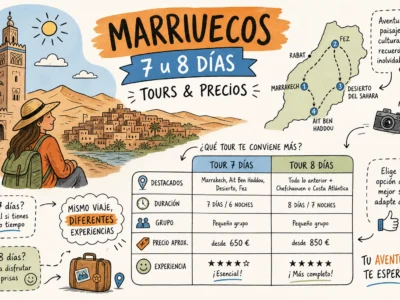
As a 7-day tour, this circuit moves at a brisk but achievable pace. Stretched to 10 or 11 days, it allows for an additional coastal stop at Essaouira, more time in the medinas, or an excursion into the Todra Gorge. Either way, it remains the most complete single-route experience Morocco offers for first-time visitors.
Sample day-by-day breakdown for a 10-day classic tour
A standard 10-day Morocco itinerary unfolds roughly like this, based on the most common guided tour formats currently running:
- Days 1, 2: Arrive in Marrakech. Guided orientation through Djemaa el-Fna, the souks, and the Koutoubia Mosque area.
- Day 3: Cross the High Atlas Mountains with stops at scenic passes, arriving at Aït Ben Haddou for the evening.
- Days 4, 5: Drive through the Draa Valley and Dades Gorge toward Merzouga. Arrive in time for a late-afternoon camel trek into Erg Chebbi and an overnight at a Sahara desert camp.
- Day 6: Desert sunrise, then onward travel north toward Fes with stops along the southern route.
- Days 7, 8: Full immersion in Fes. The medina justifies a full day on its own, with a second day covering the tanneries, the madrasa, and a guided souk walk.
- Days 9, 10: Return routing toward Marrakech or Casablanca, with an optional detour to Chefchaouen or Meknes depending on your schedule.
Shorter 3- to 4-day options for limited time
Not every American traveler has ten days, and Morocco’s best experiences don’t require them. A 3-day Marrakech-to-Fes desert sprint covers the essential route at a focused pace: drive south from Marrakech through the Atlas on day one, reach Merzouga and the Sahara on day two, and continue to Fes (or return to Marrakech) on day three. You still get the camel trek, the desert overnight, and the stargazing, just concentrated rather than stretched.
Sahara Serenity Tours offers this shorter format as a popular option for travelers who can’t carve out a full week. The route is structured so nothing feels skipped, and the core desert experience remains fully intact.
Desert experiences: what actually happens on a Sahara tour
The camel trek and what to realistically expect
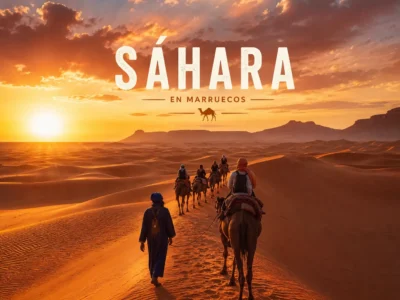
Most desert tour operators depart from the camp’s edge at dusk or dawn, with camel treks commonly ranging from about 45 minutes to a couple of hours depending on the camp’s location and itinerary. It’s not a long endurance ride, it’s a ceremonial arrival into the Sahara, and it frames the whole experience in a way that driving a 4×4 directly into camp simply doesn’t. The pace of a camel through the dunes gives you time to absorb the landscape in a way that any motorized transport removes.
What surprises most American travelers is how meditative and quiet the trek actually feels. By the time you dismount and see your tent set up against the dunes with dinner being prepared over an open fire, the camel trek tends to rank as one of the strongest memories of the entire trip, even for travelers who weren’t sure about it beforehand.
Luxury desert camps vs. standard desert camps
Standard desert camps offer shared bathroom facilities, a communal firepit, basic Berber-style tents with floor mattresses, and a set dinner and breakfast. The experience is genuine and memorable, though the comfort level is modest. Many travelers find this completely sufficient for one night in the dunes.
Luxury glamping setups at Erg Chebbi are a different category altogether. Private en-suite tents with proper beds, curated Moroccan dinners, individual terraces facing the dunes, and attentive service make these feel more like a boutique hotel that happens to sit in the middle of the Sahara. One-night luxury camp stays in Merzouga typically run around $200, $220 per person, important context when you’re comparing Morocco tour packages 2026 at different price tiers.
Stargazing in Erg Chebbi: the part nobody talks about enough
The Sahara sky at night has almost zero light pollution, and travelers who have seen it consistently describe it as one of the most genuinely disorienting and beautiful experiences of their lives. The Milky Way is visible with the naked eye. The silence amplifies everything. Most travelers don’t know to expect this until they’re already lying on the sand looking up.
Some tour operators, including Sahara Serenity Tours, incorporate stargazing as a dedicated part of the desert camp experience rather than treating it as a background feature. Having a guide connect the constellations to Berber navigation and desert tradition adds a layer of meaning that stepping outside the tent on your own simply doesn’t provide.
What’s actually included in a Morocco tour package
Accommodation and meals: what you get at each tier
Budget Morocco packages typically include daily breakfast and basic riad rooms. Even at the entry level, riads, traditional guesthouses built around a central courtyard, tend to be atmospheric and well-located within the medinas. Mid-range tours upgrade to private riad rooms, add more included meals (usually a mix of lunches and dinners at local restaurants), and include a standard desert camp stay.
Luxury packages bundle most meals, boutique riads, premium glamping in the desert, and sometimes a private hammam session. One cost that almost never appears at any tier: international flights from the US to Morocco. That’s always a separate expense, regardless of how comprehensive the package looks.
Transport and guide services
Most guided Morocco tours include air-conditioned private or shared vehicles between all destinations, airport transfers at both the start and end of the trip, and English-speaking licensed guides. On small-group tours, you typically travel with the same guide and driver for the entire duration, which builds a level of personal connection that genuinely improves the experience. Your guide becomes the person who explains why the tanneries in Fes are laid out the way they are and who knows the best place for a bowl of harira soup in Merzouga.
Private tours often add a dedicated driver separate from the guide, which creates more comfort on long travel days. Some luxury itineraries include domestic flights between major cities to reduce extended driving days, though this is typically an add-on rather than a standard inclusion.
Activities and cultural experiences included
A standard guided Morocco package includes city tours of both Marrakech and Fes medinas, a guided visit to Aït Ben Haddou, scenic driving through the Atlas Mountains, a camel trek in the Sahara, and an overnight desert camp stay. Most packages add at least some meals at local restaurants throughout the route.
Optional extras that add cost include cooking classes with a local family, hot air balloon rides over Marrakech at sunrise, hammam treatments, and multi-day trekking in the Atlas. These are worth asking about before you book because some operators bundle them into upgraded packages, while others treat them as entirely separate line items.
Price ranges for Morocco tours 2026, broken down by style
Budget, mid-range, and luxury: the real numbers in USD
Guided Morocco tours in 2026 fall into three clear tiers:
- Budget tours: $400, $700 per person for a 7-day guided trip. Daily costs run roughly $30, $70 per person. Basic riad rooms, hostel-style desert camp, breakfast included.
- Mid-range tours: $900, $1,500 per person for a 7, 10 day duration. Private riad rooms, standard desert camp, breakfasts plus selected lunches and dinners. This is where most American travelers land.
- Luxury and private tours: $2,500, $5,000+ per person for 10, 14 days. Premium glamping in the Sahara, boutique riads, private vehicles, and personalized guiding throughout.
For context, a mid-range Morocco tour for 10 days can come in at a lower per-person cost than a comparable European river cruise or a packaged Japan itinerary, a comparison that tends to surprise American travelers doing their first price research.
What drives the price up (and what’s worth paying for)
The biggest cost drivers in Morocco tour pricing are accommodation quality, group size, and desert camp tier. The upgrade that delivers the most noticeable impact on the actual experience is the desert camp. The difference between a standard camp and a luxury glamping setup in the Sahara is felt immediately, and the memory of that night is what most travelers talk about for years afterward.
Guide expertise is the second factor genuinely worth paying for. A knowledgeable local guide who speaks fluent English and has real cultural depth transforms a sightseeing itinerary into something educational and personal, particularly in the medinas and at historical sites like Aït Ben Haddou, where context changes everything.
How Sahara Serenity Tours prices compare for American travelers
Sahara Serenity Tours quotes pricing directly in USD, which removes the currency conversion guesswork that frustrates American travelers comparing overseas operators. Their small-group 3, 4 day Marrakech-to-Fes desert route sits at a competitive mid-range price point with clear inclusions listed upfront. The goal is straightforward: no surprise fees, no hidden costs when you arrive, and no ambiguity about what the package actually covers.
Why American travelers keep booking with Sahara Serenity Tours
A specialist operator with direct booking and transparent USD pricing
Many Morocco tour listings that appear in online searches are aggregator pages or reseller platforms, not actual operators. Sahara Serenity Tours is a specialist operator based in Morocco with their own team, their own vehicles, and a dedicated departure calendar for 2026. When you book directly, you’re communicating with the people who actually run your trip, not a booking layer that then contacts someone else on your behalf. For a broader roundup and comparison of reputable options, see Best Morocco Tour Companies For American Travelers In 2026 | Sahara Serenity Tours.
All pricing is quoted in USD with itemized inclusions, which makes comparison straightforward for American travelers. There’s no need to convert currencies and then try to figure out what’s actually included versus what costs extra when you arrive.
Small groups capped at 10: why this actually matters
A 10-person group cap isn’t just a marketing detail, it changes the physical experience of the trip in tangible ways. The vehicle is more comfortable with fewer people. The guide gives individual attention rather than managing a crowd. Stops can be adjusted based on what the group genuinely wants to do. Dinner around the campfire in the Sahara feels like a real shared experience rather than a catered event for a bus tour crowd.
Large escorted Morocco tours often carry 30, 40 travelers in full-size coaches. You save money, but the experience becomes less personal at almost every level. For travelers who have done large escorted tours in Europe and felt like they were moving through a checklist, the small-group format in Morocco tends to be a revelation.
What past American travelers say about their experience
Feedback from American travelers who have taken guided Morocco tours with Sahara Serenity Tours points to a few consistent themes worth knowing before you compare operators. Guides are described as fluent, knowledgeable, and genuinely warm rather than transactional. Itineraries are described as well-paced: packed with highlights but not rushed in a way that leaves travelers depleted by day five. The most common phrase in the feedback is some version of “I didn’t have to think about a single thing.”
That result reflects a team that handles every detail from airport pickup to the last cup of mint tea before departure. That consistency across different traveler profiles, solo adventurers, honeymooners, families, and retirees, is a strong signal of an operator that genuinely knows its craft and its clientele.
How to book a Morocco tour from the US and what to lock in first
The booking conversation American travelers often skip
A common assumption among American travelers is that booking a Morocco trip requires a travel agent or a large online marketplace. In practice, booking directly with a specialist operator gives you more control, better communication, and often more flexibility on dates, routing, and group composition. Large platforms add a middleman layer that sometimes delays responses and complicates changes, particularly if your travel dates shift after booking.
Before committing to any operator, ask these questions directly: What is the exact group size cap? What is specifically included in the price? Which city does the tour depart from and return to? What happens if you need to change your dates after booking? The answers reveal quickly whether you’re dealing with a specialist or a generalist reseller with limited control over your actual trip.
Flexible cancellation, deposits, and travel insurance
Most quality small-group Morocco operators ask for a deposit of 20, 30% to secure your spot, with the full balance due 30, 45 days before departure. Cancellations made more than 30 days out typically receive a partial refund minus the non-refundable deposit. Cancellations inside 30 days are usually non-refundable, though some operators offer credit toward a future trip instead of a cash refund.
Travel insurance is not optional for international travel at this price level. Operator policies cover their piece of the trip, but they don’t cover your flights, your medical emergencies, or a last-minute family situation that forces you to cancel. A standalone travel insurance policy purchased at the time of booking covers those gaps and typically costs far less than the peace of mind it provides.
Practical next steps to go from browsing to booked
The path from “interested in Morocco” to “deposit paid and dates confirmed” is shorter than most travelers expect. Start by locking in your travel window and deciding on your trip length: a focused 3, 4 day desert experience or a full 10-day Morocco circuit. Then choose your tour style, small-group or private, standard or luxury camp, Marrakech departure or Fes departure.
Once those decisions are made, reach out to Sahara Serenity Tours with your dates and preferences to check availability for guided Morocco trips in 2026. For step-by-step instructions on booking from the United States, see the How To Book A Morocco Tour From The USA: Complete Guide. Their team communicates directly in English and can confirm a group departure or build a custom private quote with a quick turnaround. Secure your spot with a deposit, and let the planning stop being something you’re carrying around in your head.
Morocco tours in 2026: the trip that justifies the planning
Morocco rewards travelers who arrive with the right operator and itinerary behind them. The country packs an extraordinary range of experiences into a geography that a well-structured 7, 10 day tour can realistically cover. The medinas, the kasbahs, the desert, the mountain passes, the riads at night, all of it holds together as a coherent trip in a way that few destinations manage for first-time visitors.
The decisions that shape your experience are the ones you make now: tour type, price tier, group size, and which season you travel. Small-group and luxury desert camp spots for Morocco tours 2026 peak windows are already filling, and waiting until you feel completely ready to commit usually means settling for what’s left rather than what you actually wanted.
If you’re ready to lock in your Morocco tour for 2026, Sahara Serenity Tours is built to take everything off your plate from the moment you land until the moment you leave. Their local team, capped group sizes, transparent USD pricing, and focus on American travelers make them a strong choice for anyone planning Morocco group tours 2026 or a custom private itinerary. Reach out, check availability, and secure your dates. The Sahara will be there. The question is whether your spot will be.