So what makes a Morocco vacation package luxury, truly, verifiably luxurious rather than just marketed that way? It’s a fair question, because Morocco has become one of the most “luxury-washed” destinations in travel marketing. Many listings use imagery and the word “riad” to imply a premium experience. Some operators label packages “5-star” even when they involve sharing a desert camp with dozens of strangers and handing you a fixed itinerary with no flexibility. The word has lost almost all of its meaning, and knowing how to cut through that noise is the most valuable thing you can do before booking.
Here’s a contrast worth sitting with. Two travelers book what’s described as a “premium Morocco experience.” One gets a private desert camp positioned away from the main tourist dune strip, a guide who grew up in Fes and knows every tile-setter and tanner’s family by name, and a vehicle that waits patiently while they spend an extra hour wandering a qissaria. The other shares a tent row with four other tour groups, eats a buffet tagine, and boards a 30-person bus at 7 a.m. sharp. Both paid for “luxury.” The difference isn’t always the price. It’s knowing exactly what to look for and how to ask for it.
At Sahara Serenity Tours, we’ve built a boutique model around what genuine luxury in Morocco actually requires: small groups, vetted partners, local guides who are part of our team, and logistics handled so thoroughly that our travelers never have to think about what comes next. This article walks through every feature that separates a truly luxurious Morocco trip from one that only looks that way in the brochure.
The gap between “upscale” and what makes a Morocco vacation package luxury
The “luxury” label that means very little
Mass-market tour operators have turned “luxury” into a decoration rather than a standard. A tour with 30-plus travelers per departure, a pre-set routing with no flexibility, and accommodation that looks upscale in photos but operates like a hotel with 20-plus rooms and a communal breakfast is not a luxury product, regardless of what the listing says. To illustrate: a typical mass-market “premium” day in Morocco might look like this: wake-up call at 6:30, board the group bus, guided walk through the medina highlights in 90 minutes, lunch at a tourist-district restaurant, drive to the next city, check-in at a three-star riad with a lobby full of other tour groups. It checks every box on paper and delivers very little on the ground.
The language patterns to watch for are easy to spot once you know them. Words like “premium,” “boutique-style,” and “luxury-inspired” describe an aesthetic ambition, not a service standard. Real luxury Morocco travel is defined by specific, verifiable features you can ask for by name before you book.
What the boutique operator model actually delivers
Boutique operators build their packages around a completely different set of priorities. Small group caps. Hand-picked accommodations vetted in person. Local guides who are team partners rather than freelancers. Real itinerary flexibility. Genuine luxury is less about thread counts and more about access, personalization, and the absence of friction. When the logistics are invisible and the experience feels personal, you’re in luxury territory. When you’re counting minutes until the bus loads, you’re not.
This is the philosophy Sahara Serenity Tours is built on. Our team is Moroccan, locally based, and personally experienced on every route we operate, that firsthand knowledge is what allows us to control quality in a way that a travel agency reselling third-party packages simply cannot.
Why price is a signal, not a guarantee
Luxury Morocco tours run roughly $180 to $600-plus per person per day, with 7-day trips ranging from about $1,260 to $4,200-plus before flights. But as an illustrative example: a $3,000 package from a large operator filling 40-person departures and booking camps through wholesale intermediaries can easily deliver less than a $2,200 package from a boutique operator who caps groups at 10 and handles every detail personally. Price signals investment, but it doesn’t tell you who the guides are, how many people share your camp, or whether anyone at the operator has ever been to the places they’re selling. Those questions matter far more than the number on the invoice.
What makes a Morocco vacation package luxury: where you sleep
What a true luxury riad actually offers
Step into a genuine luxury riad and the city disappears. The tiled inner courtyard, the fountain, the carved stucco catching afternoon light, and the near-silence from the medina outside are experiences you can’t manufacture at a large hotel. But atmosphere alone is not a service standard. The features that earn the label are specific: private plunge pools, dedicated staff, in-room hammam access, candlelit courtyard dinners, and cooking classes with the riad’s own chef. Properties like Royal Mansour, known for its underground staff tunnel system and butler service, La Sultana, and Villa Mabrouka represent this standard, with dining experiences that rival the best restaurants in any European capital.
Contrast that with the “boutique riad” that appears on a standard tour package. It may have 20-plus rooms, a communal breakfast served at fixed hours, and a rooftop terrace shared with 15 other guests. The bones of the building are traditional; the experience is a hotel. Knowing the difference before you book saves you from a significant disappointment in the middle of what should be a remarkable trip.
Kasbahs and mountain lodges beyond the cities
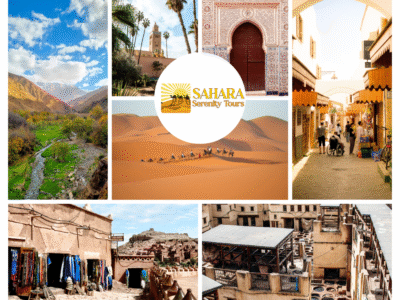
Luxury Morocco travel extends well past Marrakech’s medina walls. The route between Marrakech and Merzouga passes through some of the most dramatic landscapes on the continent: the High Atlas passes, the Draa Valley, the pre-Saharan plains, and the kasbahs of the southern road. How you spend those nights matters as much as the Sahara experience itself. Properties like Kasbah Tamadot in the Atlas Mountains, with infinity pools and views across the Ouirgane Valley, show what this segment of the trip can look like when it’s done right. A roadside guesthouse that uses “kasbah” in its name because the building is old is not the same product, and no amount of warm lighting in the photos makes it equivalent.
The accommodation checklist: what to ask before booking
Before committing to any Morocco luxury package, ask these specific questions about every property on the itinerary. Is it a full hotel with a reception desk and dozens of rooms, or a true riad or private property with a genuinely small room count? Is the pool private to guests or shared across the property? What exactly is included at each property, specifically breakfast, dinner, and transfers? Has the operator personally visited and vetted each property, or is it booked through a third-party aggregator? A confident, specific answer to all four questions is a green flag. Vague references to “carefully curated boutique-style properties” are not.
The luxury desert camp experience: glamping versus basic bivouac
What separates a luxury desert camp from a standard one
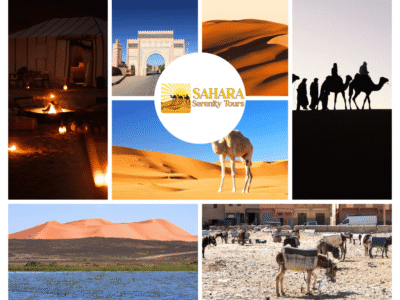
The desert camp is the centerpiece of almost every Morocco itinerary, and it’s also where the gap between real luxury and marketing luxury is sharpest. A genuine luxury desert camp, what’s often called a luxury desert camp Merzouga travelers seek out, has private bathrooms attached to each tent, real beds with quality linen, a properly staffed dinner service with multiple courses, and enough physical separation from neighboring camps that you actually feel alone in the Sahara. A standard camp has shared toilet facilities across a row of foam-mattress tents, a communal tagine served at long tables, and a view of four other camps’ generator lights across the dunes. The Berber-style tent decor, the lanterns, the carpets, and the fire setup only create magic when the camp is positioned for solitude.
When your camp is surrounded by 30 competing groups playing the same three songs on competing drums, the fireside music and stargazing experience loses everything it’s supposed to be. This is not a minor distinction. It is the difference between an experience your guests talk about for years and one they describe as “fine.” Research on traveler satisfaction in Erg Chebbi consistently confirms that crowding is the single most-cited factor undermining otherwise well-appointed camps. For a deeper comparison on how camp types and crowding affect the experience, see our Luxury Vs Budget Morocco Desert Tours.
Location matters as much as the tent itself
Erg Chebbi, near Merzouga, is the more accessible option: easier road access, a wider range of camps, and the famous tall dunes that anchor most Morocco photos. It’s also more developed and, in peak season, noticeably crowded. Erg Chigaga, near M’Hamid, requires more travel time and a 4×4 for the final stretch, but delivers genuine remoteness, fewer visitors, and a stronger sense of actually being inside the Sahara rather than at its edge. A quality operator chooses camp placement deliberately. At Sahara Serenity Tours, we hand-pick our desert camp partners directly rather than booking through wholesale intermediaries, which is how we control both quality and exclusivity, whether that means routing travelers to Erg Chigaga for full solitude or selecting Erg Chebbi camps that sit deeper in the dunes than the standard cluster.
What a luxury desert night actually includes
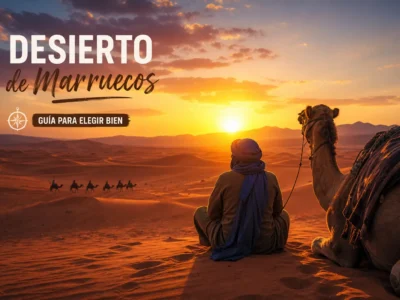
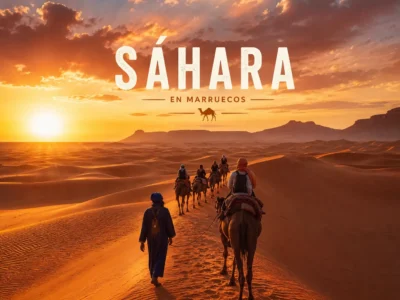
Our desert nights at Sahara Serenity are designed around a specific rhythm. The camel trek into the dunes begins at the right angle for golden-hour light, arriving at camp as the sky shifts color. The tent is properly appointed: a real bed, a private bathroom, Berber rugs, enough space to move comfortably. Dinner is a full sit-down service under the stars, not a shared pot. Traditional music around the fire runs long enough to feel genuine, not rushed. Guided stargazing follows, and a sunrise dune walk before breakfast gives travelers the dunes entirely to themselves before the day-trippers arrive. This is the experience American travelers picture when they search Morocco, and the job of a quality operator is to make sure the reality matches it. For more on our approach to a truly private desert night, read our private luxury glamping under the Sahara stars guide.
Private guides who unlock the real Morocco
What a licensed local guide actually does differently
A licensed private guide in Morocco holds a certification from the Moroccan Ministry of Tourism, has passed written and verbal examinations, and is, by law, a Moroccan citizen with deep knowledge of the country’s history, architecture, geography, and culture. This is not the same as a tour escort who reads from a laminated card and moves a group through the medina highlights in 90 minutes. A genuine private local guide has personal relationships in the city: family-run workshops not on any map, mint tea spots that aren’t staged for tourists, and the professional freedom to slow down in the zellige quarter because one traveler is genuinely fascinated by the geometry of the tilework.
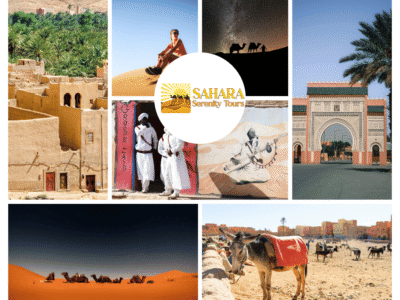
In the medinas of Fes and Marrakech, this distinction changes everything about what a day looks like. A private guide can arrange access to a master tanner’s workspace, explain the centuries-old craft of brass chasing while the craftsman works, or navigate the covered qissaria markets with the familiarity that only comes from growing up in the city.
Cultural depth that a group tour can’t provide
In a group of 30, the guide optimizes for the average. The pace is set for the slowest walker, explanations are pitched for the least informed person, and there’s no time to follow a thread of curiosity wherever it leads. In a small-group or private setting, the guide has time and freedom to go deeper. A 10-person cap changes the equation entirely: the guide-to-traveler ratio improves, side conversations become possible, and the itinerary bends to what the group actually cares about. That flexibility is what turns a pleasant guided tour into a real cultural education.
Language and communication for American travelers
American travelers need more from a guide than English fluency. They need cultural context framed for a Western starting point: why the medina layout reflects Islamic city-planning principles, what tipping culture looks like in Morocco and how to handle souk negotiations without offense, and when to push forward versus when to slow down and absorb a moment. Morocco is an extraordinary country, and an unfamiliar one for most American first-timers. A guide who understands that context, who can read what a group needs without being asked, is one of the most practical luxury features on the entire itinerary.
Gourmet dining as a deliberate part of the package
Beyond the tourist-menu tagine
Food is one of the clearest markers of a luxury Morocco package because it requires real local relationships to execute well. The gap between a standard-tour dinner and what gourmet Morocco dining actually looks like is not subtle. On one side: a tourist-facing restaurant near the main square serving the same fixed menu to hundreds of travelers per night. On the other: a private courtyard dinner at a riad with a chef who sources from the souk that morning, a rooftop restaurant with a menu built around seasonal Moroccan produce, or a home-cooked meal arranged by the guide with a Berber family in a mountain village. The latter requires an operator with actual relationships. You can’t book that through a third-party platform.
Culinary experiences worth paying for
The dining formats that define a premium Morocco package go beyond sitting down for a good meal. Cooking classes with riad chefs, where travelers learn to build a proper ras el hanout spice blend and assemble a bastilla, generate more genuine connection to Moroccan culture than any museum visit. A souk market tour followed by a guided cooking session turns a morning into a full immersive experience. For travelers who want the full picture, select Moroccan properties offer wine pairings. Private picnic setups in unexpected locations, such as a palmerie outside Marrakech or a plateau overlooking the Draa Valley, are entirely achievable for operators with the right local network.
What a luxury package’s meal structure looks like
A well-designed luxury Morocco package includes daily breakfast at every accommodation, selected dinners at hand-picked restaurants chosen based on firsthand operator knowledge, and open lunches that leave room for spontaneous local discoveries. That unscheduled lunch hour is not an oversight, it’s a feature. It gives travelers the freedom to follow the guide’s recommendation of the day, whether that’s a family-run spot in the medina or a courtyard café that happens to be spectacular. Mass-market packages typically fill those slots with buffet hotel dinners and tourist-district stops that have no local character and no flexibility.
Seamless logistics from arrival to departure
Private transfers and premium ground transport
The logistics infrastructure of a luxury Morocco package starts at the airport. A private transfer on arrival means a driver holding a sign with your name, helping with luggage, and getting you to your riad without a single navigation decision required. From that moment, a dedicated driver stays with your group for the duration of the trip. On desert and mountain routes, that means a premium 4×4 vehicle suited to Atlas passes and unpaved southern roads. In cities, it means someone who knows exactly where to park near the medina entrance in Fes, how to time arrivals at riads to avoid check-in queues, and how to stage the day so transitions between sites are seamless rather than stressful.
In a mass-market tour, these transitions are rushed, crowded, and often the source of the trip’s most frustrating moments. A bus of 30 people loads slowly. Luggage goes into a shared hold. The driver follows a fixed schedule that doesn’t accommodate the group running long at a particularly good location. None of that is a function of the destination. It’s a function of how the product was designed.
24/7 support and the concierge model
Genuine end-to-end support means a trip coordinator who is reachable throughout the journey, proactively adjusts when road conditions or weather change, and handles every reservation and on-the-ground issue before the traveler ever notices it. That’s a specific operational commitment, not a marketing phrase. Compare that to the standard tour model, where the operator’s contact number routes to a call center staffed by people who have never been to Morocco and whose ability to help mid-trip is limited to reading from a booking file.
The no-taxi, no-planning standard
The core luxury logistics promise is this: from the moment a traveler lands to the moment they board their flight home, they never need to figure out transportation, worry about a hotel check-in problem, or negotiate with a driver. For American travelers specifically, this matters enormously. Morocco is a country where road navigation is genuinely complex, medina street logic defies mapping apps, and language barriers add friction to every unplanned interaction. A luxury package removes that friction entirely, which frees the traveler to be present in the experience rather than managing it. That’s what makes logistics a luxury feature, not just a convenience.
Customization and the bespoke Morocco itinerary difference
What “customizable” actually means in practice
Most operators claim their trips are customizable. In practice, mass-market packages offer surface-level flexibility: choose from three departure dates, add one optional excursion, or upgrade your room category. That is not customization. A genuine bespoke Morocco itinerary means the operator builds everything around the traveler from the start: beginning in Casablanca rather than Marrakech because that’s where the flight lands, spending three nights in Fes instead of one because the traveler is a historian who wants to walk every medina neighborhood, or skipping an imperial city entirely to spend more time in the Draa Valley. To test whether an operator’s customization is genuine, ask a specific question: “Can I restructure the itinerary so we skip Casablanca and start in Tangier?” A real answer means they can. A non-answer means the customization is cosmetic.
Departure flexibility and pacing
A luxury Morocco trip for a couple celebrating an anniversary looks completely different from a 10-day family trip with young children, which looks different again from a pair of retired travelers who want to spend a full afternoon in a single mosque without the group moving on. Departure city flexibility, duration options ranging from 3 days to 2 weeks, and daily pace control are the hallmarks of a bespoke Morocco itinerary. At Sahara Serenity Tours, our private Morocco tour packages are structured around the traveler’s actual departure city and timeline rather than forcing everyone onto the same Marrakech-Merzouga-Fes circuit. That circuit exists because it works, but it’s a starting point for design, not a constraint.
When bespoke becomes truly exclusive
At the upper tier of customization, the itinerary includes experiences that don’t exist in a catalog. Private access to locations not on standard routes. Exclusive camp setups arranged for a specific group of two. Romantic additions for honeymooners: flowers, a private dune dinner, dedicated camp access. Family-specific pacing with midday rest breaks and flexible meal timing for young children. These are the experiences that generate reviews describing specific moments rather than general satisfaction. “Our guide arranged a private tea with a carpet weaver’s family” is a different kind of review than “the hotel was lovely.” Both matter, but only one is irreplaceable.
Group size: the luxury factor most travelers overlook
Why a 40-person bus tour cannot deliver luxury
Group size is the most overlooked variable in evaluating Morocco packages, and it affects every other feature on this list. When a group grows past 10 or 12 travelers, logistics drive every decision. The guide splits attention across too many people to go deep with any of them. Desert camp access becomes crowded because the camp must be large enough to absorb the volume. Restaurant reservations require tourist-circuit venues that can seat everyone simultaneously. The flexibility to pause for 20 extra minutes in a souk neighborhood because one traveler is fascinated by the zellige tilework simply disappears, that decision would delay 39 other people, so it doesn’t happen.
The 10-person cap and what it changes
A strict 10-person cap changes the product in specific, concrete ways. The guide-to-traveler ratio improves dramatically, making real cultural education possible. The group fits in a single premium vehicle, which simplifies every transfer. Boutique accommodations that cannot accept large groups, including the best luxury riads Morocco has to offer and the most intimate desert camps, become fully accessible. The social dynamic around a campfire actually works: 10 people from different American cities sharing a Sahara night is a genuine experience. Forty people at the same camp is a logistics operation. At Sahara Serenity Tours, the 10-person cap on shared group departures is the single feature our returning travelers mention most often. It is not arbitrary. It is the number at which the experience stays genuinely personal.
Private tour vs. small-group: how to choose
Couples, honeymooners, and families with specific itinerary needs should seriously consider a fully private Morocco tour package: complete flexibility, a dedicated guide and driver, and an itinerary built entirely around them. Solo travelers and small friend groups of two to six people who want a social campfire element and the cost-sharing benefit of a shared departure should look at small-group tours with a hard cap. The critical variable is the cap itself. A tour marketed as “small-group” that allows 20 or more travelers is not a small-group tour, it’s a medium bus tour with better language in the listing. Ask the number directly before booking.
How to evaluate a Morocco luxury tour operator before booking
Questions that separate real operators from resellers
Before committing to any exclusive Morocco travel package, ask these six questions and listen carefully to how the answers are delivered. Do your guides work exclusively with your company, or are they contracted through a third party on each departure? How many travelers will be on my specific departure date? Can I speak with or receive a profile of the guide who will lead my trip? Have you personally visited and stayed at the desert camp included in this itinerary? What is your specific process when something goes wrong mid-trip? What is included versus excluded in the daily rate? A confident operator answers all six immediately and specifically. Vague responses about “carefully vetted partners” without details are a warning sign, not reassurance.
Red flags in luxury Morocco marketing
The signs that a “luxury” package isn’t what it claims are consistent. Stock photography of camps and riads that are not directly partnered with the operator. No transparency about group sizes on the website or in the initial sales conversation. Accommodation described only as “boutique-style properties” with no named properties listed. No named guides or team profiles. Customer reviews that express general happiness without describing any specific experience, moment, or person by name. The green flags are just as consistent: named properties, named guides, a hard group cap stated clearly, detailed day-by-day itineraries, and reviews that describe specific moments. Those are the markers of a 5-star Morocco vacation that’s real.
What Sahara Serenity Tours gets right
Every feature described in this article maps directly to how Sahara Serenity Tours is built. Our team is Moroccan, local, and personally experienced on every route we operate. We have slept in every camp we recommend, driven every mountain road, and walked every medina neighborhood we send our travelers into. Our shared group departures are capped at 10 people, stated company policy, and the cap our team treats as non-negotiable. Our private tours depart from any Moroccan city and are built from scratch around the traveler’s actual timeline and interests. We handle every logistical detail from the moment a traveler lands to the moment they leave, with in-trip support provided by a real person on the ground in Morocco, not a call center.
If you’re ready to start planning, we’d love to hear from you. Reach out to the Sahara Serenity Tours team to discuss your trip, your dates, and exactly what a Morocco vacation package luxury travelers genuinely value looks like for you. Whether you’re looking at a 4-day desert run between Marrakech and Fes or a fully private 10-day journey through the imperial cities and into the Sahara, we build it around your trip, not ours. Start the conversation today, and let’s design something worth talking about for years. You can also explore our BEST Morocco Luxury Vacation for an example itinerary.
What you’re actually buying when you pay for luxury in Morocco
Understanding what makes a Morocco vacation package luxury comes down to a specific set of features you can see, feel, and verify: where you sleep, who guides you, how the logistics are handled, how many other travelers share the experience, and whether the operator has actually been to the places they’re selling. When all of those features align, something shifts. The traveler stops managing the trip and starts living it. The logistics become invisible. The itinerary feels designed for them, because it was.
Morocco at its best is one of the most remarkable travel experiences available to American travelers right now. The Sahara at sunrise from a private dune. A medina guide who has tea with the same family every week. A riad courtyard at midnight with no sound except a fountain. These are experiences that stay with people for decades, and getting them right requires choosing an operator who has built their entire model around delivering them. That’s the standard worth holding to when you start comparing packages, and it’s the standard Sahara Serenity Tours is built to meet.
[…] lusso che vale la pena cercare è fatto di tre componenti precise. La prima: un riad storico nella medina con massimo 10-12 […]