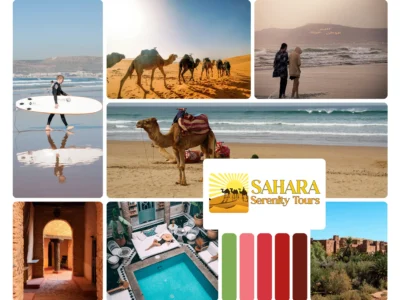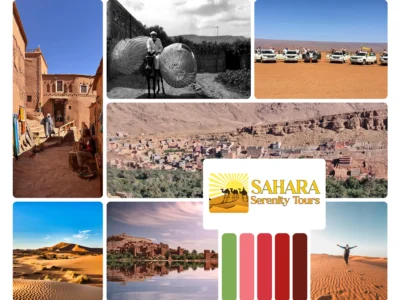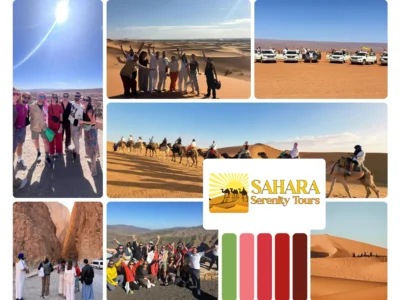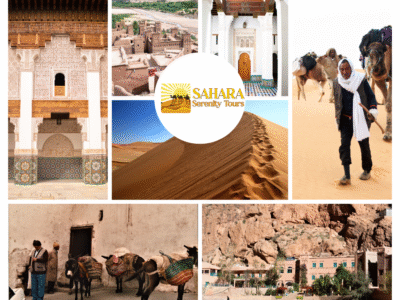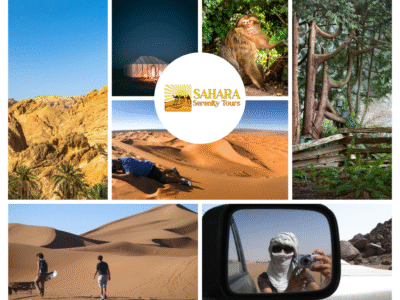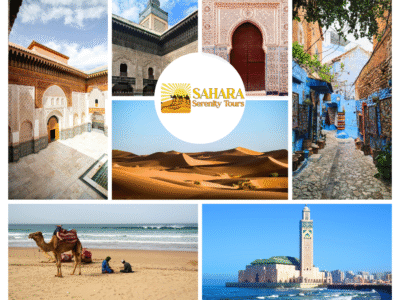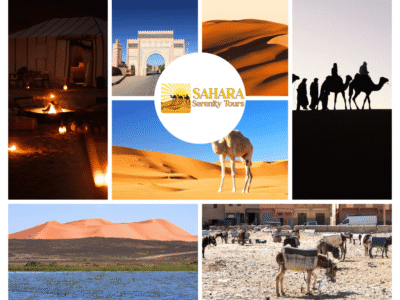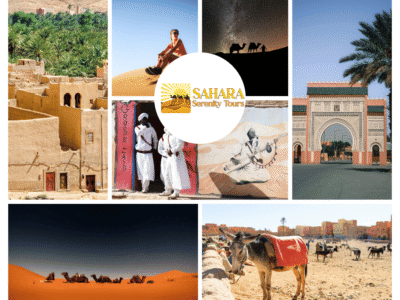
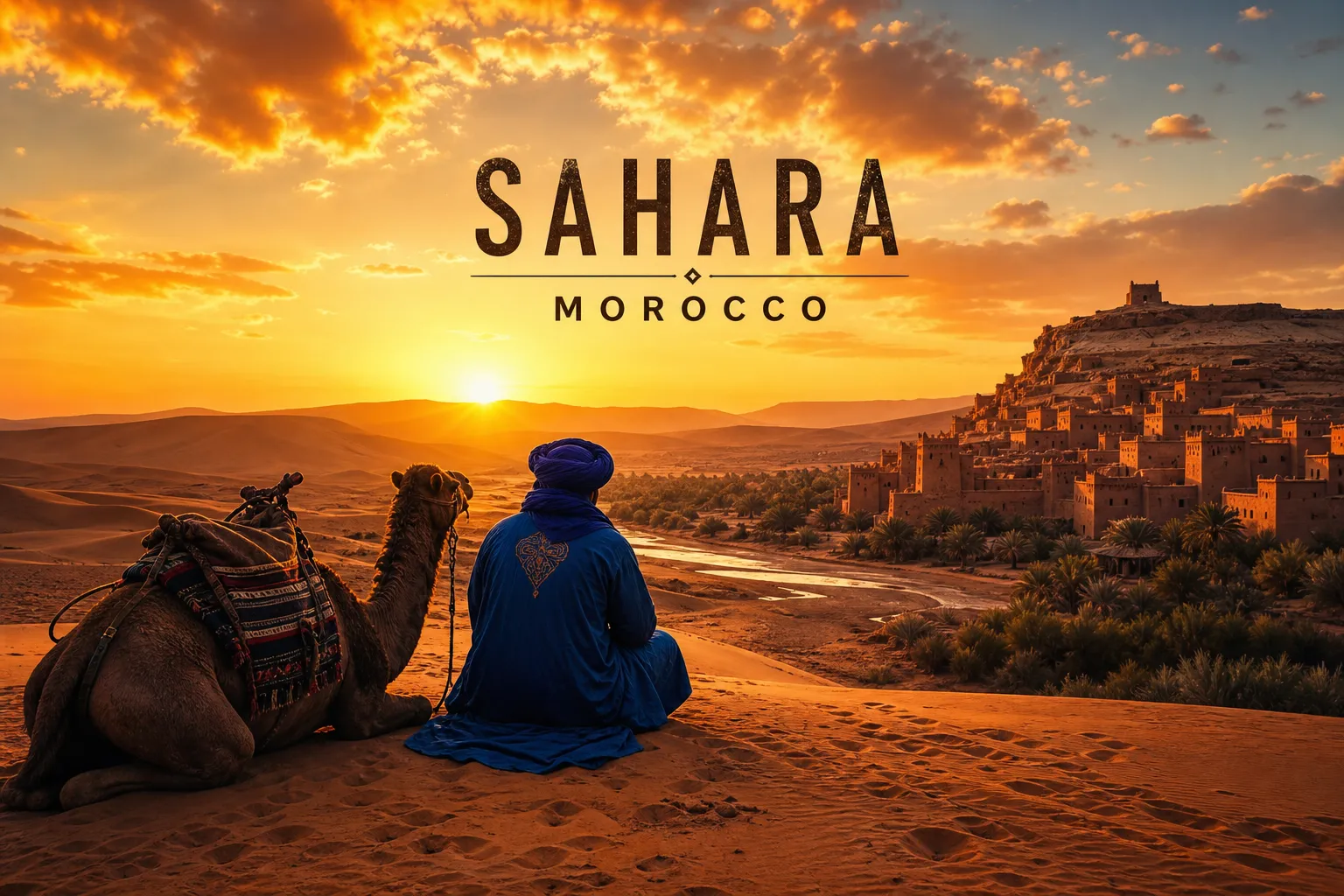
Before the sun clears the ridge of Erg Chebbi, the desert is completely silent. The sand holds the warmth from the day before, mint tea steams from a clay cup outside your tent, and the sky shifts from deep navy to copper orange in minutes. Nothing about that moment feels like a travel brochure. It feels earned, and it feels real. That’s what the Moroccan Sahara delivers that most destinations don’t: the sense that you’ve actually arrived somewhere.
This complete Morocco Sahara travel guide for 2026 covers every practical decision a first-time Sahara traveler needs to make before booking. We’re talking desert regions, itinerary length, transport logistics, camp standards, what to pack for 45°C days and 5°C nights, and how to show up as a respectful guest in Berber communities. The team at Sahara Serenity Tours has been guiding American travelers across these same dunes for over a decade, and everything here reflects that firsthand knowledge of the route.
By the end, you’ll know exactly which itinerary fits your schedule, what the trip will realistically cost, and how to choose the right partner so the logistics don’t get in the way of the experience.
Merzouga or Zagora: Choosing the Right Sahara for Your Trip
This is the single most important decision you’ll make before anything else in Morocco. Most first-time visitors don’t realize that Merzouga and Zagora offer fundamentally different desert experiences, and choosing the wrong one can cost you days without delivering the landscapes you actually came to see.
The dune difference: Erg Chebbi vs. the rocky south
Erg Chebbi, near Merzouga in southeastern Morocco, is what most people picture when they think “Sahara.” The dunes rise dramatically from flat ground, some reaching over 150 meters, and the sea of golden sand stretches in every direction from camp. Zagora, by contrast, sits in a more arid southern landscape of stone, scrub, and modest dunes. It’s still desert, but it doesn’t deliver the visual drama that most travelers cross an ocean for. If the image in your head is a classic, rolling dune landscape with camel silhouettes at sunset, you want Merzouga.
How far each desert is from Marrakech
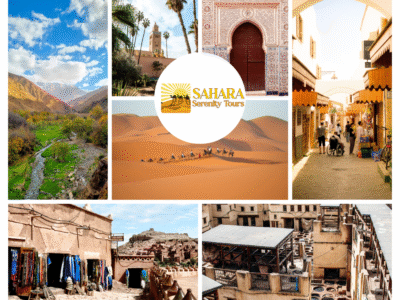
Zagora sits roughly 6 hours from Marrakech by road, while Merzouga is closer to 10 hours. That’s a real difference, and it matters when you’re working with a tight vacation schedule. For trips of 3 days or fewer, Zagora is a workable shortcut that still gets you into the desert. For anyone with 4 or more days, the extra driving hours to Merzouga are absolutely worth it. The route itself passes through some of Morocco’s most dramatic scenery: the High Atlas, Aït Ben Haddou, and the Dades Valley are all on the way.
Which desert suits your travel style
Zagora works well for short itineraries, and for families with very young children who just want a taste of the desert without committing to a long overland journey. Merzouga is the go-to choice for first-timers who want the full iconic experience: a real overnight camp, a camel trek into towering dunes, and a sunrise that genuinely stops you in your tracks. If this is your first Sahara trip, Merzouga is the answer.
Complete Morocco Sahara Travel Guide 2026: Best Itineraries by Trip Length
The best itinerary depends entirely on how many days you have, not on any single “perfect” route. Here’s how experienced desert travelers approach each trip length.
The 3-day Sahara sprint: Marrakech, Dades, and Merzouga
Day 1 takes you through the High Atlas Mountains, over the Tizi n’Tichka Pass, past the UNESCO-listed kasbah at Aït Ben Haddou, and through Ouarzazate to the Dades Valley. Day 2 moves through Todgha Gorge to Merzouga, where you mount a camel at sunset and ride into the dunes for an overnight camp. Day 3 starts with a sunrise in the sand and then returns toward Marrakech or continues north to Fes. This is the shortest trip that delivers a genuine desert night, and it works well for travelers who are short on vacation days but refuse to skip the Sahara entirely.
The 5-day balanced route: slowing down without losing the highlights
The 5-day version uses the same backbone but removes the marathon pace. A second night around Merzouga, time in Rissani’s weekly market, and a wander through the Valley of Roses replace the nonstop transit days. You actually have time to sit at camp after dinner instead of calculating tomorrow’s drive. This is the best pacing for first-time visitors who want to come home feeling restored rather than exhausted.
The 7-day classic loop: cities plus Sahara
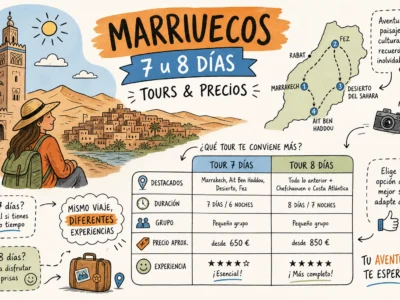
Seven days is enough time to add a real city introduction at either end of the desert route. Arrive in Marrakech or Fes, spend a half-day in the medina, then head south through the Atlas into Merzouga territory. The added days let you linger in the Ziz Valley, stop at Erfoud, and still reach your end city without rushing. This format works well for travelers who want cultural depth alongside desert time, and it’s one of Sahara Serenity Tours’ most popular structures for American visitors.
The 10-day complete Morocco journey
Ten days is the only itinerary long enough to genuinely combine Marrakech, the Sahara, Fes, and northern Morocco. A strong 10-day route puts 2 full days in Marrakech, 2 days crossing to Merzouga, a full Sahara day, and then routes north through the Ziz Valley toward Fes, Chefchaouen, and the coast. This is the trip for travelers who want the complete picture rather than a desert-focused sprint, and it’s as close to “all of Morocco” as most vacation schedules allow.
When to Visit: Sahara Seasons and What to Expect Each Month
Timing your trip correctly matters more than almost any other planning decision. The wrong month can turn a dream itinerary into a heat survival exercise or leave you shivering in a camp tent with no real gear.
Spring and autumn: the clear sweet spot
March through May and late September through October are the best months to visit. Days are warm and comfortable, nights are cool but manageable, and sandstorms are relatively rare. April and October consistently sit at the top of every local guide’s recommendation list. April offers daytime highs around 29°C with nights around 13°C; October brings around 30°C by day and 15°C at night. Both months give you the full desert experience without the extremes pulling you in opposite directions.
Summer heat and winter cold: what the extremes actually feel like
June through August daytime temperatures regularly hit 42, 45°C in Merzouga. Camel treks in that heat are genuinely draining and carry real risk, especially for children and older travelers. December and January flip the challenge: pleasant and sunny by day at around 18°C, but temperatures drop to 3, 5°C after dark, which requires proper warm layers at camp. Neither extreme is a dealbreaker with the right preparation and packing, but both require a specific adjustment to your plan.
A month-by-month reference for planning
Use this quick-reference breakdown to match your travel window to desert conditions:
- January: 18°C high / 3°C low, cold nights, clear days
- February: 21°C high / 6°C low, warming slightly
- March: 24°C high / 9°C low, spring sandstorms possible
- April: 29°C high / 13°C low, ideal conditions
- May: 34°C high / 15°C low, still excellent, warming
- June, August: 38, 43°C high / 22, 26°C low, extreme heat, plan carefully
- September: 34°C high / 19°C low, comfortable conditions return
- October: 30°C high / 15°C low, ideal conditions
- November: 22°C high / 9°C low, excellent, quieter crowds
- December: 18°C high / 4°C low, cold nights, fine by day
For most American travelers planning their first Sahara desert trip, April, May, or October is the straightforward answer.
Getting to Merzouga from Marrakech: Your Transport Options
The real decision here isn’t just about cost. It’s about whether you want the drive to be part of the trip or just a way to reach your destination. Those are genuinely different experiences.
Public bus: the budget option and its real trade-offs
The Supratours bus from Marrakech to Merzouga takes roughly 12 hours and costs around $25, $43. It’s the cheapest option on the list, and it gets you there. What it doesn’t do is stop at Aït Ben Haddou, Todgha Gorge, or the Dades Valley. Travelers who take the bus to save money often arrive wishing they’d seen the route rather than just covered it. The drive between Marrakech and Merzouga is genuinely one of the most scenic overland stretches in North Africa, and a direct bus skips all of it.
Private transfers and shared shuttles: faster but at a cost
Private minivans run 7, 10 hours and cost around $285, $300 for the vehicle, which works reasonably well for small groups splitting the price. Shared shuttles run a similar duration and cost $94 or more per person. These options work best when you’re purely transferring between cities and have already seen the region’s highlights on a previous trip. For first-timers, they still skip the scenic stops that make the overland journey worthwhile.
Getting to Merzouga (Morocco Sahara travel guide 2026: guided tours)
A guided Sahara Desert Tour in Morocco from Marrakech or Fes turns the drive into part of the experience itself. You stop at Aït Ben Haddou before the afternoon crowds arrive, eat lunch in a kasbah town in the Dades, and arrive at your desert camp having actually seen Morocco on the way. Sahara Serenity Tours structures all of its desert routes this way: the journey between cities is treated as a highlight, not a transfer. The difference in how you arrive at camp is noticeable.
What the Sahara Desert Camp Experience Actually Looks Like
After “how do I get there,” the most common question is: what actually happens at camp, and how comfortable will it be? Here’s the honest answer.
The camel trek: duration, pace, and what to realistically expect
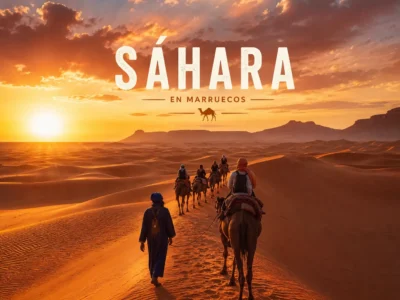
Most camel treks from the edge of the dunes into camp run 45 minutes to 1.5 hours each way, timed for a sunset arrival and a sunrise return the following morning. The rhythm is slow and rolling, single-file through the dunes with a Berber guide leading on foot. The camel’s movement takes some getting used to, but it’s not physically strenuous. Longer rides can cause some mild hip or lower back soreness, so if that’s a concern, ask your operator about the 4×4 return option for the morning after.
Standard camps vs. luxury glamping: what separates them
Standard Berber camps offer traditional goat-hair tents, shared bathrooms, and a communal dinner around a campfire with music. Luxury camps, often marketed as glamping or “luxury desert camps,” add private ensuite tents with proper beds, Moroccan-style furnishings, gas heaters, and elevated dining. Both experiences sit under the same night sky and share the same dune landscape. The difference is comfort level and privacy. Couples celebrating a honeymoon or milestone anniversary typically choose a luxury camp; groups and adventure travelers often prefer the communal energy of a traditional camp.
Stargazing in Erg Chebbi: why it’s worth staying the night
With zero light pollution for miles in every direction and dry desert air that keeps the sky crystal clear, the night sky at Erg Chebbi is genuinely exceptional. On a clear night, the Milky Way is visible to the naked eye from camp. This is consistently the detail that surprises first-time visitors most: they came for the dunes and leave talking about the stars. It’s the primary reason experienced desert travelers always recommend an overnight stay rather than a day trip from Merzouga.
The Sahara Packing List: What to Bring and What to Skip
The most common packing mistake is packing for one extreme or the other. People either load up with heavy gear they don’t need or arrive in the desert completely unprepared for how cold it gets after sunset. Here’s what actually works.
Clothing for extreme temperature swings
Days in spring and autumn run 29, 34°C, while nights can drop to 9, 15°C. A layering strategy is the only approach that covers both. Pack lightweight, breathable base layers for daytime: cotton, linen, or merino wool all work well. Add a fleece or packable light down jacket for after sunset. A headscarf, shemagh, or buff serves double duty as dust and wind protection during the camel trek and warmth at night. Closed-toe shoes or sturdy hiking sandals matter more than flip-flops: walking on warm sand in loose footwear is uncomfortable and tiring.
Sun protection, hydration, and desert health basics
Bring high-SPF sunscreen, quality UV-rated sunglasses, a wide-brim sun hat, and at least two liters of personal water capacity. The desert glare is intense even in spring and autumn; polarized lenses make a real difference after an hour on the dunes. Sahara Serenity Tours provides water throughout the tour, but carrying your own supply for the camel trek means you’re never dependent on timing or proximity to camp.
What to leave behind
Heavy DSLR camera rigs without proper sand protection, valuable jewelry, and formal clothing are all unnecessary weight. Sand finds its way into everything: lenses, ports, zippers, and bags that aren’t sealed. A mirrorless camera in a padded, closeable bag or a smartphone with a strong night mode will serve you better than an unprotected camera setup for 90% of the shots you actually want. Pack light: experienced desert travelers aim for a single soft duffel under 12 kg, which makes camel loading much easier.
Berber Culture and Desert Etiquette: What Every Visitor Should Know
Knowing a few cultural basics doesn’t just prevent awkward moments. It opens doors to more genuine interactions that most tourists on rushed itineraries never experience. The Merzouga area has real Berber and nomadic communities alongside the tourist-facing operations, and how you show up matters.
Understanding Berber hospitality in practice
Mint tea in Morocco is not a sales pitch; it’s an invitation. Accepting tea at camp, in a shop, or at a guesthouse signals respect and willingness to connect rather than transact. The traditional three-glass pouring has meaning: the first glass is bitter like life, the second sweet like love, and the third gentle like death. You’re not obligated to finish every glass, but accepting the gesture warmly is the right move every time.
Dress codes, photography, and respecting desert communities
Modest clothing around local villages near Merzouga is a straightforward sign of respect. Covered shoulders and knees are appropriate for both men and women when outside of camp. Always ask before photographing local people, and be especially thoughtful around children: a simple gesture or a smile asking permission goes a long way. Don’t assume that because something is happening in front of you, it’s available for your camera.
What to expect around a campfire at night
Berber music, hand drums, and communal storytelling are standard at most traditional desert camps after dinner. The atmosphere is warm and inclusive rather than performative. Participation is welcomed but never required: clapping along, asking about a song, or just sitting and listening are all equally valid. What doesn’t land well is treating the evening like background entertainment while you scroll your phone. Genuine curiosity and presence are the simplest forms of respect you can offer your hosts.
Planning Your Sahara Trip with Sahara Serenity Tours
This is the practical section on choosing the right operator, because every planning challenge covered above gets easier with the right local team behind you.
Why going with a local expert changes the entire trip
DIY travel has real appeal, and Morocco rewards curious independent travelers in many ways. But coordinating transport from Marrakech, booking the right camp in Merzouga, managing the overland route logistics, and finding a guide with genuine cultural knowledge across multiple regions adds significant planning friction. Most travelers who try to piece it together independently spend more time managing logistics and less time actually experiencing the country. A local operator who knows the Sahara firsthand absorbs those variables so you can focus on the trip itself. For advice on finding a professional desert tour guide in Morocco, consult our practical guide.
What Sahara Serenity Tours handles for you
Sahara Serenity Tours manages the full logistics: departure from Marrakech, Fes, or any Moroccan city; transport in private vehicles with English-speaking local guides; stops at all major route highlights including Aït Ben Haddou, the Dades Valley, and Todgha Gorge; camel trekking; desert camp reservations; and deep cultural context throughout. Small-group tours are capped at 10 travelers, which keeps the experience intimate and personal rather than bus-tour impersonal. The team isn’t a generic reseller; they’re local professionals with firsthand knowledge of every stretch of the route.
How to book and what to ask before you commit
Reach out to Sahara Serenity Tours directly to discuss your schedule, travel style, and what matters most to you on this trip. Both private and small-group formats are available, and itineraries range from a 3-day Sahara sprint to a 10-day full-country journey. Ask about departure city flexibility, camp standards, group size, and what’s included in the price. A good operator answers those questions clearly and without pressure. The Sahara Serenity Tours team has been doing exactly that for American travelers for over a decade, and they’re ready to help you put together the right trip. If you’re unsure which option fits your travel style, read our guide on how to choose the best Morocco desert tour as a first-timer.
Your Moroccan Sahara Trip Starts Here
The Sahara is one of those rare places that delivers exactly what you imagine and then surprises you anyway. The sunrise camel ride, the silence of the dunes at 4 a.m., the Milky Way over an Erg Chebbi camp: these aren’t travel clichés in Morocco. They’re real experiences that stay with travelers for years after they return home.
The key decisions are straightforward once you know them. Choose Merzouga for a first trip. Pick the itinerary that fits your actual schedule rather than stretching for a version you can’t sustain. Travel in spring or autumn when conditions are at their best. Pack for both the heat and the cold. Work with a local team that knows the route firsthand, so the logistics don’t get between you and the experience.
Use this complete Morocco Sahara travel guide to plan your itinerary, pick the right camp, and choose a guide who knows the route. Sahara Serenity Tours is that team. Reach out, ask your questions, and get your trip on the calendar. The best camp spots book up well in advance, so the sooner you plan, the more options you’ll have.