If you’re searching for the best Morocco desert tour for first-time visitors, start here. You land in Marrakech, step out of the airport into warm, spiced air, and pull up the tab you bookmarked three weeks ago: “best Morocco desert tours.” Dozens of results. Prices ranging widely from budget day trips to multi-day luxury expeditions. Merzouga, Zagora, Erg Chebbi, Erg Chigaga. Two-day, three-day, seven-day. Shared van, private 4×4, luxury glamping, budget bivouac. If you’ve ever stood in that mental sand dune of options and felt genuinely lost, you’re not alone. Many first-time visitors tell us the same thing when they reach out to Sahara Serenity Tours.
Here’s the good news: the decision is much simpler than the number of listings suggests. Once you understand a few key differences, the right tour for your trip becomes obvious. This guide walks you through every factor that actually matters, from which desert region to choose to what to pack for the overnight cold, so you can stop comparing and start planning with confidence.
How to choose the best Morocco desert tour for first-time visitors
Before diving into the details, here’s the short version: commit to Merzouga for the dunes, plan at least 3 days, understand exactly what is and isn’t in the price, and choose a small-group operator with real local knowledge. Everything below explains why those four decisions matter and how to make each one confidently.
Merzouga or Zagora: choosing the right desert for your first trip
This is the question that trips up almost every first-time visitor, and getting it wrong means a long drive to a result that doesn’t match what you imagined. The two regions offer fundamentally different experiences, and the choice should come down to dune quality, travel time from your base city, and what kind of memory you want to carry home.
Why Erg Chebbi near Merzouga is the classic first-timer’s choice
Erg Chebbi is what most people picture the moment someone says “Sahara Desert”: towering orange dunes reaching up to 150 meters, easy camel access, and a full range of camps from budget bivouacs to genuine luxury glamping Morocco has to offer. The road is paved all the way to Merzouga, access to fuel and basic services is consistent along the route, and the visual payoff starts the moment you crest a ridge and the dunes come into view. For a first-time desert visitor, Merzouga delivers everything on the wish list without requiring off-road vehicles or complicated advance logistics beyond booking your tour.
What Zagora offers (and where it falls short on dunes)
Zagora is closer to Marrakech, which makes it tempting if you’re pressed for time. The drive runs about 7 to 8 hours compared to 8 to 9 hours for Merzouga. But the dunes near Zagora are noticeably smaller and less dramatic than Erg Chebbi. If you simply want to sleep in the desert and check that box, Zagora works fine. If the Sahara is a bucket-list moment you’ve imagined for years, the extra hour or two of driving to Merzouga is worth every kilometer.
The remote option: Erg Chigaga for repeat visitors
Erg Chigaga sits far beyond Zagora and requires a 4×4 across open desert terrain to reach. The dunes are vast, genuinely remote, and far less trafficked by tourists. That remoteness is the point, and it produces an extraordinary experience. Save it for your second trip, once you already know what you love about Morocco’s desert and you’re ready to go deeper.
How many days do you actually need in the Sahara?
Tour length shapes everything else: how much you see, how rested you feel, and whether the desert camp feels like the highlight of your trip or a rushed checkbox. Based on years of guiding first-time visitors at Sahara Serenity Tours, the pattern is consistent: more days equals a better experience, up to a point.
The 2-day tour: fast, affordable, and genuinely exhausting
A standard 2-day tour from Marrakech to Merzouga covers roughly 560 kilometers each way, with pickup at 7:00 AM and a full 8 to 9 hours of driving on Day 1. You arrive at the dunes in the late afternoon, trek to camp on camelback, watch the sunset, sleep under the stars, and then drive the entire route back on Day 2. The scenery along the way is genuinely stunning, but the pace is relentless. You’ll see the Sahara, but you won’t feel it.
Why a 3- to 4-day tour is the sweet spot for first-time visitors
A 3- or 4-day tour breaks the driving into manageable legs of 5 to 7 hours per day and adds meaningful stops at places like Ait Ben Haddou, the Draa Valley, Dades Gorge, and Todra Gorge. It also gives you a full evening at camp without immediately rushing back the next morning. You actually have time for a sunrise walk in the dunes, a slow Berber breakfast, and the kind of unhurried conversation with your guide that makes Morocco stick with you long after you land home. This is the format we recommend to first-time visitors at Sahara Serenity Tours, and it’s the one that produces the most satisfied travelers.
When a longer Morocco itinerary makes sense
If you have 7 to 10 days available, a full Marrakech-to-Fes (or Fes-to-Marrakech) desert itinerary is worth serious consideration. You get everything in the 3- or 4-day tour plus the imperial cities, the High Atlas, and the chance to end in a different city than you started. For American travelers working with a 1- to 2-week vacation window, a 7-day itinerary is often the most satisfying balance of depth and efficiency.
What’s actually included in a Morocco desert tour (and what isn’t)
Most tour listings look comprehensive at first glance. The differences between what’s included and what costs extra can shift your budget significantly, so it’s worth reading the fine print before you commit to a booking.
Standard inclusions you can expect at most price points
At virtually every tier, a desert tour should include shared or private transport from your departure city, a camel trek to the overnight camp, dinner and breakfast at the camp, and a return journey with scenic stops. The driver on mid-range and above tours typically also functions as a guide, handling logistics and narrating the route. Most operators include accommodation in kasbahs or riads on overnight stops along the way from the city to the desert.
The extras that almost always cost more
Quad biking, dune buggies, and sandboarding are popular add-ons at most desert camps, but they’re almost never included in the base price. Lunch on travel days is usually your own expense at a local restaurant or roadside stop. Bottled water, tips for camp staff, and entrance fees to heritage sites like Ait Ben Haddou are also commonly excluded from budget and mid-range packages. Many travelers find it useful to set aside an extra $30 to $50 per person per day as a general buffer for these kinds of costs, so you won’t be caught off guard.
Bivouac vs. luxury glamping Morocco: understanding camp levels
A standard desert camp, often called a bivouac, includes shared Berber tents, communal bathrooms, a campfire, dinner, and live music under the stars. A mid-range camp upgrades to private tents with proper beds and better linens. A luxury glamping camp adds en-suite tents with private bathrooms, gourmet meals, and often a climate-controlled sleeping environment. Prices for luxury camp stays alone can run $165 to $275 per night. Know what level of comfort you need before comparing prices across different operators, because you’re not comparing the same product when you line up a $100 tour next to a $500 one.
Small-group vs. large bus tours: why group size shapes the whole experience
This is the single most underestimated factor in Morocco desert tour planning. Two tours can have identical itineraries and produce wildly different experiences based purely on how many people are in the vehicle with you.
What a large-group bus tour actually looks like on the ground
Larger coach tours can carry a couple dozen passengers or more. Stops are brief and timed for the group, not for your curiosity or your camera. Camel treks often happen in longer single-file lines on big tours. Dinner at camp is served buffet-style in a crowd. You see the same things as everyone else, on the same schedule, with limited ability to ask questions or slow down when something genuinely interests you. For first-time visitors who want to absorb Morocco rather than just process it, this format can feel like a highlight reel without the film.
What changes with a small-group tour (and why it matters for first-timers)
Small-group tours capped at around 10 travelers feel completely different. The guide can actually talk to everyone. Stops are flexible when something worth stopping for appears along the route. Conversations with locals happen naturally rather than through a microphone pointed at a sea of hats. At camp, dinner around a shared fire with nine other curious travelers is genuinely social and memorable, not logistically overwhelming. This is the format that produces the kind of stories people come home telling for years.
How Sahara Serenity Tours structures its small-group model
Sahara Serenity Tours caps all shared group tours at 10 travelers maximum, as outlined in our booking terms. Every tour runs in a private vehicle with a dedicated local guide and driver, both with firsthand knowledge of Morocco’s desert routes, landscapes, and culture. First-time visitors consistently describe this as the format that made Morocco feel personal rather than packaged. The 10-person limit is a deliberate design choice, because the size of your group is one of the few things that shapes every single hour of your experience.
Morocco desert tour costs: what to expect at each tier
Sticker shock is common when first-time visitors start comparing tour prices. Here’s a clear breakdown of what each price tier actually delivers, so you can match your budget to the right experience rather than just chasing the lowest number.
Budget tours: $100 to $250 per person
At this price point, you get shared transport in a larger vehicle, a basic bivouac camp with shared facilities, a group camel trek, and usually breakfast and dinner at camp. The logistics work, and the desert is still the desert. These tours are the right fit for travelers with very limited budgets who understand the trade-offs going in: less personalized service, larger groups, and more basic sleeping conditions.
Mid-range tours: $250 to $500 per person
Mid-range is where comfort and authenticity begin to align properly. You get a smaller vehicle, a more experienced and engaged guide, a comfortable camp with private tents, and usually all main meals included. This is the tier where most satisfied first-timers land, and where Sahara Serenity Tours’ small-group shared packages sit. The step up from budget to mid-range is where the experience changes most noticeably.
Luxury and private tours: $500 and up
At $500 and above, tours typically include a private 4×4, a dedicated driver-guide, luxury glamping with en-suite tents, gourmet meals, and full trip customization down to pace and stops. Highly personalized private tours with all logistics handled can reach $1,000 or more per person for a multi-day itinerary. For honeymooners, families with young children, or travelers who want total control over their schedule, this tier is worth every dollar and then some.
How your departure city changes the entire itinerary
The city you start from isn’t just a logistical detail. It determines your route, your daily driving time, and what highlights you encounter along the way to the dunes.
The Marrakech to Merzouga itinerary: the most popular starting point
Marrakech is where most American travelers begin their Morocco trip, and the drive east to Merzouga ranks among the most scenic routes in North Africa. You cross the High Atlas via the Tizi n’Tichka Pass at over 2,000 meters, drop into the Draa Valley, pass through Ouarzazate (often called the “door of the desert”), and arrive at Erg Chebbi as the dunes glow orange in the late afternoon. On a 3-day Sahara tour from Marrakech, daily driving averages 5 to 6 hours with meaningful stops built in at Ait Ben Haddou, Dades Valley, and Todra Gorge.
Starting from Fes: the underrated direction
A Fes-to-Merzouga tour approaches the desert from the north, through the Middle Atlas mountains, cedar forests, and Berber villages that feel genuinely untouched by tourism. The scenery is different from the Marrakech route but equally striking and far less traveled. Travel time from Fes to Merzouga is roughly 8 to 9 hours on a direct drive, so a 3-day tour paced from Fes works best with an early first-day start and a midpoint stopover built in. This direction is ideal for travelers flying into Fes or planning to end their Morocco itinerary there.
One-way tours: ending in a different city than you started
The most efficient format for first-timers with a full Morocco itinerary is a one-way tour: start in Marrakech, end in Fes, or run it in reverse. This eliminates backtracking, adds more destinations naturally, and fits neatly into a 7- to 10-day trip. Sahara Serenity Tours’ Marrakech-to-Fes itineraries are structured this way, and our team can advise on flexible routing based on where your flights land, reach out directly to confirm what works for your specific travel dates.
What to pack for your first overnight Sahara camp
The Sahara is not just hot. At night, especially from October through March, temperatures in Morocco’s desert can drop to 2 to 10 degrees Celsius (around 36 to 50°F). First-time visitors consistently underpack for the cold and overpack for the heat. Getting this right makes the difference between a magical evening under the stars and a long, shivering night waiting for sunrise.
What to wear during the day on the dunes
Daytime in the desert means direct sun, wind-blown sand, and high UV exposure. Wear loose, long-sleeve, light-colored clothing that covers your arms and neck. A wide-brim hat or a Moroccan cheche (the traditional head wrap you’ll see everywhere in the desert) is both practical and doubles as a windbreak when the sand picks up. Closed-toe shoes or lightweight desert boots protect your feet far better than sandals when you’re climbing dunes or walking rocky paths between stops. Sunscreen at SPF 30 or higher is non-negotiable at any time of year.
Gear for the overnight camp that most people forget
The most common first-timer regret on any Sahara trip is not bringing warm enough layers for after sunset. A packable insulated jacket, a fleece mid-layer, and warm socks will make the difference between a memorable campfire evening and an uncomfortable one. Standard camps provide blankets, but quality varies widely between operators. If you’re visiting between October and March, treat the overnight temperature as you would a chilly fall camping trip in the American Northeast. A buff or neck gaiter doubles as both sand protection during the day and warmth at night.
The non-negotiable Sahara packing list
- Moisture-wicking base layers (avoid cotton for cold nights)
- Fleece or insulating mid-layer and windproof outer jacket
- Wide-brim hat or cheche scarf, plus sunglasses with UV protection
- Closed-toe shoes or boots and extra socks
- Sunscreen SPF 30 or higher
- Dedicated warm sleep clothes (kept dry and separate from day clothes)
- Water bottle, a 2-liter capacity is a practical starting point for a full desert day
- Headlamp and portable power bank for devices
How to evaluate and book the right Morocco desert tour operator
Knowing what you want from a tour is half the work. Finding an operator who actually delivers it is the other half. The market has a wide range of legitimate operators and a fair number of resellers who present themselves as operators, so knowing what to look for before you hand over a deposit matters.
Questions to ask before you commit
Ask the operator directly: how many people are in the group? Is the guide a local with firsthand knowledge of the region, or a licensed generalist? Who owns and operates the camp you’re sleeping in? What happens if your tour is delayed or a site is unexpectedly closed? What’s the cancellation policy, and is there a written confirmation of everything that’s included? A reliable operator answers all of these clearly and specifically. Vague answers about “partner camps” or “affiliated guides” are red flags worth taking seriously.
Signs you’re looking at a reseller, not an operator
Many Morocco tour listings online are resellers who aggregate capacity from local operators without ever meeting the guides or inspecting the camps. You’ll usually recognize them by generic stock photography, no specific camp name listed anywhere, and customer service based in a time zone far from Morocco. If you can’t find a named local guide, a real camp with actual photos, or a Moroccan business presence on the website, keep looking. Reputable operators also won’t ask for full upfront payment via wire transfer or any unusual payment method.
Why locally operated tours consistently outperform larger platforms for first-timers
A locally operated tour company employs its own guides, owns direct relationships with the camps, and has a genuine stake in your experience. When something unexpected happens on the road, which it occasionally does in a country as wonderfully unpredictable as Morocco, a local operator solves it on the spot using real knowledge and real relationships. A platform-based reseller files a support ticket. At Sahara Serenity Tours, our entire team is based in Morocco, our guides know the routes personally, and we handle every detail from the moment you book to the moment we drop you at your final destination. For first-time visitors who want authenticity without the stress of figuring it all out alone, working directly with a small-group specialist is the decision that consistently produces the best stories.
Frequently asked questions: best Morocco desert tour for first-time visitors
Is a 3-day Sahara tour the best Morocco desert tour option for first-time visitors?
For most first-timers, yes. A 3-day tour from Marrakech to Merzouga gives you the full desert experience, scenic mountain passes, heritage stops, a camel trek to camp, and a sunrise in the dunes, without the exhaustion of a 2-day rush. If your schedule allows, stretching to 4 days adds breathing room that most travelers are glad they built in.
What’s the difference between the best Morocco desert tours and budget options?
The biggest differences are group size, guide quality, and camp comfort. Budget tours in the $100, $250 range work logistically but typically run larger groups with less personalized service. The best Morocco desert tour experiences for first-time visitors tend to sit in the mid-range ($250, $500), where small-group formats, experienced local guides, and comfortable camps come together at a reasonable price point.
Is Merzouga or Zagora better for a first-time visitor?
Merzouga. The dunes at Erg Chebbi are taller, more dramatic, and more photogenic than those near Zagora. The extra hour or two of driving is worth it for most first-timers, especially if the Sahara is a major reason you’re visiting Morocco in the first place.
When is the best time to visit Morocco’s desert?
October through April is generally the most comfortable window. Temperatures are manageable during the day and cold but not dangerous at night. July and August bring extreme daytime heat that makes extended dune activity difficult. Spring (March, April) and fall (October, November) offer the best balance of mild temperatures and good light for photography.
Ready to stop comparing and start going?
Finding the best Morocco desert tour for first-time visitors comes down to a few honest decisions: commit to Merzouga for the dunes, plan at least 3 days, understand exactly what is and isn’t in the price, and pick a small-group operator with real local knowledge. The Sahara rewards travelers who slow down enough to actually feel it rather than just photograph it.
Every itinerary at Sahara Serenity Tours is built around that principle, whether you have 3 days or 2 weeks, and whether you’re traveling solo, with a partner, or with a group of friends. We cap groups at 10, our guides know Morocco the way only locals can, and we handle every logistical detail so you can show up and be present for all of it.
If you’re ready to move from the research tab to the real thing, reach out and let us build your desert itinerary around exactly how you want to travel. The dunes aren’t going anywhere, but your vacation window is.
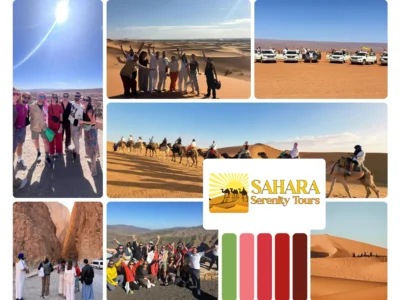
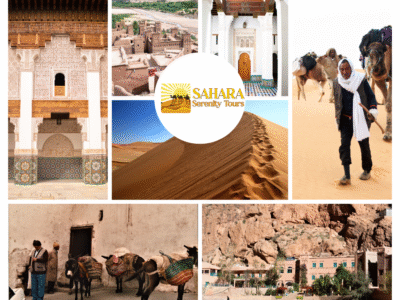
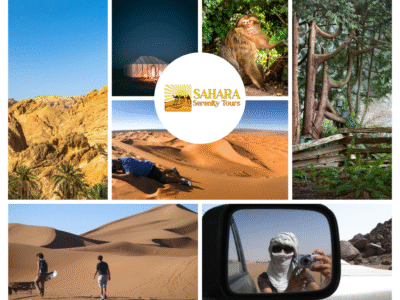
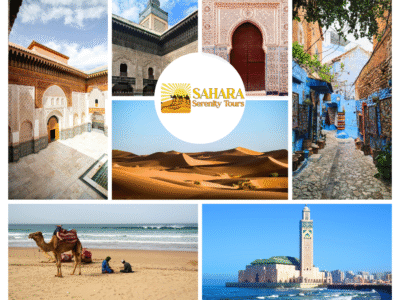
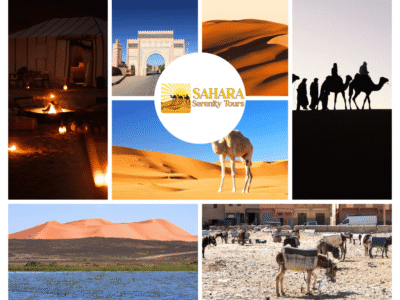
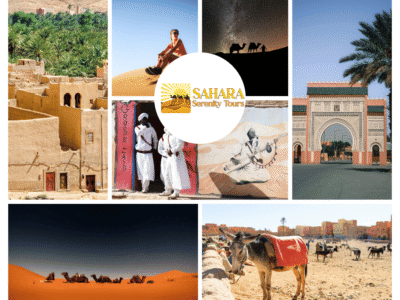
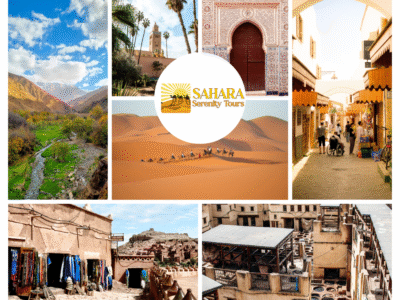
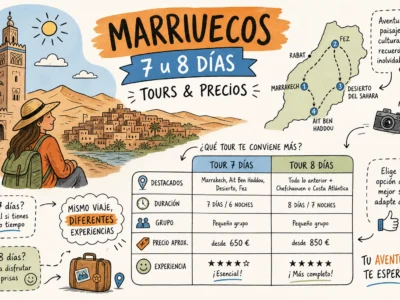
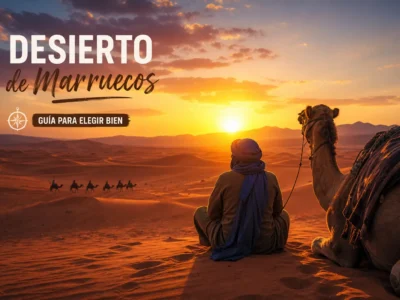
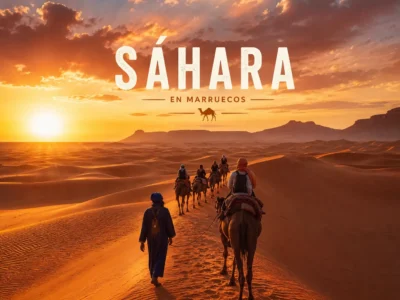
[…] At Sahara Serenity Tours, our three- and four-day desert itineraries are built so the camel portion falls at sunset on the arrival day, giving travelers the most comfortable and photogenic riding conditions without adding extra hours onto an already full travel day. Our guides offer guests the option to walk alongside their camel for part of the route, a small but thoughtful touch that many larger group operators skip. We keep groups small to ensure the camp experience stays intimate, with more personal attention from your guide and a quieter, more relaxed atmosphere overall. If you’re unsure which itinerary fits your schedule best, see our guide to choosing the best Morocco desert tour as a first-timer. […]
[…] and that knowledge shows in the details. If you’re unsure which format suits you best, read How To Choose The Best Morocco Desert Tour As A First-Timer | Sahara Serenity Tours for practical guidance tailored to first-time […]