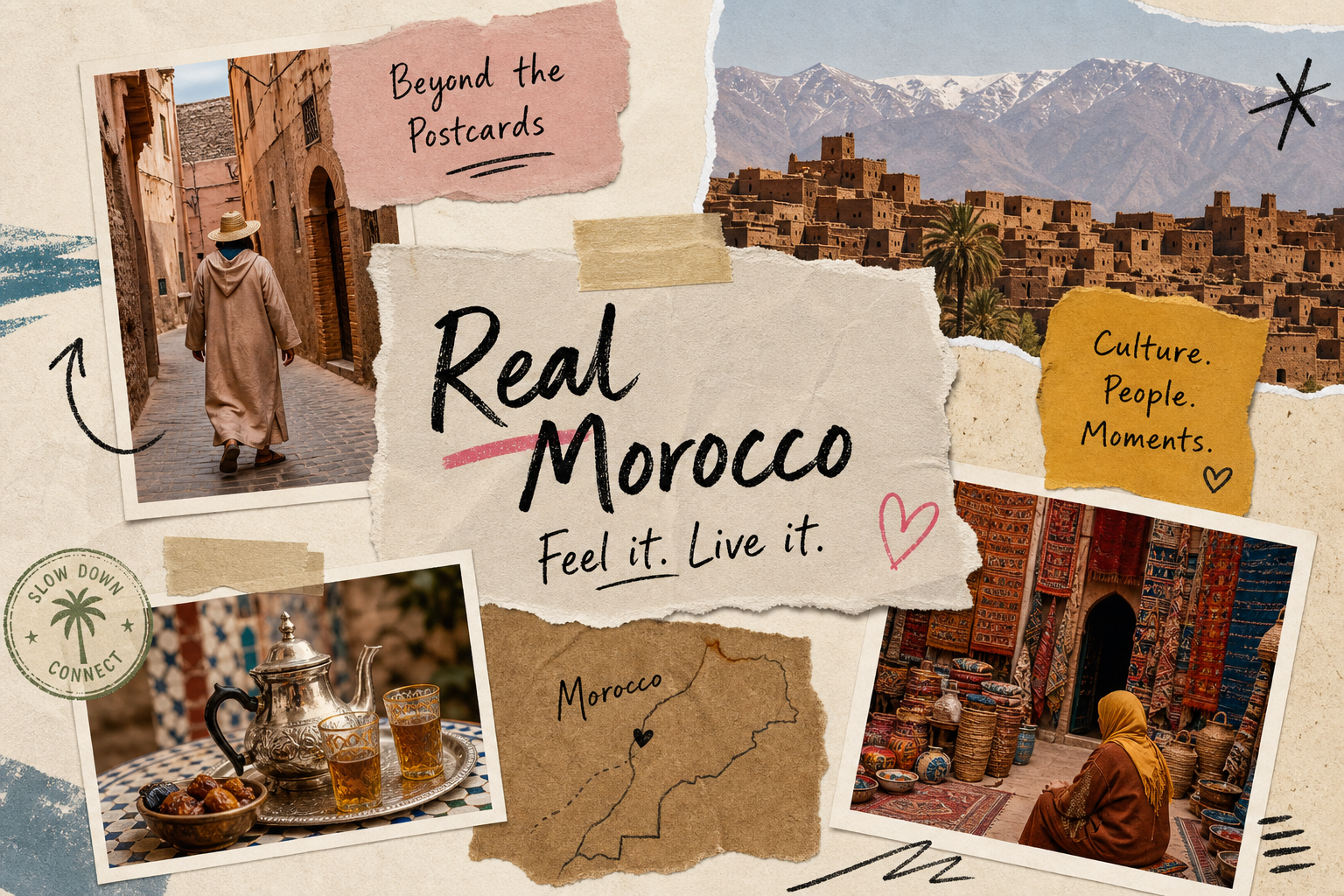
Most travelers choose ten-day Morocco itineraries, and many come home with a beautiful gallery of photos and a vague sense that something was just out of reach. To have an authentic Morocco experience, you need more than the right itinerary, you need the right pace and the right people. Morocco doesn’t withhold itself. But it does ask something of you: a willingness to slow down, to follow a thread without knowing where it leads, and to trust someone who actually comes from here.
Two days with a Berber family who has guided desert journeys for over a decade can teach you more about this country than a week of monument hopping. Not because the monuments aren’t real, but because what happens between the landmarks is where Morocco actually lives. That kind of encounter isn’t a product you can book off a list. It’s a quality of attention, and the right guide is what makes it possible. This piece is built around that idea.
What “authentic” actually means, and what most tours get wrong
The difference between seeing Morocco and experiencing it
Mass-market Morocco tours are engineered for efficiency. The coach picks you up, deposits you at the tanneries for fifteen minutes, and moves on. You see the leather being dyed, but no one explains what the craft means, who those workers are, or why the industry has survived for centuries. You’ve witnessed something, but you haven’t encountered it. The gap between those two things is exactly what separates a good Morocco trip from a great one.
Morocco’s most immersive experiences happen in family homes, not tourist restaurants. They happen on streets with no official name, over tea you didn’t plan for, in conversations that go off script. Locally rooted travel has a different rhythm: slower, less predictable, and far more memorable because of both those qualities.
Why the “tourist trail” version leaves people feeling hollow
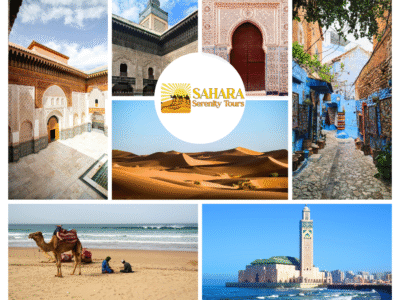
Marrakech, a Sahara overnight, Chefchaouen for the blue walls. These are real places, and visiting them is worth your time. But the way most group tours deliver them strips out the cultural meaning. You arrive, you photograph, you leave. Talk to enough Morocco travelers and the same words surface: felt like an observer, wished we had more time. The issue isn’t the destination. It’s the design.
Off-the-beaten-path Morocco isn’t necessarily a remote village with no Wi-Fi. Sometimes it’s just the same city, walked differently, with someone who knows which door to knock on. The tours that actually work are designed around connection, not logistics.
Medina life in Fes and Marrakech: passing through vs. actually being there
Fes: a living museum that rewards slowness
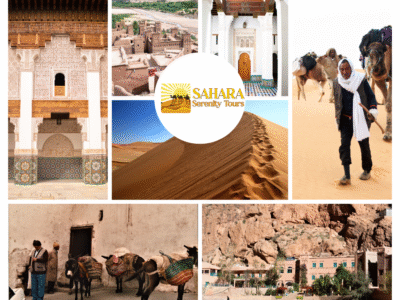
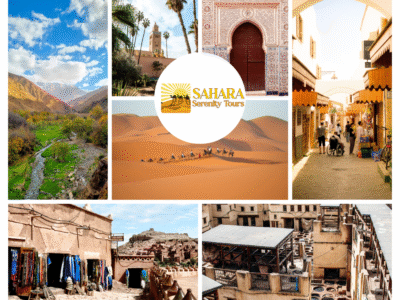
Fes medina is medieval craftsmanship in daily practice. Tanneries where leather is dyed by hand using centuries-old methods, copper workshops producing pieces that will last a hundred years, tile artisans cutting geometry that borders on mathematics. This is not a recreation. It’s just Tuesday in Fes. But you’ll only see it that way if you walk without a fixed route and give your guide room to introduce you to the people who actually work here.
The spiritual and intellectual heritage of Fes runs just as deep: madrasas built as teaching institutions centuries before modern universities existed, mosques that anchor neighborhood life rather than just tourist routes. An hour in Fes with a local guide who grew up here is a different experience entirely from a quick group loop. The city rewards slowness, and it punishes rushing.
Marrakech: how to read the energy of Jemaa el-Fnaa
Jemaa el-Fnaa is not a tourist attraction. It’s an evening gathering space that has been functioning the same way for generations: storytellers work the crowd in Darija, musicians set up in rotating clusters, food vendors wheel in their carts at dusk. The square has a rhythm and a logic. Learning to read it, rather than just photograph it, takes a stretch of patient watching before it clicks, something most group tours don’t budget time for.
Where you sleep in Marrakech matters more than people realize. Waking up inside the medina at a historic riad, with the call to prayer threading through the courtyard and breakfast arriving in a tiled room unchanged for generations, is a fundamentally different experience from a modern hotel on the ring road. The Marrakech riad experience is not just accommodation; it’s context. It puts you inside the city rather than adjacent to it.
Berber village visits and Atlas mountain culture that go beyond the itinerary
What a real Berber village encounter looks like
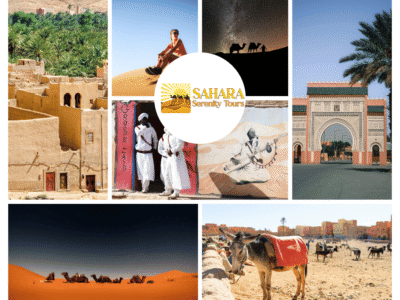
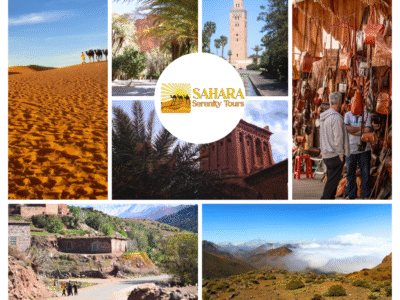
The Atlas Mountains are home to farming communities shaped by altitude, seasonal rhythm, and oral tradition. A genuine visit here isn’t a coach stop. It involves slowing down enough to sit for tea while bread is being made in a clay oven, or walking a local trail with someone who learned it as a child. Weaving cooperatives, olive harvests, water management systems built into the landscape: these are threads of cultural knowledge, not performances staged for visitors. For inspiration on locally rooted activities, see a list of 10 experiences only in Morocco.
Berber village stays give you access to the actual texture of Amazigh life. Food prepared for a household, not a menu. Hospitality extended as a matter of course, not a transaction. That texture is what people remember years later, not the itinerary item that preceded it.
How to tell the difference between a staged stop and real immersion
A staged “Berber village” stop tends to be brief and commercial, a demonstration, an offer of tea, a display of rugs. It’s pleasant enough, but it’s also a transaction wearing the costume of cultural exchange. The difference is obvious once you’ve experienced both.
A genuine encounter is slower and less polished. It often happens because your guide has a personal connection to the community, not because it’s listed on the itinerary. Locally rooted operators aren’t just driving past these villages; they’re connected to them. That connection is the whole point, and it’s not something any international agency can replicate by adding a village stop to a PDF itinerary.
Sahara nights, and why your guide matters more than the dunes
The camel trek, the camp, and what happens in between
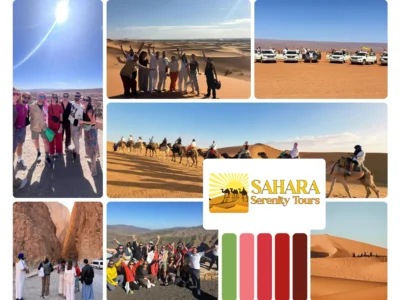
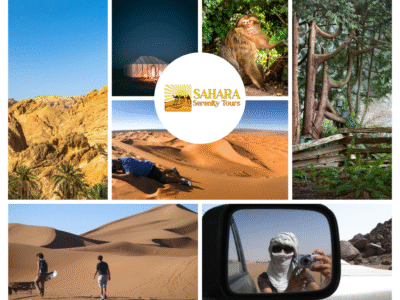
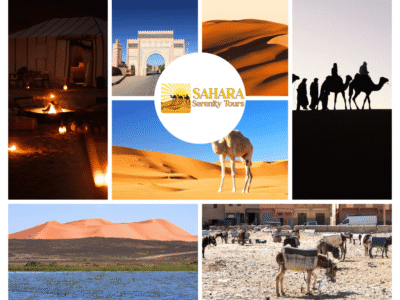
The standard Merzouga experience looks like this: a camel trek at dusk across the Erg Chebbi dunes, a sand camp with lanterns and cushions, a sky that doesn’t look real. That visual experience is genuinely worth having. But the part that stays with you is not the photograph. It’s the conversation at the fire when the group goes quiet, the guide who explains what the desert means to the people who have lived beside it for generations, the names of the stars, the reason silence here feels different from silence anywhere else.
None of that happens automatically. It happens because of who is sitting with you. Sahara desert nights are memorable in proportion to the knowledge and humanity of the person leading them. The dunes are the same dunes regardless of who brought you here. The guide is what makes the difference.
Why a family-run Berber operator changes the experience entirely
A locally owned, family-run company like Sahara Serenity Tours isn’t delivering a product. They’re sharing a heritage. Their guides carry roots in the communities along the route, speaking regional languages, navigating the kind of introductions no international agency can replicate. When a guide like that walks you into a desert community, he isn’t introducing a tourist group. He’s bringing someone home.
Private tours led by people with genuine roots in the places they’re showing you are a different category of travel entirely. The distinction between a generic overnight camp and an experience designed around belonging is the difference between sleeping near the desert and actually being welcomed into it. That welcome is what people mean when they say a trip changed them.
Food, hospitality, and the unplanned moments that define Morocco travel
Eating the right way in Morocco
The best food in Morocco is rarely on a tourist menu. It’s the tagine made by the host family at the riad, slow-cooked with preserved lemon and olives from the tree in the courtyard. It’s harira soup from a stall that has been in the same spot for thirty years, the bowl handed over without ceremony. It’s msemen bread cooked on a griddle in a mountain village kitchen, torn and dipped in argan oil while someone explains which grove it came from.
Authentic Moroccan food experiences connect you to place, season, and family in a way that no restaurant menu can approximate. Cooking classes run by local women’s cooperatives go further: they’re a hands-on way to understand how knowledge travels through generations and how feeding someone is, in this culture, an act of genuine care.
How hospitality opens doors that itineraries can’t
Moroccan hospitality is not a courtesy. It’s a value, practiced with intention. Accepting an invitation for tea is a form of trust. Sitting down to a shared meal is a relationship, however brief. These are the moments that travelers carry home and struggle to explain to people who weren’t there.
The travelers who come back genuinely changed are almost always the ones who slowed down enough to let someone host them. Morocco’s most immersive experiences are not engineered. They emerge when you’re present enough to receive them, and that requires a pace most commercial itineraries don’t allow, and a guide who understands that the unscheduled moments are often the best ones.
How to choose an operator that actually delivers an authentic Morocco experience
What to look for in a Morocco tour company
The markers of a trustworthy, culturally grounded operator are specific. Look for local Berber ownership or documented community ties, guides who speak the regional languages rather than just French and English, and small-group or private structures that allow for the flexibility genuine encounters require. An itinerary that includes meals with families or village visits is a better signal than one that lists ten landmarks and a photo stop at each. For a starting point when researching providers, consult curated lists like the best Morocco tour companies (2026 guide) or browse a broader Morocco tour operators directory to compare options.
For context on what to budget: private desert tours in the three-to-five-day range typically run $300 to $1,500 per person depending on accommodation tier, with seven-day private circuits ranging from around $950 to $2,000 or more for premium options. (These ranges reflect 2026 market pricing drawn from major booking platforms; verify directly with operators for current rates and see a detailed 2026 desert tour cost guide.) The numbers reflect the spread between standard mid-range riads and full luxury camps. What they don’t capture is the quality of the guide, and that’s the variable that matters most. Sahara Serenity Tours operates across this full range, with private packages departing from Marrakech, Fes, Casablanca, and other major Moroccan cities.
Practical tips: etiquette, packing, and what to expect
Dress modestly in smaller towns and religious areas, particularly as a woman. Keep shoulders and knees covered as a baseline; more conservative coverage is appreciated in rural Berber communities. Ask before photographing people in markets or village settings. Accept tea even when you’re not thirsty: the tea is not the point, the sitting-together is. Remove your shoes when entering a private home unless the host indicates otherwise, and use your right hand when eating from shared dishes.
For the Sahara specifically: pack layers. The desert is cold at night regardless of what month you’re traveling. A temperature swing of 20 degrees Celsius between midday and midnight is not unusual. Carry a copy of your passport rather than the original, since police may ask for identification in smaller towns and medinas, and check current entry requirements with up-to-date visa information for Morocco. Book through operators who are transparent about cancellation terms, local guide qualifications, and accommodation standards, particularly for remote desert stays where logistics matter more than they do in a city.
The trip that changes how you see things
Morocco doesn’t need to be rushed. The country has been here for a long time and it will absorb your ten days graciously, regardless of how you spend them. But there’s a version of this journey that stays with you, and a version that fades by the time you unpack. The difference usually comes down to pace and to the people you trust to lead you.
An authentic Morocco experience belongs to the traveler willing to move slowly, eat what’s offered, and follow a guide who is genuinely from the place. That kind of travel doesn’t require a bigger budget. It requires a better operator. Sahara Serenity Tours builds their packages around exactly that principle, explore their private Morocco desert tours to find an itinerary that fits where you are right now.
[…] who genuinely know and care about the places they’re showing you. For a fuller sense of an authentic Morocco experience, see our detailed […]