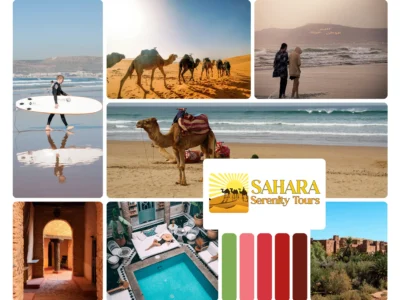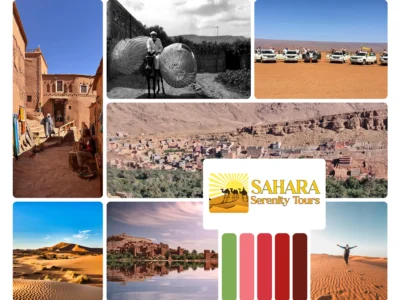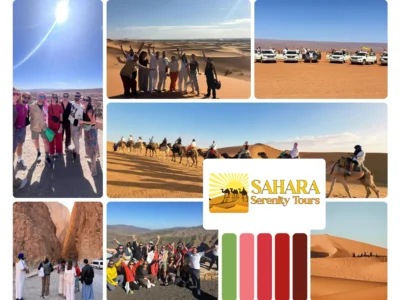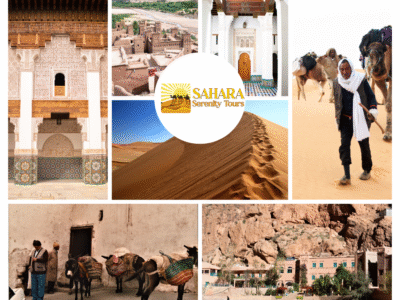
Planning group tours in Morocco for students is familiar territory for us, and genuinely one of the most rewarding categories of travel to get right. Every coordinator knows the feeling: Morocco looks perfect on paper, then the planning reality kicks in. Tight budgets, mixed travel experience within the group, a full cultural syllabus to cover, and a roster of students who all have opinions. Organizing university or school group trips here is rewarding, but it takes the right structure to pull off well.
Morocco earns its reputation as one of the world’s great educational destinations. In a single trip, a student group moves through Berber villages, UNESCO-listed medinas, Roman ruins, and Sahara dunes, each stop offering a different lens into history, geography, ecology, and culture. Very few countries pack that kind of cross-disciplinary range into such a compact, accessible space. At Sahara Serenity Tours, we’ve spent years building flexible, budget-conscious packages specifically for student groups, working with university programs and school coordinators who need real local expertise, not just a booking form.
This guide covers everything you need to move from research to reservation: realistic budgets, the best routes by trip length, safety and logistics, accommodation trade-offs, and exactly how to lock in your group booking. By the end, you’ll have a clear picture of what your Morocco student trip looks like and what it costs.
Why Morocco works so well for student group travel
What makes Morocco uniquely suited for group learning trips
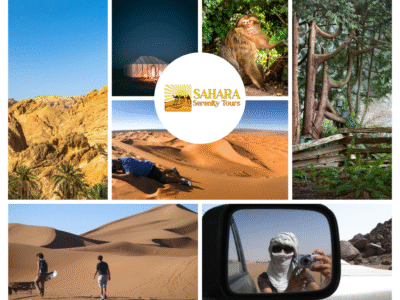
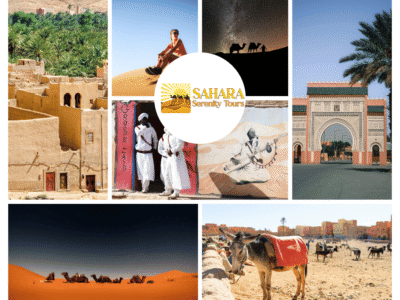
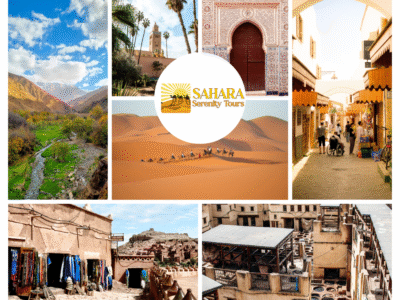
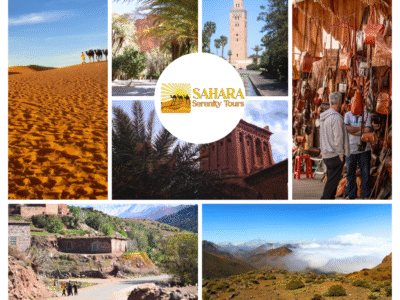
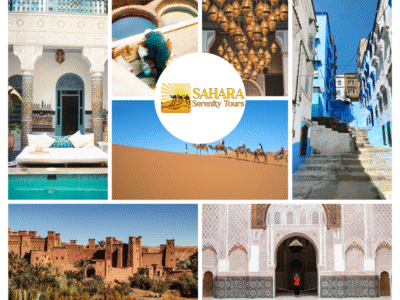
Morocco functions like a living classroom. Students engage with anthropology in High Atlas Berber communities, trace architectural history through UNESCO-listed medinas, and study desert ecology at Erg Chebbi’s dunes, all within a single itinerary. That cross-disciplinary range makes Morocco unusually strong for programs in international studies, geography, sustainability, and architecture: subjects that a lecture hall simply can’t replicate at the same scale. Compared to destinations that specialize in one era or one ecosystem, the breadth of learning material Morocco packs into a short trip is difficult to match.
The practical advantages for coordinators and group leaders
Many nationalities, including most EU citizens and a number of North American passport holders, do not need a visa for short stays in Morocco; check your national embassy or official government travel guidance to confirm requirements for your group. Morocco operates in a timezone close to Europe, and several major European hubs offer direct connections to Marrakech, Casablanca, and Agadir, including routes from London, Paris, Madrid, and Amsterdam. The tour infrastructure is well-developed, with licensed guides, organized logistics, and accommodation options built for groups. Morocco’s geography is also compact enough that a student group can cover serious ground in 3 to 11 days without losing half the trip to exhausting travel days.
What your group should budget per person
Cost breakdown by trip length
Budget planning is where most student group coordinators start, so here are realistic per-person price ranges for Morocco student group tours in 2026. These reflect roughly $60, $130 per person per day for budget-to-midrange packages, with the range within each bracket depending on accommodation type, group size, and inclusions. For a recent detailed breakdown of tour pricing, see a Morocco tour cost 2026 guide and an alternate trip to Morocco cost 2026 budget breakdown.
- 3-day tours: $180, $390 per person
- 4-day tours: $240, $520 per person
- 5-day tours: $300, $650 per person
- 8, 11-day tours: $480, $1,430 per person
The wide range within each bracket exists for a reason. A 3-day package at $180 means shared rooms, a basic desert camp, and a tight schedule. At $390, you’re getting mid-range accommodation, more flexibility, and better comfort on the coach. Both deliver the core Morocco experience; the difference is the quality of the margins around it. For another point of reference on group trip pricing, see an analysis of group trip costs to Morocco in 2026.
What’s typically included (and what isn’t)
Most student group packages cover accommodation, ground transport, a licensed guide, some meals, and key entry fees, though inclusions vary by operator, so always request an itemized quote to confirm. What students consistently forget to budget for: travel insurance, international flights, personal spending in souks, and any optional upgrades. Two packages with identical per-person costs can include very different things, and discovering that after you’ve committed is a problem no coordinator needs.
For standard package structures and educationally focused offers, review industry summaries of student tour packages and educational travel. Also download a practical Group Travel Planning Guide to help capture all hidden costs before you sign on the dotted line.
Best routes for group tours in Morocco for students, by trip length
3-day desert escape: Marrakech or Fes to the Sahara and back
The classic 3-day route runs from Marrakech through the High Atlas Mountains, past Aït Benhaddou, through the Dades Valley and Todra Gorge, and overnight at Merzouga for a camel trek and desert camp. Day three is a sunrise in the Erg Chebbi dunes, then the return journey. For groups flying into one city and out of another, the Fes-to-Marrakech one-way route is the smarter option: it avoids backtracking, covers more ground, and gives students a clear geographic narrative as they cross the country. Sample itineraries are available from operators offering a dedicated 3-day Morocco student tour and private-tour examples such as a 3-day private tour to the Sahara itinerary.
The educational highlights on this route are concentrated and distinct. Aït Benhaddou is a UNESCO World Heritage ksar with strong architecture and film history connections. Todra Gorge is a natural geology classroom. Erg Chebbi offers a direct encounter with a living Sahara ecosystem, including dune dynamics and desert ecology that textbooks can’t communicate the same way.
4, 5-day route with imperial cities and the Sahara
One or two extra days transforms the 3-day sprint into a more balanced experience. Groups can add time at the Skoura Oasis, the Rose Valley, and a proper half-day in Fes for the medina without the pressure of a rushed schedule. The most logical structure runs: Marrakech to Dades on day one, Dades to Merzouga on day two, Sahara activities and overnight camp on day three, Merzouga to Fes via scenic stops on day four, and Fes city time on day five. This is the sweet spot for groups that want both desert and imperial city content without overextending their budget or schedule. See extended offerings like the Imperial Cities & the Desert for inspiration on pacing and content.
7, 11-day grand Morocco tour for larger university programs
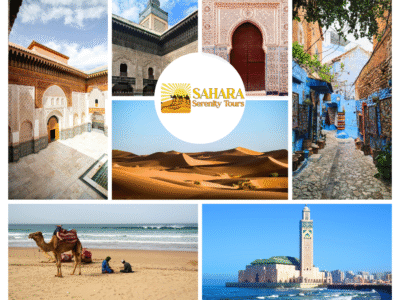
The full circuit suits university groups running cultural immersion or semester-travel programs where depth matters more than pace. Starting from Casablanca or Tangier, the route typically covers the imperial cities of Fes and Marrakech, a full Sahara crossing through Merzouga, and a coastal add-on: either Essaouira for an Atlantic contrast or Chefchaouen for the visual impact of the Blue City. Rabat and Volubilis fit naturally into the northern leg, adding a Roman ruins stop that works well for history and archaeology programs. This length allows actual time in each place, not just photo stops. For longer, packaged offerings, consult broader listings such as a TourRadar tour listing or established student-program providers like Rustic Pathways’ Morocco programs.
Safety and group logistics that actually work in Morocco
How reputable operators handle student supervision
Professional operators build student group safety around structure, not luck. That means licensed local guides on every leg, clear contact protocols so every student knows who to reach and where to assemble, and pre-trip risk assessments covering transport, walking routes, accommodation, and activity sites. In line with most operator guidelines, supervision ratios of around 6:1 or 7:1 are common for school and university groups, though your institution may have its own requirements, so confirm these when comparing providers. Bilingual staff travel alongside the group, and a 24/7 emergency contact line is maintained throughout the trip. For practical traveler-focused safety advice, see this Morocco travel safety guide.
The safeguarding framework centers on controlled movement: students travel in sub-groups, solo wandering is not permitted, and a visible staff contact point is maintained at all times. Cultural and behavioral briefing before arrival covers dress expectations, respectful conduct, and photography guidelines in villages. These aren’t add-ons; they’re the baseline for any reputable operator working with student groups. For school-specific considerations, review resources on safety at international schools in Morocco which include relevant local context and expectations.
Managing large groups across long-distance routes
Long-distance Morocco routes have specific logistical pressure points that first-time group coordinators often underestimate. These include seating assignments on coaches, emergency procedures for remote desert stretches where mobile coverage is inconsistent, and vetting of all accommodation and activity providers before the group arrives. A local operator embedded in the region handles on-the-ground problem-solving far faster than a foreign agency managing remotely. When something changes, and something always changes, local knowledge and local relationships are what actually fix it. Helpful academic material on Morocco’s physical geography can support your pre-trip curriculum, see a concise geography resource on Morocco.
Accommodation and transport options that fit a student budget
Where your group will sleep: trade-offs by accommodation type
The four main options each have an honest trade-off. Shared hostels and youth lodges sit at the lowest cost, with basic comfort and shared facilities; they work well for large groups on tight budgets where the social energy outweighs the need for privacy. Riads offer more atmosphere and a stronger cultural experience, typically at mid-range pricing, making them a better choice when the accommodation itself is part of the learning. Quad-occupancy group hotels balance cost and comfort more predictably, with more privacy than hostels and facilities that work reliably. For examples of reliable, budget-conscious properties, browse curated lists of affordable hotels in Morocco.
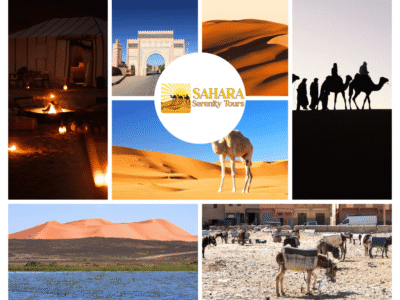
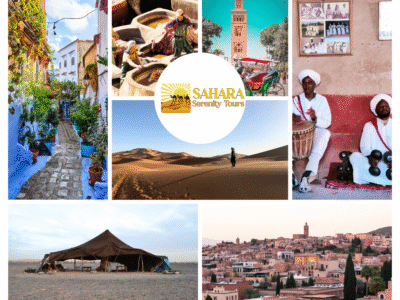
Desert camps sit in a category of their own. Students sleep in furnished Bedouin-style tents, share communal dining under open sky, and wake before sunrise for the dunes, a night that tends to be the most-talked-about part of the whole trip. Most student groups treat one night in a Sahara camp as non-negotiable, and rightly so. The night sky alone justifies it. If you want to preview a typical Saharan camp experience, watch this short YouTube video.
Getting around: minibus, motorcoach, or 4×4
Minibuses and motorcoaches cover most student routes efficiently and at the lowest per-person cost. For larger groups, a dedicated coach keeps logistics clean and brings per-person transport costs down meaningfully. 4×4 vehicles come into play for off-road segments: mountain tracks, remote desert terrain, or smaller splinter groups needing flexible routing. They cost more per person but are often the only practical option when routes leave the main roads. The honest advice is to use coaches for everything you can and switch to 4×4s only where the route genuinely requires it.
How to book your student group tour and lock in the best rate
Understanding deposits, cancellation terms, and group discounts
The typical booking structure works like this: a deposit of 20, 30% secures the reservation, with the balance due 14, 30 days before departure. Groups of 15 students or more generally qualify for reduced per-person rates, and group leaders or teachers often receive complimentary services depending on group size. Cancellation policies vary between operators, some allow free cancellation up to 15 days before travel, after which deposits become non-refundable, while others use different cutoffs. Always confirm the exact terms with your provider in writing. Travel insurance is not optional for student groups; it’s what protects the deposit and the individual students if circumstances change. When comparing providers, review their terms and conditions and, where available, the operator-specific terms and conditions or terms and conditions to understand refund and liability positions.
Get everything in writing before any money changes hands. A proper booking agreement should include the itemized itinerary, full pricing breakdown, inclusions and exclusions, payment schedule, and cancellation policy. A headline price without that detail is not a quote; it’s a starting point for a conversation.
Working with a local operator who knows student groups
At Sahara Serenity Tours, we’ve built our student group packages specifically around the way educational groups travel: fixed budgets, structured learning goals, mixed experience levels, and the need for a local partner who can adapt when the plan changes. Our team is based in Morocco, and we bring genuine cultural knowledge into every route, not a rehearsed script. Our guides speak the languages, know the terrain, and have the local relationships that turn a good Morocco trip into a great one.
We offer custom itinerary building that starts from your group’s learning objectives rather than a standard brochure, with departures available from multiple gateway cities including Marrakech, Fes, and Casablanca. Request a custom group quote directly through our website and we’ll respond with a full breakdown, not a holding email. For additional examples of educationally focused operators, see perspectives on Morocco student tour educational trips.
Start planning now, not two months before departure
Student group travel in Morocco is manageable when you have the right local partner behind it. The destination delivers on every front: a depth of history that takes multiple visits to exhaust, genuine cultural immersion across medinas and mountain communities, a Sahara experience that stays with students for years, and a range of academic angles that few other destinations match in a single trip.
The core planning decisions are straightforward once you frame them correctly. Trip length sets your budget range. Your itinerary should reflect your group’s learning objectives, not just the most popular stops. And safety comes down to choosing an operator with real supervision protocols, vetted local guides, and clear emergency procedures. Once you know what to ask, none of those are complicated questions.
The groups that get the best results from Morocco student group tours start planning early, ask good questions, and work with a local operator who understands how educational travel actually functions. That’s exactly what Sahara Serenity Tours is built for. Reach out, tell us your group size, dates, and goals, and we’ll build the itinerary from there.
Morocco Student Tours Morocco Desert Tours Morocco Tours For Seniors 10 Best things about Morocco