You’ve just landed in Marrakech. Your itinerary stretches from the High Atlas to the dunes of Erg Chebbi, and you’re standing at the arrivals gate wondering whether to figure out transport as you go or lock in a private driver before the trip starts. That moment of uncertainty is familiar to almost every American traveler who visits Morocco for the first time. When you decide to hire a driver in Morocco, it’s one of the smartest moves you can make, but finding the right one takes a little homework. The good news is that hiring a private driver in Morocco is genuinely affordable and transformative. The catch is that the gap between a seamless experience and a stressful one comes down to who you book, what you confirm in writing, and what you pay.
This guide covers everything you need to hire driver Morocco trips with confidence. You’ll find realistic 2026 pricing by vehicle type and route, a clear breakdown of what’s included versus what gets added to your bill later, a checklist of vetting questions, sample driving itineraries, tipping norms, and honest guidance on why your choice of provider matters far more than most travelers realize. Operators like Sahara Serenity Tours handle the entire logistics layer for their private tour clients, which means their travelers never have to navigate any of this alone. But whether you’re booking through a full tour operator or arranging your own driver, this guide gives you the knowledge to do it right.
Why a private driver changes how you experience Morocco
Freedom to travel at your own pace
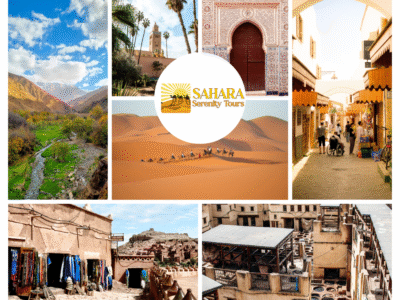
Morocco’s distances are deceptive on a map. The drive from Marrakech to Merzouga passes over the High Atlas via mountain passes with tight switchbacks, then rolls through valleys, gorges, and stretches of pre-Saharan desert before the dunes appear. Public buses cover some of these routes, but they run on fixed schedules, stop at assigned points, and don’t pull over when the light hits the Dades Gorge walls in a way that makes you want to get out and stare for ten minutes. A private driver does. You stop at the roadside argan cooperative where women are hand-pressing oil the traditional way. You arrive at your desert camp before sunset instead of after dark. That flexibility transforms transit from a logistical burden into part of the experience itself.
Shared group minibus tours solve the transport problem, but they solve it for the group, not for you. Every stop is predetermined, every schedule is collective, and detouring for a spontaneous tea at a Berber family’s home simply isn’t on the itinerary. A car with a driver puts your itinerary back in your hands, which is exactly where it belongs on a trip like this.
Who benefits most from hiring a driver in Morocco
Couples on honeymoons benefit from the seamless, private atmosphere, no strangers in the back row, no compromising on lunch stops. Families traveling with children gain the comfort, predictability, and reassurance of a professional who knows the roads. For first-time visitors to Morocco, not having to read road signs in Arabic and French while simultaneously navigating a roundabout in Ouarzazate during rush hour is reason enough. American travelers in particular typically arrive with one or two weeks of vacation time, sometimes less, which means every day has to deliver. A vetted private driver eliminates decision fatigue and turns every hour of road time into something worth remembering.
Hire Driver Morocco: Costs and What’s Included in 2026
Daily rates vs. route-based pricing
Two pricing models dominate the Morocco private driver market. Daily rates apply when you hire a driver for a full day of touring, transfers, or a multi-stop itinerary. In 2026, a standard vehicle with a private driver runs approximately €110 to €160 per day (~$120 to $175 USD). An SUV or 4×4 sits in the €130 to €150 range (~$140 to $165 USD), and a private minivan typically runs €145 to €160 per day (~$160 to $175 USD). Luxury chauffeur services start around €200 per day (~$220 USD) and go up from there depending on the vehicle and level of service. Note that some providers quote in euros and others in USD, so it’s worth confirming the billing currency upfront.
Route-based pricing applies to fixed transfers between two points. A Marrakech airport transfer averages $8 to $22 depending on the provider and service tier. A private transfer from Casablanca to Marrakech runs around $70. Full-day city tours in Marrakech are listed on various booking platforms at approximately $70 to $130 per adult, with variation based on group size and service level. The biggest cost factors across both models are distance, trip duration, vehicle class, and whether you’re booking a one-way transfer or a multi-day tour.
How multi-day driver hire is priced differently
Multi-day private driver tours are not simply a daily rate multiplied by the number of days. When you book through a tour operator, the pricing bundles the driver’s time, vehicle use, route logistics, and often accommodation into a package structure. That bundled approach typically works out more economically per day as the trip extends, because the operator builds efficiency into the itinerary rather than billing each element separately. A 3-day private tour from Marrakech to Merzouga through a structured operator like Sahara Serenity Tours looks very different in price and value from hiring a freelance driver day by day. You get transparent upfront pricing, no negotiation on arrival, and no surprises when the fuel bill appears at the end of a long desert road.
What drives price variation between providers
If you’ve started looking at quotes, you’ve probably noticed a wide range for what appears to be the same service. That variation is real, and it reflects meaningful differences in quality. Vehicle condition and age, driver licensing and English fluency, whether tolls and fuel are included, and the accountability structure of the operator all affect price. Marketplace platforms like Viator and TripAdvisor aggregate operators across multiple quality tiers, which is why you’ll see wildly different numbers side by side. A low quote is not automatically a deal. It’s worth understanding what you’re actually buying before you confirm.
What’s included in the rate and what costs extra
The standard inclusions: what you can expect
The base rate for most private driver services covers the driver’s time, the vehicle, and a short waiting-time window at pickups. Some operators include highway tolls or a basic fuel allowance in their quoted price. When you book through a structured tour operator, inclusions are typically documented clearly in a written agreement before you confirm. That clarity is worth a lot, especially on longer trips where the costs of add-ons can accumulate quickly.
What almost always costs extra
Fuel is often billed separately on longer road trips, particularly when the driver provides the vehicle from their own fleet. Tolls beyond a small included allowance are usually extra. Driver meals and accommodation on overnight multi-day trips are almost always the client’s responsibility unless the contract states otherwise. Waiting time beyond the grace period is frequently billed as an hourly fee. None of this is a scam; it’s simply the industry standard for private hire services in Morocco. The problem arises when these terms aren’t disclosed before the trip begins, which is why asking upfront matters so much.
How to avoid surprise charges before you depart
Get everything itemized in writing before the trip starts. That means the fuel policy (included or client-billed), toll reimbursement terms, whether the driver’s meals and overnight accommodation are covered by you or the operator on multi-day routes, and what happens if your flight is delayed and waiting time extends beyond the grace period. For travelers who want zero ambiguity, booking through an established operator like Sahara Serenity Tours, where all costs are stated before confirmation and documented clearly, removes this entire category of stress from your trip preparation.
How to Hire Driver Morocco: Vetting Your Provider
Licensing and professional documentation in Morocco
Professional drivers in Morocco who transport tourists commercially are required to hold the appropriate driving license category for their vehicle type, along with a carte de conducteur professionnel, the professional driver card issued after completing an authorized training program. Any reputable agency should be able to confirm that their drivers hold this card. Asking for confirmation isn’t being difficult; it’s basic due diligence. A driver who transports passengers on mountain roads and desert tracks without the right credentials puts everyone in the vehicle at risk, and there’s no accountability if something goes wrong.
Vehicle condition, insurance, and comfort
Check vehicle age, air conditioning (non-negotiable for summer travel in the desert), seatbelts for all passengers, and whether the vehicle has enough luggage capacity for your group. Ask whether the vehicle is insured for commercial passenger transport, not just personal use. For longer multi-day routes that cross the High Atlas passes or run over unpaved desert tracks near Merzouga, an SUV or 4×4 isn’t just a comfort upgrade, it’s a practical safety decision. Standard sedans handle Morocco’s main highways fine, but they struggle on rough piste roads and steep switchbacks at altitude.
English proficiency and cultural knowledge
A driver’s ability to communicate in English matters more than most travelers anticipate before the trip. You’ll be spending six to eight hours a day together, sometimes for multiple days in a row. Beyond language, a knowledgeable driver acts as an informal cultural guide: explaining the significance of a kasbah, recommending a local restaurant the tourist trail hasn’t found yet, and navigating the chaos of medina parking that would leave most first-time visitors defeated. Ask operators directly about their drivers’ English proficiency and how long they’ve been running specific routes. Route familiarity is not trivial; a driver who knows the Marrakech-to-Merzouga road intimately will make decisions on timing and stops that a less experienced driver simply can’t.
Freelance driver vs. vetted tour operator: why it matters
The appeal and the real risk of freelance drivers
Booking a freelance driver via WhatsApp or a casual marketplace listing can look appealing on price. And some freelance drivers in Morocco are genuinely skilled, professional, and reliable. But the structural risks are real. There are no contractual protections if the driver cancels the morning your trip starts. There’s no guarantee the vehicle is properly insured for passenger transport. There’s no recourse if the itinerary discussed over messages doesn’t match what actually happens on the road. Common red flags include vague or shifting pricing after you’ve agreed on a number, pressure to book immediately, mandatory commission stops at carpet shops and cooperatives, and rates dramatically below the market average that signal hidden costs to come.
What a vetted operator actually provides
A vetted operator employs drivers with documented professional credentials, maintains a fleet inspected and suited to each route, and provides a clear itinerary and pricing agreement before you depart. If something changes, there’s a team to call. The driver knows the route intimately because they’ve done it dozens of times, not once or twice on a freelance booking. That experience matters especially on complex routes like the Marrakech-to-Sahara circuit, where mountain passes, desert tracks, and logistically layered overnight stops reward drivers who know exactly what they’re doing. Sahara Serenity Tours employs professionally vetted local drivers who have run Morocco’s most popular routes extensively, with the documentation to back it up.
Why this matters more for American travelers
Americans traveling to Morocco are navigating a new language, a new country, and often significant jet lag. The value of having an operator who coordinates airport pickups, manages accommodation logistics, handles route adjustments, and supports you in English from booking through departure is genuinely significant. Sahara Serenity Tours offers American travelers fully private Morocco tours with their own vetted drivers, transparent USD pricing, and English-speaking support throughout the entire trip. That peace of mind is more affordable than most travelers expect, and troubleshooting a freelance driver situation on the side of a mountain road in the Atlas is not a Morocco memory worth making.
What a typical day looks like on a private car tour
Morning to evening: the rhythm of a driving day
The day usually starts with an early hotel pickup. Your driver loads the bags while you finish breakfast, and you’re on the road before the heat builds. The first few hours often cover the most dramatic terrain, whether that’s climbing through the High Atlas before the morning clouds burn off or rolling through the palmeries south of the mountains. Mid-morning brings a natural stop: a viewpoint, a roadside market, or a short walk through a village the main tourist route barely notices. Lunch is at a place the driver knows from experience, typically not the tourist-facing café on the main road. The afternoon is quieter, roads longer, landscape wider. You arrive at the next destination before dusk, with time to settle in before dinner rather than rushing through check-in.
The mental shift that comes with not navigating
Many travelers report the same realization after their first private driver day in Morocco: they saw more, absorbed more, and felt noticeably less exhausted than on days they self-navigated. When you’re not watching Google Maps or calculating the next fuel stop or stressing about parking in a medina that wasn’t designed for cars, the scenery outside your window gets your full attention. Conversations happen more naturally. Spontaneous stops feel possible rather than disruptive. This is the underrated benefit of the car-and-driver model in Morocco, the journey stops being logistics and starts being the trip itself.
Sample routes and realistic driving distances in Morocco
Short hauls: Marrakech to Essaouira and day trips
Marrakech to Essaouira is roughly 2.5 to 3 hours one way, making it a comfortable half-day transfer or a natural first or last day on a longer circuit. Essaouira itself, a blue-shuttered Atlantic port city with excellent seafood and a relaxed pace, is worth an overnight stay. Day trips from Marrakech to Ouarzazate take around 5 hours over the Tizi n’Tichka pass in the High Atlas, which means it’s best treated as a full driving day with one or two planned stops rather than a quick there-and-back. These shorter routes work well for travelers who want to hire driver Morocco services for the first time before committing to a longer multi-day itinerary.
Multi-day routes: Marrakech to the Sahara
Marrakech to Merzouga, the gateway to Erg Chebbi’s dunes, is best split into two to three driving days. A practical breakdown looks like this: Day 1 from Marrakech to Aït Benhaddou or Ouarzazate, Day 2 from Ouarzazate through the Valley of Roses to the Dades or Todra Gorge, and Day 3 from the gorge onward to Merzouga. Attempting to cover this in a single day is the mistake most first-timers make when planning without local knowledge. Mountain roads don’t reward speed, and arriving at an Erg Chebbi desert camp after midnight because the schedule was too ambitious is a disappointing way to start your Sahara experience.
Planning rule: one major transfer per day
One rule worth building your itinerary around: avoid scheduling more than one major long-distance leg per day, especially when the route includes mountain passes, unpaved desert sections, or arrivals at remote accommodations with no flexibility on check-in. This isn’t just about comfort, it’s about safety on roads that genuinely don’t reward rushing. Reputable tour operators already build this logic into their itineraries because their drivers know the routes and understand that a relaxed, well-paced trip is what keeps travelers coming back and sending their friends.
Tipping, etiquette, and a booking checklist for American travelers
How much to tip your driver in Morocco
Tipping norms are straightforward once you know them. For a good driver on a multi-day trip, 50 to 100 MAD per day (approximately $5 to $10 USD) is considered fair and genuinely appreciated. On single-day transfers, 50 MAD is a meaningful gesture. For an exceptional multi-week private tour where the driver went above and beyond on every front, some travelers leave 200 MAD per day or more, which is warmly received. Tipping isn’t obligatory in Moroccan culture, but it is recognized as a mark of appreciation, particularly from American travelers whose tipping culture is well understood by the hospitality industry.
Cultural norms to know before you travel together
Most professional drivers observe Ramadan, so be thoughtful about eating loudly or drinking in the vehicle during daylight hours if your trip falls during that period. A short greeting each morning goes a long way in a multi-day relationship; your driver is not a background service, they’re a person spending most of their waking hours helping make your trip excellent. Many drivers enjoy sharing stories about their hometowns, their families, and the regions they know best. Those unscripted conversations, somewhere on a quiet desert road with mint tea cooling in a thermos, often end up being the most memorable parts of the whole trip.
Pre-booking checklist: what to confirm before you hire driver Morocco
Before confirming any private driver booking, work through these questions:
- Confirm the driver holds a valid professional driver card (carte de conducteur professionnel) and that the vehicle is properly insured for commercial passenger transport.
- Request a written quote that itemizes fuel costs, toll reimbursements, and driver accommodation on overnight legs.
- Ask about the driver’s English proficiency and their specific experience on your planned route, not just Morocco in general.
- Clarify exactly where pickups and drop-offs happen and what the procedure is if your flight is delayed.
- For multi-day bookings, confirm that cancellation terms are documented clearly.
- If you’re booking through a tour operator, verify that they have reviews from travelers whose itinerary and travel profile resemble yours.
Taking twenty minutes to run through this checklist before you confirm will save you hours of uncertainty on the road.
Booking the right driver sets the tone for your whole trip
When you hire driver Morocco services, you’re making one of the best investments you can in the quality of your trip. Know the going rates so you can identify fair pricing and unrealistic quotes. Understand what’s included in the rate so you’re not blindsided by fuel bills or driver accommodation costs on day three of a desert circuit. The checklist above gives you every question worth asking before you confirm, use it.
For American travelers who want the private driver experience without the uncertainty of booking a stranger from a marketplace listing, Sahara Serenity Tours offers fully private Morocco tours with professionally vetted local drivers, transparent USD pricing, and end-to-end logistics handled from booking through your final drop-off. Their private tours are fully customizable and built around itineraries that respect realistic driving distances rather than stacking too much into a single exhausting day.
Whether you’re planning a 3-day Sahara sprint from Marrakech to Merzouga or a two-week circuit through the imperial cities, the Atlas, and the desert, the right driver makes every mile count. Start with the right operator, and the rest of the trip takes care of itself. Ready to plan? Contact Sahara Serenity Tours to get a custom quote for your Morocco itinerary.