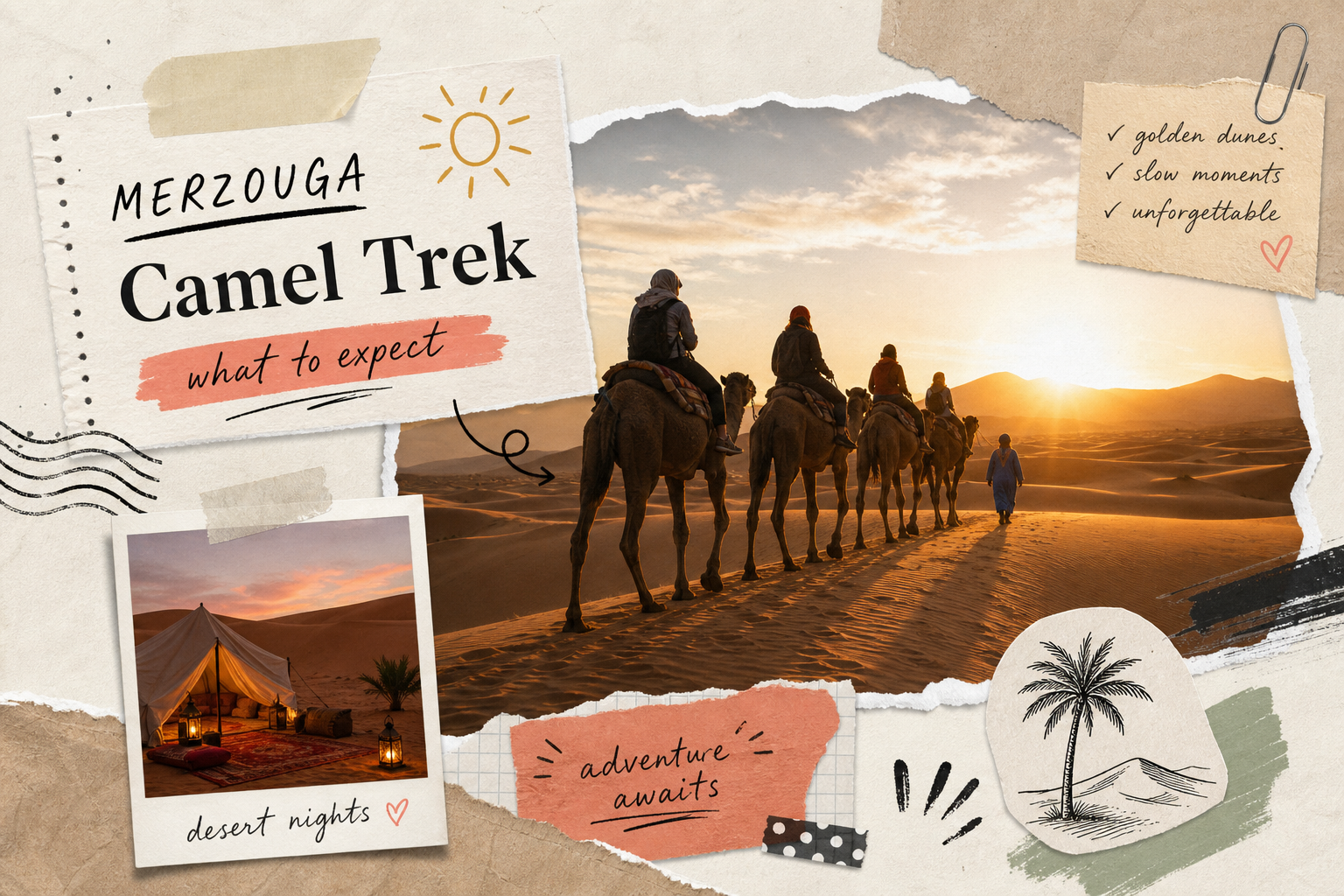
Most people who book a Merzouga camel ride at Erg Chebbi have the same image in mind: golden dunes, a slow sunset, a tent under the stars. What they haven’t thought about is the pickup time, the cold, which camp level they’ve actually booked, or what happens after sunrise. That gap between the postcard and the reality is where trips go sideways. A Merzouga camel trek is genuinely one of the most memorable things you can do in Morocco. It just goes better when you know what you’re actually walking into.
At Sahara Serenity Tours, our Berber guides have led this same route across the dunes more times than we can count. The questions travelers ask us most are almost always the same: How long is the ride? Will I be cold? Is a luxury camp actually worth it? What do I pack? This guide answers all of it, with real timings, honest price ranges for 2026, and the practical detail that most booking platforms leave out.
How the Merzouga camel trek unfolds from start to finish
The afternoon pickup and camel mount
Pickup typically happens between 4:30 and 6:00 PM, depending on the season and your operator. In the cooler winter months, sunset comes earlier, so earlier pickups are common. In March, with sunset around 6:20 PM, a 5:00 PM start gives you just enough time. Your meeting point is usually either Merzouga village itself or a designated drop-off at the dune edge. Since the village sits only about 10 minutes from the base of Erg Chebbi, some operators include a short 4×4 transfer before the ride begins.
Mounting a camel for the first time is its own small adventure. The animal kneels, you climb on, and then it rises back legs first, which pitches you forward before leveling out. Hold on, lean back slightly, and within a few minutes the rhythm becomes natural. Your guide walks alongside or leads from the front. The first few minutes feel unfamiliar; after that, most people settle in and start paying attention to the landscape.
The ride to camp and what happens on arrival
The camel ride to camp takes about one hour in total, sometimes broken into two legs with a pause at a high dune crest to watch the sun drop. That pause is not incidental. A guide who knows the route times it precisely so you’re at the right elevation when the light goes orange. On arrival at camp, you’re welcomed with mint tea, shown your tent, and given time to settle before dinner. The evening flows in a natural sequence: dinner after sunset, then a campfire, Berber drumming, and a long stretch of sky with no light pollution to compete with the stars.
Sunrise, breakfast, and the return ride
Wake-up comes early, usually around 5:30 AM. The camp will rouse you. The sunrise ride is shorter and quieter than the evening one, and you return to camp for breakfast before heading back to Merzouga, typically between 7:00 and 9:00 AM depending on the season. Think of the overnight experience as a full sensory bookend: you arrive under golden afternoon light, and you leave under the soft clarity of a desert morning. Both are worth being present for.
Sunset versus sunrise: which one is actually worth it
What riding into camp at sunset looks like
The sunset ride into Erg Chebbi is the one most people picture when they book, and it delivers. The dunes go deep orange, shadows stretch long across the sand, and the whole landscape takes on a kind of theater. That light lasts about 20 to 30 minutes, so timing is everything. Operators who know the route pace the ride so you’re positioned well when it happens. Those who don’t often arrive late and miss the best light entirely. Miss that window and the whole ride becomes a walk in the dark, which is exactly why booking an experienced local guide for your Erg Chebbi camel safari makes such a practical difference.
Why sunrise is the one most travelers don’t expect to prefer
Sunrises at Erg Chebbi are quieter, cooler, and almost always less crowded than the late-afternoon dune scene. The light before the sun crests the ridge moves through pink and lavender before it turns gold, and the stillness of that early hour gives it a different quality entirely. It’s less dramatic and more still. You need to be up at around 5:30 AM, but the camp handles that. The honest advice: if you can only do one, do both. The Merzouga overnight camel trek gives you both naturally, which is exactly why staying the night is worth it.
What to pack for your Merzouga camel trek
The essentials most people forget
Layers are non-negotiable. Even in summer, Sahara nights drop sharply once the sun is gone, and not all camps provide extra blankets. Bring a warm fleece or jacket, and in winter, gloves and a hat are not excessive. A scarf or shemagh is essential for the camel ride itself: the wind and fine sand are real, and having something to wrap around your face makes the ride significantly more comfortable. Sunglasses, sunscreen, a small headlamp, and a reusable water bottle round out the basics. Pack any personal medication you might need, since you’ll have no pharmacy access once you’re in the dunes.
For footwear, closed shoes work best for mounting and dismounting the camel. Sandals are fine once you’re settled in camp, but save your good shoes for after the ride, the sand and the motion will wear on anything you value.
What you can leave at the hotel
Keep it small. A single overnight trek needs a daypack, not a full suitcase. Large bags are impractical; they either ride awkwardly on the camel or have to be transferred by the guide separately. Luxury camps provide towels, quality bedding, and basic toiletries. Basic camps cover the essentials, but it’s worth bringing your own just in case. One last practical note: your phone will almost certainly have no signal out in the dunes. For most people who make the trip, that turns out to be the best part.
Basic bivouac or luxury glamping: what each one actually gives you
What basic camps near Erg Chebbi look like in practice
Simple tents with twin beds, basic carpets, and minimal furnishings. Shared bathroom arrangements are common, and shower options are often limited to a bucket wash setup. Meals are included and prepared by the hosts, typically a Berber-style dinner and breakfast cooked over an open fire or gas stove. The experience is rougher but genuinely atmospheric, and for travelers who want a traditional desert feel without many modern comforts, it works well. Prices for basic overnight treks typically sit in the €30 to €70 per person range.
What luxury Erg Chebbi glamping actually includes
Luxury camps around Erg Chebbi often provide ensuite tents with private bathrooms and hot running water. Many also offer electricity, air conditioning in summer, electric blankets in winter, and terraces with direct dune views. Some include swimming pools, live music areas, and restaurant-style dining. Luxury camp options generally run from €100 to €270 or more per person, depending on trek length, group size, and how private you want the experience.
The honest framing: if the Sahara night is the centerpiece of your Morocco trip, a luxury camp is worth budgeting for. If the desert is one stop among many, a standard camp delivers the core experience well. Know which trip you’re on before you book.
Camel trekking Merzouga prices and how to choose the right operator
Real price ranges for 2026 by trek length
Here’s what the 2026 market actually looks like for camel trek packages departing from Merzouga: (Merzouga camel trek prices)
- 1-night trek: €30 to €70 per person for standard options; €70 and above for private or luxury versions
- 2-day trek: €70 to €155 per person, with most solid options clustering around €88 to €133
- 3-day trek: €150 to €270 or more per person, with private and luxury versions at the higher end
Standard inclusions across most packages are: the camel ride to and from camp, tent accommodation, dinner, breakfast, tea, and the evening and morning dune experiences. Lunches, drinks, quad biking, 4×4 excursions, and any transfers from Marrakesh to Erg Chebbi are almost always extra unless explicitly stated. Read the inclusions list carefully before you book, not after.
What separates a local Berber operator from a foreign booking agency
This is where the difference becomes real. A Berber guide who grew up near Erg Chebbi doesn’t just lead the camel along a route. He reads the dunes, knows which ridge catches the best evening light, adjusts the pace based on the group, and carries knowledge about the landscape and the culture that no foreign-managed agency can replicate. The stories, the hospitality, the instincts: those come from a life lived in and around the Sahara, not from a training manual.
At Sahara Serenity Tours, this is exactly what we’re built around. Our guides are local Berber men whose knowledge of Erg Chebbi is inherited. They grew up here. That cultural context changes how you experience a Merzouga overnight camel trek in ways that are hard to quantify but easy to feel. When you book through a locally rooted operator, you’re not just hiring a camel guide. You’re getting access to a place through the people who actually belong to it.
For practical vetting: look for operators with verified reviews across multiple platforms, not just one. Confirm that inclusions are clearly spelled out in writing before payment. And check that there’s a responsive point of contact you can reach before you arrive. If an operator is hard to communicate with at the booking stage, that’s a signal worth taking seriously. You can consult popular review listings like Merzouga Camel Trekking Day Tours reviews as part of that process.
Book well, show up prepared
A Merzouga camel trek is not a complicated experience to plan, but it’s a surprisingly easy one to under-plan. The core decisions are simple: how long do you want to go, which camp level suits your budget and expectations, and who’s guiding you. Those three choices determine most of what your experience will feel like.
The difference between a forgettable night in the sand and one that stays with you for years often comes down to who leads you through it. A good guide doesn’t just get you to camp on time. He shapes the whole experience by knowing when to be quiet, when to tell a story, and which way to walk so the light is exactly right. Don’t sacrifice that for a cheaper rate on a booking platform.
Do your research, check the reviews, verify the inclusions, and reach out to a Berber-led operator directly. The dunes at Erg Chebbi are magnificent on their own terms. A well-planned Merzouga camel trek just makes sure you’re ready for them. The Sahara doesn’t need embellishment, it only asks that you come prepared.
[…] base layers and wool socks to that list. For practical packing lists, see recommendations on what to pack for a desert trip in Morocco or a traveler-focused checklist on what to bring for the Sahara desert. Also check short-term […]
[…] The choice between a Merzouga camel trek and a Zagora camel trek is primarily a practical one, not an aesthetic debate. Merzouga sits beside Erg Chebbi, home to Morocco’s most iconic dunes: sweeping formations of orange sand that rise dramatically above the desert floor. The scale is striking, the photography is exceptional, and the camel trek through the dunes at sunset has become one of the signature travel images of North Africa. Most overnight and multi-day camel treks depart from here (learn what to expect on a Merzouga camel trek). […]
[…] tu voglia una camel trek a Merzouga di un’ora o tre notti sotto il cielo del Sahara, Sahara Serenity Tours costruisce il percorso […]