You’ve decided you want to see the Sahara. Morocco is the gateway. And then you open a browser tab and stare at a wall of tour listings, departure city options, day counts, dune names you can’t pronounce, and prices that vary by a factor of ten. Suddenly a trip that felt exciting starts to feel exhausting before it’s even begun.
This guide to choosing a guided Sahara desert tour from Morocco’s major cities is built to fix that. The team at Sahara Serenity Tours hears the same handful of questions from nearly every traveler who reaches out: Which city should I leave from? How long will the drive take? What’s actually included? And how do I know I’m booking with someone trustworthy? By the time you finish reading, the decision won’t feel complicated at all.
Which departure city actually fits your travel plan
The single biggest mistake travelers make when planning a desert excursion in Morocco is defaulting to Marrakech simply because it appears most often in search results. That’s sometimes the right choice, but it depends entirely on where you already are in Morocco, not on which city has the most Google traffic.
Marrakech: the most popular starting point and why
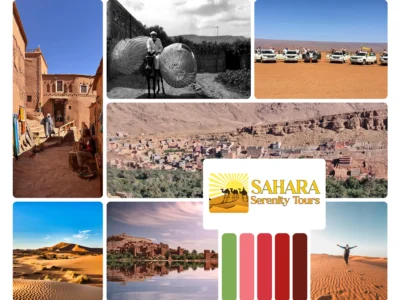
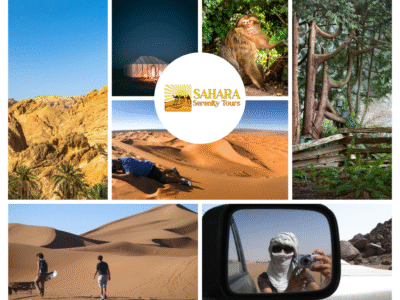
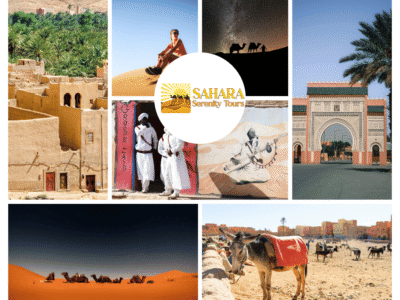
Sahara guided tours from Marrakech are among the most well-serviced options in Morocco, and the southern route earns its reputation before the dunes even appear. Driving through Aït Benhaddou’s ancient ksar, into the Dades Valley, and up through Todra Gorge gives travelers a landscape that shifts dramatically by the hour. Most operators, including local specialists and international platforms, offer frequent departures from Marrakech, making it a practical choice for travelers already based in the south. If this is your first visit to the country and you’re already in southern Morocco, Marrakech is the natural and well-serviced starting point.
Fes to Sahara tour: the northern route with different scenery
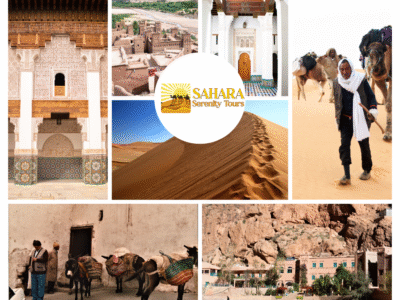
The Fes to Sahara tour is genuinely underrated and appeals to a different kind of traveler. The route heads south through the Middle Atlas mountains, past cedar forests full of wild Barbary macaques at Azrou, through the apple country of Midelt, and into the dramatic Ziz Valley with its canyon walls and palm oases before arriving at Erfoud and Rissani on the edge of the desert. Travelers who are already in northern Morocco, or who want a completely different road experience from the Marrakech run, consistently find this route memorable. Itineraries from Fes cover the same standard day counts as their southern counterparts and are equally well-serviced.
Less obvious but fully valid: Casablanca, Agadir, Tangier, and beyond
If you’re flying into Casablanca, spending time on the coast in Agadir, or crossing from Spain via Tangier, you don’t need to reroute your entire trip just to access the desert. These are all legitimate and practical starting points. For travelers with very limited time who want the Sahara overnight camp experience without spending two full days on the road, it’s also worth asking your operator about departures from towns closer to Merzouga, some operators offer flexible pick-up arrangements depending on where you are in your Morocco itinerary.
Best Sahara guided tours from Morocco’s major cities: drive times compared
This is the section that saves travelers from the most common planning mistake. The distance from Marrakech to Merzouga is roughly 560 km. Online map tools sometimes return a deceptively short estimate, but the realistic drive with mountain roads, proper lunch stops, and the occasional photo pull-off runs between 8 and 10 hours of total road time. The Fes to Merzouga route is approximately 465 km and takes around 7 to 8 hours of driving without stops, often stretching to 9 or more hours when you account for rest breaks and the scenic detours worth making along the way.
This is precisely why most well-designed itineraries split the drive over two days, with an overnight stop in the Dades Valley or near Ouarzazate on the Marrakech route, or in the Ziz Valley area on the Fes route. Rushing the drive to save a day compresses the most visually spectacular part of the journey into a blur you’ll barely remember.
Erg Chebbi vs. Erg Chigaga: choosing your dunes
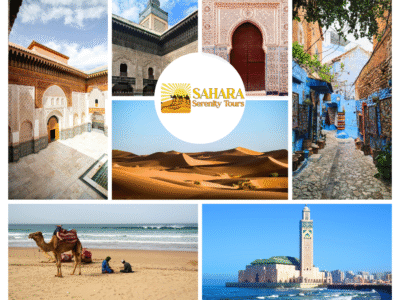
Morocco has two major dune areas, and they suit very different travelers. Erg Chebbi at Merzouga is the more accessible option: reached by paved road, well-developed with camps across a wide range of budgets, and suited to 2-to-4-day tours. The dunes rise up to 150 meters and deliver the classic orange-sand Sahara panorama most travelers picture. Erg Chigaga, near M’Hamid, is larger, quieter, more remote, and requires a longer drive plus an off-road desert track approach. It’s the specialist choice, best suited to four-plus day itineraries or travelers specifically seeking isolation and a more rugged experience. Most guided Merzouga desert tours target Erg Chebbi for good reason; Chigaga is for travelers who want to go further off the map.
Choosing a Sahara desert guided tour from Morocco: what your itinerary looks like across 2, 3, or 4 days
The 2-day Sahara escape: right for some, rushed for others
A 2-day, 1-night tour from Marrakech or Fes is possible, but be honest with yourself about the trade-off. The day involves an early departure, a long drive with one brief stop along the route, arrival at Merzouga in the late afternoon, a Sahara camel trek timed for sunset, overnight in the desert camp, sunrise the next morning, and then the return journey begins. The travel-to-experience ratio is compressed, and the route scenery becomes something you pass through rather than genuinely experience. That said, it works well for travelers with tight schedules who specifically want the camp night and the dune morning, even if the surrounding journey is secondary.
The 3-day sweet spot: the Marrakech to Merzouga 3-day tour
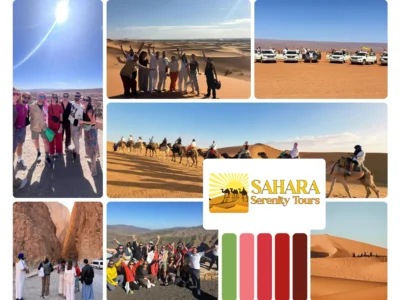
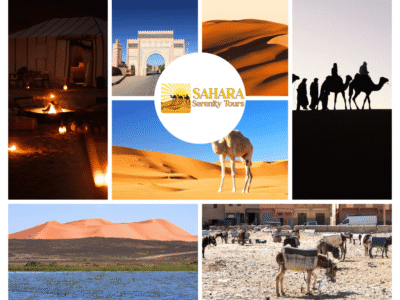
The Marrakech to Merzouga 3-day tour is one of the most commonly booked itineraries in Morocco, and it earns that position. Day one covers the drive south with a stop at Aït Benhaddou and an overnight in the Dades Valley, letting the landscape build slowly rather than arriving at the desert exhausted. Day two moves through Todra Gorge to Merzouga, with the camel trek into Erg Chebbi at sunset and the overnight camp giving you the full experience, including a Berber music session around the fire. Day three opens with sunrise over the dunes, a relaxed breakfast, and the return journey with optional stops. This pacing gives the road the respect it deserves while delivering everything the desert has to offer.
4-day tours: more breathing room, more Morocco
A 4-day guided desert excursion from Morocco shifts the experience from a checklist to a genuine journey. There’s time to wander the Fes medina without rushing, to linger at the Ouarzazate kasbahs, to add a sandboarding session in the dunes, or simply to sit with a cup of mint tea and watch the light change over the desert in the morning rather than immediately packing your bag. Travelers who treat Morocco as a destination rather than a transit stop almost always find the 4-day format the most satisfying return on their investment.
What’s included in a guided Sahara tour (and what usually costs extra)
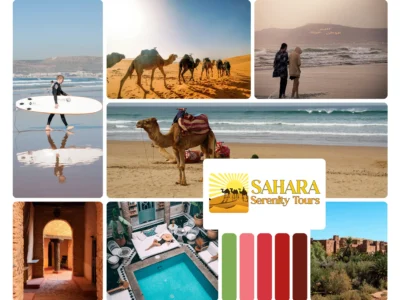
Most guided Sahara desert tours cover the same core inclusions: private or shared transport in a 4×4 or air-conditioned van, a local driver and guide, the Merzouga camel trek into the dunes, dinner at the desert camp, breakfast the following morning, and overnight accommodation in the camp. Standard tours use traditional tent setups; mid-range and luxury options offer upgraded glamping tents with proper beds and private bathrooms. Many tours also include a Berber music session at camp, which is one of the quieter highlights travelers tend to mention afterward.
Lunch along the route is almost always extra, paid at roadside restaurants or local cafés you’ll stop at naturally. Water and drinks at the camp are frequently not included. Optional add-ons such as sandboarding, quad biking in the dunes, or an upgrade to a luxury desert tent with ensuite facilities can usually be arranged at booking. Visa fees and personal travel insurance are always the traveler’s own responsibility.
How to think about budget before you book
Budget Sahara tours from Marrakech generally run between €70 and €150 per person. These typically involve shared transport, a group setting, and standard tent accommodation at the camp. Mid-range options fall in the €150 to €300 range per person and usually include a private vehicle, a more attentive guide, and meaningfully better camp quality. Luxury Sahara tours from Marrakech or Fes start around €600 per person and rise well above that, featuring private desert tents with en-suite bathrooms, gourmet meals, curated activities, and fully bespoke itineraries. Fes departures tend to run slightly higher across all tiers due to the greater distance involved; mid-range tours from Fes commonly fall in the €200 to €400 range per person.
The most important distinction between budget and mid-range is group size and vehicle comfort. The real gap between mid-range and luxury is the camp itself. A well-resourced luxury camp with private facilities, a proper bed, and thoughtfully prepared food is a genuinely different experience from a standard tent setup, not just a slightly fancier version of the same thing. Decide which matters most to you: the journey across Morocco, or the night in the desert, and let that guide your budget allocation.
How to choose an operator you can actually trust
International platforms and aggregators are useful for one thing: verified review volume. When you’re booking a multi-day trip with overnight stays in a remote desert, a strong body of consistent, verified reviews is a meaningful signal worth paying attention to. The limitation is that these platforms often list tours through local sub-operators whose on-the-ground standards can vary, and platform pricing typically includes margins that aren’t always reflected in the experience. What you see on the screen and what you get on the ground can sometimes diverge.
A licensed local operator with a real presence in Morocco, guides who grew up in the region, and genuine accountability beyond an app brings something a booking platform simply cannot offer. Itinerary adjustments on the ground, a guide who knows which camp serves the best tagine, responsive communication before and during the trip, these things come from relationships built over years, not from an algorithm matching you to the lowest-cost available slot.
Sahara Serenity Tours is a local, Berber family-run operation with years of experience guiding travelers through the Moroccan desert. Departures available daily from cities including Marrakech, Fes, Casablanca, Tangier, and Agadir mean your itinerary is built around your trip, not the other way around. The team specializes in different traveler profiles, luxury travelers, student groups, seniors, solo adventurers, and families, each with packages designed around what actually matters to them. Merzouga camel treks, Sahara overnight camp stays, and a genuine commitment to responsible tourism that supports local Berber communities run through everything they do. For travelers who want the desert done right, this is a strong place to start.
The decision is simpler than it looked at first
By now you know your departure city options and what each route actually involves. You have a realistic picture of drive times, day-count trade-offs, what goes into your bag (and onto your bill), and how to read the difference between a budget and a luxury camp experience. A guided Sahara desert tour from Morocco’s major cities stops feeling complicated once the logistics are visible.
Most travelers find the dunes meet or exceed everything they imagined. The orange light at sunset, the silence after the campfire dies down, the cold desert air at sunrise, none of that disappoints. What shapes the experience around those moments is the guide who knows which route to take when a road is closed, the camp that actually delivers on its promise, and the operator who picks up the phone. Those things are worth choosing carefully.
If you’re ready to start planning, Sahara Serenity Tours is worth a direct conversation. Reach out with your departure city, your available days, and what kind of experience matters most to you. The rest is straightforward from there.