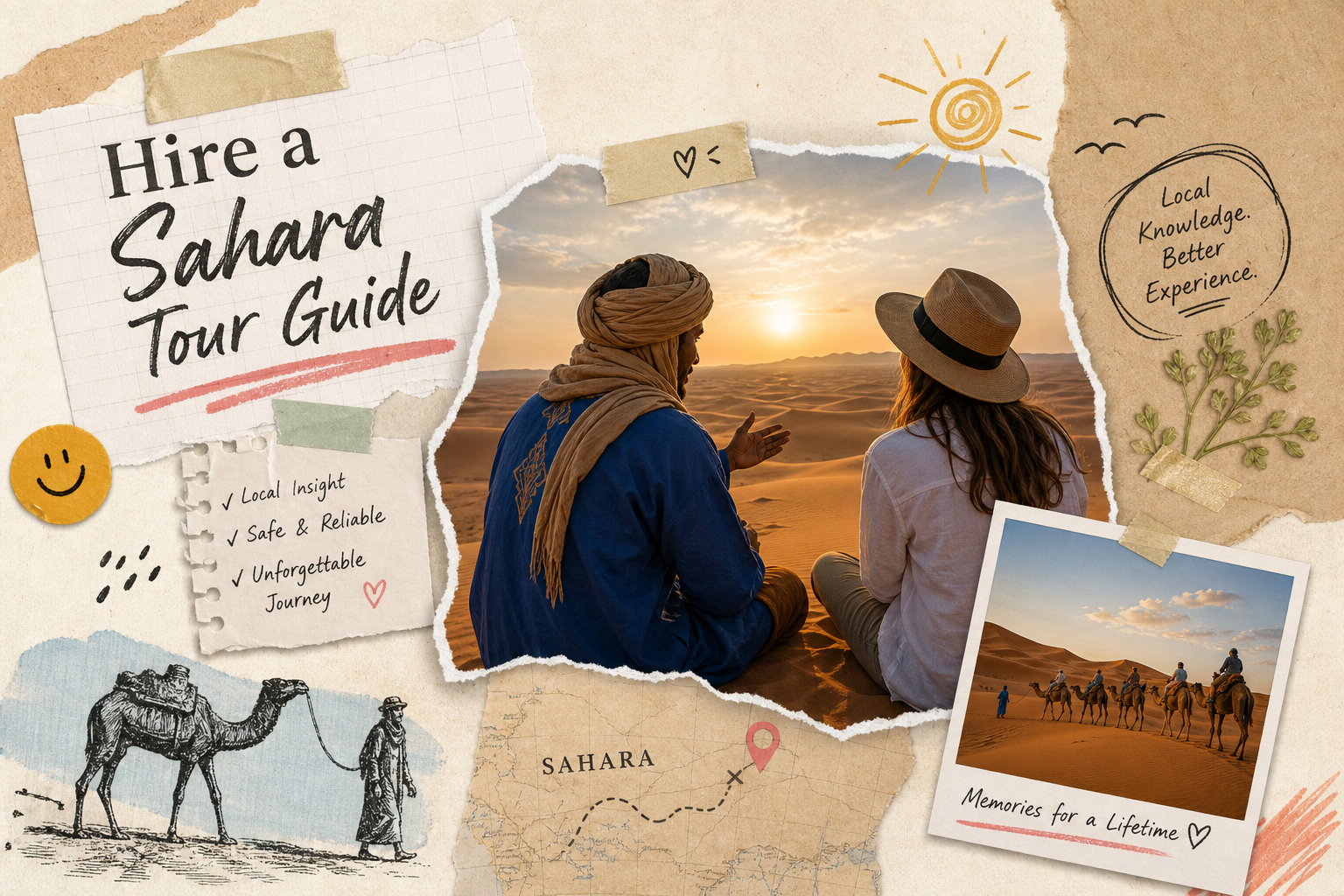
Ask anyone who has traveled through Morocco’s Sahara what they remember most vividly, and they rarely mention the dunes first. They talk about their guide. The way he spotted a scorpion track in the sand at dusk. The story he told about his grandfather’s caravan route through Erg Chebbi. The calm in his voice when a sandstorm rolled in and everyone else panicked. That’s the honest truth about hiring a Sahara tour guide: the person leading your desert journey is the experience. The gear, the camp, the camel, those are just the setting.
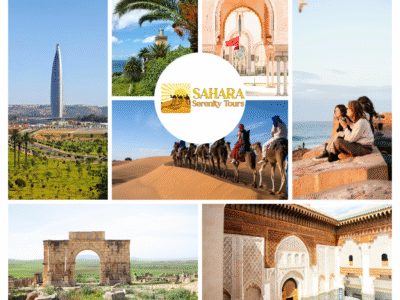
Morocco’s desert tour market is genuinely full of options. You’ll find large international platforms, small local family operators, and everything in between. The good news is that knowing what to look for cuts through the noise quickly. Sahara Serenity Tours, rooted in Berber heritage and built around generational knowledge of the desert, represents the standard this guide helps you find on your own terms. Whether you end up booking with them or another operator, these are the criteria that separate a desert experience worth the journey from one that isn’t.
Why your Sahara tour guide defines the experience, not the destination
A skilled desert guide does far more than navigate from one dune to the next. The best ones translate the silence of Erg Chebbi into something you can actually feel, weaving landscape, history, and living culture into a story that sticks with you long after you’ve shaken the sand out of your shoes. They turn a camel trek into a conversation about Berber nomadic life. They turn sunrise over the dunes into context about how desert light has shaped local architecture and seasonal migration patterns for centuries. That interpretive layer is the difference between a tour and a memory.
Consider what the opposite looks like. A traveler books the cheapest Marrakech to Sahara itinerary they can find and spends 10 hours in a van with a guide who speaks limited English, skips stops without explanation, and knows little about the terrain beyond the main paved road. The dunes were still beautiful. The camel ride still happened. But the trip felt hollow, and the traveler came home with photographs rather than stories. A poor fit costs more than money. It costs you the experience you flew across the world to have.
Language skills: what to look for in a Sahara tour guide
Multilingual fluency is non-negotiable for international travelers visiting Morocco’s Sahara. English, French, Spanish, and Arabic are the most common language combinations among reputable operators, and for good reason: each covers a major segment of the international market. A guide who speaks your language fluently doesn’t just translate words. They pick up on your questions mid-sentence, adjust their pacing when you need more explanation, and know when to let the desert speak for itself. That level of attunement signals broader communication skill and cultural intelligence.
You can assess a guide’s communication quality before you ever set foot in Morocco. Pay close attention to how the operator responds to your initial email or WhatsApp inquiry. Is the reply detailed, warm, and specific to your actual questions? Or does it feel like a copy-pasted template that could have been sent to anyone? That pre-booking interaction mirrors the on-tour experience more closely than most travelers realize. Send a specific question about the route, the camp conditions, or a cultural custom you’ve read about. The thoughtfulness of the answer tells you a great deal.
Local knowledge that no travel app can replicate
A trustworthy Sahara tour guide knows the difference between Erg Chebbi and Erg Chigaga not just by name but by feel. They understand the dune height, the wind patterns, the best time of year to visit each, and what four-wheel-drive conditions are required for more remote routes. They know which tracks flood in spring, where to pull over for a panoramic view that isn’t on any map, and how to adjust a Merzouga desert tour route based on the season and a group’s physical fitness. This depth of knowledge only comes from years lived in the desert, not from a training manual or a tourism course.
This is where locally rooted operators carry a real structural advantage. The Berber guides at Sahara Serenity Tours don’t recite Moroccan history from a script, they grew up inside it. A guide with generational knowledge of Berber customs, ancient kasbahs, and Saharan trade routes transforms stops along the Draa Valley or Todra Gorge into living history rather than photo opportunities. When your guide’s grandfather walked the same route as a nomad, the landscape takes on a different weight entirely.
Safety protocols every qualified Sahara tour guide must have
The Sahara’s biggest risk isn’t getting lost. It’s heat exhaustion and dehydration, particularly during camel treks in midday sun when temperatures can be genuinely dangerous. A prepared guide carries enough water for the entire group, monitors the pace of activity during treks, schedules physical exertion around the cooler morning and late afternoon hours, and recognizes the early signs of heat-related illness before they escalate. Responsible desert camping in Morocco also requires a clear briefing before departure: what gear the operator provides, what travelers must bring themselves, and what to expect overnight.
Beyond heat management, a properly equipped guide on any Merzouga desert tour or overnight camp should carry a first aid kit, a satellite-capable phone or a clear emergency contact plan, solid knowledge of the nearest medical facility, and a plan for sandstorms or unexpected weather shifts. These aren’t unreasonable things to ask about before booking. If an operator responds to those questions with vague reassurances rather than specific answers, treat that as a meaningful red flag. The desert rewards preparation and punishes shortcuts.
Cultural sensitivity as a core qualification, not a bonus
Cultural sensitivity isn’t a soft skill in this context. It’s core to whether the experience feels authentic or extractive. A culturally aware guide knows how to introduce travelers to Berber family homes without making residents feel like exhibits in a living museum. They explain the right way to dress for a desert camp, how to receive mint tea as an act of genuine hospitality, and why certain sites carry deep significance that goes far beyond their visual appeal. That awareness protects local communities and makes the trip richer for the traveler at the same time.
Choosing the right guide also has direct economic consequences for the communities you’re visiting. Responsible desert camping tours run by locally rooted operators channel money directly into Berber villages, employ local staff rather than outside contractors, and avoid outsourcing the core experience to large agencies with no community ties. Sahara Serenity Tours is built on exactly this model: a Berber family-run business where guides are community members, not hired hands. When you book this type of operator, your Merzouga camel trek contributes to the culture it’s showcasing rather than simply photographing it.
Vetting a Sahara tour guide before you book
Before committing to any booking, there are specific questions worth asking every operator or independent guide. How long has this guide been leading desert tours? Do they hold a Moroccan professional guide license for natural spaces? What languages do they speak fluently? What’s the emergency protocol if someone needs medical attention mid-trek? What’s included in the desert camping package, and what isn’t? How many people will be in the group? These questions surface competence, transparency, and communication quality in a single conversation.
When reading reviews, look past the star rating and focus on specifics. A guide with 50 detailed reviews that mention them by name is a far stronger signal than a company with hundreds of generic five-star responses. Strong reviews mention specific moments: how the guide handled an unexpected situation, explained a cultural practice, or adjusted the pace for someone struggling with the heat. Those details are nearly impossible to fabricate at scale. Once you’ve read through them, the bullet points below give you a quick reference for what to keep in mind.
- Green flags: specific mentions of safety handling, cultural explanations, and genuine warmth from named guides
- Red flags: vague itinerary descriptions, no real communication before booking, and pricing that seems low with no clear explanation of what’s excluded
- Worth confirming: licensed guide status, group size limits, water and heat protocols, and overnight camp supervision
Based on listings across major booking platforms as of 2026, pricing across Morocco’s desert tour market typically ranges from roughly $120 to $350 per person for an overnight tour, and $250 or more for a quality two-to-three day private itinerary. Unusually low prices often mean excluded meals, shared vehicles, or guides without formal training. Understanding what’s included versus what’s not is the fastest way to compare options honestly.
The right guide turns extraordinary into unforgettable
The Sahara is extraordinary on its own. The dunes at Erg Chebbi, the silence of the desert at 3 a.m., the way the stars appear when there’s no ambient light for hundreds of kilometers, none of that requires a guide to be beautiful. But the right Sahara tour guide turns beautiful into meaningful. Language fluency, genuine local knowledge, safety preparedness, and cultural sensitivity aren’t a wish list. They’re the baseline for a desert experience worth the journey.
The good news is that operators who meet this standard exist in Morocco, and they’re usually the ones most deeply embedded in the communities they guide through. Whether you’re planning a three-day Merzouga desert tour from Fes or a longer Marrakech to Sahara itinerary, the process starts with knowing what questions to ask. Sahara Serenity Tours welcomes exactly those questions, about the routes, the guides, the safety protocols, and the Berber culture behind every stop on the journey. Reach out before you book, ask the hard questions, and pay attention to how they’re answered. The right Sahara tour guide will take care of the rest.