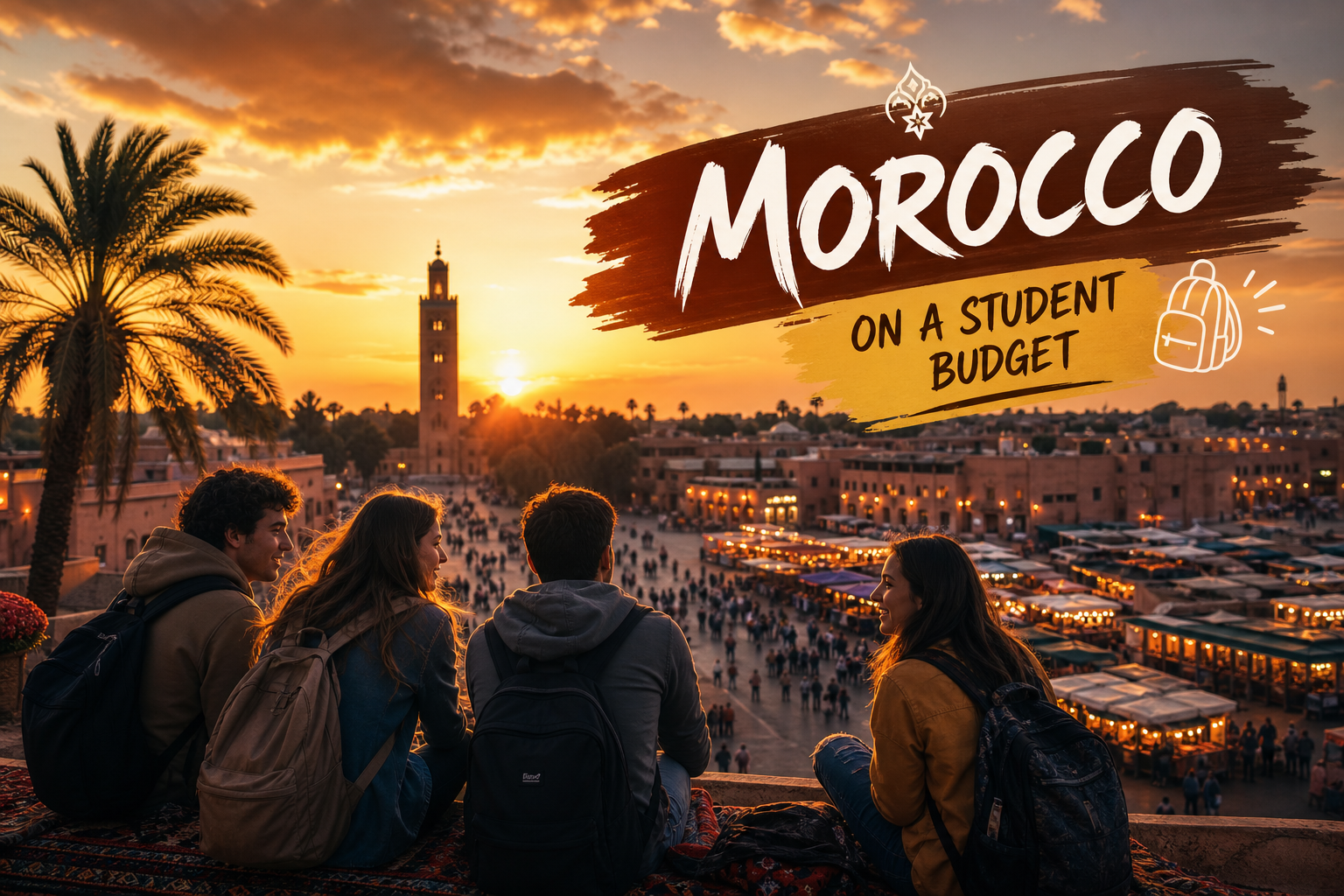
What are the best Morocco tours for student groups on a budget? It’s a question every academic trip organizer eventually faces, and the honest answer depends on who’s building your itinerary. Morocco is one of the most value-packed destinations on the planet for student groups. The food is cheap, the culture is dense, and the Sahara desert experience is unlike anything else on earth. The problem is that most group tour packages aren’t built with student budgets or group logistics in mind. They’re built for leisure travelers who want comfort and flexibility, not a group of 15 students trying to fit a real Morocco experience into a tight schedule and a tighter budget.
The real question organizers face isn’t “can we afford Morocco?” It’s “which tour actually works for a group of 10 to 20 students who want authentic experiences without blowing the budget?” That’s a different question, and it needs a different kind of answer. At Sahara Serenity Tours, we’re a local Berber family-run operation that has spent years building group itineraries specifically for student travelers: shared accommodations, Berber homestays, Sahara desert overnight camps, and daily-available departures from multiple Moroccan cities. This article gives you the real cost ranges, workable itineraries, honest accommodation breakdowns, and practical guidance on how to book safely.
What Are the Best Morocco Tours for Student Groups on a Budget? Start With Cost.
Most budget Morocco tours for student groups run between $45 and $80 per person per day when you book a structured group package. Bookmundi lists budget group tours starting from around $46 per day, which represents the lower end of what’s realistic when traveling in a shared vehicle with shared accommodation. At the higher end of the budget range, you’re getting more cultural activities included and slightly more comfortable beds.
What 3, 5, and 7-day trips cost per person
Here’s a clean breakdown by trip length:
- 3-day trip: $150, $300 per person ($50, $80 per day)
- 5-day trip: $250, $375 per person ($50, $75 per day)
- 7-day trip: $315, $525 per person ($45, $75 per day)
Longer trips cost less per day because fixed costs, a private group vehicle, guide fees, and accommodation negotiations, get spread across more nights. A 7-day group itinerary almost always delivers better value per day than a rushed 3-day trip. If your group has the schedule flexibility, booking a longer trip is the smarter financial move.
What’s usually included and what isn’t ?
A typical budget group package covers shared transport between cities, basic accommodation, and sometimes breakfast or dinner. What gets cut is predictable: entrance fees to sites like Aït Benhaddou or the Fes medina, most lunches, personal spending money, and flights. Build $15 to $25 per day on top of the tour cost to cover those gaps. Group organizers who don’t account for this end up with frustrated students who run short of cash by day three.
Morocco Tour Options That Actually Work for Student Groups
Not all operators are the same, and the difference between a good student group trip and a mediocre one comes down to whether your operator has built their product for groups or is just reselling a standard leisure package with more seats in the van.
Why Sahara Serenity Tours is built for student groups?
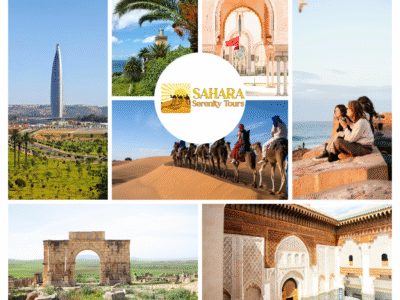
Sahara Serenity Tours offers daily-available departures, customizable group itineraries, shared accommodation options, Merzouga camel treks, and access to Berber family homestays that generic agencies simply don’t have. As a local Berber family operation, not a distant booking platform, we can respond when a university group from Spain needs to adjust an itinerary to fit an academic schedule, or when a school from France wants a Berber cultural exchange built into the trip. The cultural immersion is structural, not an optional add-on charged separately.
We serve university and school groups from Europe and beyond. Departures run from Marrakech, Fes, Casablanca, Tangier, Agadir, and Errachidia, geographic flexibility that matters when your group’s flight options don’t all land at the same gateway city.
Other operators in the market: what to know?
Contiki targets the 18-to-35 age range with budget service levels and is a recognized option for student-age travelers. Intrepid Travel runs small-group Morocco departures across a wide age range. TourRadar lists Morocco trips with a labeled student package option. These are legitimate products serving a real market. They operate standardized itineraries at scale, which means you get a fixed product with limited ability to add a Berber homestay night, adjust pacing for an academic group, or build in a specific cultural activity. A local specialist handles all of that.
What to look for when comparing packages?
A few criteria cut through the noise when comparing student group Morocco tour options. Check the group size limits first: a vehicle crammed with 25 people is a fundamentally different experience than a group of 12 with proper space and attention. Get clarity on which cultural activities are actually included versus optional paid add-ons, because some packages advertise the Sahara but charge extra for the camel trek. Confirm whether guides are local licensed experts with regional knowledge or generic contractors rotating between itineraries. Guide quality shapes everything about the trip.
Sample Itineraries: What 3, 5, and 7 Days in Morocco Looks Like
The 3-day desert starter: Marrakech to Sahara and back
Day 1 departs Marrakech, crosses the High Atlas Mountains, and stops at the UNESCO-listed Aït Benhaddou before continuing toward Ouarzazate. Day 2 brings the group to Merzouga for an afternoon camel trek into the dunes, followed by an overnight at a shared desert camp with dinner and a bonfire under a genuinely dark sky. Day 3 starts with sunrise in the Sahara before the return journey to Marrakech or onward to Fes. The whole thing runs on a private group vehicle and costs roughly $150 to $300 per person depending on accommodation level and group size.
The 5-day cultural circuit for deeper immersion
This route runs Marrakech to Fes and adds the Fes medina, a Berber village stop in the Dades Valley, and an overnight homestay with a local family. This itinerary specifically addresses the educational value that academic institutions often require for trip approval: UNESCO heritage sites, documented cultural exchange, and guided historical context. Sahara Serenity Tours builds these routes on request, which means the academic framing, the specific villages, and the cultural activities can be documented and shared with university approval committees before the trip departs.
The 7-day full Morocco sweep
The seven-day route runs Marrakech to Fes through the Atlas Mountains, with stops at Chefchaouen, Todra Gorge, and the Fes medina, plus a full Sahara overnight. Seven days is the sweet spot for student groups who want real immersion rather than a highlights reel. The pacing is calmer, the Sahara gets a full day instead of a rushed afternoon, and students actually absorb the cultural context rather than spending half the trip staring out a van window. At this length, the per-day cost drops to around $45 to $75, making the longer trip the most cost-efficient option per experience delivered.
Where Student Groups Sleep: Accommodation Types and Real Costs
Riads and budget guesthouses
Traditional Moroccan guesthouses run $30 to $80 per person per night for budget options in cities like Marrakech, Fes, and Chefchaouen. Shared rooms lower the per-person cost further. Riads are genuinely better than bland chain hotels for student groups: the courtyard layout keeps the group together in a shared space, meals are often served communally, and the architecture alone generates conversation and cultural context. You’re not paying a premium for ambiance. The riad is often cheaper than a comparable hotel room and delivers more.
Desert camps: shared versus private
Basic shared desert camps run $25 to $70 per person per night, usually with dinner and breakfast included. The difference between a shared tent setup and a luxury private camp is real but irrelevant for most student budgets. Shared camps are the standard for affordable Morocco student itineraries and still deliver the full experience: the dunes, the stars, the silence at 2 a.m. when the wind drops. There’s no meaningful experience gap at the basic level. The gap only appears at the luxury end, which isn’t what this market needs.
Berber homestays: the most authentic and often the cheapest option
Berber homestays typically run $15 to $45 per person per night, often including at least one meal. This is where Sahara Serenity Tours’ local roots become a concrete advantage. Access to Berber family homes across the desert and mountain regions is not something a booking platform can replicate. Students eat with the family, hear the language, and understand the daily rhythms of a culture that exists nowhere else on earth. The cost is lower than a riad. The educational value is higher than any museum visit. For groups making the case to a university review board, a Berber homestay night is the kind of documented cultural exchange that justifies the trip budget.
Safety and Logistics Every Student Group Organizer Needs to Handle
Key safety awareness for group travel in Morocco
The U.S. State Department advises travelers to exercise increased caution in Morocco due to terrorism risk, noting that attacks may target tourist locations, transportation hubs, and markets with little warning (travel.state.gov, current advisory). This applies to organized group travel the same as any other format. Practical steps are straightforward: keep students together in medinas and busy markets, avoid solo night movement, use licensed guides, and establish clear meeting points and headcounts at every stop. Morocco is a welcoming country and a safe destination for organized groups when logistics are tight. The risk rises when students wander independently in unfamiliar neighborhoods after dark.
Group logistics that prevent problems before they start
Always use licensed local guides. Plan daytime transfers between cities. Run a structured itinerary with defined schedules rather than open-ended independent movement. Brief students before arrival on modest dress, how to decline vendors politely but firmly, and basic cultural respect. Organized tours handle the transport, guide licensing, and structural logistics automatically, which reduces the burden on academic trip leaders who are managing students rather than planning routes.
Insurance: what to require before anyone boards a flight
Every participant needs travel insurance that explicitly covers medical treatment, emergency evacuation, and trip cancellation. Morocco does not require insurance for entry, but that’s not the standard to use. Group organizers should require it at the program level, confirm that group activities and desert excursions are covered in the policy language, and verify that medical evacuation to a major city or home country is included. Enroll all U.S. participants in the Smart Traveler Enrollment Program (STEP) before departure. For non-U.S. groups, use your national traveler alert equivalent. This takes 10 minutes and creates an emergency contact chain that actually works if something goes wrong.
How to Book a Student Group Morocco Tour and Get a Fair Deal ?
Book directly with local operators when possible
Booking directly with a local specialist like Sahara Serenity Tours almost always produces better customization and better pricing than going through an aggregator platform. Third-party booking platforms add margin at every layer. Local operators can adjust the itinerary, split accommodation nights between a riad and a homestay, add a Berber village stop, or remove an activity that doesn’t fit the academic purpose, because they’re not locked into a fixed mass-market product. That flexibility is worth more than any discount code from a booking site.
Group size, timing, and what moves the price
Groups of 10 or more typically unlock group rate pricing. Travel in the shoulder seasons, March to April or October to November, and you avoid peak heat, reduce accommodation costs, and move through a Morocco that isn’t overwhelmed with summer tourists. Book 2 to 3 months ahead to give your operator time to lock in accommodation at better rates and customize the itinerary properly. When you reach out, ask explicitly about student pricing and group size discounts. Most local operators have flexibility they don’t advertise publicly.
Frequently Asked Questions: Best Morocco Tours for Student Groups on a Budget
What are the best Morocco tours for student groups on a budget?
The best options are 5- to 7-day small-group packages that combine shared transport, riads or Berber homestays, and at least one Sahara overnight. Look for operators with fixed group departures, local guides, and flexible itineraries, not resellers working from a fixed leisure template. Sahara Serenity Tours builds these packages specifically for academic groups, with per-person costs starting around $45 per day.
How far in advance should a student group book a Morocco tour?
Two to three months ahead is the target window. It gives your operator time to hold accommodation at better rates and build any custom academic elements into the itinerary before departure.
Are cheap Morocco group tours worth it?
Budget-level group packages absolutely deliver real value when built by a specialist. The key is understanding what’s included: transport, accommodation, and one or two meals is a fair baseline. Anything that strips out local guides or replaces homestays with generic hotels starts to cut into the experience in ways that matter.
What’s the minimum group size for a student group rate?
Most operators start group pricing at 10 participants. Larger groups of 15 to 20 typically negotiate better per-person rates, especially on private vehicle costs.
Morocco is worth it. Choose the right operator.
Morocco delivers more per dollar than almost any comparable destination for student groups. The cultural depth is real, the cost is manageable when you book smart, and a well-run Sahara desert budget trip for students is one of those experiences that stays with people long after the semester ends. The key is choosing an operator that designs for groups, not one that stuffs students into a standard leisure package with a shared minivan and calls it a student tour.
Sahara Serenity Tours is built specifically for this. Local Berber family roots, expert guides, Merzouga camel treks, Berber homestays, shared desert camps, and group itineraries that can be documented for academic trip approval. We serve student groups from Europe and beyond, with departures from six Moroccan cities and daily availability on most itineraries.
Reach out with your group size, travel dates, and rough budget. We’ll build an itinerary that fits the trip, not the other way around.