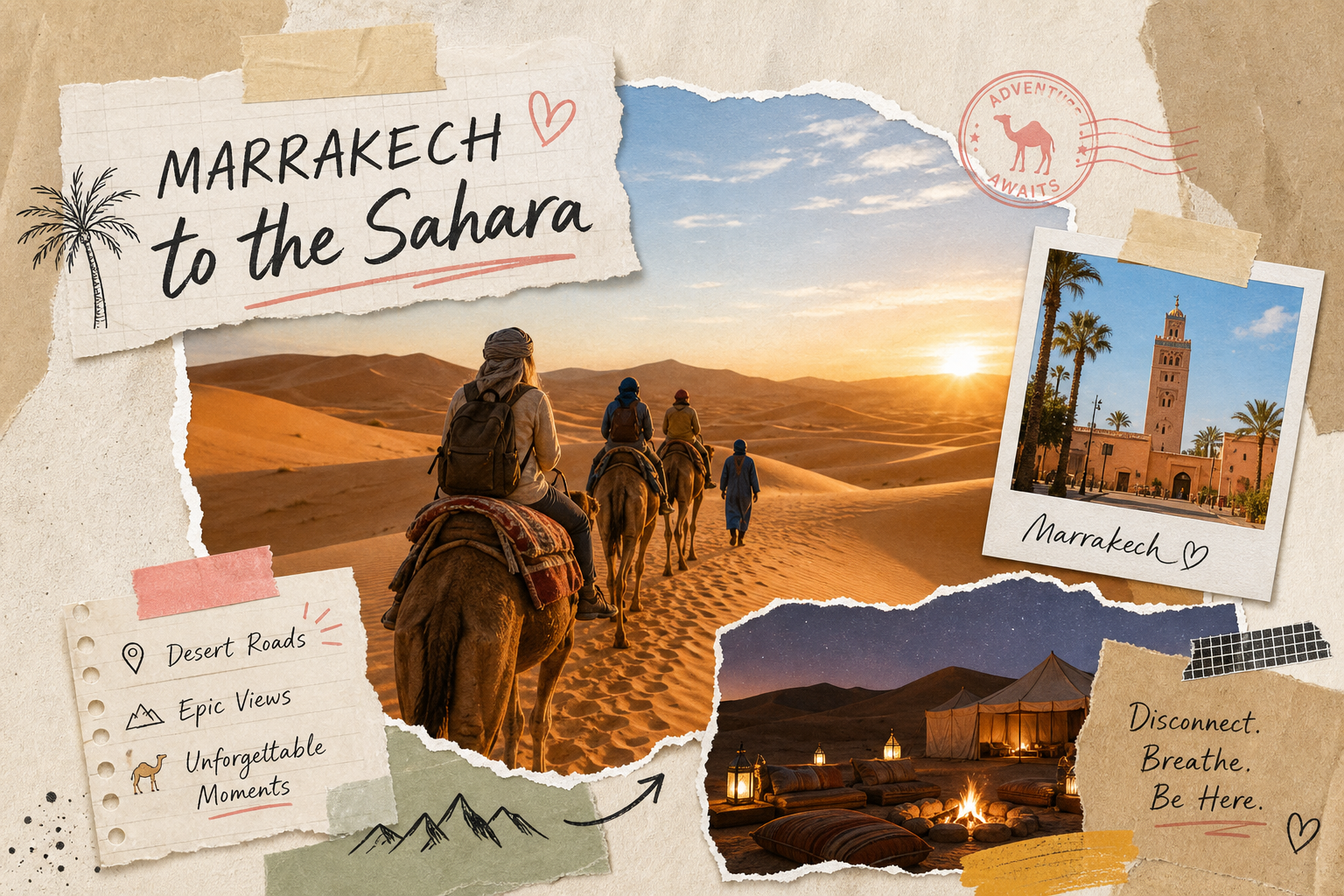
A Marrakech desert tour 3 days sounds like it won’t be enough. You’re crossing a mountain range, stopping at a UNESCO World Heritage site, reaching one of the world’s largest sand seas, riding a camel at sunset, and sleeping under a sky so dark you can see the Milky Way with your naked eye. And then you drive home. The truth is, three days is generally sufficient for this well-structured route, provided the timing is respected from the first morning.
Sahara Serenity Tours, a local Berber-run company specializing in private desert tours and Morocco tour packages, has built this guide around the actual itinerary, real driving times, honest pricing, and the questions to ask before you confirm any booking. No vague promises, just the facts you need to book with confidence.
Day 1: Marrakech to the Dades Valley through the Atlas and Ait Benhaddou
Crossing Tizi n’Tichka: the drive that sets the tone
Departure is early, typically between 7:00 and 8:00am. This isn’t arbitrary. Starting before the heat builds keeps the full day usable and gets you to Ait Benhaddou before the midday crowds. The first major leg is the climb through the High Atlas via the Tizi n’Tichka pass, documented at approximately 2,260 meters in geographical references, roughly three hours of driving that moves you from Marrakech’s olive groves and red buildings into bare mountain rock, hairpin bends, and panoramic valleys. The landscape shift is gradual and then suddenly dramatic. It’s worth staying awake for.
The Ait Benhaddou stop: what you actually see and how long to allow
Ait Benhaddou is a fortified ksar, a UNESCO-listed earthen citadel that has appeared in Gladiator, Game of Thrones, and dozens of other productions. Most itineraries on this circuit allot around 1.5 to 2 hours here: walk up through the labyrinthine lanes, cross the shallow river on the stepping stones, and climb to the top level for the view over the valley. Skip the carpet shops near the entrance and spend the time on the structure itself. From Ait Benhaddou, Ouarzazate is just 30 minutes further east. Some operators include a brief stop at the Ouarzazate film studios; it’s optional and worth it if you have the time. For practical route options and travel connections, see the Marrakech to Aït Benhaddou route.
Afternoon push to the Dades Valley
After Ouarzazate comes the stretch known as the Road of 1001 Kasbahs, a corridor of crumbling fortresses and oasis villages along the Draa and Dades rivers. Total driving time on Day 1 runs to roughly 7 to 8 hours with stops, plan accordingly and bring something to read or listen to. The overnight stop is typically in the Dades Valley or Kelaat Mgouna area: a guesthouse or riad with dinner included and proper beds. Day 2 pays off the effort.
Day 2: Todra Gorge, the Erg Chebbi dunes, and your first Sahara night
The Todra Gorge morning: a short walk with a big visual payoff
After breakfast, the first stop is Todra Gorge, a narrow canyon with imposing cliffs that rise hundreds of meters on either side and a shallow river running through the base. Plan for 45 to 60 minutes of walking before continuing east. The road beyond the gorge passes through Tinjdad and Erfoud, and the terrain becomes increasingly arid and flat. By the time palms start appearing in clusters along dry riverbeds, you know Merzouga is close.
Arriving at Merzouga and the sunset camel trek into Erg Chebbi
Late afternoon arrival in Merzouga is by design. The Erg Chebbi dunes reach up to 150 meters high, and the light at golden hour turns them shades of amber and copper that photographs don’t fully capture. From the vehicle, you transition to camel for the ride into camp. The ride is 45 to 60 minutes each way, and it’s not a theme park experience: the dunes are big, the silence is real, and the pace is slow enough to actually absorb where you are. This moment is the emotional center of the entire trip. Everything on Day 1 was building toward it. If you prefer to compare organized departures and itineraries before booking, see a typical 3-day desert tour from Marrakech to Merzouga.
What a desert camp night actually looks like
Camp arrival comes just before or after dark. A traditional Berber dinner is served in the communal tent, followed by live drumming and music around the fire. Sandboarding is usually available for those who want it before the light goes completely. After the music dies down, the star visibility in the Erg Chebbi area is extraordinary, very low local light pollution makes this one of Morocco’s best stargazing locations. Bring a warm layer regardless of season because desert nights drop fast after sunset, sometimes sharply.
Day 3: Sunrise over the dunes and the long road back
The 5am alarm that’s worth it
Wake-up is around 5:00 to 5:30am. The camel or walking climb to a high dune in the dark, followed by the slow color shift from grey to pink to gold as the sun clears the horizon, is the moment the whole trip has been moving toward. It’s quiet in a way that two days of diesel engines and group conversation makes you forget is possible. Breakfast at camp follows, then the camel ride back to the vehicle. This is the part people talk about for years afterward.
The return to Marrakech: route options and real expectations
The return drive is a full day, roughly 9 to 10 hours with stops. Some operators return via the Draa Valley for a different landscape perspective, while others retrace the Ouarzazate route. Lunch is typically included on this leg and comfort stops are built in. Expect to arrive back in Marrakech in the early to late evening, varying by route and stops. Set that expectation before you leave so there’s no frustration on arrival.
Marrakech desert tour 3 days: costs and what each tier includes
Shared group tours: price ranges and what they include
Shared group tours in 2026 fall into three broad price bands. Budget options sit around €65 to €95 per person. Mid-range shared tours run €100 to €180 per person and typically include transport, one hotel night, one desert camp night, camel treks, and select meals. Premium shared options reach €180 to €250 per person and usually upgrade the camp quality and add more inclusions. For firsthand traveler feedback on shared departures, consult aggregated shared Sahara desert tour reviews.
The common exclusions across all tiers are worth knowing before you book: lunches on Day 1 and 2 are often not included, drinks are usually extra, tips are not covered, and the optional local guide at Ait Benhaddou typically costs around €2 per person. These aren’t deal-breakers, but they should be budgeted.
Private tours: when the upgrade is worth it
Private tour pricing starts at €200 to €300 per person on the lower end and rises to €600 per person for genuine luxury packages. What the upgrade actually buys is a private vehicle with no waiting on group schedules, a private luxury tent at camp with an ensuite bathroom, upgraded meals, and a guide who moves at your pace rather than the group’s. For couples or families of three or four, a private tour can work out to a comparable total cost as a premium shared option, with a meaningfully different experience in terms of flexibility and comfort.
3-day Marrakech desert tour: camp choices from standard to luxury
Standard camps: what “authentic” actually means
Standard camps offer a private tent per couple or small group with basic furnishings, shared bathroom and shower facilities, and communal dinner. Nightly rates run roughly €40 to €80 per person including the camel trek and meals. The experience is genuine; the comfort level is functional rather than polished. For budget travelers, this tier delivers the full desert experience without unnecessary extras.
Luxury camps: what the upgrade includes and costs
Luxury desert camps near Erg Chebbi offer private ensuite tents with real beds, upgraded bedding, and in some cases air conditioning or heating for shoulder-season visits. Rates sit around €100 to €200 per person per night. The best camps in Merzouga also offer features like private terraces with dune views, higher-quality Moroccan dinners, and structured stargazing. For travelers who want the Sahara experience without sacrificing sleep quality, this tier is the clear choice. If an operator offers only one tier with no explanation, ask why.
How to choose the right operator and book without regret
Six questions to ask before you confirm any booking
Before paying a deposit, get clear answers to these six questions:
- Does the price include accommodation for all three nights or just two?
- Is the desert camp tent private or communal?
- What vehicle type is used: minivan, SUV, or shared bus?
- Is a local guide included at Ait Benhaddou or is it an extra cost?
- Are lunches included across all three days or only Day 3?
- Is there a fixed departure time or flexible pickup by hotel?
Any operator worth booking will answer all six without hesitation, vague answers are your signal to keep looking.
Why a local Berber-run operator changes the quality of the trip
Large online marketplaces aggregate tours from dozens of contractors, which means the guide you get is often unknown until departure day and the camp quality can vary trip to trip. A local Berber-run operator, by contrast, is typically able to assign a consistent guide and vehicle from Day 1, structure the route based on hands-on experience with this specific circuit, and maintain direct relationships with desert camps rather than routing through resellers. On a 3-day Sahara tour from Marrakech where every hour counts, that continuity matters in practical terms, not just philosophical ones.
Direct booking through a local operator also typically delivers a sharper price for the same quality level compared to the same tour listed on a third-party marketplace. You’re cutting out the commission layer and talking directly to the people who run the trip.
Ready to plan your Marrakech desert tour 3 days?
A Marrakech desert tour 3 days, the full Marrakech to Merzouga Sahara trip, is a genuinely achievable and deeply rewarding itinerary. You now know the exact day-by-day flow, realistic driving hours, what to budget at each tier, how desert camps compare, and what to ask before you book. The itinerary works. The variables are the operator, the camp, and whether the route is structured with care.
If you’re ready to plan, Sahara Serenity Tours offers private and shared options on this circuit, with transparent pricing and direct contact so you can ask specific questions about camp choices, departure dates, and what’s included before committing to anything. No hard sell, just honest answers and a Merzouga camel trek 3-day experience worth taking. If you prefer to compare marketplace listings as well, see example departures on Viator’s 3-day Merzouga tours.
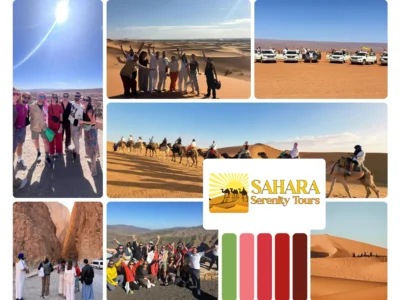
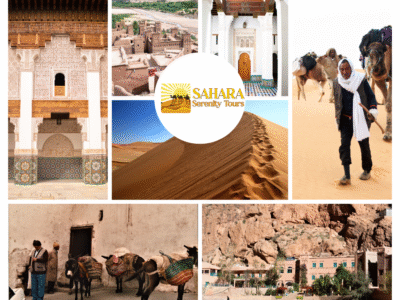
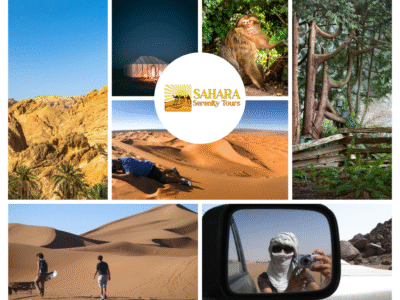
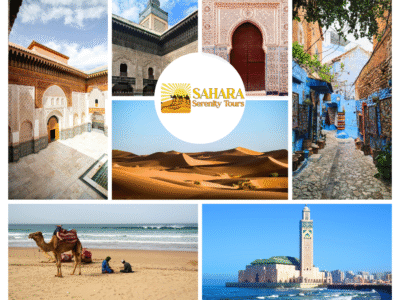
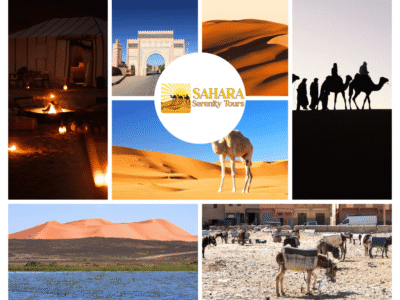
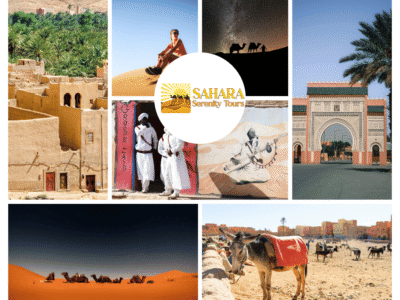
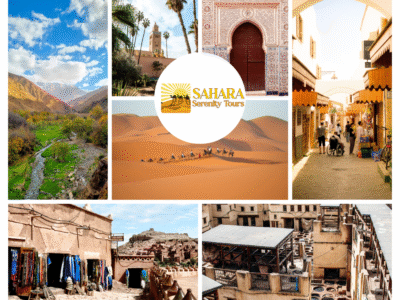
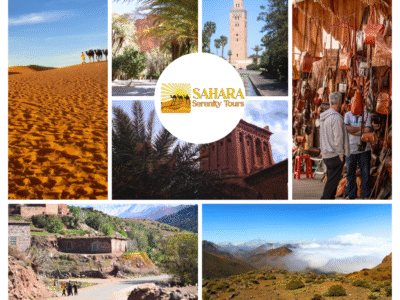
[…] also run a popular 3-Day Marrakech Desert Tour for travelers who want a shorter but still immersive Sahara […]
[…] 3-Day Marrakech Desert Tour is the minimum that gets you to Merzouga’s Erg Chebbi from either Marrakech or Fes and gives you a genuine night in the desert. Day one is mostly driving with stops, day two is the desert and camp, and day three is the return or transfer. It’s tight but it works, and for travelers with limited vacation days who want the core Sahara experience without skipping it entirely, a well-run 3-day tour delivers exactly what the trip promises. […]
[…] Three-day tours exist, and they’re popular because they’re cheaper. But the trade-off is real: you arrive at the dunes near dark after a long driving day and leave by 7am the next morning. The Sahara becomes a backdrop for a photo rather than an experience you actually sink into. Many three-day travelers come back wishing they’d had one more day at the dunes; four-day travelers tend to come back wishing they’d had more time at each individual stop. The sweet spot isn’t about adding more destinations, it’s about staying long enough at the right ones. […]
[…] è un’opzione valida per itinerari più brevi: pensata per chi preferisce soluzioni come i tour di 3 giorni o itinerari fino a 5 giorni, o per chi ha difficoltà di mobilità che rendono il lungo […]
[…] Il secondo giorno si raggiunge Merzouga nel tardo pomeriggio, si sale a dorso di dromedario al tramonto e si dorme in bivacco sotto un cielo stellato senza inquinamento luminoso. Il terzo giorno si sveglia all’alba sulle dune, si rientra passando per le Gole del Todra e si arriva a Marrakech in serata. Per chi cerca una descrizione pratica dell’itinerario consigliato puoi vedere il nostro tour Marrakech Sahara di 3 giorni. […]
[…] Tre giorni con due notti a Merzouga rappresentano la durata minima consigliata per un’esperienza completa del Sahara marocchino. Si dorme in campo berbero tendato sotto le stelle, si fa il camel trek all’alba o al tramonto, si visitano le tappe principali lungo il percorso. I tour da due giorni esistono, ma sono più stringati e lasciano meno spazio alle soste. Per i viaggiatori italiani che hanno una settimana in Marocco e vogliono combinare le città imperiali con il deserto, il formato da tre giorni offre abbastanza tempo per vivere l’esperienza completa senza dominare l’intero itinerario. Per un esempio pratico di questo formato, consulta il nostro tour di 3 giorni da Marrakech. […]
[…] un cielo senza inquinamento luminoso. Per un’esperienza completa servono almeno due giorni; tre giorni sono l’ideale per chi vuole vivere Merzouga senza fretta. Se vuoi fare il viaggio “bello del […]
[…] hai 3-4 giorni liberi e visiti il Marocco per la prima volta, il tour da 3 giorni da Marrakech verso Merzouga è il punto di partenza logico. È abbastanza lungo per sentirti davvero lontano […]
[…] Marrakech: quattro giorni intensi ma fattibili, con una notte nel deserto inclusa (vedi il nostro tour Marrakech-deserto di 3 giorni). Giorno 1: Fès, Ifrane, Azrou, Merzouga. Giorno 2: Merzouga, Gole del Todra, Gole del Dadès. […]