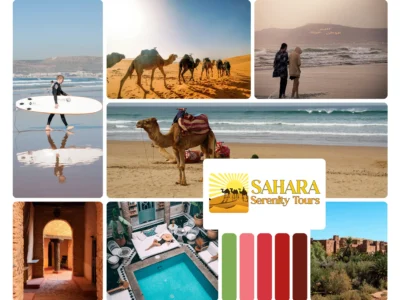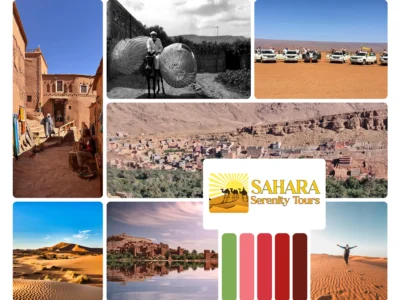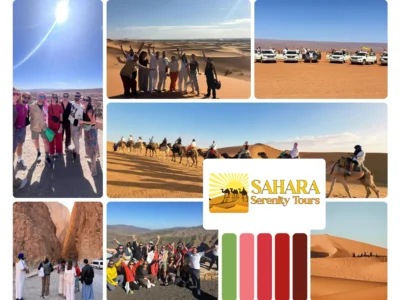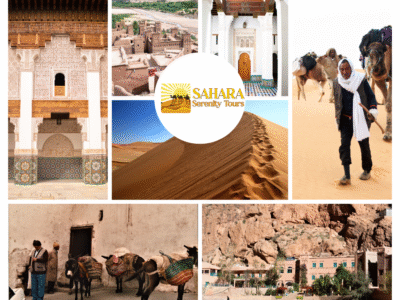
Picture this: you open a browser, search for Morocco trip packages, and suddenly you’re staring at dozens of listings. One costs $118. Another costs $7,399. Both promise “authentic desert experiences” and “unforgettable memories.” Most don’t explain the difference. You close the tab, open it again, and feel no closer to a decision.
This is the situation many American travelers face when planning Morocco trip packages for 2026. The market is full of options, but the transparency isn’t. Prices span from under $200 to over $7,000, inclusions are buried in fine print, and itineraries list city names without telling you what you’ll actually do there. That confusion is what this guide solves.
Over the next several sections, you’ll get a clear breakdown of what Morocco packages actually include, how pricing tiers work in real USD terms, which trip length fits your schedule, what a 10-day itinerary looks like in practice, and how to spot a trustworthy operator before you pay a deposit. Throughout, we’ll use Sahara Serenity Tours as a working example, a small-group Morocco specialist built specifically for American travelers navigating this exact decision.
What Morocco trip packages actually include in 2026
Most packages bundle the same core components: transportation, accommodation, guided activities, and some meals. The real differences aren’t in what’s listed; they’re in the quality, depth, and continuity of each element. Knowing what to look for in each category saves you from paying for something that looks complete on paper but falls flat on the ground.
Transportation between destinations
Overland transport is the backbone of any Morocco package. You’ll typically travel in a private minivan or 4WD vehicle with a local driver, though shared group transport is common at the budget end. The distinction matters: on longer itineraries covering the Marrakech to Fes route via the Sahara, you’re looking at 4 to 6 hours of driving per day through desert roads, mountain passes, and valley routes. A comfortable, climate-controlled vehicle with a driver who knows the terrain isn’t a luxury. It’s the difference between an exhausting day and a memorable one.
Accommodation: riads, kasbahs, and desert camps
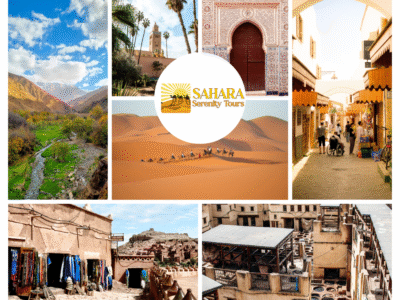
The accommodation sequence on a typical Morocco package follows the geography. In imperial cities like Fes and Marrakech, you stay in riads: traditional courtyard homes converted into guesthouses, ranging from basic en-suite rooms to boutique properties with rooftop terraces and hammams. In the south, kasbahs are the standard stop. At Erg Chebbi near Merzouga, you overnight in a desert camp.
“Desert camp” is the term that requires the most scrutiny. At the budget tier, this means canvas tents with shared facilities. At the luxury end, it means furnished private tents with ensuite bathrooms, electricity, climate control, real beds, and dinner served in a communal dining tent under open sky. Your package tier determines which version you’re getting, so always ask specifically about camp type before booking.
Guided activities and cultural experiences
Standard inclusions across most packages include a camel trek, a guided medina tour in at least one imperial city, a stop at Aït Ben Haddou (a UNESCO-listed ksar), and the classic Sahara sunset and sunrise experience. Hammam visits, cooking classes, dune sandboarding, and Berber village excursions don’t automatically come with the package price. Those are typically add-ons or upgrades.
English-speaking local guides are standard in quality packages, not a premium feature. If an operator charges extra for an English-speaking guide, that’s a signal worth scrutinizing, quality operators build this in from the start.
What most packages don’t cover
International flights, travel insurance, and personal meals beyond daily breakfast are almost universally excluded from land-only pricing. Entry fees for some monuments, gratuities for guides and drivers, and optional activity upgrades also fall outside the package cost. American travelers often assume “all-inclusive” means flights are covered; in the Morocco tour market, it almost never does. Any package you compare should clearly separate its land-only price from total trip cost so you can budget accurately.
How 2026 Morocco package prices really break down
Morocco tour pricing in 2026 follows three clear tiers, and each tier reflects a meaningfully different experience rather than just a different price tag. The figures below are land-only costs per person for a 7-day trip, in USD, so you can build from a real baseline.
Budget packages: what $650, $900 gets you
At this tier, expect hostel-style or basic riad rooms, shared group transport, and a more limited set of guided inclusions. Short shared desert tours from Marrakech to Merzouga start as low as $118 per person for 3 days, which gives you a sense of how this tier is priced. The trade-offs are real: groups are often larger than 10 people, guide quality is variable, and accommodation is functional rather than atmospheric. For backpackers or travelers who prefer to book activities independently, this works well. For first-timers who want a structured introduction to Morocco, it often underdelivers.
Mid-range packages: the $1,300, $1,800 range for 7 days
This is where many American travelers land, and for good reason. The mid-range tier gets you private en-suite riads, comfortable private minivan transport, an English-speaking guide throughout the trip, a Sahara camel trek, and a mid-range desert camp overnight. This is also the tier where small-group tours capped at 8 to 10 people operate, giving you intimacy and social energy without the full cost of a private tour. For a solo traveler or a couple, this format offers exceptional value: you get a real guide relationship, manageable group dynamics, and accommodation that actually enhances the experience.
Luxury packages: $3,900 and up for 7 days
Boutique five-star riads, private vehicles and guides throughout, curated cultural experiences, and glamping-style luxury desert camps define this tier. Adding round-trip airfare from a major U.S. city, which typically runs $650 to $1,200 depending on your departure city, brings a 7-day luxury package to roughly $5,000 to $5,500 total. Worth knowing: a $4,000 package from a locally operated Morocco specialist with a genuinely small group and a deep-knowledge guide often outperforms a $6,000 package assembled by a reseller agency with no real local presence. Price and quality don’t always move together in this market.
Choosing the right trip length for your schedule
A typical U.S. vacation window runs 7 to 14 days, and Morocco can fill any of those spans well. The key is matching trip length to what it actually delivers, not just how many cities appear on the itinerary.
3, 4 day desert sprint: Marrakech to Merzouga and back
This format works well for travelers adding Morocco as a side trip from Europe. You’ll cross the High Atlas, stop at Aït Ben Haddou, and spend one or two nights in the Sahara before returning to Marrakech. The pace is fast, with long driving days and minimal time in any city. It’s best suited for travelers who plan to spend additional days in Marrakech independently, since this itinerary won’t give you meaningful city time beyond what you glimpse through the window on the way out.
7-day highlights: the minimum for first-timers
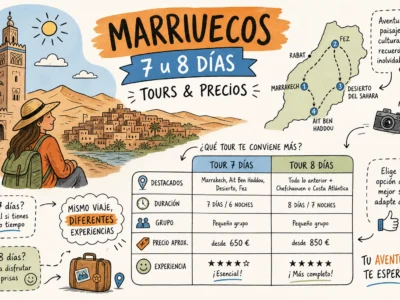
Seven days gets you Marrakech, the southern desert circuit, and Fes. It’s a brisk pace with 4 to 6 hour drives on several days, but you’ll come away having experienced the essential Morocco: medinas, the Sahara, and the imperial city contrast. Expect to feel the trip was worthwhile but leave knowing there’s more to see. This is the most popular entry-level full-trip format for American travelers adding Morocco to a broader international itinerary.
10 days: the sweet spot for combining cities and desert
Ten days is the recommended minimum for American first-timers who want to feel Morocco’s rhythm rather than sprint through it. At this length, you can include Casablanca, Meknes, Volubilis, full time in both Fes and Marrakech, and still have the Sahara circuit as the centerpiece. Driving days become more manageable, and you get at least one or two mornings where you can linger over mint tea without watching the clock.
14 days: the full-country experience
Two weeks opens up the northern circuit, including Chefchaouen and Tangier, or a coastal add-on like Essaouira, alongside the desert and imperial cities. Rest days become possible. Cooking classes, hammam visits, and slower medina mornings actually fit into the schedule without cutting into something else. For travelers who prefer depth over coverage, 14 days is the format that makes Morocco feel fully explored rather than efficiently sampled.
What a 10-day Morocco itinerary looks like in practice
Abstract itinerary descriptions don’t help you evaluate a real package. Here’s a realistic breakdown of the most popular format, which you can use as a reference when comparing any tour you’re considering.
Days 1, 3: Casablanca, Rabat, and Fes
Arrival is in Casablanca, where a visit to the Hassan II Mosque, one of the largest mosques in the world and a genuine architectural landmark, is worth the stop. The drive to Rabat follows, taking in the royal quarter and medina before continuing to Meknes and the Roman ruins at Volubilis. By day two, Fes opens up: two full days to explore the medieval medina, the Chouara tanneries, artisan quarters producing hand-painted ceramics and woven textiles, and a traditional dinner in a riad courtyard. Fes rewards slow travel; the medina is dense, layered, and genuinely disorienting in the best possible way.
Days 4, 6: The Sahara circuit
Departing Fes toward the desert, the route passes through Ifrane, Morocco’s alpine village with cedar forests and European-style architecture, then through the Ziz Valley palm groves before reaching Erg Chebbi near Merzouga. This is the emotional centerpiece of any Morocco trip package. The late afternoon camel trek into the dunes, the transition from golden light to a sky full of stars, and the early morning silence before sunrise in the desert are the moments people describe for years afterward. The quality of your desert camp matters significantly here; this is the night that defines the trip.
Days 7, 10: The south and Marrakech
The return route threads through the Dades Valley, Todra Gorge, the kasbah-studded landscape around Skoura, and the ksar of Aït Ben Haddou before reaching Ouarzazate and then Marrakech. A full day in Marrakech covers Jemaa el-Fna at its chaotic best, the Bahia Palace, Majorelle Garden, and the souks of the medina. Most 10-day itineraries end with a departure from Marrakech Menara Airport on day 10 or 11, depending on flight timing.
Best seasons to travel Morocco in 2026 by region
Timing your Morocco trip affects comfort, crowd levels, desert camp availability, and what the landscape actually looks like. “Visit in spring” is the standard advice, but it’s not the whole picture.
Spring (March, May): the most popular window
March through May brings wildflowers in the Atlas Mountains, manageable Sahara temperatures (daytime highs in the low 80s Fahrenheit), and comfortable walking weather in Marrakech and Fes. This is the most popular booking window, which means demand fills fast. Book any spring departure at least 3 to 4 months in advance, often by January or February, particularly for small-group tours with limited spots. Mid-April through early May tends to see the heaviest tourist traffic at major medinas, so build in some flexibility if crowds affect your experience.
Fall (September, November): the quieter alternative
October is arguably the strongest single month for visiting Morocco across all regions. The Sahara is warm but not punishing, the Atlas light is golden and dramatic, the medinas are less crowded than during spring peak, and the evenings cool quickly in the desert, which makes for spectacular stargazing. Early November extends this window comfortably. September is quieter than peak season, though the Sahara can retain summer heat into early September in some years.
When to reconsider your travel dates
Summer in Marrakech and the Sahara means temperatures regularly exceeding 104°F (40°C). This is manageable if you plan for early mornings and midday rest, but it significantly limits what you can do and enjoy. Ramadan in 2026 is expected to fall approximately in late February through late March (confirm current dates with an authoritative religious calendar, as the exact start depends on moon sighting). Restaurant hours shift and some souk stalls close during daylight hours, it’s not a reason to cancel, but worth building into your planning. Winter is cold in the Atlas and at night in the desert, but it’s low season: riads are quieter, prices soften, and you’ll often have the dunes to yourself.
Small-group vs. private Morocco tours: which fits your trip
This decision shapes your entire experience, from daily pacing to campfire conversation to how flexible the itinerary can be. Neither format is universally better; the right choice depends on who you’re traveling with and what you want to feel at the end of each day.
What small-group tours deliver
Small-group tours capped at 8 to 10 travelers provide a social atmosphere, shared costs, and the energy of traveling alongside a handful of like-minded people. The campfire dynamic in the Sahara is genuinely different with a small group, more personal than sitting alone at a private camp. This format works particularly well for solo travelers and pairs who are open to the serendipity of meeting people on the road. Sahara Serenity Tours caps group sizes at 10 travelers, which preserves the intimacy that makes small-group travel worthwhile and eliminates the anonymous bus-tour feeling that larger operators can’t avoid. For more on group departures, see Group Travel In Morocco: Plan The Perfect Trip In 2026/2027 | Sahara Serenity Tours.
When private tours are the smarter choice
Couples celebrating a honeymoon, families traveling with young children, and groups with specific pacing preferences benefit most from fully private arrangements. A private tour gives you your own vehicle, your own guide, and an itinerary that bends around your interests rather than the group’s schedule. It costs more per person, but the price gap narrows significantly when a group of four to six people splits the cost. For travelers who need flexibility around departure dates, dietary needs, or physical pace, private is worth the premium.
The hybrid option worth knowing about
Some Morocco operators offer both formats under the same brand: small-group shared departures for social travelers and fully private customizable tours for those who want more control. Sahara Serenity Tours is one example, offering both options so travelers aren’t forced to choose between a rigid group schedule and the higher base cost of going fully private. If your dates don’t match a fixed departure schedule, a private tour from a quality local operator is a better option than forcing your trip into an ill-fitting group itinerary.
What separates a reliable Morocco operator from a poor one
Morocco’s tour market includes locally based experts, international aggregators, and resellers with no physical presence in the country. From the outside, they can look nearly identical. These are the factors that actually distinguish them.
Local expertise vs. reseller agencies
A locally based Morocco operator employs guides who grew up in the country, speak Amazigh and Darija alongside English, and know which desert camp in October is genuinely quiet versus overrun with day-trippers. A reseller books wholesale tours from a third party and adds a margin, with no real accountability for what happens on the ground. The simplest way to test this: ask any operator whether their guides are employed directly by them or sourced through a subcontractor. The answer is revealing. A quality local operator responds immediately and with specifics.
Transparent USD pricing and clear inclusions
For American travelers, opaque pricing in Moroccan Dirhams with vague inclusions is a practical problem. A trustworthy operator lists exactly what is and isn’t covered on every itinerary: accommodation type and star rating, which meals are included, entrance fees, camel trek duration, and group size cap. Sahara Serenity Tours publishes prices in USD with a clear inclusions list on every package, which makes comparison straightforward for U.S. travelers used to line-item transparency when booking trips at home.
Group size limits and guide continuity
A cap of 10 travelers is the standard for genuine small-group intimacy. Anything above 12 starts to feel like a standard bus tour, regardless of what the marketing says. Beyond group size, ask whether the same English-speaking guide travels with you for the full trip or whether you’re handed off to a new guide at each city. Consistent guide relationships are one of the most commonly cited factors in five-star Morocco tour reviews, and it’s easy to see why. A guide who knows your interests by day three shows you things you would never find on your own. Our roundup of the Best Morocco Tour Companies For American Travelers In 2026 | Sahara Serenity Tours offers additional questions to help you evaluate operators.
Practical steps for booking your 2026 Morocco package
You’ve done the research. Here’s how to convert that into a confident booking without leaving money on the table or getting caught off-guard.
How far in advance to book for 2026 departures
Spring departures from March through May fill the earliest, often by January or February for small-group tours. Fall departures in October and early November should be booked by July or August at the latest if you want your preferred dates and group size. Private tours have more scheduling flexibility, but even private Morocco operators need 4 to 6 weeks minimum to coordinate permits, accommodation reservations, and driver logistics. If you’re targeting a specific travel window, earlier is always the right call.
Key questions to ask before you pay a deposit
Before committing to any Morocco package, confirm the following with the operator directly:
- What is the maximum group size, and how many spots remain on your target departure date?
- Are airport transfers in and out included in the package price?
- What is the cancellation policy, and is there free cancellation at least 7 days out?
- Is your guide a licensed local employed by the operator, or a freelance subcontractor?
- Does the desert camp have private ensuite facilities, or are bathrooms shared?
A quality operator answers every one of those questions clearly and without hesitation. Vague answers or deflection are a signal to keep looking.
Red flags that signal a low-quality package
Prices dramatically below the market rate with no explanation of what’s been cut are worth scrutinizing. No physical Morocco address for the operator, stock-photo desert camps in marketing materials, and itineraries that list only city names without specifying activities or accommodation type are all indicators of a reseller with limited local accountability. The operators worth booking welcome detailed questions because they know exactly what they’re delivering.
Making your Morocco decision with confidence
When comparing morocco trip packages 2026, the range is real: from sub-$700 land-only desert sprints to $5,500-plus full-country luxury journeys. The right choice depends on trip length, who you’re traveling with, and what you want to feel at the end of it. Most American first-timers do best with a 10-day mid-range small-group package that covers the Sahara, the imperial cities, and Marrakech, with a locally based operator who handles every detail from airport pickup to desert camp check-in.
The operator matters as much as the itinerary. Local expertise, honest USD pricing, and a genuine group size cap are the three factors that separate a forgettable tour from the trip you’ll be describing for years. Those aren’t marketing points; they’re the practical variables that determine what your actual days in Morocco look and feel like.
If you’re ready to see what the right Morocco trip package looks like for your travel style, Sahara Serenity Tours offers both small-group shared departures and fully private customizable itineraries built specifically for American travelers. Start by reading our Morocco Travel Guide: Plan Your Perfect Trip In 2026 | Sahara Serenity Tours. Browse 2026 departure dates, review detailed inclusions, and request a custom quote at Sahara Serenity Tours. The Sahara is waiting. We’ll handle everything else.