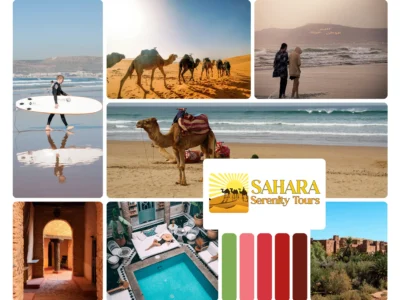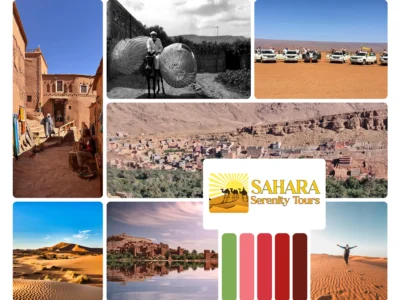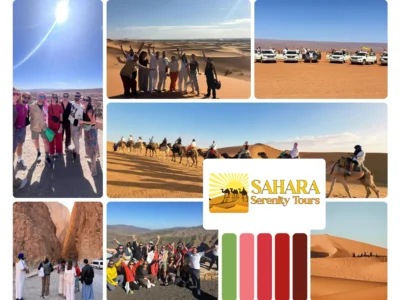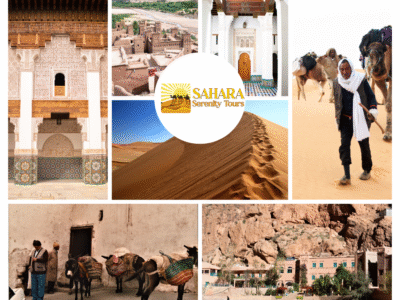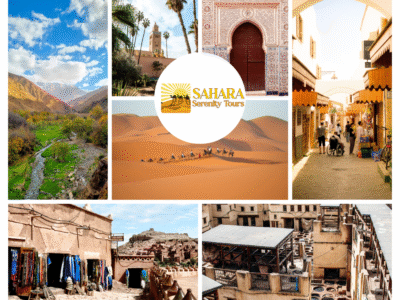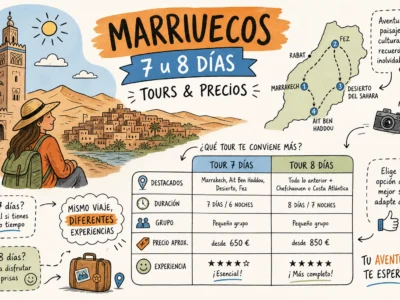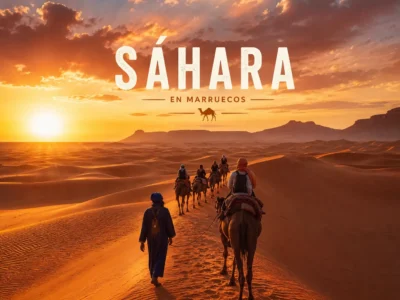
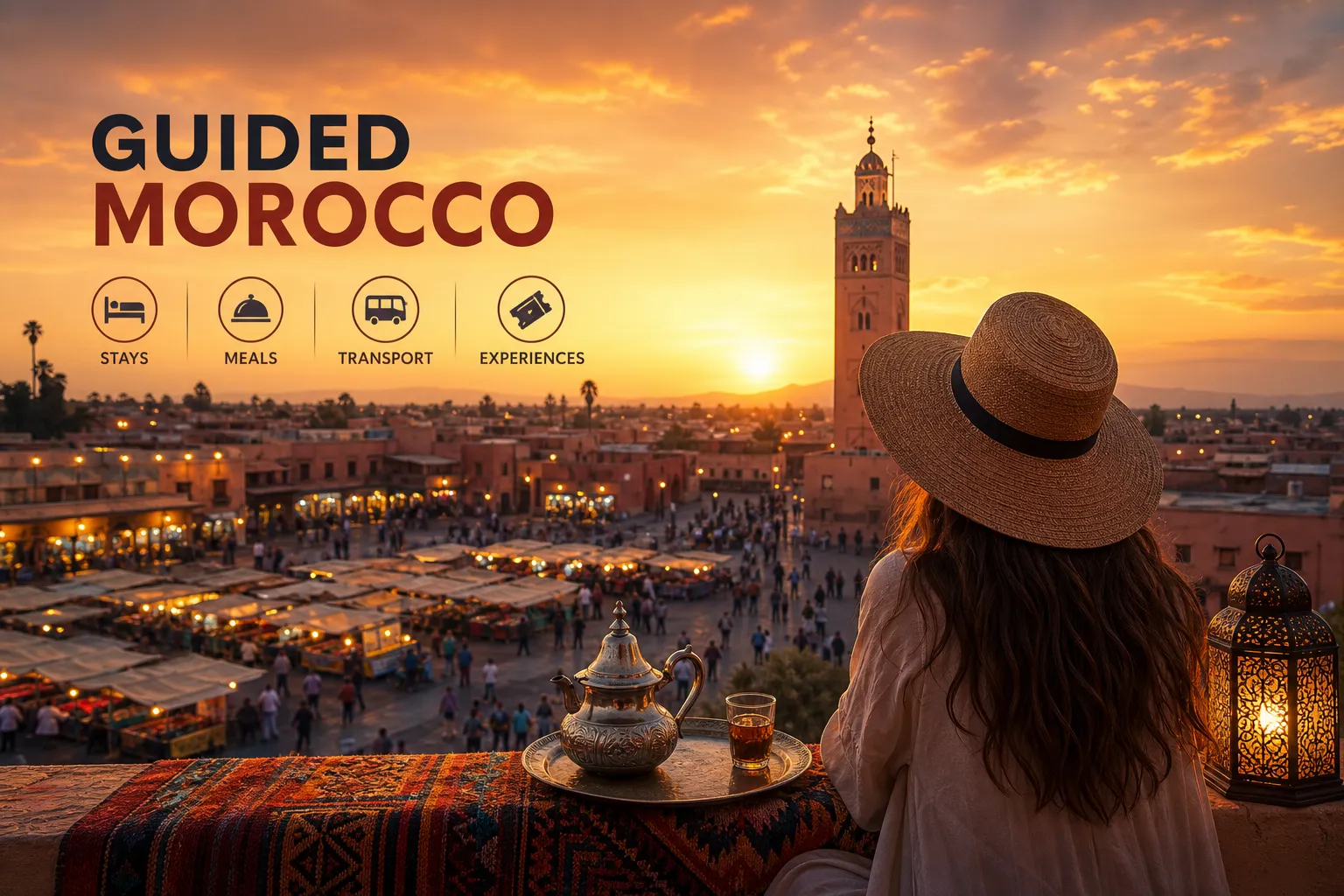
You land in Marrakech. You walk out of the terminal into the warm Moroccan air, and there’s already a driver holding a sign with your name on it. No scrambling for a taxi, no figuring out which lane is which, no awkward negotiation over a fare in a currency you’ve never handled before. Your bags go in the back, and the city starts unfolding through the window. That’s the opening scene of a Morocco guided vacation, and it sets the tone for everything that follows.
The promise of a fully guided Morocco trip is simple: someone who knows this country handles every moving part so you can concentrate on actually experiencing it. But “guided” means different things depending on who’s selling the trip. A large international escorted tour operates very differently from a local Moroccan specialist. The inclusions, the accommodations, the quality of information you receive at each stop, and the flexibility of the experience are all different. This article breaks down exactly what a well-run Morocco guided vacation delivers, from the airport pickup on day one to the final farewell in Fes or Marrakech.
At Sahara Serenity Tours, our local team has been showing American travelers this country in depth for years. Our guides grew up in the medinas and mountains we take you through. We’re sharing this breakdown because travelers who understand what’s included make better decisions, arrive with accurate expectations, and enjoy the trip far more. So here’s exactly what you’re paying for and what it looks like on the ground.
What “fully guided” actually means in Morocco
Most travelers have seen the image: a tour leader with a flag or an umbrella, walking briskly through a square while twenty people trail behind trying to hear through the noise. That’s one version of guided travel. A Morocco-specific guided tour from a local specialist is a completely different category of experience, and the distinction matters enormously when you’re choosing who to book with.
The difference between guided, escorted, and self-guided travel
Self-guided travel means you book your own flights, hotels, transfers, and activities, then navigate everything yourself. You have total freedom and total responsibility. Escorted travel means a group leader travels with you, but that person may outsource local knowledge at each stop to freelance city guides of varying quality. Fully guided travel with a local specialist means a single cohesive team handles your entire experience: a knowledgeable local guide who speaks Darija and Arabic alongside English, pre-booked accommodations vetted by the operator, and intercity transport handled by drivers who know the routes personally.
The distinction between escorted and fully guided becomes most visible in Fes, where the medina has over 9,000 streets and no formal signage. A locally based guide navigates it instinctively. A tour leader from an international company who visits twice a year does not.
What a Morocco guided vacation typically bundles
Standard inclusions on a well-structured Morocco guided vacation cover airport transfers on arrival and departure, intercity transport in a private or shared vehicle, guided city walks at every major stop, accommodations in riads, kasbahs, and desert camps, and a specified number of meals, typically daily breakfast and several dinners. What the bundle does not cover is just as important: international flights, travel insurance, most entrance fees, personal spending, and gratuities are almost always excluded. We’ll cover that in detail in section seven.
Why local operators deliver more than international agencies
When you book through a large international travel company, Morocco is often one chapter in a broader catalogue that also includes Egypt, Spain, and Portugal. The operator doesn’t own the experience on the ground; they’re reselling it from local vendors they may or may not have vetted personally. When you book with a specialist like Sahara Serenity Tours, the guides, drivers, and desert camp contacts are the same people on every departure. That consistency means insider access, genuine relationships with riad owners, and the kind of spontaneous recommendations that never appear in any guidebook: the best harira in Fes, the family-run argan cooperative worth stopping at on the road south, the dune you need to climb at exactly this hour for that photograph.
Where you’ll sleep: accommodations on a Morocco guided vacation
Accommodations are one of the biggest variables in price and experience on a Morocco guided vacation. The type of property shifts as the route moves from city to mountains to desert, and each change brings its own character. Understanding that progression helps you set realistic expectations and recognize what you’re paying for at each tier.
Riads in the imperial cities
A riad is a traditional Moroccan townhouse built around a central courtyard, usually tucked inside the medina. Most guided itineraries in Marrakech and Fes use mid-range to boutique riads because they’re atmospheric, centrally located, and offer a sensory experience that no chain hotel can replicate: mosaic tilework, carved plaster, the sound of a fountain in the courtyard. Riad quality varies significantly between operators, ranging from basic guesthouses to beautifully restored boutique properties with rooftop terraces and hammams. When you’re comparing tours, ask specifically about riad category rather than star rating, since the traditional property classification doesn’t map cleanly onto international hotel standards.
Kasbahs and valley lodges in the south
As the route moves south through the High Atlas and into the pre-Saharan valleys, accommodations shift to kasbahs, traditional fortified guesthouses built from pise (compressed earth). These properties sit against dramatic backdrops of red rock canyons and palm groves. Many travelers say their kasbah night in Dades Valley or near Ait Benhaddou is among the most visually memorable of the entire trip. Quality at this tier ranges from simple and clean to beautifully appointed, depending on the tour package.
Desert camps at Erg Chebbi or Erg Chigaga
The desert camp night is what many people book the entire trip for. Standard camps offer basic Berber-style tents with shared bathroom facilities; they’re atmospheric and comfortable enough for the experience. Luxury or semi-luxury desert camps are genuinely different: ensuite tents with proper beds, hot showers, private terraces facing the dunes, and a multi-course dinner served in an open-air dining area. The price difference between a standard and a luxury camp experience varies by operator and season, so it’s worth checking current quotes when you book, but for most travelers making a once-in-a-lifetime Sahara desert tour in Morocco, the upgrade is worth serious consideration.
Getting from city to city without the stress
Transportation anxiety is a real factor for first-time Morocco travelers. The distances between major stops are long, the mountain passes through the High Atlas are narrow and winding, and the medinas of Marrakech and Fes are pedestrian-only labyrinths where vehicles simply don’t go. On a Morocco guided vacation, the transportation piece disappears from your plate entirely. You show up, you get in, and the scenery does the rest.
How transportation works on a Morocco guided vacation: private van vs. shared minibus
Most guided tours use either a private 4WD or minivan or a small shared minibus. The difference matters for comfort and flexibility. A private vehicle means your group sets the pace, can stop for photographs without a vote, and isn’t sharing road hours with strangers. A shared small-group vehicle is more economical and comes with its own social energy, especially on multi-day desert routes where the group dynamic becomes part of the memory. Sahara Serenity Tours caps shared group tours at 10 travelers, a policy that keeps the minibus from feeling like a crowded charter and preserves the intimacy that makes a desert trip special.
The driver as part of the team
On a well-run guided Morocco tour, the driver is not simply hired transport. The best operators pair travelers with drivers who have deep route-specific knowledge: where the road opens up for an Atlas panorama, which argan cooperative is genuinely family-run versus a tourist trap, and how to time the approach to Merzouga so the dunes catch the late-afternoon light. At Sahara Serenity Tours, our drivers work the same routes consistently, which means their knowledge is earned from genuine familiarity rather than a map app.
Airport pickups, city transfers, and luggage logistics
The questions Americans ask most often about Morocco logistics are practical ones: who meets them at the airport, how luggage is handled during medina walks in vehicle-free zones, and how transfers between cities are coordinated. On a guided vacation, the airport pickup is confirmed in advance with your guide’s contact information. During medina exploration, larger bags stay in the vehicle or at the riad while you walk with a day bag. Intercity departure times are communicated the night before, and the guide handles any adjustments due to road conditions or timing changes. None of it requires you to figure anything out on your own.
Meals on a guided Morocco tour: what’s included and what isn’t
Food is one of Morocco’s great gifts to the traveler, and it’s also one of the most consistent sources of confusion about what a guided vacation actually covers. No two operators handle meals exactly the same way, so understanding the typical structure prevents surprises on the ground.
The standard meal inclusion pattern
Most guided Morocco tours include breakfast daily, served at the riad or camp. A handful of group dinners are included throughout the itinerary, usually at the desert camp and at one or two notable dining settings in the cities. Lunches are often unstructured on city days, which gives you the freedom to explore the medina food scene on your own terms. This is genuinely a feature rather than a gap: wandering into a hole-in-the-wall for a bowl of harira or a msemen with honey is one of the best ways to experience Morocco’s food culture, and a guided lunch at a restaurant every day would actually get in the way of that.
What authentic Moroccan food looks like on tour
A typical group dinner on a guided tour is a set-menu Moroccan spread: a selection of cold salads to start, a main course of lamb or chicken tagine, or couscous, and fresh fruit or pastries to finish. The ritual of mint tea poured from height accompanies almost every meal. Many guided itineraries include at least one elevated dinner in a traditional riad setting, sometimes with live Berber music and candlelit courtyard seating. These moments are more than meals; they’re cultural introductions to Moroccan hospitality at its most deliberate.
Dietary needs and how operators handle them
Vegetarian and vegan travelers do genuinely well in Morocco. The cuisine is built around legumes, vegetables, olives, preserved lemons, and fresh bread, so plant-based eating requires almost no compromise. The key is communicating your needs to your operator before the trip so the guide can relay them to each riad and camp host in advance. A local operator handles this as a routine matter. Halal meat is standard throughout Morocco, which is worth noting for travelers with those requirements since it means no separate arrangements are needed.
A day-by-day look at a typical 7- to 10-day guided Morocco itinerary
City names on an itinerary don’t tell you what a day actually feels like. Here’s what the experience looks like in practice on the most common Marrakech-to-Fes guided route, which forms the backbone of the majority of Morocco itinerary packages sold to American travelers.
Days 1, 2: arriving in Marrakech and settling into the medina
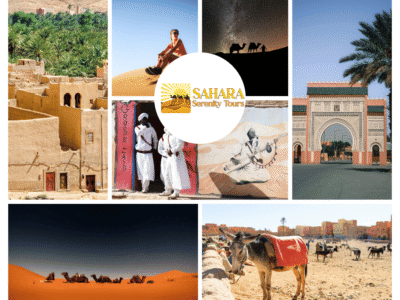
Your driver meets you at the airport and transfers you directly to your riad in the medina. The first afternoon is usually a gentle orientation walk through the souks and into Jemaa el-Fna, Marrakech’s central square, which transforms from a market during the day into an open-air theater of food stalls, musicians, and storytellers at night. Day two covers the major landmarks: Bahia Palace with its painted ceilings and carved plaster, Majorelle Gardens with their cobalt blue architecture, and a deeper souk walk with your guide explaining the geography of the market by trade. Having a guide in Marrakech’s medina matters more than most travelers anticipate, because the city’s network of covered souks is genuinely disorienting, and touts near the major sites can be aggressive with unaccompanied tourists.
Days 3, 5: the road south through the Atlas and into the Sahara
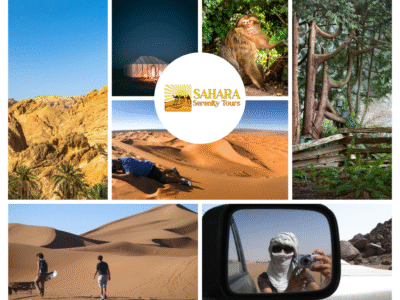
The drive from Marrakech toward Merzouga is one of the most cinematically varied routes in North Africa. You cross the High Atlas via the Tizi n’Tichka pass, with views of snow-capped peaks giving way to the arid ochre landscapes of the south. The stop at Ait Benhaddou, a UNESCO-listed kasbah village that has appeared in dozens of major films, is a highlight in its own right. From there, the route continues through Ouarzazate (Morocco’s film capital), the rose-filled Dades Valley, and the narrow slot canyon of Todra Gorge before the road opens up into the flat pre-Saharan plain. Then, ahead on the horizon, the sand dunes of Erg Chebbi appear: an orange wall of sand rising from a flat gravel plain, looking completely improbable and completely real.
Days 6, 8: the Sahara, then north toward Fes
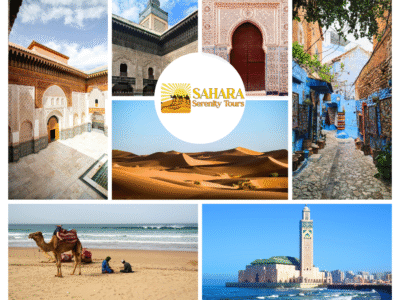
After the desert night and an early sunrise on the dunes, the itinerary swings north through the Middle Atlas, with its cedar forests and Berber market towns, toward Fes. Fes el-Bali, the old walled city, is arguably the most intense urban experience in Morocco. A guided day here covers the Chouara tanneries (the city’s famous leather dyeing pits, best viewed from an overlook above the activity), the madrasa of Bou Inania with its carved cedarwood and zellij tilework, and a walk through the artisan quarters where metalwork, ceramics, and weaving are still produced by hand. The Fes medina has over 9,000 streets and no formal street signs; a local guide is not optional here, it’s the difference between discovery and getting genuinely lost for hours.
Days 9, 10 for longer trips: Chefchaouen and Volubilis
Ten-day itineraries typically add a northern extension that shifts the visual register entirely. Chefchaouen, the Blue City perched in the Rif Mountains, is a maze of indigo-painted alleyways, small squares, and mountain light. The Roman ruins of Volubilis, a well-preserved archaeological site about an hour from Meknes, add a layer of deep history that connects Morocco to the wider Mediterranean world. Both destinations reward the extra days and prevent the common complaint that a 7-day Morocco trip felt rushed.
The Sahara experience: what the desert portion actually delivers
The Sahara is the emotional centerpiece of most Morocco guided vacations. Travelers arrive with romantic expectations, and the experience earns them, but only when you know what the evening actually involves so you’re present for it rather than confused by the logistics.
The camel trek into the dunes at sunset
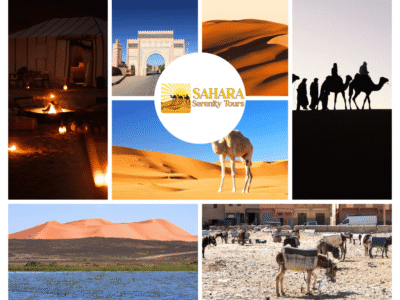
The trek from the edge of the erg to the desert camp is often about 45, 90 minutes on a trained dromedary camel, led by a Berber guide on foot, though the exact duration depends on the camp’s distance from the dunes. The ride is timed to arrive at the camp as the sun drops behind the dunes and the light turns the sand from orange to deep red. The camels are calm, well-habituated to tourists, and led the entire way, so no riding experience is required. The physical sensation of swaying across a sea of sand with nothing visible on any horizon except dunes is exactly what the photographs suggest, and those photographs don’t do it justice.
Desert camp life: dinner, music, and a sky full of stars
Once at camp, the evening follows an unhurried rhythm. Dinner is served in the communal tent or under the open sky. After the meal, hand drums come out and the music shifts from background to performance. The campfire burns low, the conversation gets slower, and then at some point someone looks up. The Sahara’s distance from any city means very little light pollution, and many travelers report a spectacular view of the Milky Way, the kind of sky that makes most people genuinely quiet for a few minutes. This is why people book the trip.
Standard camp vs. luxury encampment: what changes
In a standard desert camp, beds are basic foam mattresses in shared Berber tents, and bathroom facilities are communal and simple. The atmosphere is communal and the experience is authentic. A luxury or semi-luxury desert camp, like the options Sahara Serenity Tours works with at Erg Chebbi, adds ensuite bathroom facilities, proper beds with quality linens, sometimes a private terrace facing the dunes, and a more elaborate dinner service. The core experience, the camel trek, the stars, the music, is identical. What changes is how comfortable you are while you have it.
What a Morocco guided vacation typically does NOT include
Transparency about exclusions builds trust before booking and prevents frustration on the ground. Most negative reviews of Morocco tours trace back to a mismatch between what a traveler assumed was included and what the operator actually listed. Here’s what you should never assume is covered unless the itinerary explicitly states otherwise.
International flights and travel insurance
No Morocco tour operator includes round-trip airfare from the United States in the quoted package price. The tour price covers ground services in Morocco from your arrival transfer onward. Travel insurance is similarly always the traveler’s own responsibility, and given the distances involved in a transatlantic trip, it’s a genuine necessity rather than an optional extra. Most American travelers fly into Casablanca or Marrakech via a European hub such as Paris, Madrid, or Amsterdam.
Entrance fees, optional excursions, and personal spending
Some guided Morocco itineraries include entrance fees to palaces, kasbahs, and archaeological sites as part of the package; others list them as additional budget items. The fees themselves are modest, typically a few dollars per site, but they add up across a 10-day trip with multiple historical stops. Ask your operator for a specific list of planned site visits and whether admission is included at the time of booking. Optional excursions, such as a cooking class or a hammam treatment, are almost always add-ons regardless of package tier.
Gratuities for guides and drivers
Tipping culture in Morocco is meaningful, and guides and drivers genuinely rely on gratuities as part of their income. A practical benchmark for American travelers: budget approximately $5, $10 USD per day per traveler for the guide and $3, $5 per day for the driver. On a 7-day trip, that works out to roughly $56, $105 per person for both. It’s worth having local dirhams available for this purpose, though USD is widely accepted and appreciated as well.
Small-group, private, or luxury: choosing the right Morocco guided vacation style
Once you understand what’s included across the board, the real decision is which format fits your travel style, group size, and budget. Each option delivers the core Morocco experience; what changes is the level of customization, the social dynamic, and the comfort level at each stop.
Small-group tours: community feel at a lower price point
Small-group Morocco tours run approximately $800, $1,500 per person for 7, 10 days (based on 2026 operator estimates) and are ideal for solo travelers, friend pairs, and anyone who enjoys meeting other travelers on the road. The campfire atmosphere in the Sahara, the shared table at a riad dinner, and the van banter through the Atlas are all part of the experience. Sahara Serenity Tours caps their shared group tours at 10 people, which is small enough to feel personal and flexible enough to allow itinerary adjustments based on the group’s interests. This is not a 45-person bus experience; it’s closer to a group of friends who happened to book the same trip.
Private guided tours: full customization for families and couples
A private Morocco tour gives you complete control over pace, routing, departure city, and daily schedule. Based on 2026 market pricing, private guided tours start around $1,500 per person and can exceed $6,500 depending on duration and the accommodations included. Families with children, honeymooners, and travelers with specific interests, photography, culinary deep dives, architecture, or bird watching in the south, tend to strongly prefer this format. Sahara Serenity Tours offers fully private, customizable itineraries departing from any Moroccan city, and the flexibility extends to pacing: if you want two full days in Fes instead of one, you get two days in Fes. Couples looking for sample honeymoon-focused itineraries can review our Romantic Morocco Tour: A Complete Guide For Couples.
Luxury Morocco vacations: what the premium actually delivers
Luxury Morocco guided vacation packages in the $1,200, $3,500 or more range for 7, 10 days typically upgrade accommodations to five-star riads and luxury desert camps, include private vehicles throughout, add curated dining experiences beyond the standard riad dinner, and provide senior local guides with deeper expertise. The difference between a well-run mid-range tour and a luxury Morocco vacation is not just comfort; it’s time and depth. Luxury itineraries slow down and go deeper at each stop rather than racing through a checklist of sites. Sahara Serenity Tours delivers this quality of experience without the inflated pricing of large international luxury brands, because our relationships with properties and camps are direct, not routed through a third-party consolidator adding margin at every layer.
When to book and how far ahead to plan
Timing your Morocco trip well affects both the quality of the experience and the availability of the specific accommodations and tours you want. Americans planning from the US have a clear optimal window, and understanding it prevents the disappointment of a sold-out desert camp or a Marrakech spring week that books up months in advance.
The two best windows for a Morocco guided vacation
Spring, from late March through May, and autumn, from late September through November, are universally the best periods for a Morocco guided vacation. Temperatures in the desert are comfortable for camel treks and outdoor exploration. The cities are alive with activity. The light is extraordinary. The extreme heat of July and August makes the Sahara portion genuinely difficult, with daytime temperatures routinely exceeding 105°F, and the camel trek experience in that heat is not what anyone imagines when they book it. If you can’t travel in spring or autumn, late November through February offers cooler conditions and fewer crowds, with the caveat that desert nights are genuinely cold and some High Atlas passes may see snow.
How seasonality moves prices and availability
Peak demand in spring and autumn means that popular boutique riads, luxury desert camps, and well-reviewed small-group tours can sell out three to six months in advance. The most desirable luxury camps at Erg Chebbi have a limited number of ensuite tents and fill up quickly for April and October departures. Off-peak winter travel, December through February, offers lower prices and empty medinas, which has its own appeal for experienced travelers who prefer depth over perfect weather. Budget travelers who don’t mind cold desert nights often find the winter months excellent value.
Booking tips for American travelers
American travelers flying from the US to Morocco typically deal with a 6, 8 hour time difference and at least one connecting flight, usually through Casablanca Mohammed V Airport or a European hub. Building at least one buffer night in Marrakech or Casablanca before your main guided tour begins is strongly recommended. A missed connection that collapses day one of a 7-day itinerary is a real risk on transatlantic flights, and having that buffer night means the worst case is a late arrival to your riad rather than an entire day of the tour lost. For spring and autumn departures, book your Morocco guided vacation at least 3, 6 months ahead. For luxury desert camps specifically, 4, 6 months is the safer window.
Your Morocco guided vacation, start to finish
Here’s the full picture in plain terms. A Morocco guided vacation covers your airport arrival transfer, all intercity transport between stops, accommodations in riads, kasbahs, and a desert camp, daily breakfast, select included dinners, professional local guides at every major stop, and the camel trek into the Sahara at sunset. The desert camp night, the medina walks in Fes and Marrakech, the kasbah road through the south: none of it requires you to sort out logistics, negotiate prices, or figure out which alley leads to the riad. What you bring is curiosity, a good pair of walking shoes, and a willingness to be genuinely surprised by a country that earns every superlative travelers throw at it.
The variable is the operator, and that variable matters more than almost any other factor in how the trip feels from arrival to departure. A local specialist with real relationships and real guides delivers a different experience than an international agency reselling the same inventory through a chain of intermediaries.
At Sahara Serenity Tours, we offer small-group and fully private Morocco guided vacation itineraries ranging from a 3-day desert sprint between Marrakech and Fes to a 10-day private journey covering the imperial cities, Atlas Mountains, and Sahara desert tours in Morocco. Every detail is handled by our local team, and every departure reflects the consistent standard our travelers have come to expect. If the driver with your name on that sign is starting to feel real, explore our Morocco travel tips for first-timers (2026/2027) and reach out to our team directly. We’ll match you with the right itinerary for your travel style, your group, and the Morocco experience you’ve been picturing.
Frequently asked questions about Morocco guided vacations
Is a Morocco guided vacation right for first-time travelers?
Yes, and arguably more so than for experienced independent travelers. First-timers benefit most from having logistics, language barriers, and medina navigation handled by a local expert. A Morocco guided vacation removes the friction points that typically derail first trips: missed connections between cities, accommodation surprises, and the steep learning curve of navigating Marrakech or Fes on your own. The structure lets you absorb the experience rather than manage it. For practical planning advice, see our Morocco travel tips for first-timers (2026/2027).
What’s the difference between a Morocco guided vacation and booking independently?
Booking independently gives you full flexibility but puts every logistical decision on your plate, transport between cities, riad vetting, entrance fee research, and navigating medinas without local knowledge. A Morocco guided vacation bundles all of that into one confirmed package, typically with better riad access and desert camp partnerships than an individual traveler can arrange on their own.
How much spending money should I budget beyond the tour price?
A practical daily budget for personal expenses, lunches, souvenirs, optional excursions, and gratuities, runs roughly $50, $80 USD per day for most travelers. The tipping benchmark for guides and drivers combined is approximately $8, $15 per day, and entrance fees at major sites are typically a few dollars each.