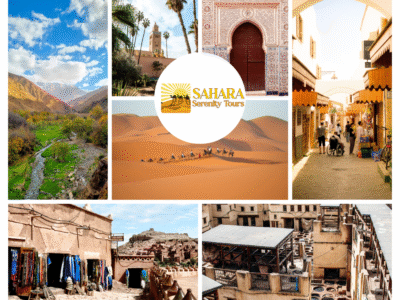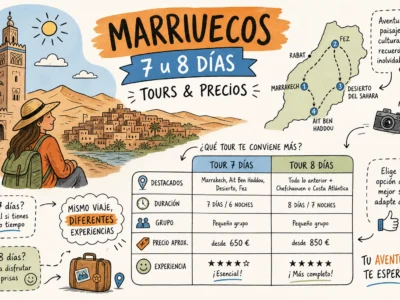
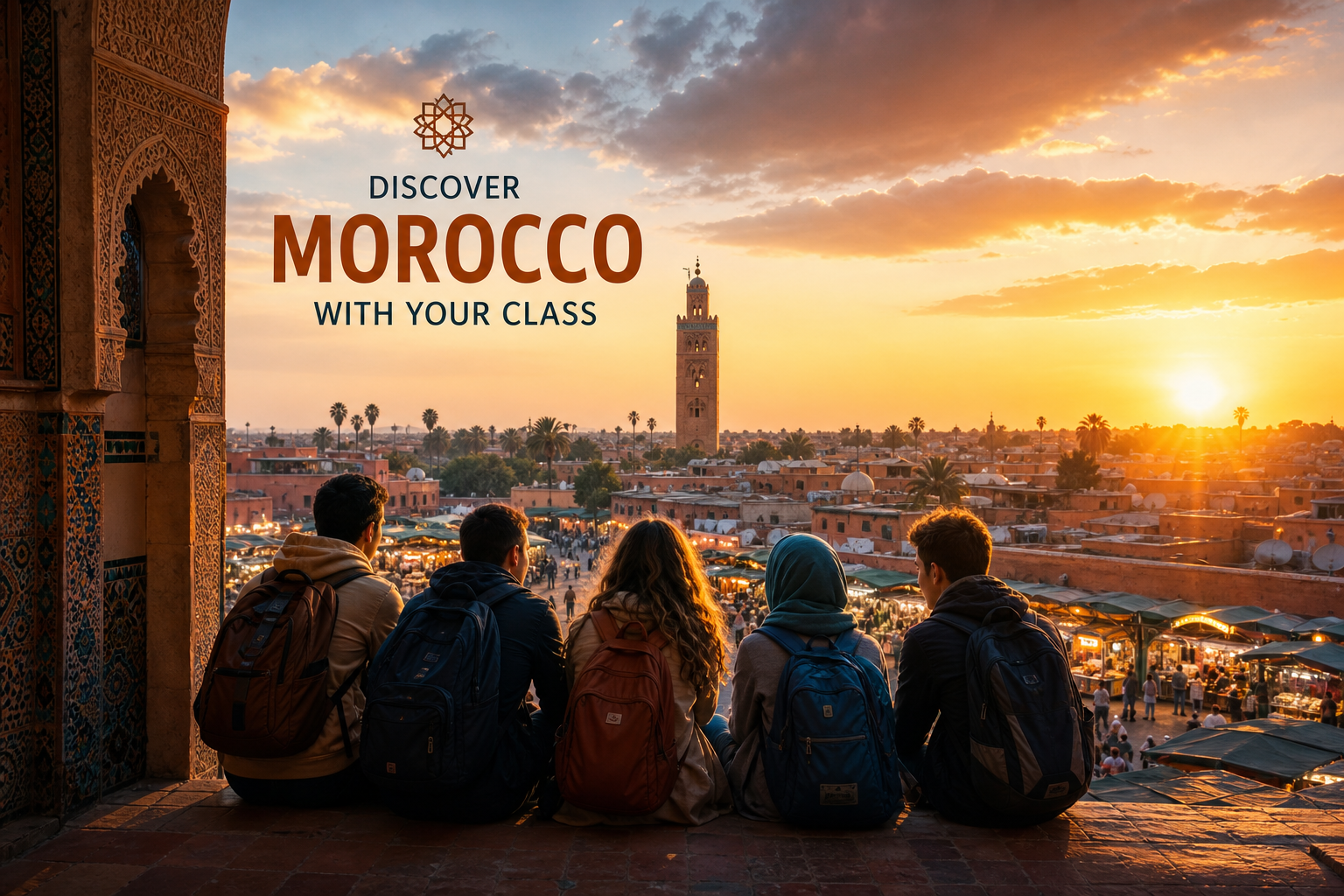
Picture a group of students standing at the edge of Volubilis, notebooks open, staring at Roman mosaics that have survived two thousand years of Moroccan sun. They’re not reading about empires. They’re standing inside one. That moment, when a classroom concept suddenly has weight and texture, is exactly what educational trips to Morocco do to a school group. Abstract curriculum becomes something students actually remember.
Morocco works as an educational destination because it doesn’t ask you to pick a subject. History, geography, cultural studies, religious education, environmental science: they all show up in the same day’s itinerary. From the medieval medinas of Fes and Marrakesh to the Berber communities of the Sahara and the Roman ruins of Volubilis, the country layers learning opportunities into every stop on the map. Sahara Serenity Tours builds these cultural and subject-linked connections into the itinerary from the start, so learning experiences are central to the route rather than afterthoughts.
This guide covers everything a teacher or group organiser needs before walking into a planning meeting: which sites match which subjects, sample itineraries from 7 to 14 days, realistic per-student cost estimates, safety and visa requirements, and a practical checklist to get the trip approved and running smoothly.
Why educational trips to Morocco work as a classroom without walls
Most heritage destinations deliver one subject well. Greece gives you ancient history. France gives you art and language. Morocco gives you an exceptional breadth of curriculum material in a single country, ancient civilisations, living Islamic culture, dramatic physical geography, and contemporary North African society all within reach of one itinerary. That range is the core argument for choosing it as a school travel destination, particularly for secondary or university groups running multi-subject programmes.
History that goes deeper than one dynasty
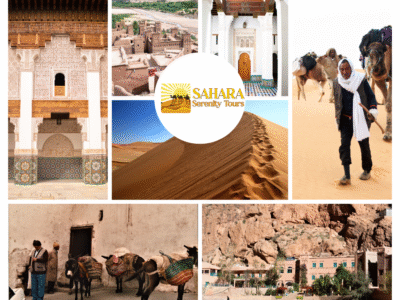
Morocco sits at the intersection of Berber, Roman, Arab, Andalusian, and French colonial histories. Students studying any strand of Mediterranean or African history will find physical evidence of it here. They don’t just read about empires. They walk through what those empires left behind, from Roman temples at Volubilis to the madrasa architecture of Fes and the French colonial boulevards of Casablanca.
Geography that covers every major biome
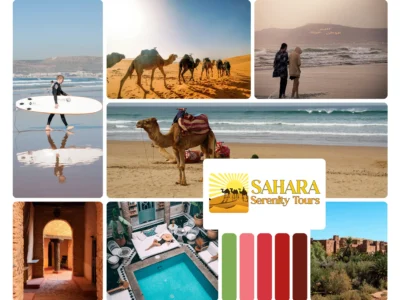
Few countries compress so many climate zones into a single trip. The Atlantic coastline, the Mediterranean north, the High Atlas, and the Saharan erg offer a cross-section of landforms, ecosystems, and human-environment relationships that geography students rarely encounter in one destination. A single 10-day itinerary can move students from coastal port cities to mountain villages to desert camps, each environment prompting a different set of questions about adaptation, resource use, and settlement patterns.
Cultural studies that challenge assumptions
Morocco is an Arabic-speaking, Amazigh-rooted, Muslim-majority country with a living Jewish heritage, sub-Saharan trade connections, and deep French linguistic influence. For cultural studies, that breadth of material in one country is genuinely difficult to match elsewhere. Students arrive with assumptions and leave with far more accurate, complicated pictures of what North African society actually looks like.
Matching Moroccan destinations to your curriculum objectives
The most useful thing a teacher can do before building an itinerary is map sites to learning objectives. Here’s how the major destinations connect to the subjects schools most commonly want to cover.
Fes and the Marrakesh medina: urban history and Islamic studies
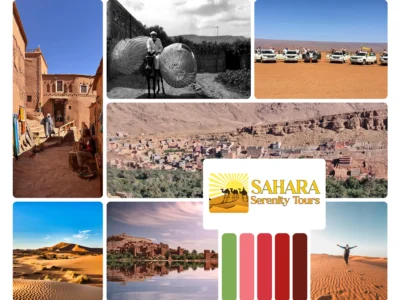
Fes is the intellectual and spiritual heart of Morocco’s imperial past. The University of Al-Karaouine, Medersa Bou Inania, the medieval tanneries, and the intact medina walls give history and religious education students a living, functioning example of pre-modern urban planning. Marrakesh extends that conversation through the Bahia Palace, Koutoubia Mosque, and the souks, adding layers of trade history, architectural analysis, and discussions about how cities maintain cultural identity under modern pressure.
Volubilis: Roman North Africa and archaeology
Volubilis is a UNESCO World Heritage Site and one of the most impressive Roman sites on the African continent, yet it remains less visited on school travel itineraries than its educational value warrants. For any group studying Mediterranean civilisations, Rome’s reach into the Maghreb, or the methods of archaeology, this site delivers in ways no textbook photograph can replicate. The intact mosaics, temples, and triumphal arches support inquiry-based learning and give students direct contact with primary historical evidence.
Sahara camps and Atlas villages: geography, ecology, and Berber identity
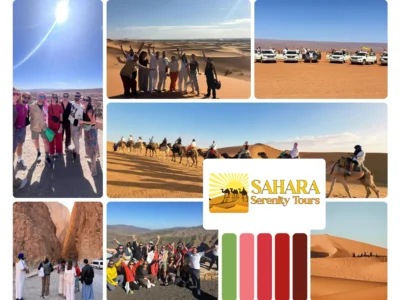
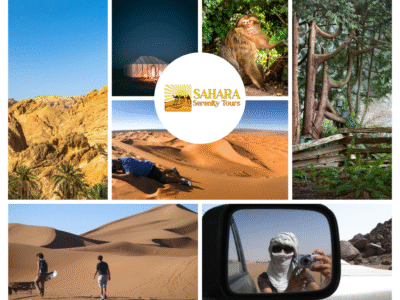
The Sahara experience connects directly to desert geography, water scarcity, nomadic adaptation, and sustainability debates. Atlas Mountain villages open discussions on rural resilience, Amazigh identity, and how physical geography shapes the way communities organise themselves. These are not peripheral stops on a Morocco school trip, they’re where the most memorable, academically grounded learning tends to happen. A Berber guide explaining dune formation to a geography class is not a bonus activity; it’s the lesson.
Sample educational trips to Morocco: 7 to 14 days
Each framework below is a planning template, not a rigid schedule. All three can be adapted to your group’s subject focus and departure city.
The 7-day imperial cities itinerary
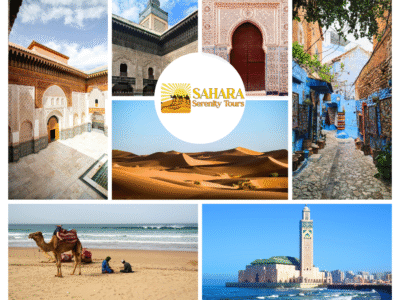
A compact, city-focused route covering Casablanca, Rabat, Fes, and Marrakesh. Key stops include the Hassan II Mosque, Mohammed V Mausoleum, Al-Karaouine University, medina walks, and Bahia Palace. This itinerary suits history, geography, and cultural studies groups at secondary level, and it’s the most manageable option for teachers coordinating a first international trip.
The 10-day city and desert combination
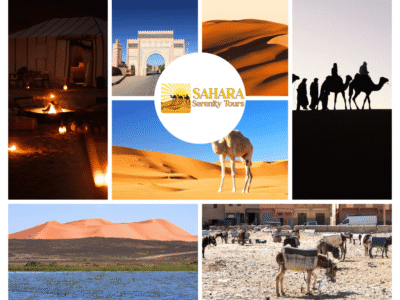
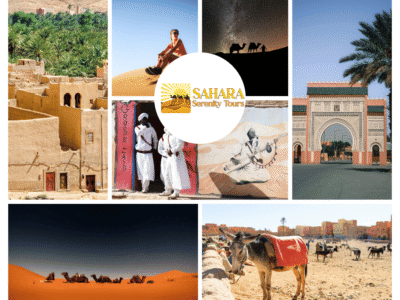
This extends the imperial cities route with a desert leg through the Atlas Mountains to the Sahara. Volubilis, Aït Ben Haddou, a Merzouga camel trek, and a desert camp overnight with stargazing are all added to the mix. Berber-led evening storytelling can be built in as an oral history activity, the kind of session some local operators include as a standard part of student group packages rather than a separately priced extra. This itinerary works well for combined history, geography, and cultural studies programmes, and it’s the format Sahara Serenity Tours most commonly builds for school groups.
The 14-day full Morocco educational circuit
This adds Tangier or Chefchaouen in the north, rural Amazigh village visits, and an Atlantic coast stop at Essaouira. It covers Morocco’s widest geographic and cultural range. This length suits university groups, gap-year programmes, or schools running multi-subject integrated field study units where depth across regions is the goal.
Costs for educational trips to Morocco
Cost transparency matters when you’re managing parent expectations and school finance approvals. The figures below reflect typical market ranges, though exact costs vary by operator, group size, and season.
Typical cost breakdown
A 7-day Morocco school trip from the UK, excluding international flights, typically runs in the region of £600 to £1,000 per student, though some providers advertise lower entry-level figures for simpler itineraries. Flights vary considerably, school-group fares from UK airports to Marrakesh or Casablanca can range from under £150 to over £400 depending on carrier, season, and how far in advance seats are booked. A full 10-day trip including flights from the UK typically lands between £1,100 and £1,500 per student when booked through a specialist operator. For a practical comparison and a more granular view of typical student-travel costs see this detailed cost breakdown for student travel. US groups should budget roughly $1,500 to $3,500 all-in, with the wide range driven mainly by flight costs from different departure states.
What affects the price
The key variables are trip length, accommodation tier (riads versus hotels versus desert camps), group size, guide and transport costs, and whether entrance fees to heritage sites like Volubilis are included. Larger groups reduce per-student costs meaningfully. Booking well in advance, ideally several months before departure, also gives schools more room to negotiate group rates, particularly on accommodation and private transport.
Why locally owned operators deliver more value per euro
Local operators who specialise in student group tours Morocco tend to build guided cultural sessions, medina walks, and desert camp experiences into the route as standard inclusions rather than line-item extras. For teachers managing tight per-student budgets, that all-in approach removes cost surprises and makes financial planning more straightforward. Sahara Serenity Tours works on this model, experiences are built into the itinerary rather than offered as paid upgrades, which makes the overall cost easier to present to school leadership.
Safety, visas, health, and insurance for school groups
Budget approval is one planning hurdle; risk-assessment paperwork is another. Here’s what teachers need to cover before submitting for sign-off.
Entry requirements and passport rules
Most nationalities, including US, UK, EU, and Canadian passport holders, can enter Morocco without a visa for stays under 90 days. Every student needs a passport valid for at least six months beyond the travel date, with at least one blank stamp page. Group organisers should verify entry requirements for every nationality represented in the group well before the trip, since mixed-nationality groups sometimes include students who face different entry conditions. Groups with students who do require official permission should consult a step-by-step guide on how to apply for a Morocco student visa well in advance of booking.
Health precautions and recommended vaccines
Travel clinics typically recommend Hepatitis A and Hepatitis B vaccines before Morocco travel, alongside ensuring routine vaccines are current. Typhoid is sometimes advised depending on itinerary and food exposure risk. A pre-trip health consultation 4 to 6 weeks before departure gives enough lead time to complete any required vaccination schedules. Students should use bottled or purified water and follow standard food safety practices throughout the trip. For country-specific vaccination guidance consult an up-to-date vaccinations guide for Morocco.
Insurance and on-the-ground risk management
Comprehensive travel insurance for every student is non-negotiable. Medical evacuation coverage is strongly recommended, particularly for groups heading beyond major cities into desert or mountain areas. Morocco’s national police number is 190. Schools should assign clear chaperone-to-student buddy pairings, brief students on modest dress and petty-theft awareness in busy medinas, and carry copies of all passports separately from the originals. A sensible chaperone ratio for international secondary trips is 1 adult per 10 to 15 students, with at least two chaperones overall regardless of group size. Organisers should also check their national travel advice resources, for example the U.S. Department of State country information for Morocco or the Government of Canada travel advice for Morocco, for the latest safety and entry updates.
Choosing a tour operator that actually serves teachers
The right operator for a school trip does more than book transport and hotels. They build the educational structure of the experience, and that distinction changes whether headteachers approve the trip.
What separates an educational-grade operator from a standard tour company
The best operators for school group tours Morocco provide structured learning moments built into the route, local guides with cultural and historical knowledge deep enough to support student inquiry, and clear communication for teachers managing risk-assessment paperwork. They offer flexible itineraries shaped around specific subject objectives rather than generic sightseeing lists. They also understand that a teacher running a school trip needs documentation, not just a nice brochure.
How Berber-guided itineraries add depth no textbook can
Sahara Serenity Tours is a locally operated company specialising in structured, culturally grounded group travel across Morocco. Their guides bring direct knowledge of Saharan traditions, trade history, and Amazigh culture, the kind of first-hand perspective that turns a desert camp night into something closer to a primary source encounter. The company offers dedicated student tour packages, departure options from multiple Moroccan cities including Marrakesh, Fes, and Casablanca, and customisable itineraries built around specific learning objectives, whether that’s Roman history at Volubilis or desert ecology at Merzouga.
Building your pre-trip teacher checklist
Before departure, confirm passport validity for every student, visa status by nationality, travel insurance with medical evacuation, pre-trip vaccination records, and confirmed chaperone ratios. Add a student briefing on cultural norms and modest dress, an emergency contact protocol, and at least two pre-trip classroom sessions that frame what students will see. Curriculum resources from providers like Discover Ltd include Morocco-specific geography units covering urban studies, the water cycle, and physical geography at GCSE and A-level. The on-the-ground experience lands much deeper when students arrive with context.
Morocco rewards the groups who arrive prepared
Morocco isn’t a novelty destination for school travel. It’s one of the most curriculum-rich countries in the world for secondary and university groups, and the gap between a forgettable overseas trip and one students reference for years comes down to how well the itinerary connects to what they already know and are ready to explore further.
If you’re ready to start planning educational trips to Morocco for your school group, Sahara Serenity Tours is a strong starting point. Their student-focused packages, Berber expertise, and subject-linked itineraries give teachers what they actually need: a locally guided study tour Morocco that arrives with the structure already built in. Get in touch with the team to start shaping your Morocco educational tour around your curriculum goals.