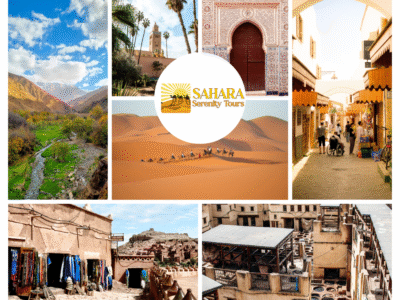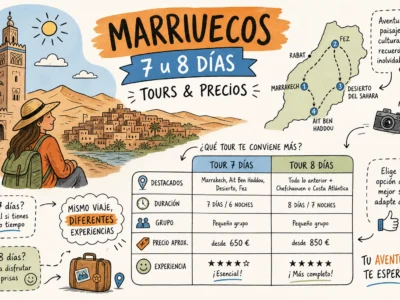
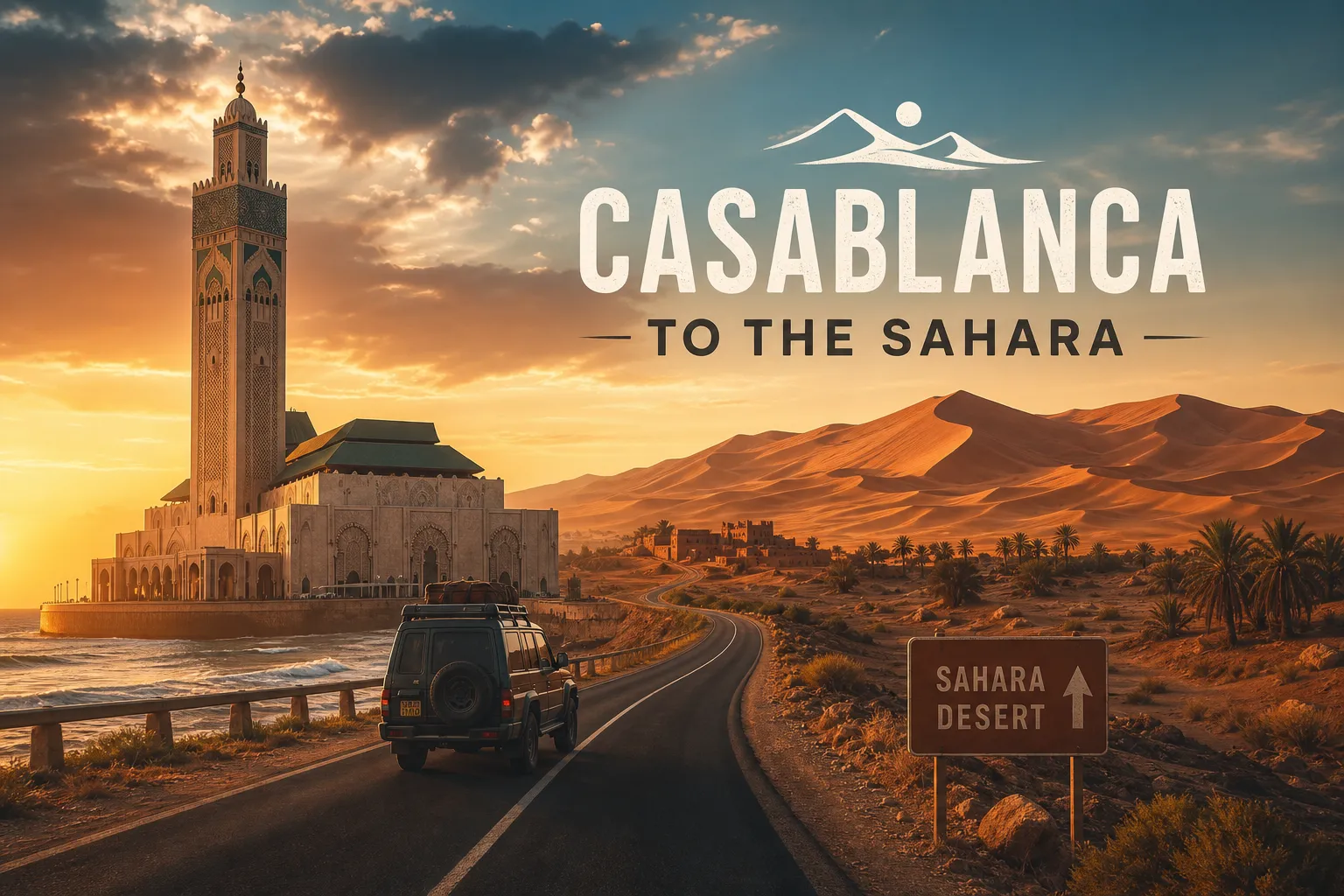
You land in Casablanca with the Atlantic air still cool on your skin and a trip to the Sahara Desert on your mind. Somewhere beyond the white apartment blocks of the city, past the cedar forests of the Atlas and the ancient kasbahs of the south, the orange dunes of Erg Chebbi are waiting. The problem is that getting from Casablanca to those dunes is not a matter of clicking “book” on a single flight. It is a multi-day overland journey with real decisions to make at every turn: which route, which desert, how many days, and whether you want a private driver or a small-group tour.
If you are asking how do I get from Casablanca to the Sahara Desert on a tour, this guide lays out every option clearly: realistic travel times, a comparison of the two main routes south, the difference between Merzouga and Zagora, and what 2, 3, and 4-day itineraries actually deliver on the ground. Pricing is included too, so you can match the trip to your budget before you book. Sahara Serenity Tours operates this route and has built this guide to reflect how the journey actually plays out, not just how it looks on a map.
By the end, you will know exactly how to get from Casablanca to the Sahara Desert on a tour that fits your timeline, your travel style, and the experience you want when you finally watch the sun drop behind those dunes.
How do I get from Casablanca to the Sahara Desert on a tour?
The short answer: most travelers take a guided overland tour by private vehicle, spreading the drive across two days and stopping at key sights along the Atlas Mountains. The route from Casablanca to Merzouga, the most popular entry point to the Sahara’s Erg Chebbi dunes, typically takes 9 to 11 hours of total driving time. How you cover that distance, and how long the full experience takes, depends on the transport option and itinerary you choose.
By private car or guided tour vehicle
A private car with a driver is a common way tour operators handle this route, and it is the option that gives you the most control. Expect 9 to 11 hours of driving, depending on stops, the route taken, and road conditions through the Atlas passes. Most guided tours spread this across two driving days to keep the pace comfortable, and that is the right call. One long desert driving day is fine; two back-to-back 11-hour slogs is not a vacation.
By train then road
Morocco’s national rail network (ONCF) runs as far south as Marrakech but does not reach Merzouga. Getting to the Sahara by train means boarding at Casablanca Voyageurs, riding roughly 2 hours 40 minutes south to Marrakech (tickets start around 120 dirhams), and then continuing overland by bus or shared taxi. Total door-to-desert time typically runs 13 to 14 hours, and connections between the train station and the onward bus are not always smooth or predictable. This route works for very budget-conscious solo travelers, but it adds real logistical friction.
By flight to Errachidia, then onward by road
Flying from Casablanca’s Mohammed V Airport to Errachidia takes about an hour, and from Errachidia airport it is roughly a 2-hour drive to Merzouga. Total travel time lands around 5 to 7 hours, including airport check-in and the ground transfer at the other end. The trade-off is significant: you skip the High Atlas passes, the cedar forests, the Ziz Valley gorges, and the kasbah country that transforms a Casablanca-to-Sahara trip into one of the great road journeys in North Africa. Flying gets you there faster, but you arrive without the story of how you got there.
The four main ways to travel from Casablanca to the desert
Each transport option suits a different type of traveler. Here is how they break down in practical terms so you can match the method to your budget, your schedule, and how much flexibility matters to you.
Private car with a driver or guide
This is the smoothest and most flexible option by a wide margin. A private driver picks you up at your Casablanca hotel or directly at the airport, handles all navigation through the mountain passes and desert roads, stops wherever you want, and delivers you to your camp in time for the evening camel trek. For families, couples, and anyone traveling with limited vacation days, a private tour removes every logistical variable that can go wrong on a complicated overland journey.
Shared small-group tour from Casablanca
Shared desert tours with a reputable operator typically cap groups at around 10 people and follow a set itinerary with a professional guide. The price per person is meaningfully lower than a private trip, and gathering around the campfire at the desert camp is part of the experience rather than a bonus. The trade-off is less schedule flexibility: if you want to spend an extra hour at Aït Benhaddou or skip a stop entirely, that is not as easy to negotiate on a shared departure. For solo travelers and friend groups, the social element more than compensates.
Train from Casablanca to Marrakech, then join a desert tour
If Marrakech is already on your itinerary, taking the ONCF train from Casablanca Voyageurs to Marrakech and then joining a departing desert tour is a practical two-step approach. Marrakech is the single most common departure city for Sahara tours, so availability is high and pricing is competitive. This option works particularly well for travelers who want to spend a few days in the medina before heading south into the desert.
Fly-drive from Casablanca to Errachidia
Flying into Errachidia and arranging a private ground transfer to Merzouga makes the most sense when your total available time is fewer than three days. Pair the flight with a local driver waiting at the arrivals hall for a seamless door-to-dunes connection. It is the fastest option, but it fits better inside a longer Morocco trip than it does as a standalone desert run.
The northern route: Casablanca through Fes and the Middle Atlas
The northern corridor is the longer of the two main routes to the Sahara, but it rewards you with a richer cross-section of Morocco. This is the road that takes you from the Atlantic coast through imperial Fes, into the cool cedar forests of the Middle Atlas, and then down through the dramatic Ziz Valley to the edge of the dunes at Merzouga. For travelers who want cultural depth alongside the desert, this route is the right choice.
Casablanca to Fes: the imperial city gateway
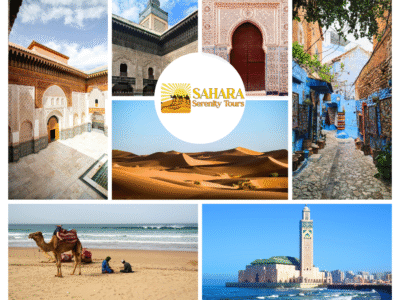
The drive from Casablanca to Fes covers roughly 293 kilometers and takes about 3 hours without stops, though most tours include a pass through Rabat for a quick look at the Hassan Tower and the royal capital’s wide boulevards. Fes itself deserves real time. The medina is a UNESCO World Heritage Site and one of the most disorienting, beautiful, and alive urban environments on earth. The leather tanneries at Chouara are worth the climb to an overlook rooftop, and the narrow alley bazaars leading to centuries-old madrasas reward slow walking. Three and four-day itineraries departing from Casablanca often include an overnight in Fes precisely because a two-hour stopover feels like a waste of a great city.
Through the Middle Atlas: Ifrane, Azrou, and Midelt
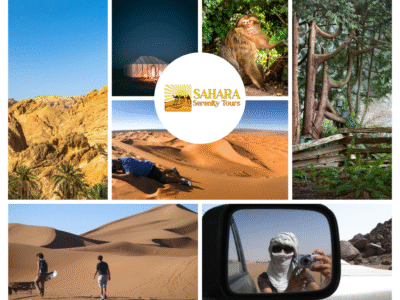
South of Fes, the landscape shifts completely from imperial grandeur to mountain air and pine forests. The road climbs into Ifrane, Morocco’s mountain resort town at roughly 5,500 feet, often called “Little Switzerland” for its red-roofed chalets and clean streets. Continue south through Azrou and you enter the cedar forest where Barbary macaques roam freely along the roadside, entirely comfortable with passing cars. Midelt, a quiet market town at around 4,700 feet, marks the transition between the Middle Atlas and the pre-Saharan south, and it is a good place for a lunch stop before the dramatic descent begins.
The Ziz Valley and the final push to Merzouga
The road drops through the Ziz Gorges in a series of tight bends above a river canyon. The views are striking if you have not seen this part of Morocco before. The gorge opens into the Ziz Valley, a ribbon of date palms and earthen kasbahs stretching south through Erfoud and Rissani. Rissani is the last proper town before the dunes: it was once the seat of the Alaoui dynasty and its weekly souk is one of the more authentic markets in the region. From Rissani, the orange dunes of Erg Chebbi are a short drive away, most travelers reach the camps within 20 to 30 minutes.
The southern route: Casablanca through Marrakech and Aït Benhaddou
The southern route swings through Marrakech, climbs the High Atlas via the Tizi n’Tichka pass at over 7,000 feet, and then descends into the kasbah country south of Ouarzazate. It is a more cinematic drive in many ways, with red-earth kasbahs, dramatic gorges, and the long green corridor of the Draa Valley. This is also the standard path for tours heading toward Zagora and the remote dunes of Erg Chigaga.
Aït Benhaddou: the kasbah you recognize without knowing why
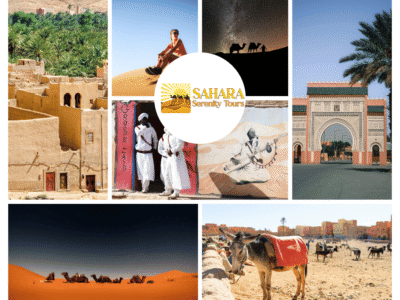
Notable films and television productions, including Gladiator and Game of Thrones, have used this location as a backdrop. Aït Benhaddou is a UNESCO-listed earthen ksar perched above the Ounila River, about 30 kilometers northwest of Ouarzazate, and the setting is extraordinary. The village itself has no official entry fee; you walk in freely, though small museums and private houses inside charge a modest amount, usually around 20 dirhams. Wear good shoes because the paths are uneven and steep in places. Arriving early in the morning, before the tour buses reach the site, gives you a far quieter experience.
The Draa Valley road to Zagora
South of Ouarzazate, the road follows the Draa River through a long stretch of palm groves, fortified ksour, and quiet Berber villages. This is the route to Zagora, and beyond it, the remote dunes of Erg Chigaga. The valley landscape feels distinctly less traveled than the Merzouga corridor, which adds to its appeal for anyone looking to escape the main tourist circuit. The towns along the Draa are well off the radar for most international visitors, and that is exactly the point.
Connecting to Merzouga via the desert circuit loop
Tours that want to combine the cinematic southern scenery with a night at Erg Chebbi often run a loop route: south through Marrakech and Ouarzazate, east into Merzouga from the Rissani side, then a return via the Dades Gorge and Todra Gorge before swinging back west. This circuit is the backbone of most 4-day Casablanca tours because it covers the maximum number of iconic stops without repeating the same road twice. It is the format that makes the most efficient use of limited vacation time.
Merzouga or Zagora: choosing the right Sahara destination
Both Merzouga and Zagora are genuine Sahara experiences, but they attract different types of travelers. Knowing the difference before you book saves you from arriving at the wrong desert for what you actually want.
Merzouga and Erg Chebbi: the classic Sahara experience
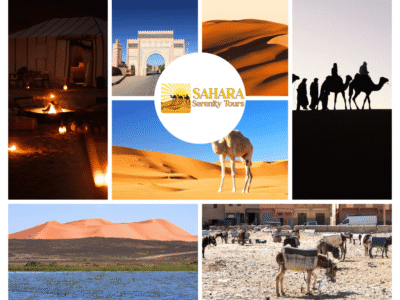
Erg Chebbi is what most people picture when they think of the Sahara: towering orange dunes that rise directly from the edge of the village, camel treks at sunset, and a sky full of stars once the camp fires die down. Access is easy, the range of desert camps runs from budget bivouacs to luxury tents with private en-suite bathrooms, and the infrastructure around Merzouga is well developed enough to handle solo travelers and families with equal comfort. Merzouga is the right choice for first-time desert visitors and anyone who wants the full postcard Sahara experience without the logistical complexity of reaching something more remote.
Zagora and Erg Chigaga: the remote and wild option
Erg Chigaga sits about 60 kilometers beyond M’Hamid, past the last paved road, and reaching it properly requires a 4×4. The off-road track from M’Hamid takes 1.5 to 3 hours depending on conditions, crossing sand, dried lake beds, and rocky desert terrain. The dunes are larger in area, far less visited, and carry a stronger sense of genuine wilderness: no villages at the dune edge, just open desert and the camps that sit within it. Erg Chigaga is the right choice for experienced travelers, adventurous couples, and anyone for whom “less touristy” carries real weight. It is also a longer journey from Casablanca than Merzouga, so factor extra road time into your total trip length when planning.
What a 2, 3, and 4-day Casablanca desert tour actually looks like
The length of your trip changes the experience significantly. A 2-day push gets you to the dunes and back with minimal padding; a 4-day circuit gives you time to breathe, explore, and actually absorb where you are. Here is what each format delivers on the ground.
2-day Casablanca to Merzouga tour
Day one is almost entirely a driving day. You depart Casablanca very early, push south through the Atlas corridor with brief stops along the way, and arrive in Merzouga by late afternoon. A camel trek carries you into Erg Chebbi at sunset, followed by dinner and traditional music at the desert camp. Day two starts with sunrise on the dunes, a camp breakfast, and then the long drive back to Casablanca or an onward transfer to your next destination. It is an intense format, but the desert sunset and the overnight stars make it worthwhile for travelers with tight schedules.
3-day one-way desert circuit
This is the most commonly purchased format for a reason. Day one connects Casablanca to Fes or Midelt with stops in Rabat and the Middle Atlas towns. Day two covers the descent to Merzouga via the Ziz Valley, ending with the evening camel trek into Erg Chebbi and an overnight in the desert camp. Day three begins with sunrise on the dunes, then a return route via the Dades or Todra Gorge before dropping passengers in Fes or Marrakech. The pacing is noticeably better than the 2-day version, and you leave having seen a genuine cross-section of Morocco rather than just a driving corridor.
4-day full Casablanca desert experience
Four days is the sweet spot for this journey, and the itinerary reflects it. Day one runs Casablanca to Fes with a stop in Rabat. Day two covers the Middle Atlas descent to Merzouga via Ifrane, Azrou, Midelt, and the Ziz Valley, ending at the desert camp for the evening camel trek. Day three is spent in the Merzouga area: sunrise on the dunes, an optional 4×4 excursion into the deeper desert, then a drive to the Todra or Dades Gorge for an overnight. Day four returns to Marrakech or Casablanca via Ouarzazate and Aït Benhaddou. Four days gives you the iconic stops, a full night under Sahara stars, and enough breathing room to actually enjoy each place you visit.
What’s included in a Sahara tour from Casablanca and how much it costs
Pricing on Morocco desert tours varies widely depending on group size, accommodation level, and what the operator bundles into the base rate. Understanding what you are actually paying for prevents unpleasant surprises when you arrive at the camp.
What a mid-range tour typically includes
Most mid-range Casablanca to Sahara tours in the $250 to $500 per person range include transportation in an air-conditioned vehicle, a guide for the full journey, the sunset camel trek at Erg Chebbi, an overnight in a desert camp with dinner and breakfast, and accommodation at the stops along the route. Some operators bundle in entry fees for sites like Aït Benhaddou. Others list these separately. Ask before you book so the final cost is clear from the start.
Budget options and what you give up
Budget tours under $250 per person tend to use larger group sizes, simpler campsites with shared tent facilities, and guides with less individual attention to offer. They work for flexible solo travelers who prioritize price over comfort, but the camp experience is noticeably different from mid-range. The desert itself is the same, but how you sleep under it varies considerably.
Luxury and private Sahara tours from Casablanca
Private tours with a dedicated driver and guide, paired with luxury desert camp accommodations featuring private en-suite tents and premium meals, typically start around $1,000 per person and scale upward from there. Luxury camps near Merzouga run roughly $130 to $340 per person per night depending on the property and the season. These packages make sense for couples on a honeymoon, families who need complete flexibility, and travelers who want to do this trip once and do it properly.
How Sahara Serenity Tours handles the whole journey from Casablanca
Piecing together a Casablanca-to-Sahara trip on your own is doable, but it takes real time: researching operators, comparing routes, coordinating pickup from the right city, and hoping the logistics hold together across multiple driving days in a country you may never have visited before. Sahara Serenity Tours was built specifically to remove that puzzle for travelers coming from the US with limited vacation time and high expectations for the experience.
Private pickup from Casablanca and a guide who knows every stop
Every Sahara Serenity Tours itinerary can depart directly from Casablanca, whether from your hotel or the airport. Your private driver and local guide handle the full route: navigating the Atlas passes, knowing exactly which stops deserve 20 minutes and which deserve two hours, and making sure you arrive at Erg Chebbi in time for the sunset camel trek. You are never left coordinating between separate bus companies, figuring out a shared taxi connection in an unfamiliar language, or wondering whether the person holding a sign at Errachidia airport is actually waiting for you.
Tour lengths built for American vacation schedules
Many American travelers work with 7 to 14 days for an international trip, which means every day needs to count. Sahara Serenity Tours offers desert itineraries from 3 days all the way to 2-week full Morocco circuits, with the most popular Casablanca departure formats running 3 to 4 days. Depending on your preference, the route can follow the northern Fes corridor through the Middle Atlas or the southern Marrakech and Aït Benhaddou path through the High Atlas and Draa Valley. Shared group tours are kept small for an intimate, non-bus-tour atmosphere, and fully private departures are available for couples, families, and anyone who wants the journey entirely on their own terms.
What comes included and how to book
Standard inclusions across the Sahara Serenity Tours range cover a camel trek at Erg Chebbi, an overnight desert camp with dinner and stargazing, accommodation along the route, and an English-speaking guide. The booking process is handled directly in English, with clear USD pricing and full itineraries provided before you commit. You can reach the team directly to customize the route, adjust the pace, or build something entirely specific to your group.
Ready to book your Casablanca to Sahara tour?
Getting from Casablanca to the Sahara Desert is one of the great overland journeys available to any traveler right now. The distance is real, the driving days are long, and the planning requires a few genuine decisions: which route south, how many days, and which desert you want to wake up inside. None of those decisions are complicated once you have the right information in front of you.
The northern Fes corridor suits travelers who want cultural depth alongside the dunes. The southern Marrakech and Aït Benhaddou route is the more cinematic choice. Merzouga and Erg Chebbi is the right call for most first-timers. Zagora and Erg Chigaga suit the adventurous and the crowd-averse. Three to four days gives you enough time to do the journey justice without arriving home exhausted, and two days works when it is all you have.
Still wondering how do I get from Casablanca to the Sahara Desert on a tour that actually fits your schedule and travel style? The team at Sahara Serenity Tours is ready to build your itinerary from scratch, around your dates, your group, and the experience you are after. The dunes are waiting. The only question is when you leave. Reach out to Sahara Serenity Tours to get started.