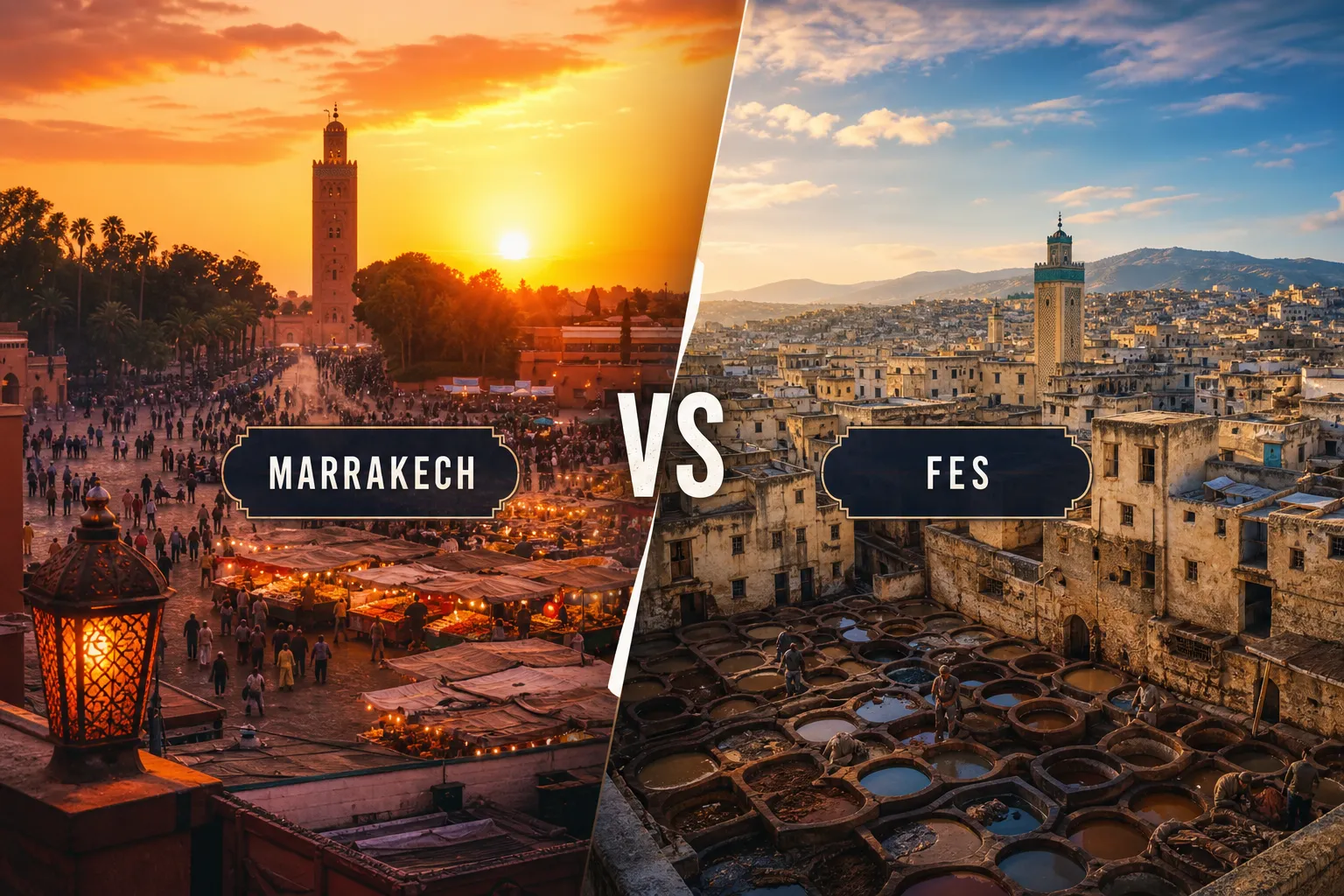
Is Marrakech or Fes better for first-time visitors to Morocco? You’ve got your flights booked, you’ve been down the Morocco rabbit hole for weeks, and you’re stuck on exactly that question. It’s the most common planning dilemma first-timers face, and honestly, it makes sense. Both cities are iconic. Both are genuinely different from anything you’ve experienced before. And the way most travel content describes them, it sounds like you need to pick a team.
This article breaks down the comparison across the things that actually matter: medinas, food, culture, atmosphere, crowd levels, and logistics. The team at Sahara Serenity Tours runs the classic Marrakech-to-Fes desert route regularly, and the feedback from travelers is consistent: those who pick just one city often spend the rest of their trip wishing they’d built in time for both. By the end of this guide, you’ll know exactly which city fits your travel style, how long to stay in each, and the smartest way to structure your itinerary.
Here’s how the two cities actually compare.
Is Marrakech or Fes Better for First-Time Visitors? The Personality Gap
Before you compare monuments and restaurant lists, you need to understand the foundational difference in energy between these two cities. Most first-timers research the sights but don’t fully register how different the atmosphere is on the ground. That gap matters, because how a city feels on day one shapes your entire experience.
Marrakech: sensory overload done beautifully
Marrakech hits you immediately. The noise from the souks, the colors of the spice stalls, the smell of argan oil and cumin, the buzz of Jemaa el-Fnaa as the sun goes down, it’s a full-body arrival. The city has developed its tourism infrastructure significantly in recent decades without losing its edge. It’s thrilling and occasionally overwhelming, especially around the medina in the late afternoon when the crowds peak.
Marrakech suits travelers who want energy. It’s the right city for rooftop dinners above the chaos, riad courtyards with rose petals in the fountain, and mornings where you’re half-lost in the souk and completely fine with it. If you want the classic Morocco postcard experience with solid tourist infrastructure around it, Marrakech delivers.
Fes: Morocco the way it existed centuries ago
Fes is rawer and less polished for tourists, and that’s precisely what makes it extraordinary. The medina of Fes el-Bali is not a heritage showcase or a living museum, it’s an actual working city where artisans practice crafts their great-grandparents mastered. Copper workers hammer trays by hand. Tile makers lay zellij patterns the old way. The tanneries still use the same dyeing pits they’ve used for hundreds of years.
Fes rewards patience and genuine curiosity more than Marrakech does. It doesn’t hand you the experience on a plate. You have to lean into the disorientation, hire a guide, and give the city real time. Travelers who do that consistently describe Fes as the most memorable stop in Morocco. Those who rush it often feel like they missed the point entirely.
The medinas: walking the old cities compared
The medina experience is the central reason most people put Morocco on their list. Both cities have historic medinas that are UNESCO World Heritage-listed and genuinely unlike anywhere else on earth. The experience of walking each one, however, is very different.
Marrakech’s medina and Jemaa el-Fnaa square
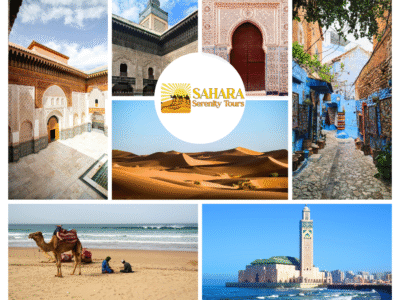
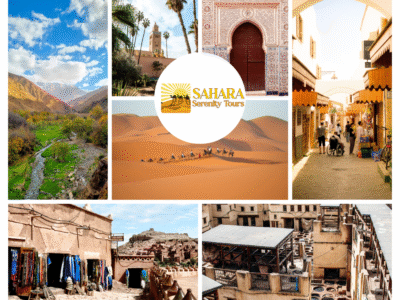
Marrakech’s medina is large but navigable for first-timers. Jemaa el-Fnaa serves as your central compass point: a massive open square at the heart of the old city where snake charmers, orange juice vendors, and food stall owners all compete for your attention. From there, the souks radiate outward in loose clusters organized by trade, leather workers here, spice sellers there, lamp makers down that alley. The Ben Youssef Madrasa sits in the northern medina and is a highly admired example of Islamic architecture, frequently cited by architectural guides alongside the great monuments of North Africa. The Koutoubia Mosque, visible from much of the medina’s south side, helps you reorient when you’ve wandered off course.
Mornings in Marrakech’s medina are significantly calmer than afternoons, and the light is better for photos. If you’re planning to visit Jardin Majorelle or the Ben Youssef Madrasa, arriving by 9 a.m. is worth the early start. The afternoon crowds in the souk areas can turn tight alleyways into a slow shuffle.
Fes el-Bali: one of the largest car-free medinas in the world
Fes el-Bali contains thousands of narrow lanes and alleyways, no cars, and almost no logical grid for a first-timer to work from. Getting turned around here isn’t a risk; it’s a certainty. The Chouara tanneries are one of the most iconic images in all of Morocco: circular dyeing vats in shades of saffron, poppy red, and mint green, best viewed from the terraces of the leather shops that surround them. The Bou Inania and Al-Attarine madrasas are architectural masterpieces of carved stucco and cedar. Al-Qarawiyyin, one of the world’s oldest continuously operating universities, still functions as a mosque and center of Islamic scholarship today.
A licensed local guide in Fes is not optional, it’s the difference between a frustrating day and a genuinely transformative one. Guides typically run around 300 MAD (roughly $30 USD) for a half-day and 600 MAD for a full day, booked through your riad or an official tourism office. That fee is one of the best investments you’ll make in Morocco.
Which medina is better for a solo first-timer?
Marrakech’s medina is more accessible and forgiving for first-time solo visitors. Fes’s medina is more rewarding but demands more preparation and a willingness to surrender control. Both are worth your time. They offer genuinely different things.
Food scenes: where you’ll eat better
Moroccan food is built on spice layering and slow cooking techniques that most visitors don’t expect, and both cities give you a deep window into that tradition. But the food experience feels very different depending on which city you’re in.
Street food and restaurant culture in Marrakech
Marrakech has one of the most developed food-for-tourists scenes in Morocco. The Jemaa el-Fnaa food stalls at night are chaotic and fun, with dozens of vendors grilling kebabs and ladling out harira soup under fluorescent lights. The surrounding restaurants range from decent to genuinely excellent. Tagine, pastilla, msemen flatbread, and slow-cooked lamb are the dishes to look for. Rooftop dining above the medina, with the Koutoubia Mosque lit up in the background, is one of the signature Marrakech experiences that earns its reputation.
For a deeper look at where to try local specialties, see our guide to Street Food In Marrakech Vs Fez, What To Eat Where.
One practical note: stepping one street off the main tourist drag almost always improves both quality and price. The restaurants directly fronting Jemaa el-Fnaa target foot traffic and price accordingly. The better meals tend to be found in the side streets of the medina or in the Gueliz district.
Fes and the deep roots of Moroccan cuisine
Fes is widely considered the culinary capital of Morocco, and the food reflects that status. Many of Morocco’s most respected traditional recipes trace their origins to the Fassi kitchen. The bastilla here, a savory-sweet pie traditionally made with pigeon, is a different experience than what you’ll find elsewhere in the country. Mechoui lamb, slow-roasted until it falls apart, is a must if you have the appetite and the time to pre-order it. Local pastry shops near the medina gates sell almond-filled treats that rival anything you’ll find in a fancy riad.
The food scene in Fes is less Instagram-polished than Marrakech’s, but it’s more authentically Moroccan in character. Restaurants near the artisan quarters, away from the tourist-facing tannery viewpoints, tend to serve the best meals at the fairest prices. If food is a major priority for your trip, Fes edges out Marrakech as the more memorable culinary destination.
Cultural highlights and must-see experiences
Both cities have remarkable cultural depth, but the type of cultural experience they deliver is different. Marrakech offers polished, well-maintained heritage sites. Fes offers something harder to define: a living culture that hasn’t been staged for visitors.
Marrakech’s palaces, gardens, and architecture
Bahia Palace gives you some of the finest ornamental architecture in Morocco, with hand-carved cedar ceilings, intricate zellij tilework, and a series of courtyards that make the scale of 19th-century Moroccan craftsmanship concrete. The Saadian Tombs are an important historical site that most guides include on a medina walk. Jardin Majorelle, the famous garden restored by Yves Saint Laurent, is one of the most photographed spots in Marrakech and absolutely worth an early morning visit.
For travelers who want something beyond the medina, the Gueliz district has a growing art and design scene with galleries, concept stores, and cafes that represent a different, more contemporary side of Marrakech. It’s a useful contrast to the intensity of the old city.
Fes’s tanneries, madrasas, and living craft traditions
The view from the leather shop terraces overlooking the Chouara tanneries is one of those images that stops people mid-sentence. The dyeing pits have operated for centuries using traditional methods, and watching workers move hides between vats of natural dye is one of the most visceral connections to traditional craft you’ll find anywhere in the world. The Bou Inania Madrasa rivals anything in Marrakech architecturally, with a level of detail in its carved plasterwork that rewards slow looking.
Beyond the landmarks, the crafts of Fes are a living cultural experience rather than a preserved one. Copper workers, wood carvers, tile makers, and weavers all operate in the medina the way they always have, not as demonstrations but as actual livelihoods. Fes isn’t a city with a museum inside it. The city is the museum, and you walk through it.
Crowd levels and the best time to visit each city
Timing matters as much as destination when you’re planning a first trip to Morocco. The medinas of both cities see significant visitor traffic year-round, but the experience shifts meaningfully depending on when you go.
Peak seasons and what they mean for your trip
Spring (March through May) and autumn (September through November) are the busiest periods in both Marrakech and Fes. Accommodation prices peak, the medinas fill quickly, and the popular sites can feel genuinely overwhelming. Spring offers the most photogenic weather, with warm days and cool evenings, which is why it draws the biggest crowds. Summer brings extreme heat, often exceeding 40°C in both cities, and significantly fewer tourists. Winter is generally pleasant and uncrowded except during the Christmas and New Year holiday window.
Both medinas see millions of visitors annually flowing through alongside their resident populations, which means there’s no true quiet season in the busiest zones. Timing within the day matters more than the month you travel. Early morning visits to major sites, aim for 8 to 9 a.m., consistently deliver a calmer, more photogenic experience. In Fes, the early morning medina walk, before the heat builds and the tourist groups arrive, is the best way to experience the city as the people who live there actually experience it.
Practical tips for avoiding the tourist rush
In Marrakech, Jardin Majorelle and the Ben Youssef Madrasa are both significantly more enjoyable before 10 a.m. Booking timed entry tickets in advance is worth the small effort. In Fes, your licensed guide will know when the tannery terraces are least crowded, which is usually a morning advantage as well. Both cities reward travelers who are willing to start their days early and rest through the midday heat.
Getting there and traveling between the cities
Logistics can be a real dealbreaker for American travelers with limited vacation days. Getting the travel connections right means more time experiencing Morocco and less time managing transit.
International flights into Marrakech (RAK) vs Fes (FEZ)
Marrakech’s Menara Airport is significantly better connected internationally, with roughly 2,781 monthly departures compared to approximately 522 from Fes. For American travelers connecting through European hubs like Paris, London, or Madrid, Marrakech is almost always the more practical entry point with more scheduling flexibility. Fes is reachable from some budget European airlines, but it has fewer options if your plans change or you need to reroute. For a first Morocco trip, flying into Marrakech and out of Fes, or the reverse, is one of the cleanest and most efficient structures.
If you’re still deciding which city to begin your desert crossing from, our guide on Choosing The Best Starting City For Your Morocco Desert Tour | Sahara Serenity Tours breaks down the pros and cons of each starting point.
Train, bus, or private car between the two cities
The train between Marrakech and Fes runs about 6.5 to 7 hours and costs roughly $22 to $35 USD depending on class. Buses run about 7.5 hours for slightly less money. A private car with a driver takes roughly 6 to 7 hours and allows stops along the way at landscapes that most first-timers don’t realize exist between the two cities: the Middle Atlas mountains, cedar forests, and the edge of the Ziz Valley all sit on this route.
For first-time visitors, the private transfer or guided tour route between the two cities is a very popular choice. It turns the journey between Marrakech and Fes into part of the experience rather than something to endure. It also opens the door to the desert route, which is the most compelling argument for not treating this as an either/or decision at all.
Safety, scams, and street hassle: the honest picture
Most travel content on Morocco either ignores this topic or treats it so gently that it’s not useful. Here’s the straightforward version.
What to watch for in Marrakech’s tourist zones
Marrakech has the most documented tourist-hustle pressure of any Moroccan city. The most common issues are unsolicited “guides” near medina entrances who expect payment after steering you anywhere, aggressive vendor tactics in the souks, fake directions that end at a commission shop, and henna artists who apply without asking and then demand payment. Petty theft, primarily phone and bag snatching, is most likely around Jemaa el-Fnaa in the evening when the crowds are thickest. None of this is unusual for a major tourist city. A confident pace, keeping your phone in a front pocket, and politely declining unsolicited offers without breaking stride handles most situations before they develop.
Navigating Fes medina without the stress
Fes has the same core issues: scams, hustlers, and overcharging. The biggest added challenge is the disorientation of the medina itself. Getting genuinely lost in Fes el-Bali after dark is uncomfortable for most first-timers, and traveler reports consistently flag the medina at night as a stress point. The solution is simple and already recommended above: book a licensed local guide for your first day in the medina. This eliminates the fake-guide problem immediately and turns a potentially frustrating labyrinth into a guided narrative through one of the world’s most extraordinary urban environments.
Which Moroccan city should you visit first? Match it to your travel style
You’ve been reading for a while, so here’s the direct version.
Choose Marrakech if this describes you
Marrakech is the right first city if you want the classic Morocco experience distilled into a shorter trip. It suits travelers who value accessible navigation and strong tourist infrastructure, couples who want rooftop dinners and riad stays with rose petals in the fountain, and anyone arriving with 2 to 3 days and no flexibility to extend. It’s the more forgiving city for a first-time solo traveler, and it delivers the iconic Morocco experience with fewer rough edges. Most travel experts recommend 3 to 4 days here to explore at a comfortable pace.
Choose Fes if this describes you
Fes is the better first choice for travelers who want cultural depth over tourist polish, who are willing to hire a guide and embrace not always knowing where they are, and who can give the city at least 2 full days to explore properly. History-focused travelers, architecture enthusiasts, and food-oriented visitors who want the genuine article consistently rate Fes as the most memorable city in Morocco. It’s harder and more demanding than Marrakech. It’s also more rewarding, and the travelers who come back to Morocco almost always say they wish they’d spent more time there.
The smarter move: build an itinerary that includes both
For any American traveler with a week or more in Morocco, the Marrakech vs Fes debate is largely a false choice. The real question isn’t which city to visit, it’s how to structure a trip that gives both cities the time they deserve.
Why the Marrakech-to-Fes desert route exists for a reason
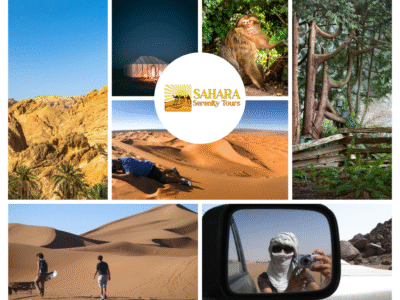
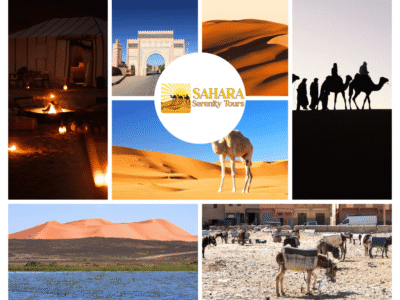
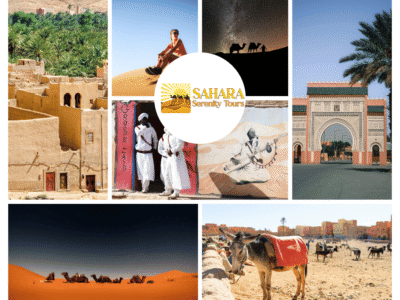
The most popular structured route in Morocco runs from Marrakech to Fes, or the reverse, through the Sahara Desert, spending nights in the Draa Valley, the Dades Gorge, Todra Gorge, Merzouga’s Erg Chebbi dunes, and Erfoud along the way. This 3 to 4-day desert crossing was designed precisely because both imperial cities deserve real time, and the journey between them is as memorable as either destination. The red dunes of Erg Chebbi at sunset, a camel trek into the desert before dark, a night in a proper desert camp under a sky full of stars, these experiences sit at the center of the Marrakech-to-Fes route, not as add-ons but as the centerpiece.
Splitting your Morocco trip between the two cities means you get Marrakech’s energy and international buzz at the start, the Sahara’s vastness and silence in the middle, and Fes’s depth and living history at the end. That structure makes for a genuinely complete Moroccan experience rather than a highlights reel of one city.
How Sahara Serenity Tours solves the dilemma entirely
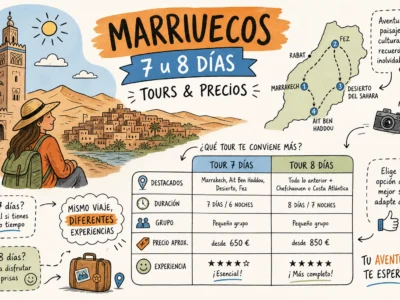
At Sahara Serenity Tours, our best-selling itineraries are built around exactly this logic. Our 3 and 4-day Marrakech-to-Fes tours, and the reverse direction for travelers who prefer to start in Fes, give first-time visitors proper time in both imperial cities while building in camel treks at Erg Chebbi, nights at our desert camps under the Sahara sky, and stops at the Dades Gorge, Todra Gorge, and the kasbahs of the Draa Valley along the way. We keep our shared groups small so the experience stays personal rather than becoming a bus tour. For American travelers with one to two weeks in Morocco, our Marrakech-to-Fes structure removes the either/or dilemma and replaces it with a complete journey.
Our guides are Moroccan locals who have spent their lives in these landscapes and cities. They know Fes’s medina well enough to take you straight to the tanneries without the commission-shop detour. They know where to find the best msemen in Marrakech on any given morning. They handle the logistics, riad check-ins, camel trek timing, route planning, so you can focus entirely on being present. If you’re at the planning stage right now and trying to figure out how to fit both cities into your schedule, that’s exactly where we can help.
If you want to read a focused comparison to help decide which city to prioritize on a shorter trip, see our article Marrakech Or Fes: Which Is The Best To Visit? Best Tips.
Making your decision: is Marrakech or Fes better for first-time visitors to Morocco?
Here’s the honest summary: Marrakech wins on accessibility, energy, and ease of first navigation. Fes wins on cultural depth, food authenticity, and immersive history. Neither is the wrong choice, and you won’t regret visiting either one. The biggest mistake first-time Morocco visitors make is spending so long on the debate that they end up under-planning both.
So, is Marrakech or Fes better for first-time visitors to Morocco? If you have 5 days or fewer, choose Marrakech. If you have a full week or more, plan for both and connect them through the Sahara. If you’re not sure how to build that structure, our Marrakech-to-Fes tours exist specifically for this situation. Browse our desert routes, check the dates that work for your schedule, and reach out directly with any questions. The itinerary that includes both cities, a camel trek, and a night in the dunes is waiting for you.
Whichever city you start in, the medina noise of Marrakech and the desert silence between the two will stay with you long after you’re home. That’s Morocco, and it’s worth every moment of planning it takes to get there.
Frequently asked questions: Marrakech or Fes for first-time visitors to Morocco
Is Marrakech or Fes better for first-time visitors to Morocco?
Marrakech is generally easier to navigate and better suited to shorter trips, while Fes offers deeper cultural immersion and is ideal for travelers with more time. If you have 5 days or fewer, start with Marrakech. If you have a week or more, visiting both gives you the most complete picture of Morocco.
How many days do you need in each city?
Most first-time visitors find 3 to 4 days sufficient in Marrakech. Fes rewards at least 2 full days, ideally 3, especially if you plan to explore the medina with a licensed guide and visit beyond the main tourist circuit.
Can you visit both Marrakech and Fes on a single trip?
Yes, and for most travelers with a week or more in Morocco, it’s the recommended approach. The classic Marrakech-to-Fes route through the Sahara Desert connects both cities while adding one of the most memorable travel experiences in North Africa.
Which Moroccan city is safer for first-time visitors?
Both cities are generally safe for tourists. Marrakech has more documented street hustle and tourist-targeted scams, particularly around Jemaa el-Fnaa. Fes adds the challenge of a disorienting medina. In both cities, booking a licensed guide for your first day in the medina eliminates the most common stress points.
What’s the best way to travel between Marrakech and Fes?
The train takes roughly 6.5 to 7 hours and is the most affordable option. A private car or guided tour takes a similar amount of time but allows stops through the Middle Atlas mountains and Ziz Valley, and opens the option of routing through the Sahara Desert over 3 to 4 days.