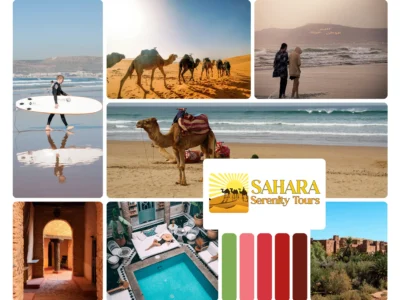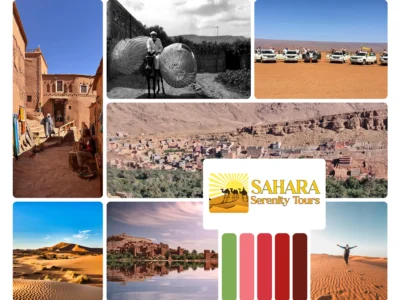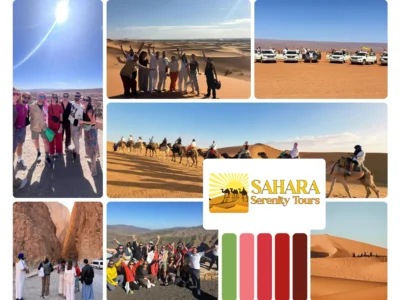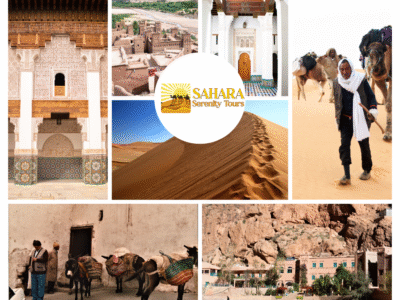
Is Morocco safe for family travel with young kids? Picture this: your child’s face lit up by a copper sunset over the Sahara dunes, their eyes wide as a camel plods gently through Erg Chebbi, or their small hands wrapped around a glass of mint tea in a lantern-lit riad courtyard. It’s a scene that inspires American parents every time they scroll through Morocco travel photos, right up until the moment the questions start piling up. Is it safe? What about the heat? Can my toddler actually do a camel ride? What happens if someone gets sick?
Those questions are completely valid, and every responsible parent asks them. The honest answer is this: Morocco is safe for family travel with young kids when you go in with the right information and the right support. Families who prepare tend to report far fewer problems on the road than those who arrive without a plan. The families who rave about Morocco as the best trip they’ve ever taken with their kids are the ones who planned carefully, or traveled with experienced local support, someone who handled the logistics so they could focus on the experience. That’s exactly what we do at Sahara Serenity Tours.
This guide covers everything a parent needs to assess honestly: what the U.S. State Department actually says, the scams that target distracted families, child-specific health preparation, car seat realities, accommodation safety, food hygiene, cultural norms, the best kid-friendly activities, and how to pull the whole trip together. By the end, you’ll have a clear picture of whether Morocco fits your family and exactly how to make it work.
What the U.S. State Department Actually Says About Morocco Right Now
The Level 2 Advisory in Plain Language
The U.S. State Department currently assigns Morocco a Level 2 designation: “Exercise Increased Caution” due to terrorism risk. If that sounds alarming, here’s the context that matters: Level 2 is the same rating carried by dozens of popular European destinations that Americans visit every year without hesitation. It is not a warning against travel. It is not a “do not travel” designation, which is Level 4. Level 2 simply means stay aware of your surroundings, solid advice in any international city.
The terrorism language in the advisory refers to the possibility of attacks targeting tourist sites, transit hubs, markets, and government facilities. Morocco experiences nothing close to the day-to-day instability that word might conjure. The country is politically stable, its tourism infrastructure is well-developed, and millions of international visitors travel through Morocco each year without incident. Understanding the difference between a precautionary rating and an active threat makes a real difference in how you interpret this information. Americans can consult our Morocco travel guide for Americans (2026) for U.S.-specific entry and safety notes.
The STEP Program: A Five-Minute Safety Step Before You Fly
Before your family boards that plane, spend five minutes on the Smart Traveler Enrollment Program, known as STEP. It’s a free service run by the U.S. State Department that registers American citizens with the nearest U.S. Embassy. Once you’re enrolled, you receive real-time safety alerts directly to your email, and the Embassy has your contact and travel information on file in case of an emergency. For a family traveling abroad, it’s one of the easiest safety steps you can take before departure, and it’s widely overlooked.
Registration takes about five minutes at step.state.gov. Enter your travel dates, destination, and contact information, and you’re set. If a situation develops anywhere near your itinerary, you’ll get a message before you’d hear about it anywhere else.
Is Morocco Safe for Family Travel with Young Kids? Understanding Common Tourist Situations
The Scams That Target Distracted Parents
The most frequently reported tourist incidents in Marrakech and Fes are not violent crimes. They are opportunistic scams that exploit the distracted tourist, and families with young children are a particularly easy target. A parent managing a stroller, watching a toddler, or herding tired kids through a medina is operating with divided attention. Common setups include fake guides who offer “free” directions then demand payment, taxi drivers who claim the meter is broken and quote inflated fares, photo traps with snakes or monkeys in tourist squares where anyone who glances at the animal is expected to pay, and the classic “complimentary” mint tea that comes with intense pressure to buy from the shop.
None of these situations are dangerous, but they are uncomfortable and will cost you time and money if you don’t know how to respond. Knowing they exist before you arrive puts you firmly in control.
How to Stay Ahead of Overcharging and Misdirection
The solution to almost every common tourist scam in Morocco is the same: agree on every price before accepting any service. Get a fare from the taxi driver before getting in. Confirm the price of mint tea before sitting down. Ask what a photo with an animal costs before your child reaches out to touch it. Polite, direct negotiation is completely normal in medina culture. Nobody is offended by it. What catches tourists off guard is assuming that courtesy means the service is free.
For guides, only hire people who carry an official badge issued by the national tourism office. When strangers offer unsolicited help with directions in the medina, decline firmly and keep walking. This isn’t rudeness; it’s the expected interaction. A calm, confident “no thank you” is all it takes.
Keeping Valuables and Children Close in Crowded Medinas
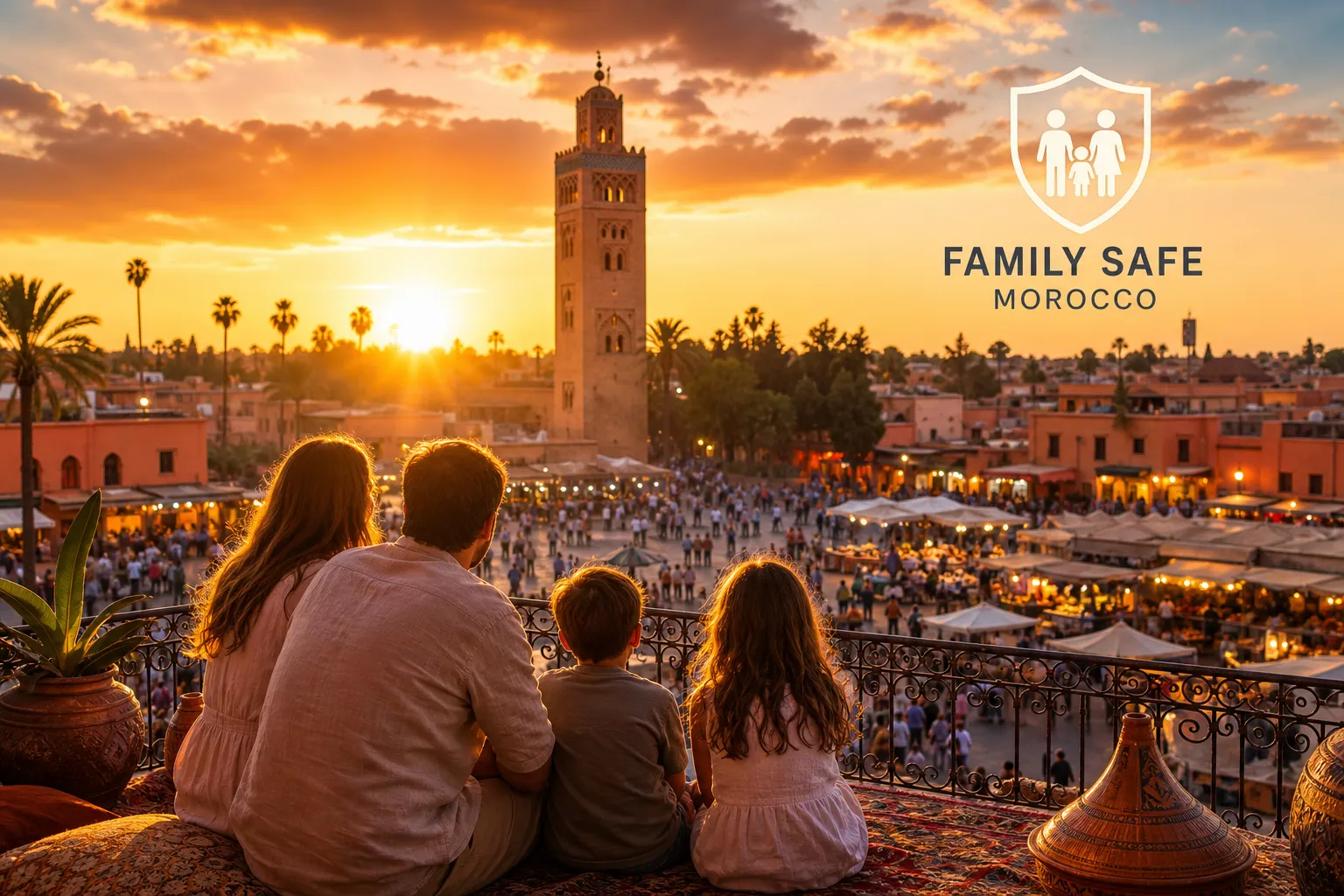
Jemaa el-Fnaa in Marrakech is one of the most exciting public squares in the world. It is also crowded, chaotic, and a known location for pickpocketing. Use a front-zip bag or wear a money belt for your phone, cash, and cards. Keep passports in your hotel safe, not your back pocket. Most importantly, maintain physical contact with young children in the narrow souk alleyways where crowds make it easy for a small child to get separated from a parent who is distracted.
The vast majority of Moroccans are welcoming people who take pride in hosting visitors. Petty opportunism in tourist areas exists in Morocco just as it does in any major travel destination. Awareness and basic precautions are all you need.
Child-Specific Health Prep: Vaccinations and Medical Planning
Vaccines Your Pediatrician Needs to Know About Before You Go
Schedule a visit with your pediatrician or a travel health clinic at least six to eight weeks before departure. For children traveling to Morocco, key recommended vaccines include MMR (infants as young as six months can receive an early dose if they’ll have significant exposure to local populations), typhoid, hepatitis A, hepatitis B, and rabies pre-exposure prophylaxis for families planning extended outdoor time in rural areas. The good news: Morocco is not considered a malaria-risk or endemic polio country according to CDC guidance, which removes two of the most common parental concerns about North African travel. That said, travelers arriving from polio-affected countries may face vaccination-related entry considerations, so check current CDC and State Department guidance before you fly. For broader trip planning and logistics, see our Morocco travel guide: plan your perfect trip in 2026.
Yellow fever vaccination is not required for entry into Morocco unless you are arriving from a country where yellow fever is endemic. Standard childhood vaccines should simply be up to date before any international travel.
Water and Food Hygiene: The Most Common Source of Upset Stomachs
Tap water in Morocco is not safe for children to drink. This is the single most important daily habit you’ll build on the trip. Use bottled, boiled, or filtered water consistently, including for brushing teeth. Fresh water contact in rivers, lakes, and non-chlorinated pools carries a schistosomiasis risk, so swimming in natural freshwater sources is off the table for kids. These precautions apply to adults too, but children’s immune systems are more vulnerable and recover more slowly from gastrointestinal illness.
Bottled water is cheap and widely available throughout Morocco, a large 1.5-liter bottle typically runs under a dollar at any corner shop. Building the habit takes one day and quickly becomes automatic. Stock up each morning before you head out, and you won’t have to think about it again.
Building a Family Medical Kit for Morocco
Pack a dedicated medical kit for the trip and include these items specifically:
- Oral rehydration sachets (essential for managing traveler’s diarrhea in young children)
- Age-appropriate fever and diarrhea medications in your child’s correct dosage
- Insect repellent with DEET or picaridin for leishmaniasis prevention
- High-SPF sunscreen in generous quantities
- A written note with the name and address of the nearest private clinic in each city on your itinerary
In Marrakech, Clinique Plaza and Clinique Internationale are both commonly cited by travelers for pediatric care and emergency services, and English-speaking staff are generally available at these facilities. Quality medical care in Morocco is concentrated in major cities, so families spending time in remote desert areas should identify their nearest medical contact point before leaving each city. For Fes and Casablanca, ask your tour operator or hotel concierge for current clinic recommendations, as facilities and staffing can change.
Getting Your Family Around Morocco Safely
Why Standard Moroccan Taxis Aren’t Built for Young Children
Morocco has two taxi categories: petit taxis for short urban trips within a city, and grand taxis for intercity routes. Neither category routinely carries car seats. Seatbelt use is inconsistent, particularly in shared grand taxis, and the shared seating model means your family may be seated alongside strangers in a vehicle with variable occupancy. For infants and toddlers, a shared grand taxi is not an appropriate transport choice when safer alternatives exist.
This isn’t a reason to skip Morocco. It’s a reason to sort your transport before you arrive, rather than figuring it out at the taxi stand with a tired toddler on your hip.
The Car Seat Reality and What to Bring from Home
The most reliable solution is to bring your own travel-rated car seat from home. Rental availability in Morocco is inconsistent, and even when a rental agency claims to offer one, the condition and compatibility vary widely. Several compact, travel-friendly car seat models fold to carry-on size and install easily in international vehicles. If you’re traveling with an infant, this is non-negotiable. For older toddlers, look into lightweight travel car seats designed for international use, and note that a CARES harness, while FAA-approved for use on aircraft, is not rated or approved as a car restraint in motor vehicles, so it should not be relied on as a ground-transport substitute.
Private Transfers: The Option That Changes the Experience
Families who pre-book private vehicles through a tour operator eliminate the taxi uncertainty altogether. A dedicated private vehicle with a professional driver means your car seat installs once and stays in the same vehicle for the duration of your route. Departures happen on your schedule, not when a shared van decides it’s full enough to leave. There are no strangers sharing your back seat, no fare negotiations at the curb, and no stress when your three-year-old needs an unplanned bathroom stop in the Atlas Mountains.
For a multi-day family itinerary through the High Atlas and Sahara, this difference in comfort and safety is substantial. The road between Marrakech and Merzouga is long and beautiful. Traveling it in a private, air-conditioned vehicle with a trusted driver who knows every stop is a completely different trip from piecing together grand taxis at each junction. At Sahara Serenity Tours, private family transfers are a core part of how we keep Morocco manageable for parents traveling with young kids.
Picking the Right Place to Stay with Young Children
The Riad Romance vs. the Toddler Reality
Morocco’s traditional riads are beautiful: open courtyards, mosaic fountains, hand-painted plasterwork, rooftop terraces. They are also, in many cases, architecturally challenging for toddlers. Steep staircases without guardrails, open courtyard pools with no fencing, and compact multi-level layouts are standard features of traditional riad design. That doesn’t mean riads are off-limits for families. It means you need to vet them specifically before you book.
Many parents book a gorgeous riad based on photos alone and arrive to discover the courtyard pool is unfenced and the stairs to their room are nearly vertical. A quick conversation with the property before confirming your reservation prevents this completely.
What to Ask Before You Confirm Any Booking
Send these questions to any riad before paying a deposit: Are there guardrails on upper-floor walkways and staircases? Is the courtyard pool fenced or lockable? Do you offer family rooms or interconnecting rooms? Can you provide a cot or crib on request? Reputable properties answer these questions directly and without hesitation. Vague or non-responsive answers are a clear signal to look elsewhere.
For families with children under three, a modern hotel in Marrakech or Casablanca often provides the layout consistency and baseline safety features that riads simply can’t guarantee. Several international hotel brands operate in Marrakech with kids’ clubs, shallow pools, and family room configurations. Staying in a hotel for the Marrakech portion of your trip and a vetted riad in a smaller city is a practical compromise that works well for many families.
Food Safety and Keeping Kids’ Stomachs Happy on the Road
What’s Safe and Where to Eat It
Moroccan cuisine is one of the best things about traveling there with kids. Tagine, couscous, fresh-baked bread, harira soup, and pastilla are all foods that children typically enjoy, and they’re safe when eaten hot and freshly prepared at reputable restaurants. Choose sit-down restaurants with visible kitchen activity and strong reviews over anonymous street stalls for young children. The risk isn’t the food itself; it’s how it’s handled. A busy, well-reviewed restaurant with high turnover dramatically reduces your family’s exposure to anything that would cause problems.
The Street Food Strategy for Adventurous Families
Don’t write off street food entirely. Some of Morocco’s best eating happens at food stalls, and skipping it means missing a real part of the experience. Instead, apply a simple filter: look for stalls with visible cooking happening in front of you, high foot traffic from local customers rather than tourists, and items served immediately after being cooked. Avoid raw salads, unpeeled fruit, and shellfish for young children. Freshly grilled kefta skewers or a paper cone of warm msemen bread from a busy stall are almost always fine.
Hydration in the Heat: More Critical Than Most Parents Expect
Morocco’s interior regions regularly exceed 100°F in summer, and children dehydrate faster than adults. Carry bottled water everywhere and offer it frequently, even when your kids say they’re not thirsty. Schedule shade or air-conditioning breaks during midday hours, particularly in Fes, Marrakech, and desert regions between late June and August. Spring (March to May) and fall (September to November) are strongly preferable for families with young kids, offering manageable temperatures in the 70s and 80s across most of the country while still allowing for Sahara visits and Atlas crossings.
Cultural Norms That Shape the Family Travel Experience
How Moroccans Treat Children: A Welcome Surprise for American Families
One of the most pleasant surprises waiting for American families in Morocco is the warmth with which Moroccan culture embraces children. Kids are not just tolerated in most spaces; they’re welcomed with visible enthusiasm. Restaurant staff are patient and accommodating. Locals in medinas frequently stop to interact with curious children. Street vendors often offer small treats like dates or candy to kids who make eye contact, a common and heartfelt gesture that many families mention in their travel reflections. The cultural atmosphere toward families with young children tends to be one of warmth and inclusion, and this makes a real difference in how relaxed your days feel.
Dress Expectations: What Kids and Parents Need to Know
Morocco is a Muslim-majority country with conservative dress expectations, particularly outside beach resorts and in rural areas. For young children, standards are considerably more relaxed, and local culture generally finds children in shorts or light summer clothing perfectly acceptable. For parents, the practical rule is to cover shoulders and knees when outside hotel grounds, in medinas, near mosques, and in smaller towns and villages. Families who ignore these norms in traditional neighborhoods invite unwanted attention that detracts from the day. Light linen pants and a loose long-sleeve shirt pack easily and make a real difference in how people receive you.
Visiting During Ramadan: What Families Need to Know
Ramadan is a fascinating time to witness Moroccan culture, but it comes with practical considerations for families with young children. Restaurants may operate with limited daytime hours, and eating publicly in some traditional areas is frowned upon during fasting hours. For families who need three regular meals on a predictable schedule, this requires advance planning. Identify tourist-friendly restaurants that serve lunch in each city on your itinerary before you arrive. The evenings during Ramadan are spectacular, with extended family meals, lights, music, and a festive atmosphere that children find captivating. With a little planning, Ramadan travel with kids is absolutely workable.
Kid-Friendly Activities Worth Building Your Itinerary Around
Desert Experiences That Work for Younger Travelers
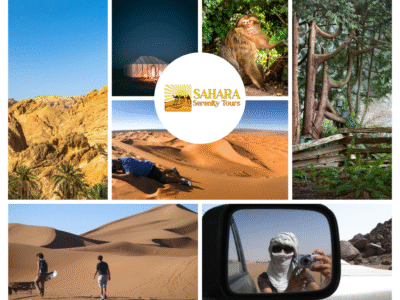
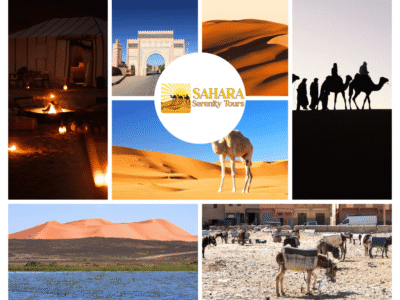
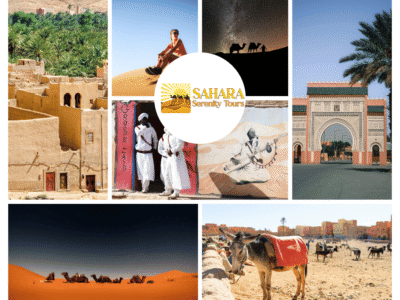
The Sahara is Morocco’s biggest draw, and it’s more accessible for families with young kids than most parents expect. A camel trek at sunset into the dunes of Erg Chebbi, followed by a night in a desert camp with a fire, traditional music, and stargazing, is the kind of experience that children remember for the rest of their lives. Camel rides are gentler than most parents expect: the animals move at a slow, rocking pace, with the guide walking alongside on foot throughout. Ride durations and specific practices vary by operator and route, so confirm details when you book; as a general guide, most camp-arrival treks run around thirty to sixty minutes. Most operators suggest children be at least four to five years old for a solo ride, though younger children can ride comfortably in a parent’s arms.
At Sahara Serenity Tours, our desert camp experiences are structured so families can enjoy the full Sahara experience without feeling rushed. We pace the camel trek to suit younger legs, and our camps include comfortable sleeping setups that work for families traveling with kids of all ages.
Medina Walks, Kasbahs, and Pacing for Short Legs
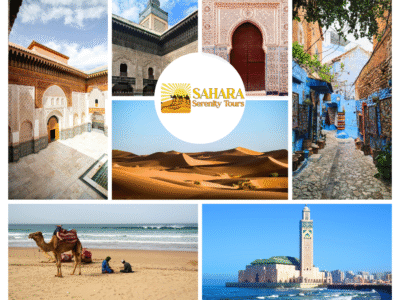
Morocco’s medinas are extraordinary but exhausting for young children. The narrow alleyways, sensory overload, and uneven cobblestones make them difficult for strollers, so a baby carrier is strongly preferable for children under two. For older kids, the key is pacing: plan medina visits in the morning before heat and crowds peak, build in spontaneous stops at a bakery or a fountain square, and cap walking time at two to three hours maximum for children under seven. Kasbahs like Ait Ben Haddou offer a more open, easier-to-navigate alternative to dense urban medinas and are a consistent family highlight on the Marrakech-to-Fes route.
Activities That Give Parents a Break Too
Some of Morocco’s best family experiences work precisely because they engage kids and give parents a moment to breathe at the same time. Cooking classes where children learn to make Moroccan flatbread or shape couscous are available in Marrakech and Fes and are consistently popular with families. Open-air markets where older children can shop with a small cash budget teach negotiation and currency skills while giving parents a moment to browse. Day trips to the Todra Gorge or the Draa Valley, where the sheer scale of the landscape entertains children without requiring constant walking, are perfect midpoint breaks on a desert itinerary.
Pulling Your Family Trip Together: Planning and Logistics Advice
The Pre-Trip Checklist That Prevents Most Problems
The unglamorous planning work is what makes the exciting parts go smoothly. Six to eight weeks before departure: schedule the travel health clinic visit, begin the vaccine process for your children, and enroll your family in STEP. Four weeks out: confirm your car seat logistics, whether you’re bringing one from home or requesting it through your tour operator. Two weeks out: make copies of all passports and vaccination records and store them separately from the originals. Download offline maps of Marrakech, Fes, and any other cities on your itinerary so navigation doesn’t depend on a data connection. None of this is complicated, but all of it matters.
Why Families Benefit from Pre-Planned Itineraries and Vetted Guides
Families who navigate Morocco entirely on their own face a fresh set of logistical decisions every single day: which driver to trust, which restaurant is safe for their toddler, how to handle an unexpected road closure between the kasbah and the desert camp, what to do when a child runs a fever in a small town with no English-speaking pharmacist nearby. That decision fatigue is real, and it competes directly with your ability to be present and enjoy the experience with your kids.
At Sahara Serenity Tours, we structure private family tours specifically to remove that burden. A dedicated English-speaking local guide who knows Morocco deeply, a private vehicle that stays with your family the entire trip, a day-by-day itinerary that accounts for rest time and child-appropriate pacing, and direct support if something unexpected comes up: these aren’t luxuries for a family traveling with young kids. They are the practical infrastructure that makes the trip work. Our clients consistently tell us that having that support in place meant they got to spend the whole trip being parents, not travel managers.
Tailoring the Morocco Itinerary to Your Kids’ Ages and Energy
For a first family visit, seven to ten days is the sweet spot. A well-paced itinerary covers Marrakech, a High Atlas crossing through the Draa Valley, two nights in the Sahara at Erg Chebbi, and the return route via the Todra Gorge and either Fes or back through Marrakech. Toddlers and children under five do best with fewer overnight stops and more days in each location. Older children handle the full Marrakech-to-Fes circuit well, especially when the days vary between driving, exploring, and downtime. Every good family itinerary builds in at least one afternoon with nothing scheduled, no sightseeing, no driving. Just a pool, some shade, and time for your kids to be kids.
The Honest Bottom Line for Parents Considering Morocco
So, is Morocco safe for family travel with young kids? Yes, when you approach it with preparation and the right logistics in place. The real risks families encounter (an unfenced riad pool, a taxi ride without a car seat, a stomach upset from tap water) are all manageable with the guidance in this article. None of them are reasons to avoid one of the most extraordinary family destinations in the world. They are reasons to do the planning correctly.
Morocco rewards families who arrive curious and prepared with experiences that simply don’t exist in typical vacation destinations. Your child watching the Milky Way from a Sahara camp, haggling for a painted bowl in a souk with their own pocket money, sitting cross-legged in a Berber tent while a guide explains why the stars look different in the desert: these are the moments that reshape how children see the world. No theme park manufactures them. Morocco does.
If you want the confidence of having every logistical detail handled from the moment you land to the moment you fly home, explore our family-friendly tours in Morocco. We’d be glad to plan yours. Reach out to start building an itinerary that works for your kids’ ages, your family’s pace, and the experience you’ve been picturing.