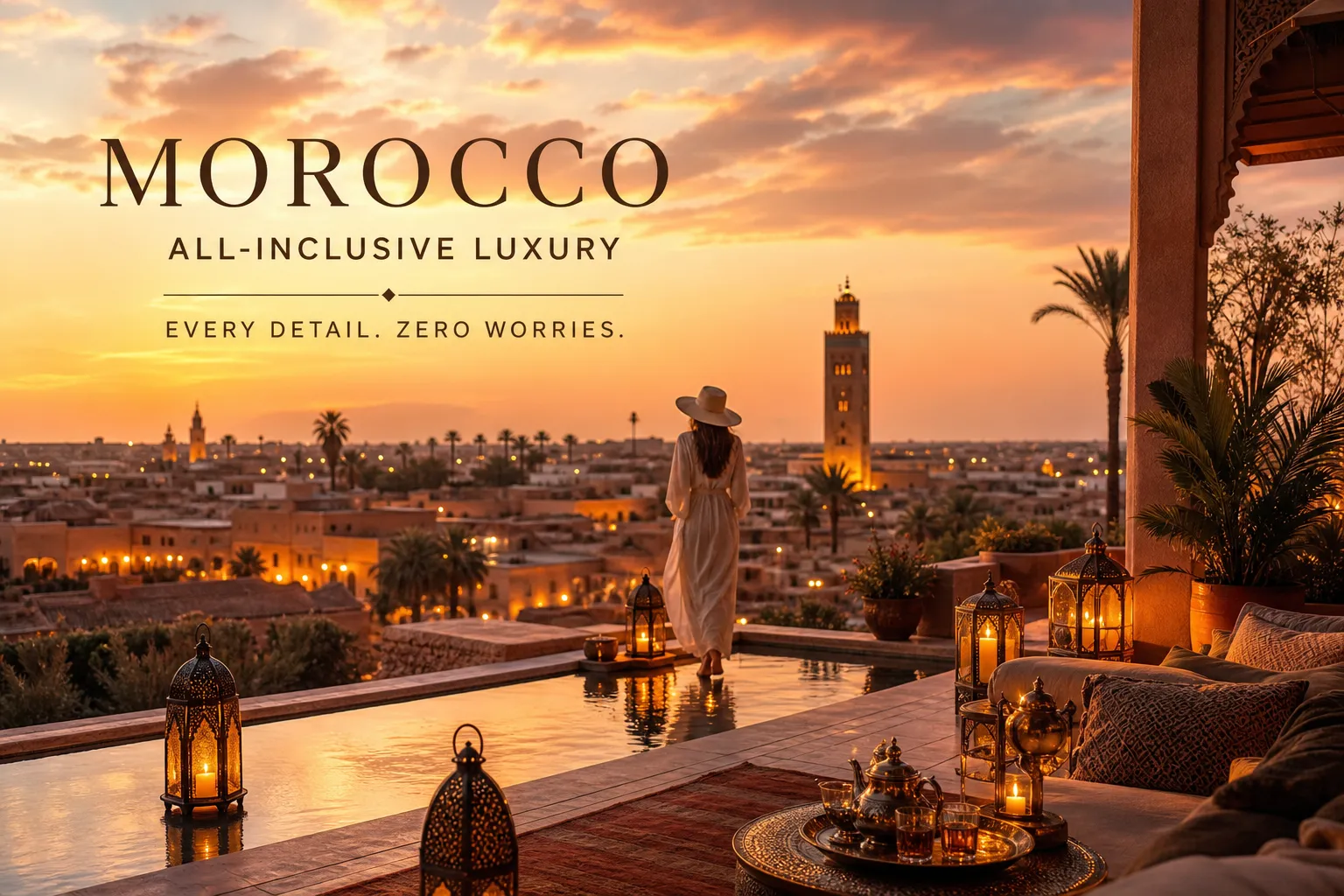
Most American travelers hear “all-inclusive” and picture a Cancun resort: a wristband, unlimited drinks by the pool, and zero reasons to leave the property. That mental model works beautifully for the Caribbean. It breaks down fast in Morocco. If you’re researching a luxury Morocco all-inclusive package, you’re going to find that what’s on offer here looks very different from anything in the Caribbean, and the gap between expectations and reality at the airport can be significant.
Morocco isn’t a stay-put destination. It’s a country designed for movement, layered across imperial cities, mountain passes, ancient kasbahs, and one of the world’s great desert landscapes. What “all-inclusive luxury” means here depends entirely on which model you’re buying: a single-property resort or a fully bundled tour operator itinerary. Both are legitimate. They serve very different travelers, and the one you choose shapes your entire trip.
At Sahara Serenity Tours, we’ve built all-inclusive Morocco experiences specifically for American travelers, and the single most common thing we hear after a trip is: “I had no idea what I was actually getting.” This guide fixes that. By the time you finish reading, you’ll know exactly what’s covered in a luxury Morocco all-inclusive package, which accommodations define the experience at each level, and what questions to ask before you commit to anything.
Why Morocco’s all-inclusive model doesn’t work like you think
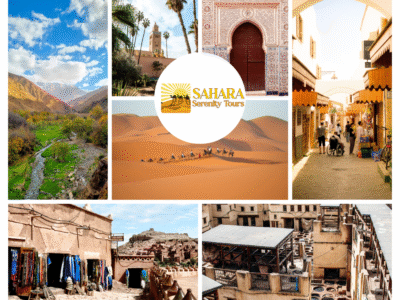
For beach and island destinations like the Maldives or Cancun, resort-style all-inclusive makes sense because the destination rewards staying put. You fly in, park yourself at a beautiful property, and the resort delivers everything you need within its walls. Morocco is structured around the exact opposite logic. The country’s most compelling experiences are spread across a geography that demands you keep moving: from the labyrinthine medina in Fes to the Atlas Mountain foothills to the dunes of Erg Chebbi in the Sahara. No single resort contains all of that, which is why the all-inclusive concept here gets structured differently from what most American travelers expect.
There are two distinct versions of luxury all-inclusive in Morocco, and understanding the difference is the most important thing you can do before you book. The first is the resort model: properties concentrated in the Marrakech Palmeraie and along the Agadir coastline, where guests stay in one location, use the pool and spa, eat on-site, and take optional day trips at additional cost. These properties are legitimate luxury options and work well for travelers who want to genuinely decompress in one place. The second model is the tour operator bundle: a multi-day itinerary covering accommodations across multiple cities, private ground transport for the entire trip, professional local guides, planned excursions, and daily meals. This model moves with you across the country rather than keeping you in one spot.
Across both models, the baseline “all-inclusive” definition covers accommodation, meals, and non-alcoholic beverages. Everything above that level depends on how the specific package is labeled and what tier you’re buying. Premium drinks, airport transfers, guided excursions, spa treatments, and desert experiences are often additional costs unless you’re looking at a higher-tier package that explicitly states otherwise. Set your expectations at that baseline and treat everything else as something to verify before paying a deposit.
What a Luxury Morocco All-Inclusive Package Covers: Accommodation Types
A riad isn’t a hotel in the Western sense, and that distinction matters when you’re evaluating accommodations. It’s a traditional Moroccan home built around a central courtyard, typically hidden behind a plain exterior door somewhere inside the medina. At the luxury level, riads feature carved cedar ceilings, hand-laid zellige mosaic tilework, plunge pools, and rooftop terraces, with a service ratio that’s impossible at a large hotel because these properties typically hold only a small number of rooms. That intimacy isn’t a limitation. It’s the entire point. Guests at a luxury riad are known by name within an hour of arrival. If you’ve been searching for all-inclusive riads Morocco, this is the accommodation category to focus on.
Kasbah-style properties in the Atlas foothills occupy a completely different register. Originally built as fortified earthen structures to protect communities in remote areas, the converted luxury versions sit between the medina and the desert with dramatic mountain views, generous grounds, and a slower pace that works particularly well for couples and wellness-focused travelers. Properties like Kasbah Tamadot represent this tier: more space, fewer guests, and a sense of elevation both literal and experiential. These properties suit travelers who want cultural depth without the sensory intensity of Marrakech’s medina.
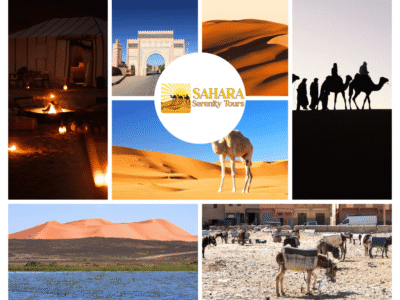
The luxury desert camp is a category in its own right, and the range within it is enormous. At the low end, a “desert camp” is a basic tent with a shared bathroom and a campfire. At the genuine luxury end, a desert bivouac offers private furnished tents of 40 to 50 square meters with en-suite bathrooms, hot showers, real beds, heating and cooling systems, and multi-course Moroccan dinners served under the stars. When you’re evaluating any desert camp, ask these four questions before you book:
- Are tents private or shared?
- Are bathrooms en-suite or communal?
- Is camel trekking access included in the price or charged separately?
- How far is the camp from the main road?
A camp visible from the highway is not the same experience as one positioned a substantial camel ride into the dunes.
What “all meals included” actually looks like at a luxury level
Moroccan cuisine is already one of the most compelling reasons to visit the country. Slow-cooked lamb tagines with preserved lemon and olives, hand-rolled couscous finished with caramelized onions and raisins, harira soup with fresh-baked bread, pastilla dusted with cinnamon and powdered sugar. These aren’t dishes assembled from a buffet station. At a quality riad or luxury desert camp, meals are curated and prepared in-house by a local cook, often using regional ingredients sourced that morning. The gap between resort food and riad food is significant, and it’s one of the reasons the tour operator model often delivers a more genuinely Moroccan meal experience.
Most luxury packages, whether resort or tour operator, include breakfast daily and dinner at the accommodation. On excursion days, some packages fold in a midday meal as well, though this varies. What’s commonly not included: alcohol (some high-end riads don’t serve it, or sell wine and spirits as a separate charge), premium bottled wine at dinner, and any meals you choose to take outside the accommodation on your own. None of this is a problem once you know it’s coming. The surprise version is the one that frustrates travelers.
Dietary needs are worth raising early and clearly with any operator you book through. A quality tour operator asks about restrictions upfront and communicates them directly to each accommodation before your arrival. Vegetarian and vegan travelers actually fare very well in Morocco because so much of the local cuisine is plant-forward: lentil soups, roasted vegetable couscous, fresh salads dressed with argan oil. Gluten-free needs require more specific communication since bread and semolina are staples. A good operator handles this logistics detail for you in advance, so you’re not navigating it in a foreign kitchen on the first night.
Private transfers: the logistics layer most travelers overlook
Morocco is not a country you navigate casually. The drive from Marrakech to the Sahara Desert at Merzouga takes roughly 9 to 10 hours through the High Atlas passes and down through the Draa Valley, depending on route and stops. The overland journey from Fes to Marrakech via the desert route is commonly planned across several days with meaningful stops along the way. If your package doesn’t include private ground transportation, you’re looking at shared CTM buses with fixed schedules, rented cars on unfamiliar mountain roads, or local taxis that don’t accommodate larger luggage. Private transport isn’t a luxury upgrade in Morocco. It’s the infrastructure that makes a multi-city itinerary function at all.
The arrival experience matters more than most travelers anticipate. Walking out of Casablanca Mohammed V Airport or Marrakech Menara after a transatlantic flight and finding a driver holding your name on a placard, with a clean air-conditioned vehicle and cold water bottles waiting, sets an immediate tone for the trip. When evaluating airport transfers in any package, confirm whether the vehicle is private or shared, whether the driver speaks English, what happens if your flight is delayed, and whether a guide or just a driver is included for the transfer leg.
Shared transfers are cheaper, and the trade-off is real. You wait for other passengers, the timing is rigid, and there’s no flexibility for unplanned stops. On a luxury itinerary, private transport is what gives the trip room to breathe. When a family wants to pause at a roadside argan oil cooperative run by a women’s collective, or a couple wants 20 extra minutes at a high-pass viewpoint watching the light change over the mountains, a private vehicle makes that possible. Shared transport doesn’t. This distinction is worth asking about explicitly when you compare packages, because some operators advertise “all-inclusive” while using shared vehicles for inter-city transfers.
Guided excursions: what’s worth bundling and what’s filler
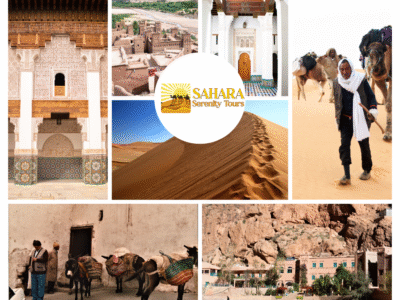
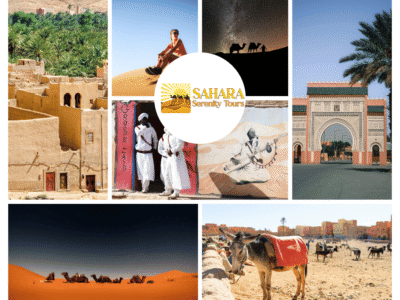
Not all guided experiences in Morocco are equal, and the difference is visible when you read the itinerary carefully. A medina walk with a knowledgeable local guide who explains the architectural logic of a 12th-century mosque, identifies which neighborhood you’re in by the sound of the craftsmen working, and steers you away from the tourist circuit into a genuine residential quarter, that’s a different product entirely from a timed group circuit with headsets and a flag-waving leader. The excursions that consistently add real depth include a Fes medina deep dive, a guided tour of Ait Benhaddou kasbah with historical context, a Berber cooking class at a family home, and desert stargazing with a guide who knows the constellation names in Amazigh. These are the ones worth confirming as inclusions.
Some packages bulk out their excursion list with activities that sound impressive but deliver little on the ground. A 15-minute camel ride in a tourist pen near the road bears no resemblance to a sunset camel trek into the dunes. A rushed 45-minute souk visit where the guide steers you toward commission-earning shops isn’t cultural immersion. Photo stops at recognizable landmarks with no historical context are decoration, not guided excursions. You can usually spot the difference by checking duration: if an excursion isn’t assigned a realistic time window in the itinerary, it’s likely a brief add-on dressed up as a feature.
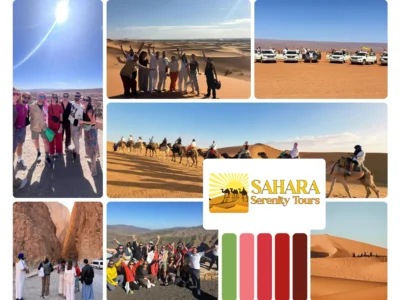
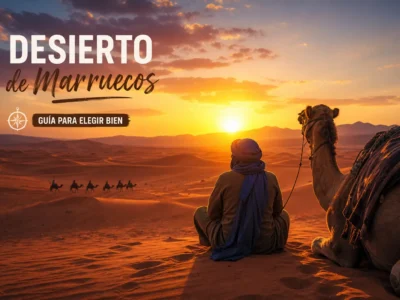
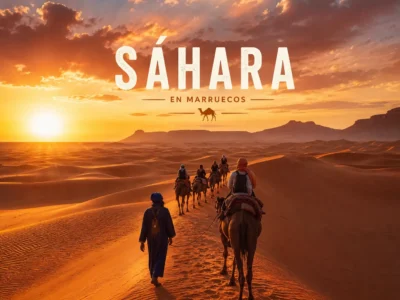
Camel trekking is the signature Sahara experience and almost certainly the most searched excursion in any Morocco package. A genuine luxury version means a late-afternoon departure timed to catch the sunset light on the dunes. Your guide explains the landscape, the nomadic history of the region, and the ecology of the erg as you ride. Arrival is at a camp removed enough from the main road to feel like the actual desert. The trek itself typically runs somewhere between 45 minutes and an hour and a half each way, long enough to feel the scale of the landscape, short enough to be manageable for most travelers. Note that mounting and dismounting a camel as it rises or sits is a memorable physical experience in itself. Camel trekking access should be a core inclusion in any Sahara package, not a paid add-on charged at the dune base.
Luxury Morocco All-Inclusive: Resort vs. Tour Operator, Shortlisted by Traveler Type
Best for couples and honeymooners
La Mamounia in Marrakech is Morocco’s most iconic hotel, earning that reputation through its extensive gardens, multiple pools, a world-class spa, and a sense of old-world grandeur that photographs can’t fully capture. It’s the choice for couples who want romance built into every surface of the property. For something different, Kasbah Tamadot in the Atlas Mountains offers altitude, sweeping mountain views, an infinity pool overlooking terraced hillsides, and a sense of seclusion that feels genuinely removed from the world, a different kind of romantic experience entirely.
Four Seasons Marrakech sits between those two registers, offering polished international-standard luxury with cultural access to the medina just outside its walls and all-inclusive options available at select tiers. Nightly rates across these Marrakech all-inclusive resorts range from roughly $400 to well over $1,000 depending on season, room type, and what the package covers. Confirm which meals and drinks are folded in versus billed separately before you book.
Best for families with kids
Iberostar Club Palmeraie Marrakech and Club Med Marrakech La Palmeraie are both situated in the Palmeraie district just outside the city center, and both are structured specifically for family-format all-inclusive stays with pools, kids’ clubs, and activity programming designed for different age groups. Iberostar runs at a 4-star classification with nightly rates ranging from approximately $148 to $709 depending on season, making it one of the more flexible-budget family options at this level. Club Med’s La Palmeraie property is built around the brand’s Exclusive Collection model, which means higher inclusions and a more polished all-inclusive structure. Before booking either property for a family, confirm room configurations for your group size, the age range the kids’ programming serves, and whether family-relevant excursions are included or charged as extras.
Best for wellness and solo cultural immersion
Sofitel Agadir Royal Bay Resort is among the stronger pure-resort options for wellness-focused travelers: beachfront location, multiple pools, a high-quality spa, and a premium all-inclusive structure that includes top-shelf beverages and gourmet dining. As one of the standout Agadir luxury resorts all-inclusive options, nightly rates typically run from around $163 to $980, placing it firmly in the luxury tier. For travelers who want cultural immersion over beach relaxation, Villa des Orangers in Marrakech is a more intimate choice, a boutique riad-style property in the medina with hammam facilities and a level of personal service that a large resort can’t replicate. Solo travelers who want to genuinely understand Morocco, not just relax near it, often find the tour operator model a better fit than either resort option, precisely because it builds cultural context into every day of the trip.
When a tour operator’s all-inclusive package beats a resort
The resort and the multi-city itinerary are genuinely different products, and that distinction matters when you’re deciding which one fits your trip. A tour operator’s all-inclusive bundle covers the entire journey: private accommodations at hand-selected riads and luxury all-inclusive Morocco desert camps across multiple cities, private ground transport for every leg, professional English-speaking local guides, all planned excursions with entrance fees, and daily meals at the accommodation. What a resort covers beautifully inside its gates, it leaves entirely open outside them. A tour operator package eliminates that open variable.
Morocco genuinely rewards movement, and this is especially relevant for American travelers working with a 10 to 14 day vacation window. A traveler who stays only in Marrakech goes home having seen one extraordinary city. A traveler who moves through Marrakech, the Atlas, the Sahara, the Draa Valley, and Fes goes home having experienced the country’s full range. The bundled itinerary format removes the logistical anxiety of planning multi-city travel in an unfamiliar country and replaces it with a seamless handoff from one experience to the next. That’s not a small thing when you’re navigating a new continent on limited vacation time.
This is where Sahara Serenity Tours’ model enters the picture directly. Our luxury Morocco all-inclusive packages keep groups capped at 10 travelers for shared departures, with fully private tour options available for couples, families, and groups who want their own vehicle and itinerary. Itineraries run from 3-day Sahara desert sprints to 14-day full-country journeys. Standard accommodations are luxury riads and high-quality desert camps. Local guides bring genuine cultural knowledge, not a rehearsed script. All inter-city and airport transfers are private and included. Budget-wise, a quality all-inclusive tour operator package in 2026 runs approximately $1,800 to $3,500 per person for 10 to 14 days, with ultra-luxury private options reaching $5,000 per person depending on customization. These figures reflect current industry ranges and vary by operator and itinerary.
How to compare packages and know what you’re actually getting
Before you pay a deposit on any luxury Morocco all-inclusive package, six questions will tell you almost everything you need to know. First: what specific accommodations are included, and can you see photos of the actual property? Second: are airport and inter-city transfers private or shared? Third: are guided excursions included in the package price, and how long does each one actually run? Fourth: what meals are covered, and how does the operator handle dietary restrictions? Fifth: are entrance fees and gratuities for guides included, or listed as extras? Sixth: is there a fixed departure date, or can the schedule flex around your flights?
The fine print is where budget-friendly packages reveal themselves. A headline price that looks competitive often excludes drinks with dinner, tips for guides and drivers, national park entrance fees, travel insurance, and any optional extensions. A genuinely transparent all-inclusive package specifies what’s in and what’s out in the written itinerary, not buried in a FAQ. Look for that specificity. If a package description uses phrases like “most meals included” or “selected excursions,” those qualifiers represent costs you’ll pay on the ground.
Matching the package to your actual travel style matters as much as the price comparison. The resort model is the right choice if you want to genuinely unplug, stay in one beautiful place, use the pool and spa freely, eat on property, and take optional day trips at your own discretion. The tour operator model is the right choice if you want to move through the country, experience its different regions and cultures, and have every logistics detail handled so you can focus entirely on the trip itself. Both are valid ways to experience Morocco at the luxury level. The mistake isn’t choosing either one, it’s buying one when your travel style clearly calls for the other.
Making your Morocco decision with confidence
You now have a clear picture of what a luxury Morocco all-inclusive package actually covers, how the accommodation types differ from a riad to a kasbah to a genuine desert camp, and what questions separate a well-constructed package from an expensive disappointment. Morocco at this level is one of the most layered, genuinely rewarding travel experiences available to American travelers right now, but it pays off in proportion to how well the logistics are handled. A great riad with no plan for getting between cities is a wasted opportunity. A private itinerary with a knowledgeable local guide who handles every transition is a completely different trip.
Whether you’re drawn to a beachfront property among the 5-star all-inclusive Morocco options in Agadir, a romantic riad in Marrakech, or a multi-day journey from the Atlas Mountains to the Sahara dunes, the key is matching the package structure to what you actually want from the trip. Read the inclusions carefully, ask the six questions above before you commit, and don’t let a headline price substitute for a clear understanding of what’s covered. When comparing your options, choose the luxury Morocco all-inclusive structure that fits how you actually travel.
If you’re ready to move from research to planning, the team at Sahara Serenity Tours is here to help you build the right itinerary for your group, budget, and travel style. From a focused desert sprint to a 14-day full-country journey, we handle every detail so you arrive focused on Morocco itself, not the logistics behind it. Reach out to start building your custom Morocco itinerary today.
[…] due modelli di viaggio completamente diversi, non versioni dello stesso prodotto. I resort all inclusive di Marrakech, Club Med La Palmeraie, Aqua Mirage, TUI BLUE Medina Gardens, Kenzi Menara Palace, si trovano nella […]