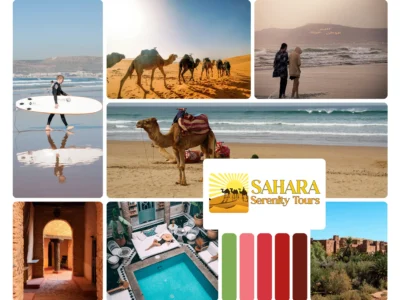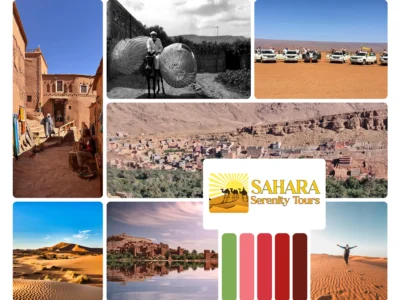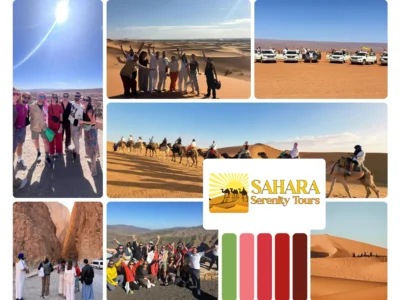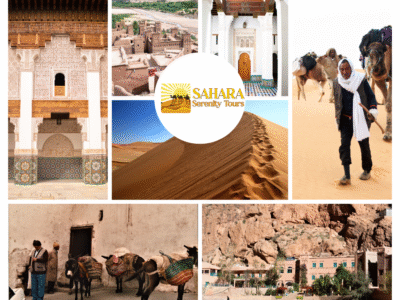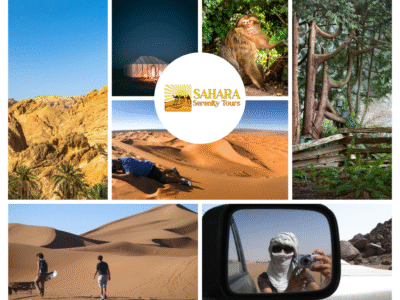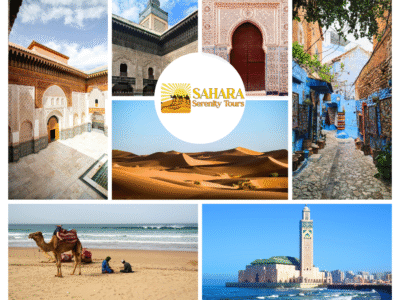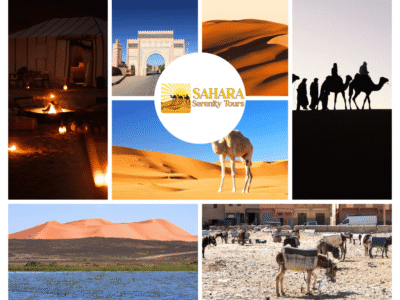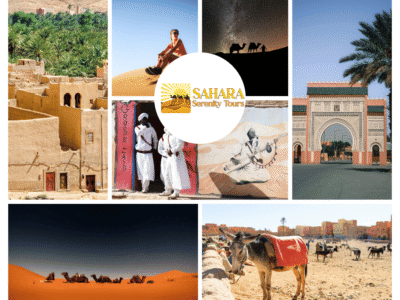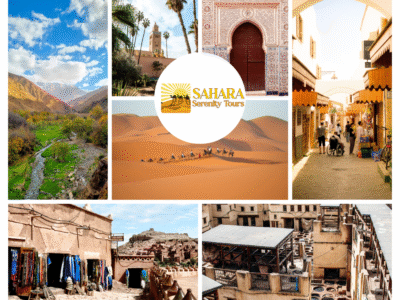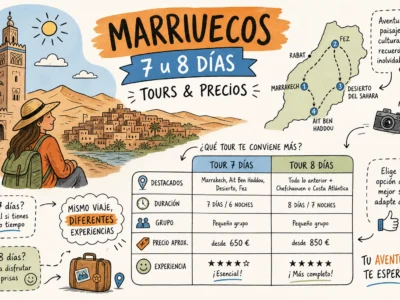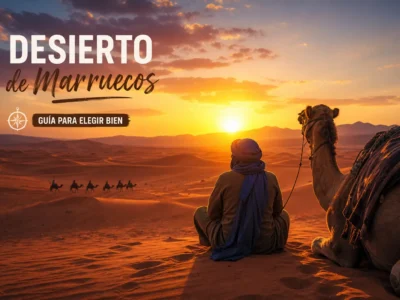
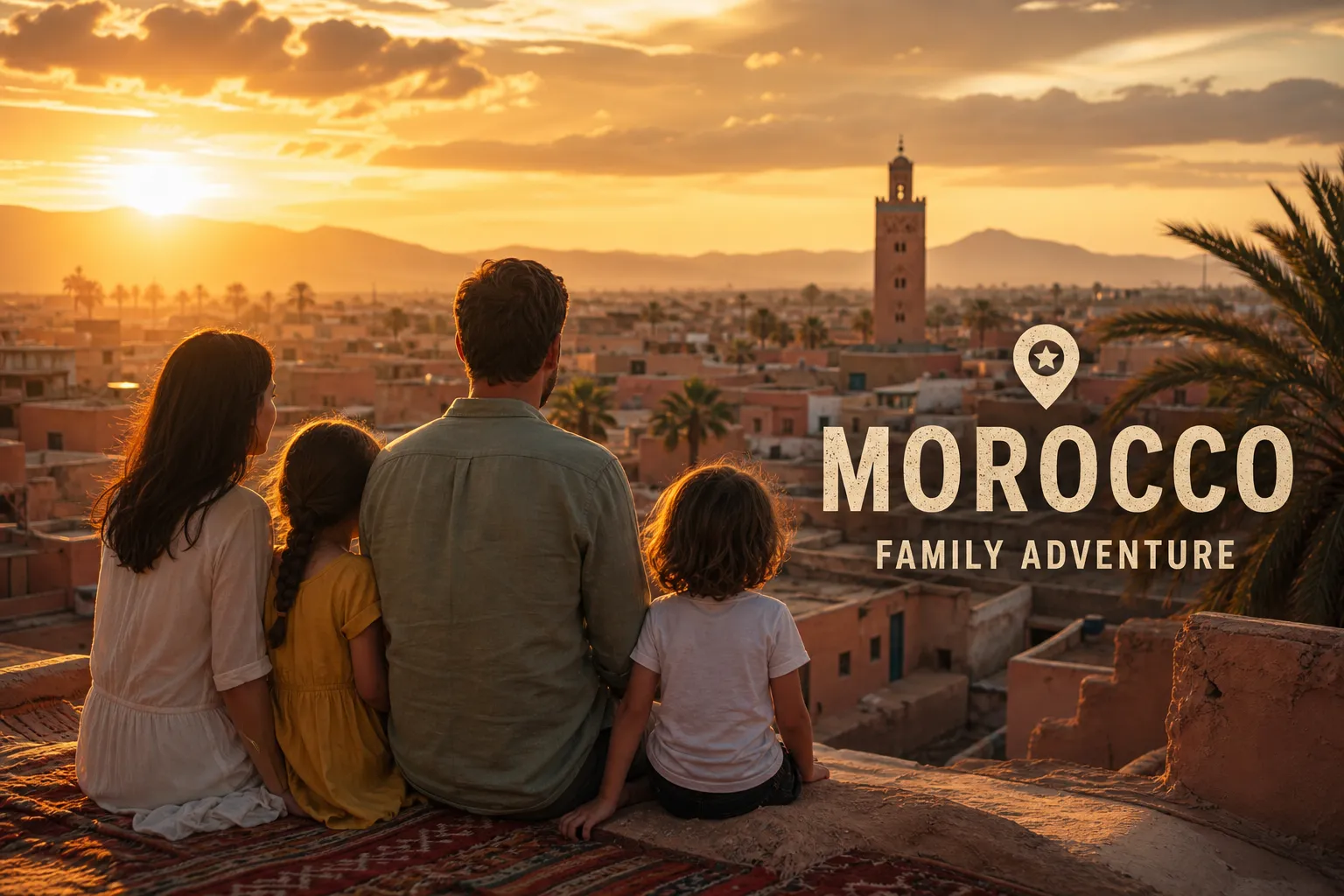
Most American parents researching Morocco for the first time land on the same thought: this looks incredible, but is it actually doable with kids? The medinas look chaotic, the desert looks extreme, and Morocco doesn’t exactly show up on the shortlist next to Disney World or the Caribbean. That thinking is worth challenging. If you’ve been asking what is the best Morocco tour for families with children, the honest answer is that Morocco family tours have quietly become one of the strongest options for American families who want something real, something their kids will still remember at 30.
At Sahara Serenity Tours, we’ve guided many American families through the Sahara dunes, the winding streets of Fes, the Berber villages of the Atlas Mountains, and the starlit silence of an overnight desert camp. We’ve seen 5-year-olds wide-eyed on camelback and teenagers who called Morocco the best trip of their lives. We’ve also seen families burned by poorly paced itineraries or operators who weren’t built for the specific demands of traveling with children. This guide covers what parents actually need to know: safety, pacing, activities by age, how to pick the right format, and the best time to go.
Why Morocco works better for families than most parents expect
The cultural warmth that makes traveling with kids easier
Many travelers report that Moroccan hospitality extends warmly to children in almost every setting. Kids in restaurants, kasbahs, and souks tend to draw smiles and friendly conversation rather than the quiet disapproval that can surface in more formal European destinations when a toddler has a meltdown in a nice café. That cultural openness takes a real layer of parental anxiety off the table and makes the trip feel welcoming from the first hour.
This matters practically, too. Local guides, riad staff, and camp hosts are genuinely accustomed to working around children’s needs. Meals come faster when kids are restless. Stops get extended when something captures a child’s attention. Morocco’s hospitality tradition is built on generosity toward guests of all ages, and families feel that every day of the trip.
What makes Morocco’s variety uniquely suited for mixed-age groups
Morocco compresses remarkable geographic and cultural variety into a single trip. Imperial cities, High Atlas mountain passes, Sahara dunes, Atlantic coastline, ancient kasbahs, the country delivers all of it, and the drive from Marrakech to Merzouga, for example, covers roughly 550 kilometers through several distinct landscapes. A family with a 6-year-old and a 14-year-old can find activities that genuinely excite both in the same week, which is rare at this price point compared to other international destinations.
That density of experience is what makes Morocco so practical for families with mixed-age children or multigenerational travel. Grandparents and grandkids, teens and toddlers, adventure-seekers and culture-lovers, the country offers something real for each of them, often within the same day’s itinerary. It’s one reason family-friendly tours in Morocco built around a 7-, 12-day circuit continue to be among the most popular formats we design.
What is the best Morocco tour for families with children? Start here.
The answer depends on your children’s ages, your pace preferences, and how much flexibility you need, but the core framework is consistent. The best Morocco family tours for children share three traits: pacing built around kids (not highlight checklists), a guide with genuine child-travel experience, and an itinerary that balances activity with downtime. The sections below break that down by age group, activity, and tour format so you can match the right trip to your specific family.
What age ranges actually work for Morocco’s key experiences
Toddlers and young kids (ages 3, 6): what’s realistic and what to skip
This age group can absolutely do Morocco, but only on a private tour with pacing built around them. What works well: short medina walks with a guide leading the way, cooking demonstrations where kids can get hands-on, the sensory energy of Jemaa el-Fna square in Marrakech, camel rides with a parent (most operators have young children share a camel with an adult rather than ride solo), and riad stays where the courtyard becomes a playground. Young children love novelty, and Morocco delivers it constantly.
What to skip at this age: marathon driving days, overnight desert hikes, and overcrowded souks without a guide holding the group together. The medinas of Fes and Marrakech are genuinely disorienting for adults navigating them alone, add a 4-year-old to that equation without a guide and it stops being fun quickly. With a local guide who knows every shortcut and safe path, that same medina becomes one of the trip’s genuine highlights.
School-age kids (ages 7, 12): the sweet spot for Morocco
This is the age range where Morocco really delivers. Kids in this window are old enough to absorb what they’re seeing, young enough to be thrilled by everything, and physically ready for the activities that define a Morocco trip. Solo camel rides become an option around age 6 with a handler close by; for longer desert treks, age 7 and up is the practical benchmark for kids with the core strength and attention span to stay steady in the saddle.
School-age kids can handle sandboarding down Erg Chebbi dunes, Atlas Mountain foothill hikes, pottery workshops in Fes, and the full overnight Sahara camp experience. They’re the travelers who come home with specific stories: the name of the camel, the way the dunes looked at sunrise, the bread they baked with a family in the village. Morocco gives this age group exactly what travel should give kids, perspective, wonder, and a felt sense that the world is far bigger than they imagined.
Teenagers: keeping older kids genuinely engaged
Teens often check out on family trips designed primarily around younger siblings, but Morocco has a specific pull for older kids. Sandboarding, local street food hunting, photography in the electric-blue alleys of Chefchaouen, drumming workshops, and the social atmosphere of a small Sahara camp under a sky full of stars, these aren’t activities designed for children, and teenagers know the difference. Morocco gives them something that feels genuinely adult and adventurous.
For families with teenagers, building the itinerary to give older kids some autonomy within safe, guide-supported settings makes a real difference. A teen who gets to lead the group through a souk with a guide translating, or who takes the best photo of the trip at the dunes, comes home with ownership over the experience rather than just a passenger’s memory of it.
Safety in Morocco for families: the honest answer
Street safety in medinas and cities
Morocco’s major tourist cities are safe for families traveling with a guide. The U.S. State Department currently rates Morocco at Level 2 (Exercise Increased Caution), citing terrorism awareness and petty crime, not widespread violence. For families, the practical day-to-day risk is petty theft and occasional tourist scams in busy market areas, not anything more serious than what you’d find in most major European cities.
Navigating a medina alone with young children is genuinely disorienting, which is the strongest argument for booking a Morocco family tour with a local guide rather than self-guiding. A good guide knows the streets, vendors, and safe shortcuts, removing the decision fatigue that comes from trying to navigate and watch your kids at the same time. With a guide in front, parents can focus on their children instead of their phone’s map app.
Food, water, and health precautions parents need to plan
The practical basics: drink bottled water throughout the trip, choose riads and desert camps with established food-handling reputations, and carry a basic travel medical kit with children’s pain reliever, oral rehydration salts, and any prescription medications your kids use regularly. Electrolyte packets are genuinely useful for desert days when kids are active in the heat and may not notice how much fluid they’re losing.
Parents should consult a travel clinic 6, 8 weeks before departure for personalized guidance. The CDC recommends that children be up to date on routine vaccines before international travel and specifically recommends hepatitis A vaccination for unvaccinated travelers age 1 and older going to Morocco; infants 6, 11 months old should receive a pre-travel dose as well, even though it doesn’t count toward the routine series. Because CDC guidance is updated regularly, check cdc.gov/travel for the latest recommendations and confirm what your specific children need based on their ages and vaccination history.
Heat is the other practical concern. Sahara summer temperatures can exceed 110°F during the day, and most travel health guidance recommends avoiding inland desert travel with young children during June through August. Spring and fall travel largely solves this problem, the section on timing below covers it in detail.
How to read a Morocco family itinerary for real-world pacing
Daily driving times and what’s actually manageable with children
Four to six hours of driving per day is the realistic upper limit for families with young children. Any itinerary pushing consistently beyond that, especially with toddlers or kids under 8, will grind the group down by day three. The drive from Marrakech to Merzouga (the gateway to Erg Chebbi) covers roughly 550 kilometers and takes 7, 9 hours straight through. A quality family operator splits that across two days, with stops at Ait Benhaddou and the Dades Gorge breaking the journey and adding genuine sightseeing rather than just windshield time.
The key is how driving days are structured, not just how long they are. Strong family-friendly Morocco itineraries build in scenic breaks every couple of hours, never stack a long driving day against a full afternoon activity program, and always anchor each day around one primary experience. Kids can handle significant distances when the journey itself is interesting; put them in a vehicle for hours with nothing to see or do and the trip unravels fast.
Red flags in itineraries that are too packed
Watch for these warning signs when evaluating any Morocco family tour: multiple cities listed as stops in a single day, consecutive overnight driving, no flexibility language in the itinerary description, and major activities scheduled immediately after arrival at a new location. Any operator who won’t tell you the exact daily driving times when asked is also a concern.
Here’s what a child-friendly Morocco itinerary actually looks like: one meaningful destination or experience per day, driving times clearly stated and capped at around 5 hours, at least one full rest morning built into longer trips, and explicit notes about how the itinerary adapts if a child needs a slower pace. If the itinerary reads like a highlight reel with no breathing room, it wasn’t designed for families.
Kid-friendly activities that make a Morocco trip unforgettable
Camel rides and overnight desert camps in the Sahara
For most families, the Sahara is the centerpiece of the trip, and it earns that position. The camel trek into the Erg Chebbi dunes near Merzouga commonly runs around 30, 60 minutes at sunset, long enough to feel like a genuine desert adventure and short enough for younger kids to handle comfortably. (Specific durations vary by operator and camp location, so confirm the timing with your guide.) The drama of arriving at camp as the sky turns orange over the dunes is the kind of moment families talk about for years.
Luxury desert camps near Merzouga offer private en-suite tents with real beds, private bathrooms, heating or cooling depending on the season, Berber dinners around the fire, traditional music, and morning stargazing before sunrise. Family-appropriate setups matter here: quality operators book camps in advance and choose options with proper bedding, private family tents, and food-handling standards that parents can trust. A basic bivouac that works fine for a couple in their 30s becomes a very different proposition when you have an 8-year-old with a sensitive stomach and a 5-year-old who needs a cot they won’t roll off at 2 a.m.
Hands-on cultural workshops that work for all ages
Pottery sessions in Fes, bread-cooking with a local family in a Berber village, drumming workshops, fossil and mineral markets in the desert region, traditional weaving demonstrations, these are the experiences kids reference when they get back to school and someone asks what they did over break. They’re not tourist performances; they’re genuine skills and traditions that Moroccan families have passed down for generations, and children understand the difference between watching something and actually doing it.
Operators who include these activities as built-in itinerary components rather than paid add-ons show they’ve thought seriously about what family travel looks like. When cultural workshops are already woven into the base itinerary, it’s a clear signal the operator designed the trip for families, not just adapted a standard tour after the fact.
Outdoor adventures scaled for families in the Atlas Mountains
Easy waterfall hikes in the Ourika Valley, mule rides through Berber villages, and visits to traditional Atlas mountain homes offer physical engagement for kids without the intensity of serious trekking. These activities work for ages 5 and up and give children real exercise and sensory experience rather than another passive stop. The Atlas foothills are dramatically beautiful, especially in spring when the landscape turns green and wildflowers appear along the trails.
For families visiting in spring, the Atlas mountain section of a Morocco itinerary is often a quiet highlight, less visually dramatic than the Sahara but more approachable for younger children who need to move. A 7-year-old on a mule crossing a mountain path, waving at villagers, is a travel memory that sits right alongside the camel ride for sheer joy.
What to look for when choosing a Morocco family tour operator
The questions that separate a real family operator from a generic booking platform
Before booking any Morocco family vacation package, ask these questions directly and listen carefully to how the operator answers. Do your guides speak English fluently and have specific experience with children on this itinerary? Can the itinerary be adjusted mid-trip if a child gets sick or a stop needs to be skipped? What vehicle will the family travel in, and how many passengers share it? Who handles logistics if something goes wrong on the road?
An operator who answers those questions clearly and confidently has thought through family travel in Morocco. One who gives vague answers, falls back on generic “family-friendly” marketing language, or can’t tell you the exact group-size cap on shared tours hasn’t. The difference between a good and a frustrating Morocco family trip often comes down to the quality of that pre-booking conversation. If you’re comparing providers, our guide on choosing the best Morocco travel company breaks down the criteria to watch for.
How Sahara Serenity Tours handles family logistics end-to-end
At Sahara Serenity Tours, our team is made up of Moroccan guides with first-hand knowledge of every route, stop, kasbah, mountain pass, and desert camp on every itinerary we offer. We’re not a generic booking platform reselling third-party tours. We handle every detail from the moment your family lands: private vehicles, English-speaking guides with real experience traveling with children, pre-booked desert camps chosen specifically for family suitability, and flexible itineraries that adapt if a toddler needs an extra rest morning or the kids fall in love with a stop and want more time.
Parents who travel with us stay focused on their kids, not on managing logistics. Our shared tours are kept intentionally small (capped at 10 travelers), which means the group feels intimate rather than like a managed crowd. Our private family tours put the entire itinerary in your hands. We’ve worked with families carrying infants, families with skeptical teenagers who came home converted, and multigenerational groups where grandparents experienced a camel ride for the first time. We know what works for families in Morocco because we’ve built these trips around them.
Private tours vs. small-group tours: which format fits families better
Why families with young children often prefer a private tour
Private tours mean the itinerary bends to the family, not the other way around. If the 4-year-old needs a longer morning at the riad, you stay. If the kids fall in love with a kasbah and want an extra hour to explore, you stay. There are no other travelers to consider, no compromises on pace, and no social pressure to keep up with a group when someone’s having a rough morning. For families with children under 8, or with mixed ages spanning toddler to teenager, a private Morocco family tour is often the better fit, because the flexibility isn’t a luxury; it’s what keeps the trip enjoyable for everyone. That same private flexibility is why couples often opt for a Romantic Morocco tour when they’re seeking an intimate, customizable experience.
When a small-group tour works well for families
Small-group tours with strict caps offer something private tours can’t: the social energy of traveling alongside other people. For families with kids aged 8 and up, sharing a campfire in the Sahara with a small group of fellow travelers creates a different kind of memory than a fully private experience. The campfire conversation, the shared enthusiasm at the dunes, the sense of collective adventure, these add something real to a desert trip.
The key word is “small.” Sahara Serenity Tours caps shared groups at 10 travelers total, which means 10 people feels intimate and personal rather than like a managed crowd. Forty people on a bus tour through the medina is a fundamentally different experience from 10 people exploring it together with one knowledgeable local guide. Families considering a shared tour should always ask for the exact maximum group size before booking, not just a vague “small group” promise.
Best months to visit Morocco with your family and how to prepare
Spring and fall as the family sweet spot
March through May and September through November are the best windows for Morocco family travel. Temperatures are comfortable for city touring, desert days, and mountain outings. Sahara summer temperatures can top 110°F, and most travel health guidance recommends avoiding desert travel with young children during June through August, spring and fall eliminate that concern entirely.
Spring travel brings an added visual reward: the Atlas Mountain foothills turn green, wildflowers appear along hiking trails, and the landscape looks dramatically different from the dry summer palette. Fall offers its own appeal, post-summer crowds have thinned, pricing tends to be more favorable than peak spring, and the desert nights in October and November deliver some of the year’s best stargazing conditions.
What to pack for a Morocco family trip and what most parents forget
The essentials specific to families on a Morocco trip: high-SPF sunscreen for every member of the group (the desert sun is intense and sneaks up on people unused to it), lightweight layers for cold desert nights even in spring and fall, closed-toe shoes for medina walking, electrolyte packets for hydration on hot days, and a basic first-aid kit with children’s medication, oral rehydration salts, and any prescription items your kids need.
The item parents most commonly underpack: warm layers for the desert night. Families who pack for the daytime heat arrive at the Sahara camp after sunset and suddenly need every warm item in the bag. The Sahara’s diurnal temperature swing is sharp, afternoons can be scorching while midnight temperatures turn genuinely cold, and a child who was sweating at 4 p.m. will be shivering by 9 p.m. without a proper fleece or jacket. Parents traveling with infants should confirm with their operator in advance that the camp can arrange appropriate bedding and sleeping setups; this is exactly the kind of detail a family-focused operator should handle without being asked twice.
The right Morocco family tour is out there: here’s how to find it
The families who have the best Morocco experiences share one thing: they booked with an operator who handled every detail so they could stay fully present with their kids. They were watching their children ride camels into the Sahara, taste Moroccan bread they helped bake, and look up at more stars than they’d ever seen.
The decision points covered in this guide give you a practical framework: match the itinerary pacing to your children’s ages, vet your operator with direct questions before booking, decide between private and small-group format based on your kids’ ages and social needs, and time the trip for spring or fall. Families with younger children often do better on a private tour where pacing is fully flexible. Families with older kids can thrive in either format, as long as the group is genuinely small.
If you’re still wondering what is the best Morocco tour for families with children, the short answer is the one built specifically around your kids’ ages, energy levels, and interests, not a generic itinerary retrofitted with a “family-friendly” label. At Sahara Serenity Tours, we build custom family Morocco travel packages ranging from 3-day desert circuits to 2-week full-country journeys. Reach out to our team, tell us your children’s ages, how many days you have, and what matters most to your family, and we’ll build something around that. Morocco is ready for your family. The only question is when you’re going.