What is the best Morocco tour for student groups? It’s the question every trip coordinator eventually lands on after staring at 40 different itineraries with no clear way to compare them. Many Morocco tours are built for solo travelers or honeymooners, not for a group of 20 students with a capped budget, a curriculum to justify, and a parent consent form to answer for. The logistics alone are enough to make a trip coordinator question the whole idea.
The real question isn’t just “which tour looks good” but which one is actually structured for groups, handles the real logistics, and delivers something students will still talk about a year later. That narrows the field fast. Operators like Sahara Serenity Tours, a locally rooted, Berber family-run company based in Morocco, have built dedicated student packages around exactly these pressures: group pricing, structured multi-day itineraries, and local guides who know how to keep a group engaged across long driving days and medina crowds alike.
This guide breaks down what to look for in a youth group Morocco tour, which tour styles actually work for student groups, what realistic costs look like in 2026, and how to approach the booking process without the overwhelm. By the end, you’ll have a clear framework for choosing the best Morocco tour for your student group, whether you’re planning a week-long school trip or a 14-day university fieldwork program.
What most Morocco tours get wrong for student groups
The five things student group planners care about most
When a trip coordinator evaluates a Morocco student group tour, five criteria tend to dominate the decision: budget predictability, guide structure and supervision, itinerary clarity, educational relevance, and logistical simplicity. These aren’t the same priorities a solo traveler brings. A solo traveler can absorb a surprise schedule change or a mediocre riad; a group of 25 students with flights booked and parents expecting a specific experience cannot.
Budget predictability matters because most school programs work from a fixed per-student cost approved by administrators before bookings open. Guide structure matters because students in unfamiliar cities need consistent supervision, not a handoff between local contractors at each stop. Educational relevance matters because a school board or university department will ask what students actually learned. A 10-day camel-trek-only tour looks romantic in a brochure, but it doesn’t hold up under a curriculum review.
What is the best Morocco tour for student groups, and why generic listings often miss the mark
Some operators list trips as group tours when they simply mean a small group of adults traveling together. The supervision model, the pacing, and the accommodation standards are all built around adults who can self-manage. Student groups need something different: age-appropriate supervision, structured downtime, and guides who understand group dynamics across a full day, not just at major sites.
Student group travelers on travel review platforms consistently flag the same complaints about generic Morocco group tours: too many long drives in a single day, salesy shopping stops that weren’t in the itinerary, and communication gaps around pickup times or included meals. Knowing these patterns before you shortlist operators is how you avoid booking the wrong trip for the wrong group.
The three Morocco tour styles and which one fits your group
Cultural city tours: strong on history, lighter on adventure
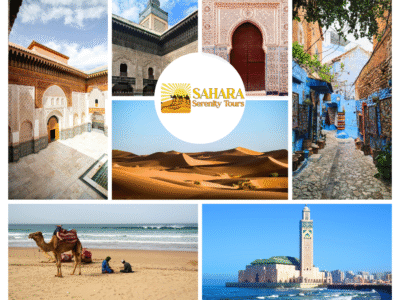
A city-focused, education-oriented Morocco trip typically covers the imperial cities: Marrakech, Fez, Meknes, and sometimes Rabat or Casablanca. Students visit medinas, artisan workshops, UNESCO heritage sites, and historical monuments. This structure works especially well for humanities, history, and social studies curricula, and it fits neatly into a 5-to-7-day school calendar window.
The tradeoff is that city-only programs miss the landscape diversity that makes Morocco genuinely memorable. For groups where the primary goal is cultural immersion and academic learning rather than adventure, this format is a clean, logistically simple choice. For groups where students are expecting something visually dramatic, it may not fully deliver.
Desert and Sahara programs: the standout experience, with caveats
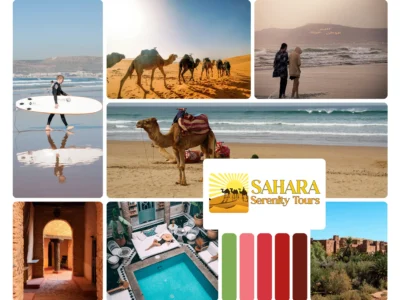
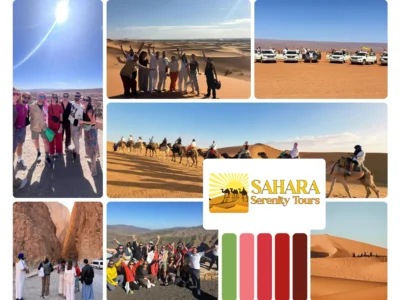
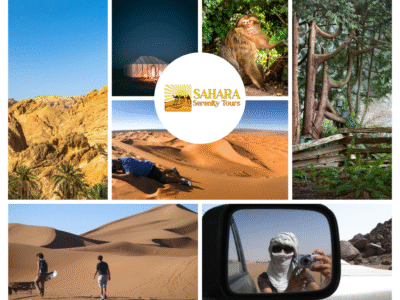
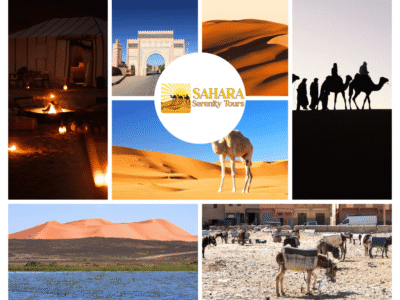
Desert-focused programs built around Merzouga, the Erg Chebbi dunes, camel treks, and Sahara stargazing consistently generate the strongest student reactions. The Sahara night is often the highlight students remember most, and for good reason: there’s nothing else quite like it. Student group travelers frequently call out the desert experience as the moment the trip became real.
The caveat is that desert-only trips involve long drives through landscapes that, while beautiful, can feel monotonous over several days. There are also fewer urban cultural touchpoints, which can weaken the educational case for the trip. A desert-only program works best as part of a mixed itinerary rather than as the full program.
Choosing the best Morocco tour for student groups: city, desert, or mixed?
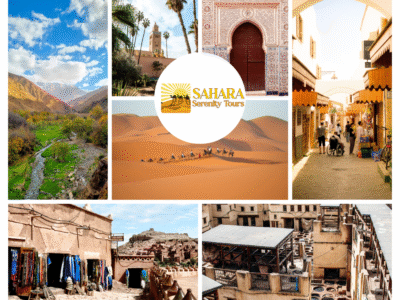
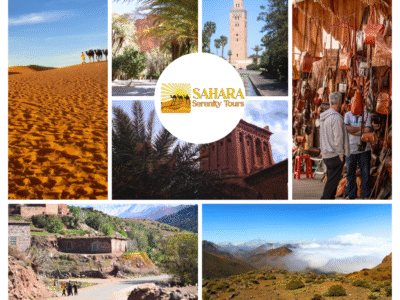
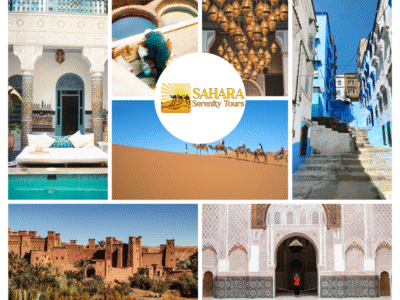
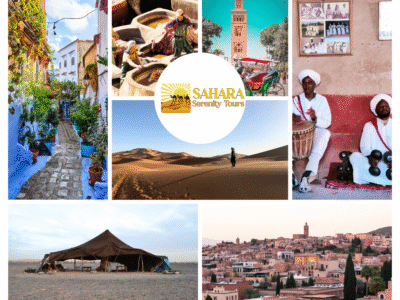
The city-plus-desert format is what most Morocco school trip itineraries are built around, and the reasons are practical. It balances educational depth with adventure, gives students exposure to multiple landscapes and cultural contexts, and works for programs ranging from 7 to 14 days. Students move from Marrakech’s medina to the High Atlas Mountains to the Sahara dunes to Fes’s artisan quarters, and the variety keeps engagement high across the full trip.
For curriculum purposes, a mixed itinerary covers history, geography, architecture, and Berber culture in a single program. That’s a much stronger case to make to a school board or university department than a trip built around a single experience. Group planners who run mixed-format Morocco trips tend to return to this structure for follow-up programs, it simply works.
What a realistic per-student budget actually looks like
Low-budget programs: what you get for $60, $100 per day
At the budget end, a typical Morocco student tour runs between $60 and $100 per student per day, putting a 7-day all-in cost somewhere between $450 and $850 per student. That price point usually includes basic riad or hostel-style accommodation, shared transport between cities, simple meals, and a shared group guide across the full itinerary. The experience is real; the logistics are functional.
What tends to show up in reviews at this price point: accommodation inconsistency, where some nights are great and others aren’t, and rushed schedules that prioritize covering ground over spending meaningful time at each stop. These aren’t disqualifiers, but they’re worth discussing with any operator before committing. Ask specifically how accommodation standards are described in writing and how much time is built into each location. For a clear cost comparison and a 7-day budget vs. luxury breakdown, consult this Morocco vacation cost: 7-day budget and luxury breakdown.
Mid-range programs: what the upgrade actually buys
Stepping up to $80, $150 per student per day brings a meaningfully different experience. A 7-day mid-range program typically runs between $800 and $1,300 per student, and the difference shows in private transport, upgraded riads or hotels, more structured guiding, and entrance fees included rather than charged as extras. For student groups, this tier usually translates to better supervision, more flexibility when the itinerary needs adjusting, and fewer of the common complaints around salesy shopping stops and unclear communication.
The mid-range also tends to attract operators with stronger infrastructure for group travel: dedicated group liaisons, written risk assessments, pre-departure briefings for teachers and parents, and emergency contacts that are actually reachable. For school and university groups where accountability to parents and administrators is part of the picture, that infrastructure matters as much as the price.
Sample itineraries: 7-day, 10-day, and 14-day structures
What a 7-day Morocco school trip itinerary covers
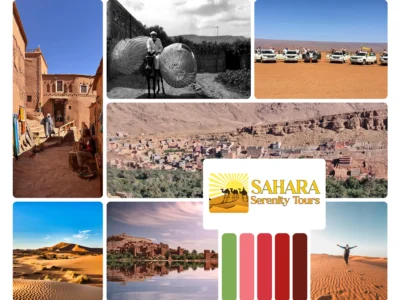
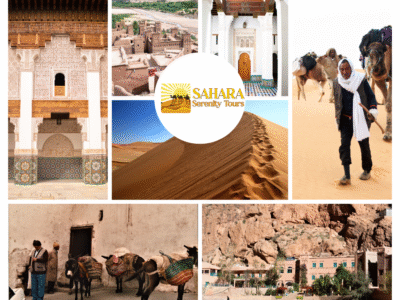
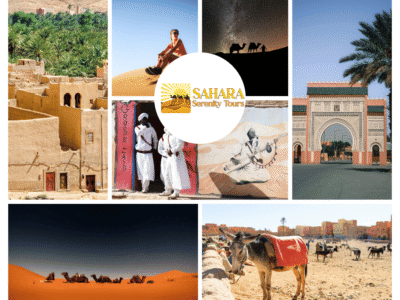
A typical 7-day student group route runs from Marrakech through the High Atlas Mountains to Aït Benhaddou, then east to Merzouga for one night in the Sahara, and north to Fes for the final days. Along the way, students visit UNESCO heritage sites, cross one of Morocco’s most dramatic mountain roads, trek by camel into the dunes, and spend time in Fes’s working medina, where artisan quarters for leatherwork, ceramics, and textiles are still operating as they have for centuries.
The educational touchpoints on this route are strong: Berber culture in the Atlas, desert ecology and caravan history in Merzouga, and Islamic urban heritage in Fes. This format works well for both spring and autumn school calendar windows, and one Sahara night is enough to make the experience genuinely memorable without overstretching the schedule. For an example 7-day route that mirrors this structure, see this sample 7-day Morocco itinerary.
How 10-day and 14-day programs go deeper
A 10-day program adds Chefchaouen, Rabat, or Casablanca to the core route, giving students a north-to-south sweep of Morocco’s cultural geography. The additional days allow slower pacing at each location, which consistently improves both student experience and the educational quality of site visits. Two nights in the Sahara becomes possible, and the overall trip feels less rushed.
Fourteen-day programs are better suited to university groups or study-abroad programs where depth and reflection time are part of the educational design. These itineraries include optional add-ons like cooking classes, community visits, Arabic calligraphy sessions, and service-learning components such as working with local schools or conservation projects. The longer format turns a Morocco trip into something closer to a fieldwork program rather than a structured tour, and for the right group, that’s exactly what’s needed.
Why Sahara Serenity Tours is built for school and university groups
Student packages designed around group reality, not individual travel
Sahara Serenity Tours has built dedicated student packages for school and university groups, not adapted solo traveler programs with a student discount applied. Their multi-day itineraries are structured around group pricing, predictable logistics, and multi-city departure points including Marrakech, Fez, and Casablanca, which simplifies the flights-and-ground-connection puzzle that many group planners struggle with.
Their guides bring firsthand knowledge of the cultural, historical, and ecological context at each stop on the route, the kind of on-the-ground familiarity that helps students get real answers to real questions rather than a rehearsed script. For a school trip trying to connect classroom content to lived experience, that depth of local knowledge is often the difference between a tour and a genuine education.
What sets a locally owned operator apart on educational trips
Booking with a large international travel agency often means working through intermediaries who don’t have direct relationships with the people and places on the itinerary. A locally rooted operator like Sahara Serenity Tours has those relationships built in, and that proximity translates directly into the quality of what students experience on the ground.
For student groups, this educational authenticity is often the gap between a trip that fulfills curriculum goals and one that ticks tourist boxes without adding much learning value. Patterns in group travel feedback suggest that locally operated small-group Morocco tours are frequently highlighted for stronger cultural depth and guide quality compared to large packaged programs, and that’s the detail worth paying attention to when comparing your options.
How to organize and book your Morocco group trip
The key questions to ask any operator before booking
Before committing to any budget Morocco group tour or premium program, ask these questions directly: What is the minimum group size? What supervision is built into the daily itinerary? How are itinerary changes handled if something comes up on the ground? What does communication look like during the trip, and who is the point of contact? Are written risk assessment documents available for school administration? How are accommodation standards described and confirmed in writing?
These questions separate operators who have done this before with student groups from operators who have simply filled the “group travel” checkbox on their website. The responses will tell you quickly whether the operator understands what school and university groups actually need or whether they’re adapting a general product on the fly. For a useful checklist of items to cover, see these essential questions to ask before booking your private Morocco tour.
Timeline and logistics your group leader needs to plan around
For school and university groups, a booking window of 3 to 6 months ahead of departure is realistic. That gives enough lead time to gather student documents and consent forms, confirm flights, brief parents, and work through any administrative approval processes your institution requires. Build in a pre-departure briefing that covers cultural norms, dress expectations for mosques and medinas, and what students should expect from shared accommodation and group travel days.
Communicate clearly with students before arrival about Morocco’s cultural context. Simple things, like understanding how to behave in a medina, how to interact with local vendors, and how to approach Berber hospitality, make the trip smoother and more respectful for everyone involved. The best student groups arrive curious and prepared; the operator’s job is to build on that from day one.
The bottom line: what is the best Morocco tour for student groups?
The best Morocco tour for a student group isn’t the cheapest option or the most popular one on a booking platform. It’s the one designed for how groups actually travel: structured itineraries, real local guides, predictable group pricing, and an operator who has done this before specifically with students. Generic tours can be adapted, but purpose-built student programs, whether that’s a youth group Morocco tour, an 18-to-35 adventure format, or a full school trip to Morocco, almost always deliver a better experience for the same or lower cost. If you’d like to review organizations that specialize in school group travel, consider programs like Rustic Pathways’ Morocco school programs as one model of how a dedicated provider structures logistics, supervision, and risk management.
For most groups, a mixed city-to-desert itinerary remains the most balanced option. It covers the educational bases, delivers the adventure students are hoping for, and generates the kind of memories that make a school trip worth the effort it takes to organize. Start with a 7-day format if your calendar is tight; build up to 10 or 14 days if your program has the depth to justify it.
If you’re ready to start planning, Sahara Serenity Tours is worth contacting directly. They specialize in exactly this kind of trip, and a direct conversation with their team will give you a clearer picture of costs, itinerary options, and logistics than any comparison article can. Reach out to Sahara Serenity Tours to get a custom quote for your group and start turning the planning into a real trip. You can also compare dedicated student-focused operators such as Lovely Morocco Tours’ Morocco student tours to see different package structures and educational add-ons.