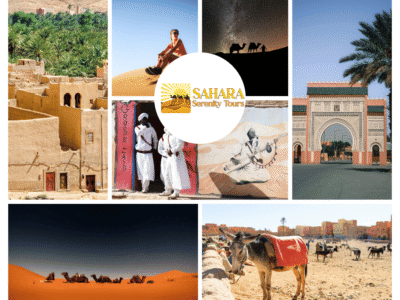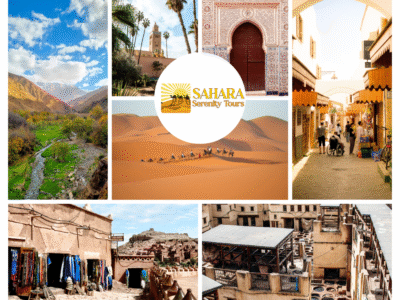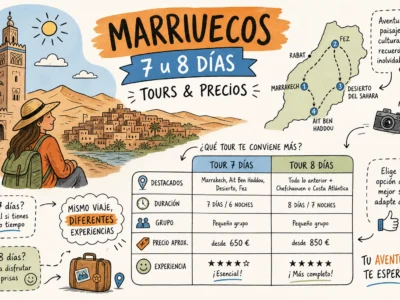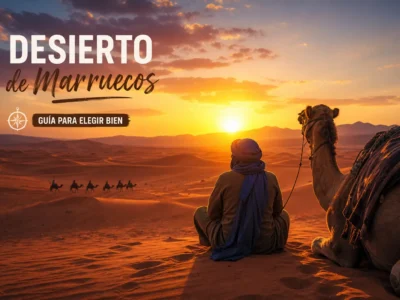
If you’re wondering what you can see on a tour starting from Casablanca, Morocco, the honest answer is: far more than most travelers expect. You’ve landed in the largest city in the country, whether you have a few hours before a connecting flight or this is where your Morocco trip officially begins, and you’re standing at the gateway to the Atlantic coast, the imperial cities, the blue-painted north, and eventually the Sahara Desert.
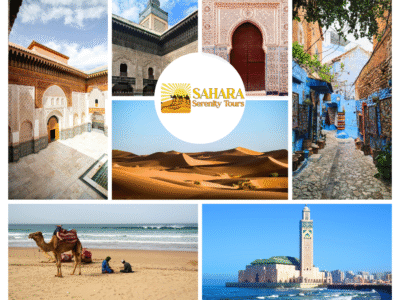
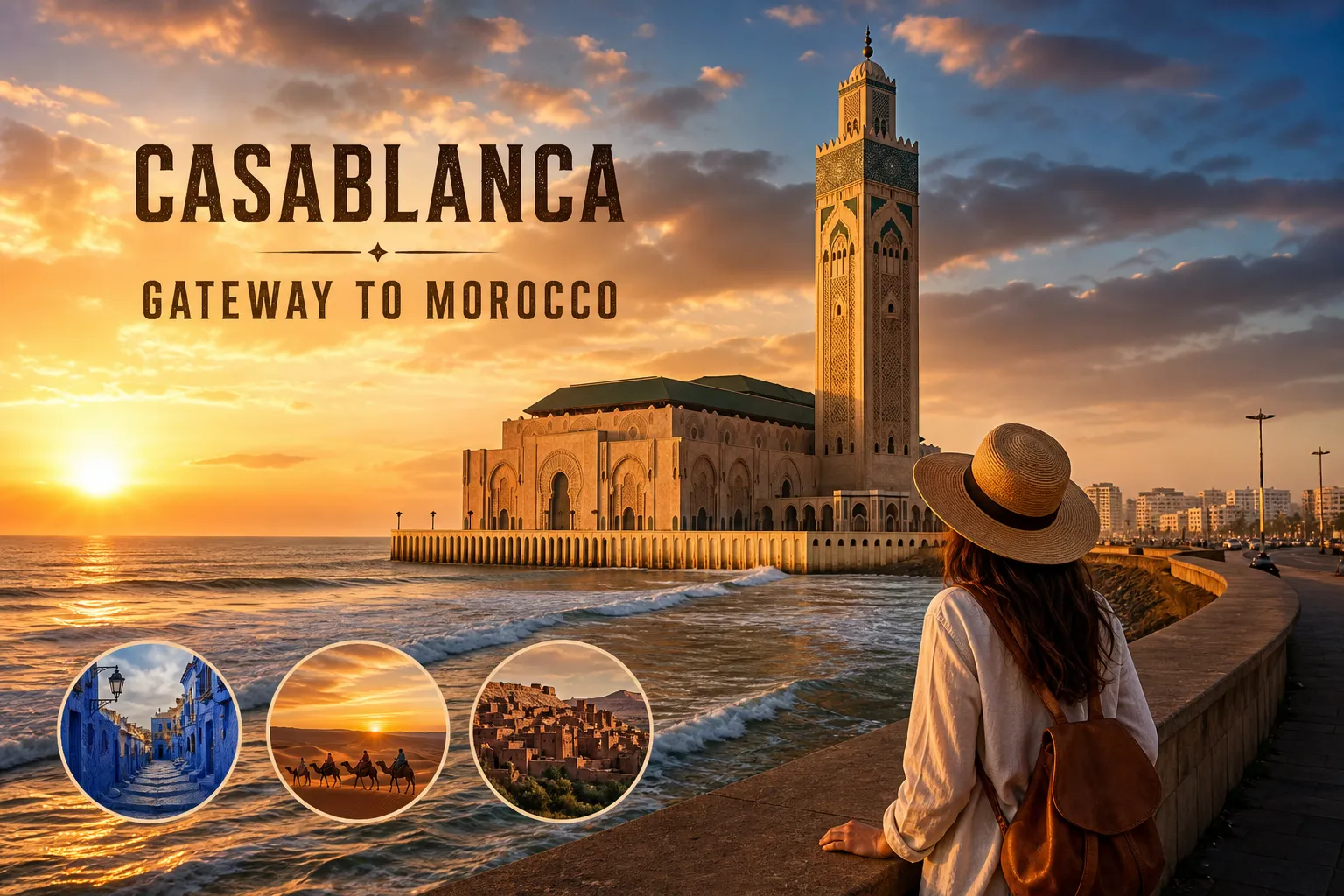
The Hassan II Mosque is the obvious first stop, and it earns that reputation. According to the mosque’s foundation, it holds up to 25,000 worshippers inside and another 80,000 in the courtyard, making it one of the largest religious structures in the world. But Casablanca isn’t just one landmark. It’s a launch pad. Within a few hours in any direction, you have a genuinely varied set of destinations that few single cities anywhere can match.
Travelers who book with a specialist like Sahara Serenity Tours can depart directly from Casablanca on a fully private, pre-mapped itinerary, so routing decisions are handled before they start packing. This guide covers what the city itself offers, which destinations work as day trips versus overnight stops, what a full multi-day circuit looks like, and how to match the right tour format to your actual trip length.
What Casablanca itself offers before you go anywhere else
Many travelers underestimate Casablanca because it doesn’t have the fairy-tale medina of Fes or the rooftop blues of Chefchaouen. What it does have is an impressive mosque, a French-Moroccan colonial downtown, a lively seaside promenade, and a neighborhood quarter that gives you a calm, unhurried introduction to Moroccan daily life. It’s also one of Morocco’s most European-influenced cities architecturally, which makes it a useful orientation stop before the sensory intensity of the interior cities kicks in.
The Hassan II Mosque: why this is everyone’s first stop
The mosque is open to non-Muslim visitors exclusively on guided tours, which run Saturday through Thursday at 9:00 a.m., 10:00 a.m., 11:00 a.m., 12:00 p.m., and 3:00 p.m. Friday visits run at 9:00 a.m., 10:00 a.m., and 3:00 p.m. Entrance for foreign adults runs 140 MAD, with a VIP private visit option at 2,200 MAD for groups of ten or fewer. Arriving at the first morning slot is the smart move: the light is better, the crowds are thinner, and you’ll have the courtyard largely to yourself before the tour buses arrive.
The guided tour takes you through the prayer hall, which sits on a glass floor above the ocean, and past the intricate carved plasterwork that took teams of Moroccan artisans years to complete. The guided format isn’t just a formality, it’s the only way to understand what you’re looking at. Allow roughly ninety minutes from arrival to exit, though your guide will set the actual pace.
The Corniche, Habous quarter, and central landmarks
After the mosque, the Ain Diab Corniche stretches south along the waterfront and works well as a post-visit decompression walk. The sea breeze, the views back toward the mosque’s minaret, and the string of cafés along the promenade make it an easy transition between sightseeing and the rest of your day. From there, the Habous district sits a short drive inland and offers the most interesting architectural mix in the city: a French-colonial neighborhood developed in the 1930s with Moroccan traditional motifs, covered souk streets, and a pace that feels completely different from the commercial energy of larger medinas.
Mohammed V Square and the colonial downtown complete the circuit. The Art Deco buildings, the courthouse, and the central fountain area give you a sense of Casablanca’s 20th-century history that most Moroccan cities don’t offer. The old medina is walkable from the center and worth an hour, even though it’s smaller and less overwhelming than Fes or Marrakech.
How much time is actually enough in Casablanca
One full day covers the mosque, Habous, the Corniche, and the downtown without rushing. Two days allows for a slower coastal morning at Ain Diab, more time wandering Habous, and a quieter dinner by the waterfront. Anything beyond two days is better spent on the road. Casablanca rewards a day, not a week, and the rest of Morocco is waiting.
What can I see on a tour starting from Casablanca, Morocco: day trips and nearby cities
Once you’ve taken in what Casablanca offers, the question shifts to what’s within reach. The good news is that several major destinations sit within a half-day’s drive, and some work as comfortable day trips without any overnight commitment.
Rabat: the imperial capital just one hour away
Rabat is the one destination on this list that works as a comfortable, genuine day trip from Casablanca. The drive takes about one hour by private car, the city is calm and well-organized by Moroccan standards, and the sights are concentrated enough that you can cover the main landmarks without feeling rushed. For travelers with a short window before flying home, a Casablanca-to-Rabat day is the easiest win on any itinerary starting here.
What you’ll actually see in Rabat
The Kasbah of the Udayas sits above the mouth of the Bouregreg River, with blue-and-white alley streets that open onto Atlantic views and Andalusian gardens that rank among the most peaceful spots in the country. The Hassan Tower and the Mausoleum of Mohammed V form a single stop requiring about an hour: the unfinished 12th-century minaret is one of Morocco’s architectural signatures, and the mausoleum beside it is free to visit. The Chellah necropolis adds another forty-five minutes or so if you want Roman ruins and medieval Marinid walls in the same frame.
A practical order for a day trip: start at the Kasbah of the Udayas, then move on to the Hassan Tower and Mausoleum. If time allows, add Chellah before finishing in the medina for lunch and a short wander.
Half-day vs. full-day visit: what changes
A half-day from Casablanca covers the Kasbah and the Hassan Tower complex comfortably, with time for a coffee and a wander through the medina before heading back. A full day adds Chellah, a longer medina lunch, and a slower walk along the Bouregreg riverside promenade. The train from Casablanca Voyageurs station runs roughly every thirty minutes and costs around $6 to $8 USD one way, making it the best budget option for this leg. A private transfer gives you the flexibility to stop along the coastal road on the way back, which is worth it on a clear day.
Fes: Morocco’s living medieval city
Fes is not a day trip from Casablanca. The drive runs 3.5 to 4.5 hours depending on traffic, and the city needs at least one full day inside the medina to make the journey worthwhile. Travelers who try to squeeze Fes into a long day from Casablanca almost always come back wishing they’d stayed overnight. The city is too layered and too dense to rush.
What makes Fes different from any other Moroccan city
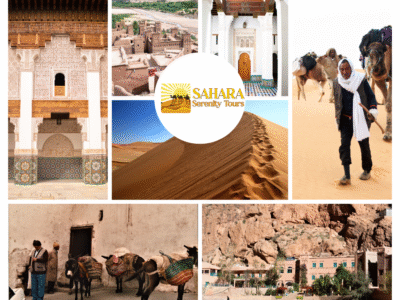
The Fes el-Bali medina is a UNESCO World Heritage site where the 9th century is still physically present. The leather tanneries are still worked by hand, the same way they’ve been worked for centuries. The Al-Qarawiyyin mosque, founded in 859 CE and widely regarded as one of the oldest continuously operating universities in the world, sits at the medina’s core. The dyers’ souk, the spice markets, and a labyrinthine street network with no grid logic whatsoever create an experience that’s genuinely difficult to navigate without a local guide.
The sensory experience of Fes is the main draw, not any single landmark. The smell of the tanneries drifting up from the neighboring view terraces, the call to prayer echoing through narrow stone alleys from what sounds like hundreds of minarets, the sight of saffron and cumin piled in open sacks at the souk, this is a city you absorb rather than tick off a checklist. Plan a minimum of one full day inside the medina, and two nights if you can manage it.
How Fes fits into the Casablanca-to-Sahara routing
Fes sits almost perfectly on the road between Casablanca and the Sahara Desert. Travelers heading to Merzouga or Erg Chebbi pass through or near Fes naturally, which means an overnight stop costs no extra detour. A natural routing is Casablanca on day one, Fes for one or two nights on days two and three, then south through the Middle Atlas toward Merzouga on day four. Building in two nights in Fes is the version travelers almost universally say they’re glad they chose. For more structured plans covering multiple durations, see the Best Morocco itinerary that outlines recommended 7, 10, and 14-day routes.
Chefchaouen and the northern route
Chefchaouen requires a deliberate detour north, roughly four to five hours from Casablanca. Many travelers who skip it say afterward they wish they hadn’t. The blue-painted medina is visually unlike anywhere else in Morocco, the Rif Mountain backdrop is dramatic, and the pace of the city is a different rhythm from the commercial energy of Fes or Marrakech. If you have the time, this is the stop that earns its own chapter in the trip.
What you’ll find in Chefchaouen
The medina streets are hand-painted in shades of blue ranging from pale sky to deep cobalt, a tradition the town takes seriously even now. The main plaza, Uta el-Hammam, anchors the medina and is the right place to start before working outward into the alleyways. The Kasbah museum on the plaza is worth an hour for its exhibits and rooftop views. The hike up to the Spanish mosque above town takes about thirty minutes and delivers the panoramic view over the whole medina that photographers come here for. One full night in Chefchaouen is the minimum; two nights allows for a slower morning and a longer walk into the surrounding hillside.
Connecting the north into a logical Casablanca itinerary
The routing logic for the north works cleanly when you avoid backtracking. From Casablanca, head north to Rabat as a first-day stop, then continue to Chefchaouen for one or two nights. From Chefchaouen, the drive east to Fes passes near Volubilis, the best-preserved Roman ruins in Morocco, and Meknes, which adds another imperial city to the circuit without a separate detour. From Fes, turn south toward the Sahara, then finish in Marrakech before returning to Casablanca. Every drive in this circuit is purposeful and every stop earns its place.
Marrakech and the south: what the route looks like from Casablanca
Marrakech sits about three hours south of Casablanca. That makes it technically possible as a very long day trip, and almost never worth doing that way. The city earns at least one full night, and the areas around it add natural extensions that turn a Casablanca-plus-one-city trip into something more complete. For travelers whose Morocco window is short and whose priority is the south, Marrakech is often the right answer.
What to expect in Marrakech on a tour from Casablanca
Jemaa el-Fna is the pulse of the city: the square transforms from a daytime juice-and-storyteller market into a full evening carnival of food stalls, musicians, and performers after sunset, and it’s worth experiencing both versions. The souks north of the square are where getting lost is part of the point, with leather goods, metalwork, spices, and textiles spread across a warren of specialized market streets. Bahia Palace, the Saadian Tombs, and Jardin Majorelle round out the main sights, with Majorelle offering the quietest and most color-saturated hour you’ll spend in the city.
Set expectations honestly: Marrakech is louder, more commercial, and more tourist-heavy than anywhere else on this list. That’s not a criticism, it’s the most alive city in Morocco and the one most visitors end up liking more than they expected. Arriving prepared for the energy is better than arriving expecting Chefchaouen. A single full day covers the main landmarks, and two days allows for a slower souk morning and more time in the gardens.
Adding Essaouira or the Atlas Mountains as a southern extension
Essaouira is three hours west of Marrakech along the coast and adds a wind-swept, ocean-cooled counterpoint to the high-energy city. The walled medina, the fishing port, and the blue-painted boat yards give it a completely different atmosphere from anywhere else you’ll visit. The Ourika Valley and the Toubkal foothills in the High Atlas are reachable as a half-day from Marrakech and offer mountain air and Berber village scenery without requiring a full trek. Either works as an add-on for travelers with an extra day before returning north to Casablanca.
The Sahara Desert: the multi-day journey that changes the trip
The Sahara is nine to eleven hours from Casablanca by road, and none of that distance is a problem when you route it properly over multiple days. The drive through the Atlas Mountains, past ancient kasbahs, through the Ziz River gorges and toward the edge of the Draa Valley, is part of the experience itself. The Sahara isn’t a distant add-on to a Casablanca itinerary. It’s the natural climax of one.
Erg Chebbi, Merzouga, and what the desert experience actually looks like
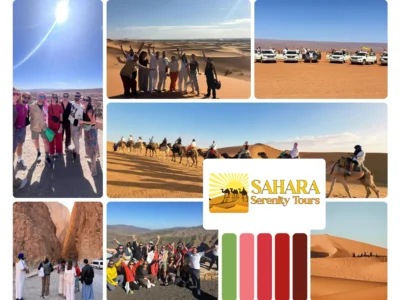
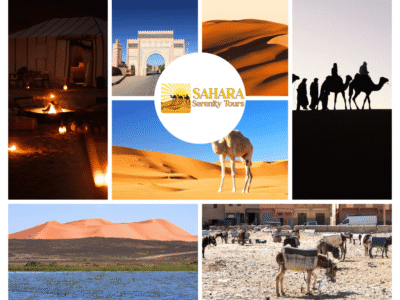
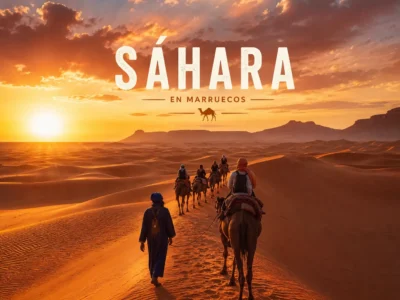
The Erg Chebbi dunes near Merzouga are the most accessible and visually dramatic entry point to the Sahara from Casablanca. The dunes rise up to 150 meters above the flat hammada around them, which makes for an arrival moment that stops most travelers in their tracks. The standard experience involves a camel trek at sunset, taking one to two hours to reach a desert camp as the light turns the dunes from gold to deep orange to red. The camps range from mid-range to fully luxurious, with proper beds, traditional Moroccan meals, and a campfire and Berber music after dinner.
Stargazing at Erg Chebbi is exceptional, with minimal light pollution, dry air, and an unobstructed horizon, the night sky here is something most travelers don’t expect until they’re looking at it. The early morning dune climb before the heat rises is worth setting an alarm for. The silence at the top of a dune at dawn, with nothing around you in any direction but sand, is the moment most travelers say they remember longest.
What a multi-day Sahara itinerary from Casablanca actually includes
A typical four-to-five-day routing from Casablanca to Merzouga looks like this: day one from Casablanca to Fes overnight; day two from Fes through Ifrane, the cedar forests of the Middle Atlas, and Midelt to the desert; day three for the full desert experience including camel trek and camp; day four through Dades Gorge and Ait Benhaddou kasbah; day five into Marrakech with a transfer north to Casablanca. The drives aren’t wasted transit time. The road from Fes to Merzouga alone passes through some of the most dramatic landscapes in North Africa, and Ait Benhaddou, a UNESCO-listed kasbah used as a filming location for dozens of major productions, is a legitimate stop on its own.
How to build a logical route from Casablanca by trip length
Everything in this guide comes down to one practical question: how many days do you actually have? The routes change significantly depending on whether you’re working with four days or fourteen. Here’s a direct breakdown of what each trip length actually looks like.
3-4 days: the short but solid Casablanca circuit
Three to four days works for one of two directions: north to Rabat and Fes, or south to Marrakech. The north route gives you Casablanca on day one, Rabat as a day-two stop, and one night in Fes before returning to Casablanca on day four. The south route is Casablanca on day one, Marrakech on days two and three, with an optional half-day to the Atlas Valley before heading back. What gets cut at this length is everything else: Chefchaouen, the Sahara, Essaouira. Be honest with yourself about the trade-offs rather than trying to see everything quickly and seeing nothing properly.
7-10 days: the Morocco circuit that covers the main acts
The classic loop for a first-time visitor departing from Casablanca runs like this: Casablanca on day one, a stop in Rabat on the way north to Chefchaouen on day two, a full day in Chefchaouen on day three, east to Fes on day four, a full Fes medina day on day five. From there, head south toward Merzouga on day six, the Sahara on day seven, Dades Gorge and Ait Benhaddou on day eight, Marrakech on day nine, and a return transfer to Casablanca on day ten. This order minimizes backtracking and delivers the widest variety of landscape, architecture, and atmosphere in the time available. Ten days is the sweet spot for a first Morocco visit from Casablanca, if you want a ready-made example schedule, check the best 10-day Morocco itinerary for a sample first-timer plan.
2 weeks: adding depth to every stop
Fourteen days allows for a second night in Fes, a proper detour to Volubilis and Meknes on the way south, two nights in the Sahara instead of one, a side trip to Essaouira from Marrakech, and a slower return north with time to stop and eat at places your guide recommends rather than places your schedule permits. This is the itinerary where travelers stop moving through Morocco and start absorbing it. If your schedule allows two weeks from Casablanca, take them.
Transport options and what to budget for each type of tour
A tour from Casablanca can mean a private car with a driver-guide, a shared shuttle between cities, the intercity train for the Rabat leg, or a combination of all three depending on how far you’re going and how much flexibility matters to you. Here’s an honest breakdown.
Private car hire with a driver runs from about $41 for a four-to-eight-hour day in and around Casablanca, scaling to $110 to $349 for intercity private transfers like Casablanca to Marrakech, depending on vehicle type and inclusions. The train is unbeatable for Casablanca to Rabat, at around $6 to $8 USD one way and running frequently throughout the day. Shared shuttles and fixed-route coaches exist for budget travelers but trade flexibility for price: you depart when they depart, stop where they stop, and wait for everyone else in the group. For destinations like Chefchaouen, Fes, or Merzouga, the difference between a private vehicle and a shared coach becomes significant over multiple days.
For full multi-day private tours covering the Sahara circuit, costs vary by operator, vehicle type, number of nights, and what’s included, but a rough ballpark for a private 7-to-10-day circuit runs from around $800 to $2,000+ per person depending on accommodation level and group size. Shared group tours sit at the lower end. Mid-range private tours with a dedicated driver-guide and solid riads typically fall in the middle. Luxury tours add premium desert camps, boutique riads, and fully private guides throughout. On a per-person basis, private tours often make financial sense for two people when compared to two individual tickets on shared itineraries, especially once you factor in the flexibility to stop when and where you want.
Why the operator you choose matters as much as the route
A great itinerary on paper becomes an exhausting trip when the logistics fall apart. The driver who drops you at the mosque without context. The desert camp that doesn’t match the photos. The medina walk that’s over before you’ve had time to actually look at anything. These are the details that separate a trip you remember for years from one you forget by the time you’re home. The route is only part of what you’re booking.
What a good Morocco tour operator actually handles for you
End-to-end handling covers more ground than most travelers realize until they’ve tried to piece a Morocco trip together themselves. Route planning from Casablanca, a private vehicle and professional driver-guide, riad and desert camp reservations, entrance fee logistics, meal planning at genuine local spots rather than tourist-trap restaurants next to monuments, and the flexibility to shift plans when something unexpected comes up. A good operator treats the itinerary as a starting point, not a fixed contract. Rain in the Atlas? They know the alternate route. The camp you wanted is full? They have the relationship with the next best one.
How Sahara Serenity Tours builds custom itineraries from Casablanca
Sahara Serenity Tours departs from Casablanca or any Moroccan city and builds fully private itineraries around each traveler’s trip length, interests, and pace. Their guides are Moroccan locals with first-hand knowledge of every route covered in this guide: the medina streets of Fes, the dunes at Erg Chebbi, the mountain roads between the Atlas passes, and the quieter stops that most generic operators skip entirely. Shared group tours are kept small to maintain an intimate rather than impersonal dynamic. Private tours are exactly that: your vehicle, your guide, your schedule.
The camel trek and desert camp logistics are handled completely. Riad bookings across the circuit are handled. Entrance fee planning for the mosque, the kasbahs, and the archaeological sites is built in. Travelers who book with Sahara Serenity Tours show up in Casablanca and experience Morocco instead of managing it. If you’re figuring out a route from Casablanca right now, their team can map a custom itinerary built around your exact dates and priorities before you’ve committed to anything. Reach out to discuss a Morocco tour from Casablanca and have the logistics taken care of before you book flights.
What can I see on a tour starting from Casablanca, Morocco, the complete picture
You now have a complete picture of what a tour starting from Casablanca, Morocco actually delivers. Rabat is an hour away and earns a full day on its own. Fes is a half-day drive that earns its own overnight, ideally two. Chefchaouen rewards a deliberate detour north and connects naturally into the rest of the imperial city circuit. Marrakech anchors the south and opens up extensions to the coast and the mountains. The Sahara is the multi-day reward that ties the whole country together and changes what you think Morocco is.
The routing and logistics are the hard part of any Morocco trip built from Casablanca. The distances are real, the options are varied, and the wrong sequence means either backtracking or missing something significant. That’s exactly what a specialist tour operator exists to solve, and it’s exactly what Sahara Serenity Tours does every day.
If your Morocco trip starts in Casablanca, contact Sahara Serenity Tours before you book your flights. They’ll map the whole circuit, match it to your travel window, and take every logistical question off your plate. Morocco is an extraordinary place to travel, and with the right planning, you’ll actually get to experience it that way.